Holidays and Zepbound: Managing Injections Around Vacation Travel
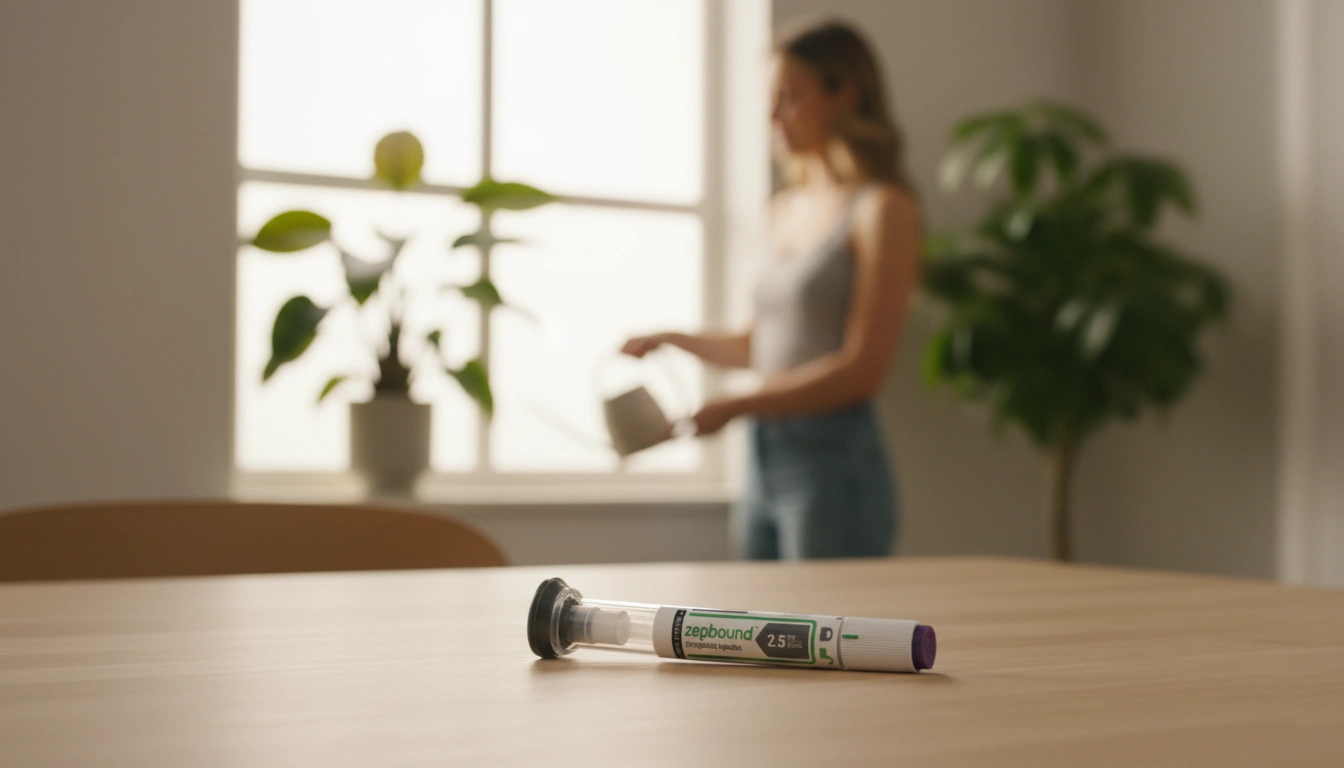
Vacation throws a lot of variables at you at once: different time zones, unfamiliar food, disrupted sleep, and a schedule that bears no resemblance to your regular week. For Zepbound patients, all of that sits alongside the practical question of how to keep your medication stored safely and your injection schedule on track when your usual routine has completely dissolved. The good news is that Zepbound’s weekly dosing gives you more flexibility than most people realize. Here’s how to use it.
What Makes Zepbound Different From Other Travel Scenarios
Zepbound is the FDA-approved weight loss formulation of tirzepatide, the same active ingredient as Mounjaro but indicated specifically for chronic weight management. Like all weekly GLP-1 injectables, it has a long half-life, approximately five days, which means the medication level in your system changes slowly and forgives modest timing adjustments without meaningful clinical consequences.
This matters for vacation planning because it means you’re not managing a medication that demands precision timing. Missing your usual injection window by 12, even 24 hours, is unlikely to affect your outcomes in any meaningful way. What you do need to manage is storage, injection hygiene, and GI side effects in an environment that may make all three harder than usual.
If you’re also taking other medications alongside Zepbound, it’s worth reviewing those interactions before travel. The article on zepbound and metformin is a useful reference for patients managing multiple medications, since travel can disrupt timing for those as well.
Planning Your Injection Schedule Before You Leave
The single most useful thing you can do before a vacation is map out your injection schedule in advance relative to your travel dates. Pull up a calendar, mark your usual injection day, and look at where it falls during your trip.
If your injection day falls on a travel day, particularly a long travel day with flights and layovers, consider adjusting by one or two days before you leave. Injecting the day before departure or the day after arrival is almost always more practical than injecting mid-travel, when you may be in an airport, dealing with delays, or moving through customs. The five-day half-life gives you the biological room to make this kind of adjustment without compromising your treatment.
If your injection day falls during the vacation itself, identify specifically where you’ll be and what your situation looks like. A day at a beach resort is very different from a day on a hiking trail or a cruise ship. The storage and logistics vary significantly, and planning for the specific context you’ll actually be in is more useful than generic advice.
Consider this scenario: a patient who injects every Wednesday is taking a ten-day trip departing on a Monday. She has two injections falling during the trip, on days three and ten. She injects on the Sunday before departure instead of waiting for Wednesday, giving herself a clean first week without needing to inject while settling in. Her second injection falls on the last day of the trip when she’s at the hotel before checkout, which is straightforward. Two minutes of calendar planning before she left saved significant logistical stress during the trip itself.
Carrying Zepbound Through Airports and Border Crossings
TSA rules for injectable medications are clear and patient-friendly. Zepbound pens and tirzepatide vials are exempt from the 3-1-1 liquid rule and can travel in your carry-on in reasonable quantities for your trip. Declare your medication proactively at the security checkpoint, keep it in original or labeled packaging, and bring your sharps container for used needles.
For international travel, the considerations are more involved. Most developed countries allow travelers to bring personal-use quantities of prescription medications, but rules vary and some countries have stricter import regulations around injectable medications. Check the embassy or consulate website for your destination before traveling internationally with Zepbound. Carrying a letter from your prescribing provider on official letterhead, with your name, medication name, dose, and indication, is a practical precaution for international trips even when not strictly required.
Zepbound is a brand-name medication with standard commercial packaging, which makes customs conversations more straightforward than compounded tirzepatide, which may have different labeling. If you’re using compounded tirzepatide rather than Zepbound, your pharmacy label with prescriber information is the key documentation to have accessible.
Always carry Zepbound in your carry-on, never in checked luggage. Checked bags are stored in cargo holds where temperatures fluctuate significantly, and the risk of heat damage in summer or freezing damage in winter is real. Losing a bag is also a possibility that becomes significantly more problematic when it contains medication you need.
Keeping Zepbound Cold During Vacation
Unopened Zepbound should be refrigerated between 36°F and 46°F. Once in use, the pen can be kept at room temperature below 86°F for up to 21 days. This room-temperature window is actually quite useful for vacation planning, because it means a pen you’ve already started using doesn’t need to stay in a refrigerator throughout your trip, as long as ambient temperatures stay below 86°F and you’re using it within the 21-day window.
For an unopened pen or vial you’re bringing for use during the trip, you need active cooling until first use. Practical options include:
An insulated medication travel case with gel packs, which can maintain appropriate temperatures for 24 to 48 hours and works well for most vacation scenarios. A FRIO evaporative cooling case for situations where carrying ice packs isn’t practical, such as beach days or hiking, noting that effectiveness drops in high humidity as covered in the hot weather storage article. Hotel refrigerators, which are available at virtually every hotel and are the simplest solution for any trip where you’re staying in accommodation with a room. Requesting refrigerator storage at the front desk for room-temperature rooms that lack a mini-fridge is a standard and easily accommodated ask.
For cruises specifically, your cabin steward can arrange refrigerator storage for medications. Notify guest services before boarding if possible so storage is confirmed before you arrive.
Managing GI Side Effects Away From Home
This is where vacation planning gets personal. Zepbound’s GI side effects, particularly nausea, slowed digestion, and occasional vomiting or diarrhea, don’t pause for travel. And the conditions of vacation, richer food, more alcohol, irregular meal timing, disrupted sleep, and different stress patterns, can all influence how you feel post-injection.
A few patterns are worth knowing. Richer, higher-fat foods that you might eat on vacation slow gastric emptying more than your usual diet, which compounds Zepbound’s already-present slowing effect. Large restaurant meals that feel celebratory in the moment can leave you feeling genuinely uncomfortable afterward. This isn’t a reason to avoid enjoying vacation food, but it is a reason to be more attentive to portion sizes than you might otherwise be. The article on restaurant menus on tirzepatide has practical guidance on navigating restaurant eating that applies directly to vacation dining.
Alcohol interacts with Zepbound in ways worth understanding before a vacation that might involve more drinking than usual. Slowed gastric emptying means alcohol is absorbed more slowly initially but then hits harder once it moves through. Many patients report feeling the effects of alcohol more intensely on GLP-1 medications than before treatment. The article on alcohol on semaglutide covers the relevant dynamics in detail, and the same principles apply to tirzepatide.
If your injection falls during vacation, timing it strategically around your plans reduces disruption. Many Zepbound patients find that injecting in the evening of a lower-key day and sleeping through the immediate post-injection window works well, since nausea is often most pronounced in the 12 to 24 hours after injection. Injecting the night before a planned beach day or sightseeing day lets you move through that window overnight.
Handling Missed or Delayed Injections While Traveling
Travel disruptions happen. Flights get canceled, bags get delayed, schedules collapse. If you miss your Zepbound injection window due to travel disruption, here’s the practical guidance.
If it’s been less than four days since your last injection, inject as soon as your situation allows and then resume your regular schedule from that new date. If it’s been more than four days, inject as soon as possible and consider that your new injection day going forward.
What you should not do is double up or inject twice in close succession to compensate for a missed dose. Two doses within a short window significantly increases side effect risk without meaningful benefit. One missed injection on a weekly medication with a five-day half-life has minimal clinical impact. The medication doesn’t simply disappear the moment your injection window passes.
Contact your TrimRx provider through the platform if you have specific questions about missed doses or need guidance on restarting after a disruption. Telehealth’s flexibility means you can get clinical input from wherever you are without needing to find a local provider.
Coming Back From Vacation
Returning from a trip often involves its own disruption: jet lag, return to routine eating, catching up on sleep, and readjusting to normal life. For Zepbound patients, this transition is usually smooth as long as storage was managed well and injection timing stayed reasonably consistent.
If you gained some weight during vacation, which is common and not a cause for alarm, know that Zepbound’s appetite suppression typically reasserts itself quickly once you’re back in your normal eating environment. The habits and patterns that vacation disrupts tend to return, and so do the results.
If you’re not yet on Zepbound or tirzepatide and are considering starting, take the TrimRx intake quiz to find out whether you’re a candidate. Compounded tirzepatide is available through TrimRx at significantly lower cost than brand-name options, delivered directly to your door so you can start without a pharmacy visit.
This information is for educational purposes and is not medical advice. Consult with a healthcare provider before starting any medication. Individual results may vary.

Transforming Lives, One Step at a Time
Keep reading

Why Is There a Bruise Where I Injected My Zepbound?
A bruise means a small blood vessel was disturbed under the skin and blood spread into the surrounding tissue. It is one of the…
My Zepbound Pen Won’t Click Past a Certain Dose
Start by checking which device you are holding, because the answer depends entirely on that. Zepbound has commonly been supplied in the United States…
Zepbound Alternatives: Your Options Compared
If Zepbound isn’t the right fit, the main alternative is semaglutide (sold as Wegovy), which produces slightly less weight loss but works similarly, along…


