Home Workout Plan for GLP-1 Users: No Gym Needed
Introduction
You do not need a gym to keep muscle while losing weight on a GLP-1 drug. A pair of adjustable dumbbells or a set of resistance bands, plus two to three short sessions a week, covers the large majority of the muscle-preservation benefit. The body responds to resistance and progression, and you can supply both at home in 30 to 40 minutes.
This plan gives you the exact equipment, movements, sets, reps, and progression to train effectively at home, designed around the lower appetite and energy that come with GLP-1 drugs.
At TrimRx, we believe that understanding your options is the first step toward a more manageable health journey. You can take the free assessment quiz if you are ready to see whether a personalized program is a fit for you.
At TrimRx, we believe that understanding your options is the first step toward a more manageable health journey. You can take the free assessment quiz if you’re ready to see whether a personalized program is a fit for you.
Can You Really Preserve Muscle at Home?
Yes. Muscle responds to resistance and progressive overload, not to a specific location or machine. As long as you challenge your muscles and gradually increase the demand, you can preserve muscle at home as well as in a gym.
Quick Answer: You can preserve muscle on a GLP-1 drug at home with minimal equipment.
The body does not know whether resistance comes from a barbell, a dumbbell, a band, or your own bodyweight. It responds to tension and effort. For someone in a calorie deficit on a GLP-1 drug, the goal is to maintain muscle, which home training handles well.
The gym offers more weight options and machine variety, which helps advanced lifters chase maximum gains. For muscle preservation during weight loss, that extra capacity is a nice-to-have, not a requirement. Home training is more than enough.
What Equipment Do You Need?
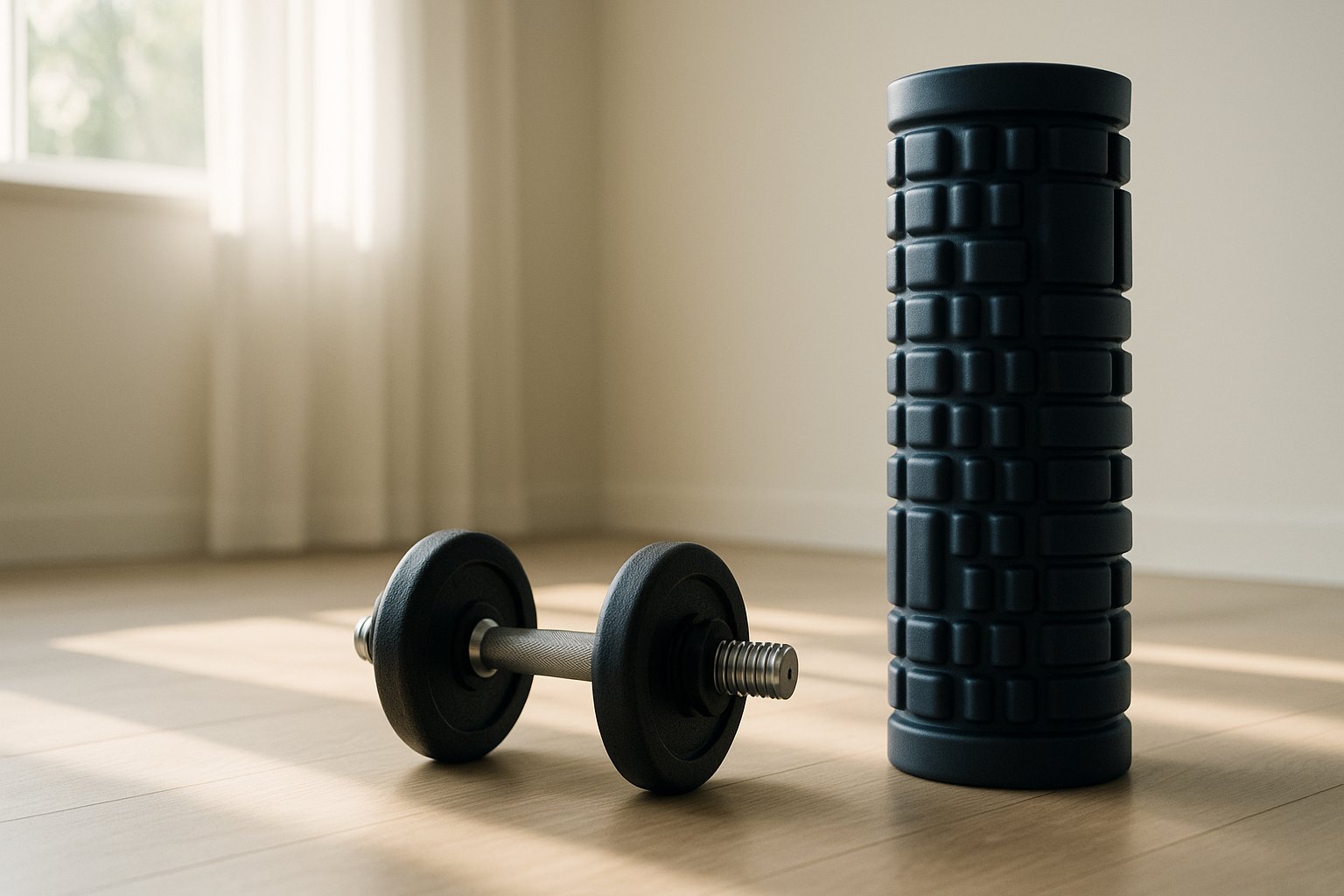
The most useful home equipment is a pair of adjustable dumbbells or a set of resistance bands. Either one lets you train all five movement patterns and progress the resistance over time.
Adjustable dumbbells are ideal because they let you change weight easily and load most exercises well. Resistance bands are cheaper, lighter, and portable, with the tradeoff that loading heavy movements like squats is harder. Many people use both for variety.
If you have nothing, bodyweight training still works, especially for beginners. Pushups, squats, lunges, glute bridges, and planks provide real resistance. As you get stronger, you progress bodyweight movements by adding reps, slowing tempo, or moving to harder variations.
The Five Movement Patterns at Home
Cover these five patterns and you have trained your whole body. Each can be done with dumbbells, bands, or bodyweight.
Squat: goblet squats, dumbbell squats, or bodyweight squats. Hinge: dumbbell Romanian deadlifts, band hip thrusts, or glute bridges. Push: dumbbell or band chest press, or pushups. Pull: dumbbell rows or band rows. Carry or core: farmer carries, planks, or dead bugs.
One or two exercises per pattern is plenty. This keeps your sessions efficient, which matters when GLP-1 appetite suppression leaves you with less energy. You are not trying to do everything. You are hitting each major pattern consistently.
A Sample Home Workout
Here is a full-body session to do two to three times a week. Do two to three sets of each.
Goblet squat or dumbbell squat: 2 to 3 sets of 8 to 12 reps. Dumbbell or band chest press: 2 to 3 sets of 8 to 12 reps. Dumbbell or band row: 2 to 3 sets of 8 to 12 reps. Romanian deadlift or glute bridge: 2 to 3 sets of 10 to 15 reps. Plank: 2 to 3 sets of 20 to 40 seconds.
Rest 60 to 90 seconds between sets. The session takes about 30 to 40 minutes. Choose resistance that is challenging but lets you keep good form, leaving a rep or two in reserve.
Repeat and progress this workout over weeks, and you cover the large majority of the muscle-preservation benefit from home. Track your numbers each session so you know what to beat next time, since progressive overload is what keeps the program working.
How to Progress Without a Full Weight Rack
Progressive overload still applies at home, even with limited weights. You have several ways to make exercises harder without buying more equipment.
Add reps: go from 8 to 10 to 12 over time. Add sets: move from two sets to three. Slow the tempo: lowering the weight over three seconds makes a movement much harder with the same load. Reduce rest: shorter rest between sets increases difficulty. Use harder variations: progress from regular pushups to a more challenging version.
For bands, you progress by using thicker bands or increasing tension. For dumbbells, increase the weight when you hit the top of your rep range. These methods let you keep challenging your muscles even with minimal gear.
How to Train with Low GLP-1 Energy
GLP-1 appetite suppression can leave you with less fuel, so adjust your home training accordingly. Train at the time of day you feel best, and eat some protein and carbs beforehand if you can manage it.
Keep sessions short and focused. A 30 minute home workout you finish beats a longer one you skip because you feel drained. If energy is low, reduce the resistance slightly but keep showing up, since consistency drives muscle preservation more than intensity.
Stay hydrated and watch for lightheadedness, since eating less can affect blood sugar and hydration. If you feel dizzy or unusually weak, stop and rest. Train within your limits, especially during dose escalation.
Key Takeaway: Train two to three times a week with full-body sessions built on five movement patterns.
How Much Protein Supports Home Training?
Aim for roughly 1.6 grams of protein per kilogram of body weight per day, spread across three to four meals. Training without enough protein limits muscle preservation, because protein supplies the raw material your muscles need.
On a GLP-1 drug, hitting this target takes planning since appetite is low. Lead with protein at meals, use protein-dense foods, and keep whey protein on hand for an easy shake when food will not fit. A post-workout shake is a simple way to deliver protein when you may not feel hungry.
Training and protein work together. Resistance sends the keep-muscle signal, and protein provides the building blocks. Both together protect far more muscle than either alone. A scoop of whey delivers about 25 to 30 grams of protein in a few ounces of liquid, which is far easier to consume than a full meal when your appetite is low after a workout.
Dumbbells vs Bands: Which Is Better at Home?
Both work, and the better choice depends on your space, budget, and preferences. Adjustable dumbbells provide consistent, easy-to-measure resistance and load heavier movements like squats and rows well. They make progressive overload simple because you just add weight. The downsides are cost and storage space.
Resistance bands are cheaper, lighter, and take up almost no room, which makes them ideal for travel and small homes. They provide variable resistance that increases as you stretch the band, which some people like. The tradeoff is that loading heavy lower-body movements is harder, and progression is less precise.
For most home GLP-1 users, a set of adjustable dumbbells is the most versatile single purchase. If budget or space is tight, or you travel often, bands are an excellent alternative. Many people end up using both: dumbbells for the main movements, bands for variety and travel.
A Weekly Home Schedule That Fits a Busy Life
A simple weekly structure makes home training stick. Train Monday, Wednesday, and Friday, or any three non-consecutive days, with the same full-body workout each time. Rest days between sessions give your muscles time to recover, which matters more in a calorie deficit.
If you can only manage two days, that still captures most of the muscle-preservation benefit. Two consistent sessions a week beat an ambitious five-day plan you abandon after two weeks. Match the frequency to what you will actually sustain.
On non-training days, add a walk or light activity if you have energy, since daily movement supports overall health and fat loss. But the resistance sessions are the muscle-protective core. Keep them consistent, and the schedule does its job.
Common Home Training Mistakes
The biggest mistake is treating home workouts as “easier” and not progressing them. Without progressive overload, your muscles have no reason to stay, and you lose the main benefit. Always track your reps and resistance and aim to do a little more over time.
The second mistake is going too long without enough rest, especially in a deficit. Marathon home sessions every day lead to burnout and poor recovery. Two to three focused sessions with rest days beat daily exhausting workouts.
The third is skipping protein because home training feels less serious than the gym. The muscle math is identical regardless of where you train. Eat your protein target whether you lift at home or in a gym. Avoiding these three mistakes covers most of what separates effective home training from wasted effort.
Path Forward with TrimRx
Home training removes the biggest excuse people use to skip resistance work, and it protects muscle just as well for someone losing weight. TrimRX offers compounded semaglutide and tirzepatide through a personalized telehealth program, with provider oversight and support for the habits that protect muscle.
A few dumbbells or bands, two to three sessions a week, the five movement patterns, and enough protein. That is the entire home formula. TrimRX’s free assessment quiz can help you see whether a structured program fits your goals.
Bottom line: Pair training with roughly 1.6 grams of protein per kilogram of body weight per day.
FAQ
Can I Preserve Muscle Without a Gym?
Yes. Muscle responds to resistance and progressive overload, not to a location. A pair of adjustable dumbbells or resistance bands, used two to three times a week, preserves muscle well at home.
What Equipment Do I Need at Home?
Adjustable dumbbells or resistance bands are the most useful. Either lets you train all five movement patterns and progress resistance. Bodyweight training also works, especially for beginners.
How Do I Progress Without More Weights?
Add reps, add sets, slow your tempo, reduce rest, or use harder exercise variations. For bands, use thicker bands or more tension. These methods keep challenging your muscles with minimal gear.
How Often Should I Train at Home?
Two to three full-body sessions a week, with rest days between. Two days captures most of the benefit, and three adds a bit more.
How Do I Train When My Energy Is Low?
Train when you feel best, keep sessions short, eat some protein and carbs beforehand if possible, and reduce resistance slightly if needed. Consistency matters more than intensity.
How Much Protein Do I Need?
Around 1.6 grams per kilogram of body weight per day, spread across meals. A whey shake after training is an easy way to hit the target when appetite is suppressed.
Are Dumbbells or Bands Better for Home Training?
Both work. Adjustable dumbbells are the most versatile single purchase and make progression simple. Bands are cheaper, more portable, and great for travel or small spaces. Many people use both.
Can I Preserve Muscle with Only Bodyweight Exercises?
Yes, especially as a beginner. Pushups, squats, lunges, glute bridges, and planks provide real resistance. Progress them by adding reps, slowing tempo, or moving to harder variations.
How Long Should a Home Workout Take?
About 30 to 40 minutes for a full-body session. A shorter focused workout you actually complete protects muscle better than a long one you skip because GLP-1 appetite suppression left you drained.
Disclaimer: This content is for informational purposes only and does not constitute medical advice. It is not intended to diagnose, treat, cure, or prevent any disease or condition. Individual results may vary. Always consult a qualified healthcare professional before starting any weight loss program or medication.

Transforming Lives, One Step at a Time
Keep reading
Construction Work in Summer on a GLP-1
Summer on a job site means early starts, heavy physical work, direct sun or hot interiors, and lunch from a cooler or the back…

Colonoscopy Prep on a GLP-1
If you are on a GLP-1 and have a colonoscopy, upper endoscopy, or any procedure with sedation coming up, the single most important step…
Clergy and Community Meals on a GLP-1
For pastors, priests, rabbis, imams, chaplains, and other community leaders, food is part of the work. Potlucks, fellowship dinners, holiday meals, funeral receptions, and…


