How Long Can Compounded Tirzepatide Be at Room Temperature?
Introduction
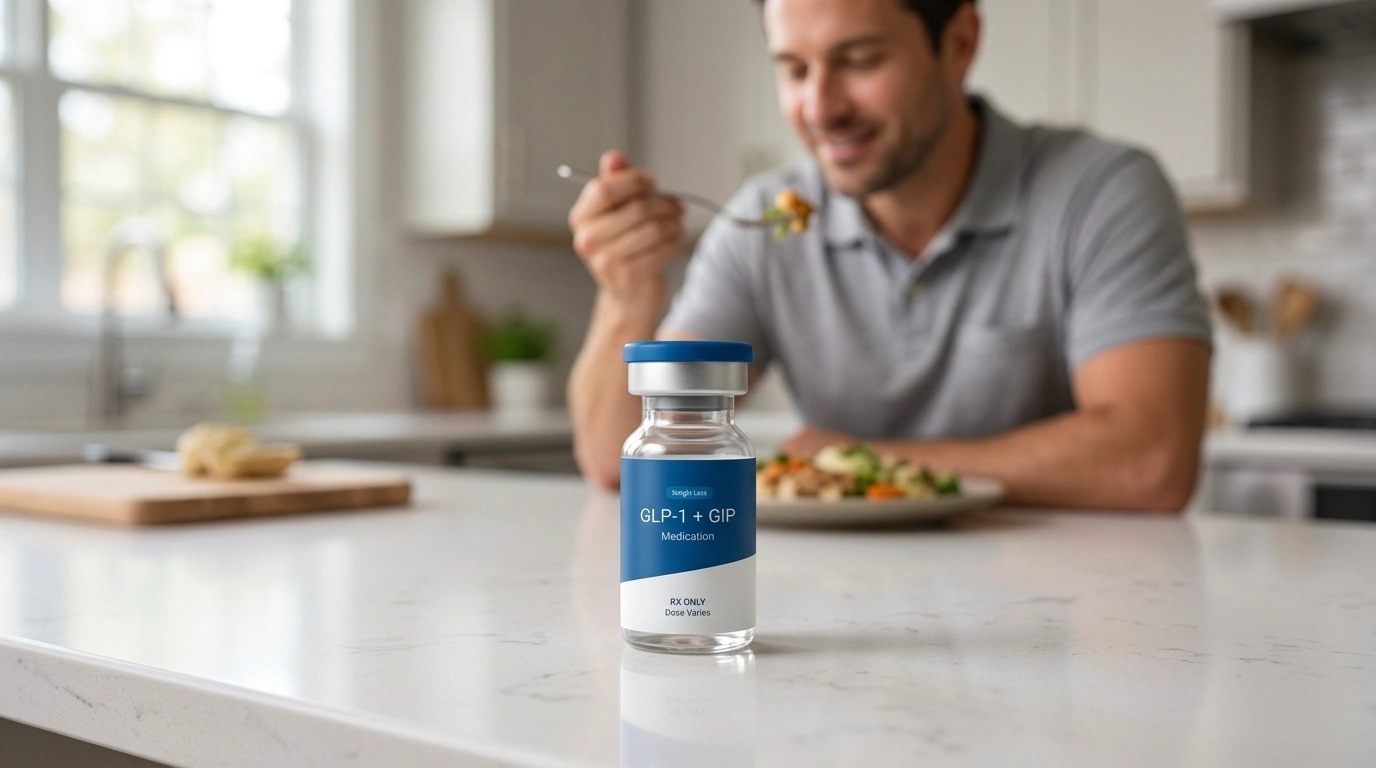
Finding the right rhythm with a new medication often involves a learning curve, and for many, the logistics of storage are the first hurdle. You might have arrived home from the grocery store only to realize your medication vial is still sitting on the kitchen counter, or perhaps you are planning a long-awaited vacation and wondering if your dose will survive the flight. At TrimRx, we understand that these practical concerns can feel overwhelming when you are focused on your health goals. This post covers the specific temperature requirements for compounded tirzepatide, how heat affects its potency, and how to tell if your medication is still safe to use. Understanding these storage protocols ensures that your treatment remains effective and your journey toward better metabolic health stays on track.
If you are considering a personalized prescription program, you can complete a free eligibility assessment to explore whether treatment may be appropriate for you.
The Science of Tirzepatide Stability
Tirzepatide is a sophisticated medication known as a dual glucose-dependent insulinotropic polypeptide (GIP) and glucagon-like peptide-1 (GLP-1) receptor agonist. In simpler terms, it is a peptide—a short chain of amino acids that tells your body how to manage blood sugar and appetite. Because peptides are essentially small proteins, they are chemically fragile. They are held together by delicate bonds that can be broken by environmental factors like light, movement, and, most significantly, heat.
When we talk about “stability,” we are referring to the medication’s ability to maintain its chemical integrity and therapeutic strength over time. For a peptide to work correctly, its specific 3D shape must remain intact so it can “fit” into the receptors in your body like a key into a lock. Excessive heat causes these protein structures to unfold or “denature.” Once a peptide denatures, it can no longer bind to its target receptors, rendering the medication less effective or entirely inactive.
For a broader explanation of temperature sensitivity and handling, review this tirzepatide storage and handling guide.
Standard Storage Guidelines for Tirzepatide
Most healthcare providers and pharmacies recommend that tirzepatide be stored in the refrigerator. The ideal temperature range is generally between 36°F and 46°F (2°C to 8°C). Keeping the medication within this cool window slows down the natural degradation process, allowing the medication to remain potent until its listed expiration date or beyond-use date.
However, life happens, and medications aren’t always tucked away in the fridge. For branded versions of the drug, such as Mounjaro® or Zepbound®, the manufacturer typically states that the pens can be kept at room temperature—up to 86°F (30°C)—for up to 21 days. It is important to note that once the medication reaches room temperature, it should not be put back into the refrigerator to “reset” the clock; the 21-day countdown begins the moment it warms up.
For additional context about expiration dates and beyond-use dates, read when tirzepatide expires and how storage affects shelf life.
Quick Answer: Most compounded tirzepatide can safely remain at room temperature (up to 86°F) for up to 21 days, though you must always check the specific label from your compounding pharmacy, as formulations vary.
How Compounded Tirzepatide Differs
Compounded tirzepatide is prepared by specialized, FDA-registered and inspected compounding pharmacies. Because these medications are tailored to specific patient needs and may include different preservatives or concentrations than branded versions, the storage rules can be slightly more specific.
Compounding pharmacies often include a “Beyond Use Date” (BUD) on the label. This date is different from a traditional expiration date. The BUD tells you the last day the medication should be used after it has been prepared or opened. While many compounded tirzepatide formulations follow the same 21-day room temperature rule as branded versions, some pharmacies may have stricter guidelines based on their specific stability testing.
For a closer look at formulation-specific storage guidance, review this article about compounded tirzepatide storage and shelf life.
Key Takeaway: Always prioritize the instructions printed on your specific medication vial or the paperwork provided by the pharmacy, as these guidelines are tailored to that specific formulation.
Why Room Temperature Limits Exist
You might wonder why a few degrees of difference matters so much. There are two primary reasons why staying within the recommended temperature window is vital for your safety and your results.
1. Maintaining Potency
As mentioned, tirzepatide is a peptide. When exposed to temperatures above 86°F, the molecular structure begins to break down more rapidly. If you use medication that has been sitting in a hot car or a humid bathroom for too long, you might find that your appetite suppression isn’t as strong as usual, or your blood sugar levels aren’t as well-managed. You are essentially taking a “diluted” or weakened version of the dose your provider intended.
2. Preventing Bacterial Growth
Compounded tirzepatide is often provided in multi-dose vials. Every time a needle enters the vial, there is a microscopic risk of introducing environmental contaminants. While these vials contain preservatives (like benzyl alcohol) to keep the solution sterile, these preservatives work best at refrigerated temperatures. At room temperature or higher, the environment becomes more hospitable for bacteria to multiply. Staying within the 21-day window minimizes the risk of a secondary infection at the injection site.
If you need help determining whether a prescription program is a fit, you can take the free assessment quiz.
Identifying Spoiled Tirzepatide
Regardless of how long the medication has been sitting out, you should perform a visual inspection before every dose. This is a critical habit for anyone using injectable medications.
What to look for in a healthy vial:
- Clarity: The liquid should be completely clear, much like water.
- Color: The solution should be colorless.
- Consistency: There should be no visible particles, “floaties,” or cloudiness.
Signs that the medication should be discarded:
- Cloudiness: If the liquid looks milky or hazy, it may have been contaminated or the proteins may have denatured.
- Color changes: Any tint of yellow, brown, or pink is a sign of chemical degradation.
- Particulates: If you see small flakes or “crystals” in the liquid, the medication is no longer safe to use.
- Foul Odor: While you shouldn’t go out of your way to sniff the vial, if you notice a distinct, unusual smell upon opening, it is a red flag.
For more information about temperature-related appearance changes, review this guide to what happens when compounded tirzepatide is not refrigerated.
Note: If your medication has frozen, it must be discarded. Freezing is often more damaging to peptides than mild heat, as the formation of ice crystals can physically shred the delicate protein structures.
Managing Travel and Commutes
One of the most common reasons patients worry about room temperature is travel. Whether it’s a cross-country flight or a long drive, you can maintain the integrity of your treatment with a little preparation.
Tips for Traveling with Tirzepatide
- Use an Insulated Travel Case: There are many small, discrete cooling cases designed specifically for insulin or GLP-1 medications. These often include gel packs that keep the medication at fridge-like temperatures for 8 to 12 hours.
- Avoid the “Glove Box” and Trunk: Never leave your medication in a car. Even on a mild 75°F day, the interior of a car can reach well over 100°F in minutes. Always keep your medication in the climate-controlled cabin with you.
- Carry-on Only: If you are flying, always keep your medication in your carry-on bag. The cargo hold of an airplane is not temperature-controlled and can fluctuate between freezing and extreme heat, both of which will ruin the medication.
- Hotel Fridges: Upon arrival, place your vial in the hotel room refrigerator. However, be cautious of “mini-fridges” that may be too cold or prone to freezing items in the back. Place the vial in the door or near the front.
Before a flight, review these practical tips for keeping tirzepatide cold during air travel.
The Role of the Compounding Pharmacy
When you receive a personalized program through a platform like ours, the medication is prepared by pharmacies that adhere to strict quality standards. These pharmacies perform stability studies to determine exactly how long the tirzepatide remains potent under various conditions.
We work to ensure that your experience is seamless, but we also empower you to be a partner in your own care. If you ever receive a shipment where the cold packs have completely melted and the vial feels warm to the touch, you should contact the pharmacy or your support team immediately. While the medication is often shipped with “over-protection” in mind, your safety and the efficacy of the treatment are the highest priorities.
What to Do If You Exceed the Time Limit
If you realize your compounded tirzepatide has been at room temperature for longer than 21 days—or if it was exposed to extreme heat (like being left in a sunny window)—the safest course of action is to consult a professional.
- Do not inject the dose yet.
- Contact your healthcare provider or the dispensing pharmacy. They can provide guidance based on the specific batch and formulation of your medication.
- Check for visual cues. Even if the time limit hasn’t passed, if the medication looks “off,” do not use it.
- Consider the “Why.” If you find it difficult to remember to put your medication away, try setting a “fridge alarm” on your phone for 10 minutes after your scheduled injection time.
Support Beyond the Vial
Successful weight management involves more than just the medication itself. It requires a holistic approach that includes nutrition, lifestyle adjustments, and consistent support. At TrimRx, we aim to provide a comprehensive experience that goes beyond simply connecting you with a provider.
Our platform is designed to be a supportive companion on your journey. From the initial assessment to the delivery of your medication from inspected compounding pharmacies, every step is built with your success in mind. If you are struggling with side effects or have questions about how to optimize your results, our team of specialists is accessible to help you navigate the process.
Optimizing Your Results
While tirzepatide is a powerful tool for metabolic health, it works best when supported by a healthy internal environment. This is why many individuals choose to supplement their journey with targeted nutrients. For instance, our GLP-1 Daily Support supplement is designed to help bridge the nutritional gaps that can occur when your appetite significantly decreases. Additionally, the Weight Loss Boost supplement can provide the extra metabolic support some individuals need to maintain energy levels while on a reduced-calorie plan.
For broader guidance on choosing supplements during treatment, read this overview of supplements to take and avoid on GLP-1 medications.
Step-by-Step: Starting Your Journey
Step 1: Complete the free assessment. / Provide your health history and goals through our online quiz to help a licensed provider determine if a GLP-1 or GIP/GLP-1 medication is right for you. Step 2: Connect with a provider. / A licensed healthcare professional will review your profile and, if appropriate, write a prescription for a personalized treatment program. Step 3: Receive your medication. / Your medication is prepared by an FDA-registered compounding pharmacy and shipped directly to your door in temperature-controlled packaging. Step 4: Ongoing support. / Access 24/7 support from our team to answer questions about storage, side effects, or dosage.
Common Myths About Tirzepatide Storage
Myth: If I put spoiled tirzepatide back in the fridge, it will become effective again. Fact: Once the protein structures in tirzepatide have denatured due to heat, they cannot be “repaired” by cooling. The damage is permanent at a molecular level.
Myth: Compounded medications are less stable than branded ones. Fact: When prepared by reputable, inspected compounding pharmacies, compounded tirzepatide is formulated to be highly stable. The storage requirements are often nearly identical to branded versions like Mounjaro®.
Conclusion
Proper storage of your compounded tirzepatide is a small but vital part of your health journey. By keeping your medication refrigerated whenever possible and limiting room temperature exposure to 21 days or less, you ensure that every dose is as potent as the first. Always remember to check your pharmacy label for specific instructions and perform a visual check before each injection.
At TrimRx, we believe that sustainable weight loss is achieved through a combination of science, empathy, and personalized care. We are here to simplify the complexities of modern weight loss treatments so you can focus on what matters most: feeling your best. If you are ready to explore a personalized, medically supervised path to health, taking our free assessment is the perfect next step.
FAQ
Can I use my tirzepatide if it was left out overnight?
Yes, in most cases, if the medication was left at room temperature (under 86°F) for a single night, it is still safe to use. You should place it back in the refrigerator immediately and ensure you use it within the next 21 days. Always perform a visual inspection for cloudiness or particles before your next dose.
For additional context about room-temperature exposure, read can compounded tirzepatide be left out of the fridge.
What happens if my tirzepatide gets too hot?
If the medication is exposed to temperatures above 86°F, such as in a hot car or near a heater, the peptides may denature and lose their effectiveness. Using heat-damaged medication usually isn’t dangerous, but it likely won’t provide the weight loss or blood sugar benefits you expect. If you suspect extreme heat exposure, it is best to consult your provider or pharmacy.
Does compounded tirzepatide expire faster than branded versions?
Compounded medications have a “Beyond Use Date” (BUD) set by the pharmacy, which may be shorter than the expiration date on a branded pen. This is because compounding pharmacies must account for the stability of their specific formulation and the fact that the vial is accessed multiple times. Always follow the BUD printed on your vial’s label rather than general information you see online.
Is it okay to travel with compounded tirzepatide in a checked bag?
You should never put your medication in a checked bag when flying. The temperature in an airplane’s cargo hold is not controlled and can reach freezing levels, which will ruin the medication. Always keep your tirzepatide in your carry-on luggage, preferably in an insulated travel case to maintain a consistent temperature.
Disclaimer: This content is for informational purposes only and does not constitute medical advice. It is not intended to diagnose, treat, cure, or prevent any disease or condition. Individual results may vary. Always consult a qualified healthcare professional before starting any weight loss program or medication.

Transforming Lives, One Step at a Time
Keep reading

Should You Taper Off Tirzepatide or Just Stop? What the Evidence Says
There is very little direct evidence either way, and anyone who tells you otherwise is filling a gap with confidence. The withdrawal trials that…
Stalled on Tirzepatide Even After a Dose Increase: Your Options
The first thing to check is how long it has been since the increase, because most people ask this question too early. A dose…

Why Did Tirzepatide Stop Working After Three Months of Fast Loss?
Five things explain almost all of it, and the first is the least satisfying: the fast stretch was never going to last. Weight loss…


