When Does Ozempic Start Working for Weight Loss? A Real Timeline
It’s the question we hear constantly, and honestly, it’s the most important one on anyone’s mind when they start this journey: how long does Ozempic take to work for weight loss? You've seen the stories, you’ve heard the buzz, and now you’re ready for real answers. You want a timeline. A roadmap. You want to know when you'll start to see and feel the changes you've been hoping for. It's a completely valid question, and it deserves a straight, unflinching answer.
Here at TrimrX, we guide patients through this exact process every single day using powerful GLP-1 medications like Semaglutide (the active ingredient in Ozempic and Wegovy). Our team’s experience isn’t based on reading studies; it’s built on real-world application and observation. So let's cut through the noise. The answer isn't a simple number of days or weeks. It’s a process, a biological adjustment that unfolds over time. It’s a marathon, not a lightning-fast sprint, and understanding that from the outset is the absolute key to success. We're here to walk you through what that marathon actually looks like, from the very first dose to the moment you hit your stride.
The Straight Answer: What to Expect and When
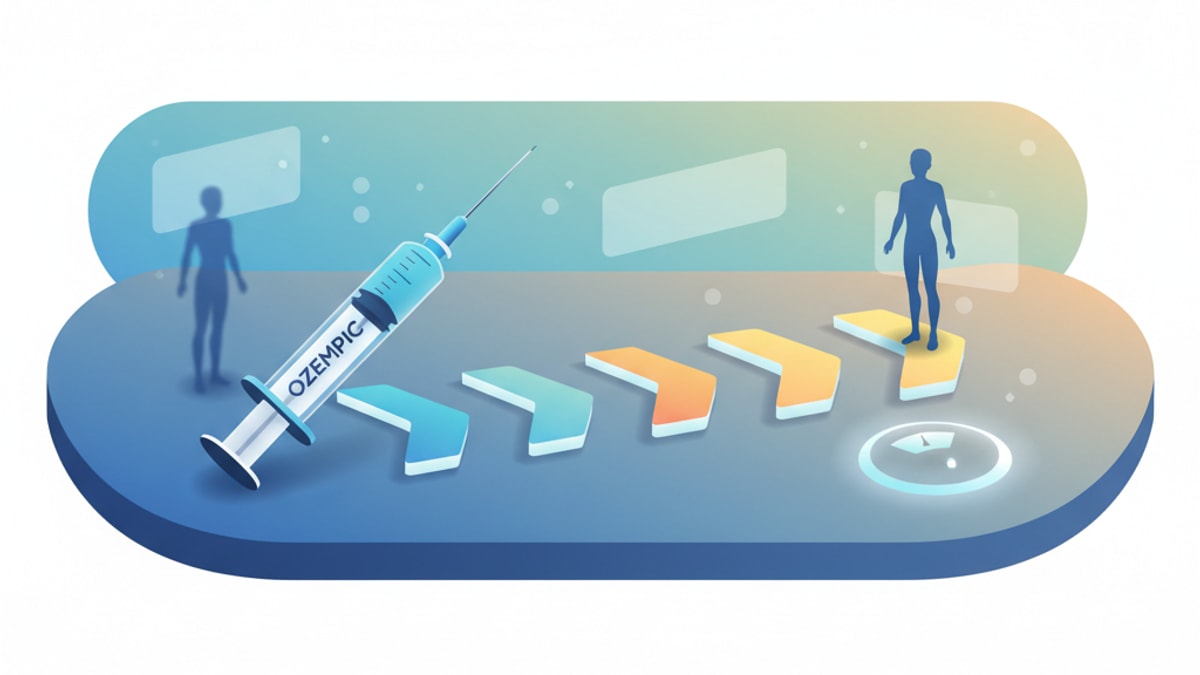
Let’s get right to it. You won’t take your first injection on a Monday and wake up ten pounds lighter on Friday. That’s not how this medication works, and frankly, that wouldn't be healthy. The process is deliberate and gradual, designed to work with your body’s systems, not against them. Our team has found that breaking the timeline into phases helps manage expectations and keeps patients motivated.
Here's the typical progression we observe:
-
The First Month (Weeks 1-4): The Adjustment Period. This initial phase is all about acclimatization. You'll start on a low 'titration' dose (typically 0.25 mg of Semaglutide). The most common feedback we get here isn't about weight loss; it's about a subtle shift in appetite. The 'food noise'—that constant chatter in your brain about your next meal or snack—begins to quiet down. You might find yourself feeling full sooner or simply not thinking about food as often. Some people lose a few pounds this month, but many don't, and that is completely normal. We can't stress this enough: do not get discouraged if the scale doesn't move much at first. It’s not supposed to.
-
Months 2-3: Building Momentum. As your dose is carefully increased (usually to 0.5 mg and then 1.0 mg), the medication's effects become more pronounced. This is typically where consistent, noticeable weight loss begins. The appetite suppression is stronger, and making healthier food choices feels less like a battle of willpower and more like a natural decision. You’re working with your body’s newfound satiety signals. Weight loss of one to two pounds per week is a common and sustainable goal during this period.
-
Months 4-6 and Beyond: Hitting Your Stride. By this point, you're likely approaching or have reached the full therapeutic dose (for weight loss, this is often 1.7 mg or 2.4 mg of Semaglutide). This is where the magic really happens. The medication is at its peak effectiveness, and when combined with lifestyle modifications, it drives the most significant results. The cumulative effects of sustained caloric deficit lead to the dramatic transformations you hear about. This is the long game. It's the phase where all the patience and consistency from the early months truly pay off.
It’s a journey. And it’s different for everyone.
Why Isn't It Instant? Understanding the GLP-1 Mechanism
To really grasp the timeline, you need to understand why it works this way. Semaglutide is part of a class of drugs called GLP-1 (glucagon-like peptide-1) receptor agonists. That sounds complicated, but the concept is actually quite elegant.
Your body naturally produces a hormone called GLP-1 after you eat. It’s a key player in your digestive and metabolic system. It tells your pancreas to release insulin, blocks your liver from releasing excess sugar, and—most importantly for weight loss—it sends a signal to your brain that you're full. It also slows down 'gastric emptying,' which is the rate at which food leaves your stomach. This combination makes you feel fuller, faster, and for much longer.
The problem is that your body's natural GLP-1 lasts only a few minutes. It does its job and then it’s gone. Semaglutide is a synthetic version of this hormone that’s been engineered to last much, much longer—an entire week, in fact.
So, when you take your weekly injection, you're not flipping a 'weight loss switch.' You're introducing a powerful signaling agent that needs time to build up in your system and recalibrate your body's metabolic and hunger-regulating pathways. It’s gently turning down the volume on your hunger cues and turning up the volume on your satiety signals. This is a profound biological shift, and it simply doesn’t happen overnight. Think of it like turning a massive cargo ship. The captain can turn the wheel, but the ship itself takes time and distance to respond and change course. Your body is that ship.
The Critical Role of Titration: Starting Low and Going Slow
We mentioned 'titration' earlier, and it's a critical, non-negotiable element of the process. You can't just jump to the highest dose of Semaglutide. Why? Because your gastrointestinal system needs time to adapt. Starting at a high dose is a recipe for significant side effects like nausea, vomiting, and diarrhea, which would make anyone want to quit.
This is where a medically supervised program becomes indispensable. Our team at TrimrX manages this dose-escalation schedule with meticulous care, monitoring patient feedback and adjusting as needed. The standard protocol, which we follow, is designed for safety and tolerability:
- Start Low: Begin with the lowest dose (0.25 mg) for at least four weeks.
- Increase Gradually: Step up the dose incrementally every four weeks (e.g., to 0.5 mg, then 1.0 mg, and so on) until the target maintenance dose is reached.
This 'low and slow' approach is the reason the first month or two might feel slow in terms of weight loss. The primary goal during this period isn't shedding pounds; it's preparing your body for the therapeutic dose where significant weight loss occurs. Trying to rush this process is counterproductive. Patience during titration is what sets you up for long-term, sustainable success without the unpleasant side effects that can derail your journey.
Factors That Can Influence Your Ozempic Weight Loss Timeline
While the general timeline holds true for most, individual results can and do vary. It's a nuanced process. A number of factors create this variability, and understanding them can help you optimize your own results.
- Your Unique Biology: Let's be honest, this is crucial. Your starting weight, metabolic rate, and genetic predispositions all play a formidable role. Someone with a higher starting body weight may see larger numbers on the scale drop faster initially.
- Lifestyle Integration (Diet & Exercise): This is the big one. Semaglutide is an incredibly powerful tool, but it's not a magic pill that works in a vacuum. It makes it easier to adhere to a lower-calorie diet because it silences cravings and reduces hunger. Our most successful patients are those who leverage this advantage to build healthier habits. They focus on nutrient-dense foods, protein intake, and hydration. Similarly, incorporating regular physical activity—even just consistent walking—doesn't just burn calories; it improves insulin sensitivity and muscle mass, further accelerating results.
- Consistency is King: The medication is designed to be taken on the same day each week to maintain a stable level in your bloodstream. Missing doses or taking them inconsistently can disrupt your progress and lead to fluctuating levels of appetite control. Adherence is paramount.
- Pre-existing Conditions: Conditions like Polycystic Ovary Syndrome (PCOS), insulin resistance, or thyroid issues can affect weight loss. The good news is that GLP-1s often help improve the metabolic dysfunction associated with these conditions, but the rate of weight loss might differ.
- Sleep and Stress Management: Never underestimate the power of hormones like cortisol (the stress hormone). Chronic stress and poor sleep can wreak havoc on your metabolism and sabotage weight loss efforts, even when you're doing everything else right. It’s all connected.
Clinical Trial Data vs. Real-World Results
The effectiveness of Semaglutide for weight loss isn't just anecdotal; it's backed by extensive, high-quality clinical research. The landmark STEP (Semaglutide Treatment Effect in People with Obesity) trials provided the data that led to its FDA approval for weight management.
In the STEP 1 trial, participants taking Semaglutide 2.4 mg for 68 weeks (about 15 months), combined with lifestyle intervention, achieved an average weight loss of 14.9% of their initial body weight, compared to just 2.4% in the placebo group. A third of the participants lost 20% or more of their body weight. Those are truly game-changing numbers.
But what does this mean for you? Clinical trials are controlled environments. In our experience at TrimrX, real-world results can be just as impressive, but the journey is more personal. The data provides a fantastic benchmark, but your individual timeline is what matters. The table below breaks down what a typical journey might look like, combining clinical expectations with our professional observations.
| Timeline | Typical Dose (Semaglutide) | Common Experiences & Expected Results |
|---|---|---|
| Weeks 1-4 | 0.25 mg | Initial appetite suppression, reduced 'food noise.' Minimal to no weight loss is common and expected. Focus is on adapting to the medication. |
| Weeks 5-8 | 0.5 mg | More consistent feeling of fullness. Some initial weight loss may begin (e.g., 1-2 lbs per week). Side effects are managed. |
| Months 3-4 | 1.0 mg | Weight loss becomes more noticeable and steady. Food choices become easier. This is often where momentum builds. |
| Months 5-6+ | 1.7 mg – 2.4 mg | Reaching the therapeutic maintenance dose. This is where the most significant weight loss occurs, as seen in clinical trials. |
| Long-Term | Maintenance Dose | Focus shifts to sustaining weight loss, solidifying new lifestyle habits, and long-term health management. |
Beyond the Scale: Other Health Benefits You'll Notice
While the number on the scale is often the primary motivator, it’s only one part of the story. The health improvements we see in our patients go so much deeper. In fact, some of the most profound changes happen inside your body long before the weight loss is dramatic.
Ozempic was originally developed as a medication for type 2 diabetes because of its powerful effect on blood sugar regulation. So, one of the first benefits is often improved glycemic control. But there's more. Much more.
We consistently see patients experience:
- Improved Cardiovascular Markers: Reductions in blood pressure and improvements in cholesterol levels (lower LDL, higher HDL) are common.
- Reduced Inflammation: Chronic, low-grade inflammation is a driver of many diseases, and weight loss significantly reduces these inflammatory markers.
- Increased Energy and Mobility: Carrying less weight makes movement easier and less painful on the joints, creating a positive feedback loop where more activity leads to better results.
- A New Relationship with Food: This might be the most life-altering benefit. For people who have struggled for years with relentless cravings and a feeling of being out of control around food, the mental freedom that GLP-1s provide is nothing short of revolutionary. It's not about willpower anymore; it's about being able to make calm, rational food choices.
What If My Weight Loss Stalls on Ozempic?
It's going to happen. At some point in your journey, you will likely hit a weight loss plateau. It's a normal, predictable part of any significant weight loss effort, with or without medication. Your body is an incredibly adaptive machine, and as you lose weight, your metabolism adjusts.
When this happens, don't panic. The first step is to connect with your medical provider. This is another area where a program like TrimrX is invaluable. We can help you troubleshoot. Often, a stall can be broken by:
- Re-evaluating Your Intake: Are portion sizes creeping back up? Are you unconsciously consuming more calories? A quick food diary review can be incredibly revealing.
- Changing Your Exercise Routine: If you've been walking, maybe it's time to add some resistance training to build muscle, which boosts metabolism. Or perhaps incorporating some high-intensity intervals is the key.
- Assessing Your Dose: It might be time for your clinician to consider adjusting your medication dose if you haven't yet reached the full therapeutic level.
Plateaus are not a sign of failure. They're a sign that your body is changing, and your strategy may need a small adjustment to keep the momentum going.
The TrimrX Approach: A Partner in Your Journey
Understanding how long Ozempic takes to work for weight loss is about more than just knowing a timeline; it's about having the right expectations and the right support system. Simply getting a prescription is not enough. Success requires a comprehensive approach that combines powerful medication with expert medical guidance, lifestyle coaching, and a plan tailored to you.
This is the foundation of our program at TrimrX. We don't just provide access to groundbreaking medications like Semaglutide and Tirzepatide. We provide a structured, supportive framework to ensure you use them safely and effectively to achieve lasting results. Our clinical team manages your titration, monitors your progress, and helps you navigate every phase of the journey, from the initial adjustment period to long-term maintenance.
If you're tired of the guesswork and ready to see how a structured, medically-guided approach can make all the difference, it might be time to take the next step. Not sure if you're a candidate? Our quick online assessment can help you find out. Take Quiz to see if you qualify. For those who are ready to begin a truly transformative journey, you can Start Your Treatment Now.
Ultimately, the timeline for weight loss with Semaglutide is a story of patience and biology. The early weeks are for adaptation, the middle months are for building momentum, and the later stages are for achieving profound, life-changing results. It’s a journey that requires commitment, but with the right tools and the right team behind you, it’s a journey that can redefine your health and well-being for years to come.
Frequently Asked Questions
Will I lose weight in the first week on Ozempic?
▼
It’s unlikely to see significant weight loss in the first week. The initial low dose is for your body to acclimate. Any early loss is typically minor; the real momentum builds after several weeks as the dose increases.
What is the average monthly weight loss on Ozempic?
▼
Once you’re on a therapeutic dose, a safe and sustainable average is around 4 to 8 pounds per month (1-2 pounds per week). However, this varies greatly based on individual factors like diet, activity level, and starting weight.
Can I speed up weight loss results with Ozempic?
▼
You cannot safely speed up the medication’s titration schedule. However, you can optimize your results by pairing the medication with a nutrient-dense, lower-calorie diet, consistent physical activity, and adequate hydration. These lifestyle factors are critical accelerators.
Do I have to diet and exercise while on Ozempic for weight loss?
▼
Yes. Ozempic is a powerful tool, not a replacement for healthy habits. It works by making it much easier to stick to a healthy diet and active lifestyle. The best, most sustainable results always come from combining the medication with improved nutrition and exercise.
What happens if I miss a dose of Ozempic?
▼
If you miss a dose, take it as soon as you remember, as long as your next scheduled dose is more than 2 days (48 hours) away. If it’s less than 2 days away, skip the missed dose and resume your regular schedule. Never take two doses at once.
When will I feel the appetite suppression from Ozempic?
▼
Many people begin to notice subtle appetite suppression within the first 1-2 weeks, even on the starting dose. This effect becomes much more consistent and pronounced as your dose is gradually increased over the first couple of months.
Is the weight loss from Ozempic permanent?
▼
GLP-1 medications are designed for long-term management of weight, which is a chronic condition. If you stop the medication without having solidified new lifestyle habits, it’s common to regain the weight. The goal is to use the medication as a tool to build sustainable habits for life.
Why is my weight loss on Ozempic so slow at the beginning?
▼
Weight loss is intentionally slow at the start because you are on a low ‘titration’ dose. This period is crucial for minimizing side effects and allowing your body to adapt. Patience in the first 1-2 months is key to setting yourself up for success later.
Does everyone lose weight on Ozempic?
▼
The vast majority of people do lose a significant amount of weight, as shown in clinical trials. However, there is a small percentage of people who may not respond as strongly to the medication. Individual results can and do vary.
At what dose does Ozempic cause the most weight loss?
▼
The most significant weight loss typically occurs at the higher, therapeutic maintenance doses. For weight management, this is often 1.7 mg or 2.4 mg of Semaglutide. The initial lower doses are for titration and generally produce less weight loss.
Can I take more Ozempic to lose weight faster?
▼
No, you should never take more than your prescribed dose. Increasing the dose too quickly will not speed up sustainable weight loss and dramatically increases the risk of severe gastrointestinal side effects. Always follow the guidance of your medical provider.
What is ‘food noise’ and how does Ozempic help?
▼
‘Food noise’ refers to the constant, intrusive thoughts about food, eating, and cravings. Ozempic and other GLP-1s work on the brain’s satiety centers to significantly quiet this noise, allowing for more conscious and less compulsive eating behaviors.

Transforming Lives, One Step at a Time
Keep reading

Is Bupropion an SSRI or a Different Antidepressant?
A lot of people ask the same question at some point: is bupropion an SSRI? It usually comes up after hearing about medications like…

Do You Need a Prescription for GLP-1s? The 2026 Answer
Wondering ‘do you need a prescription for glp 1’ in 2026? Yes. We explain why a doctor’s oversight is critical for safe, effective results.

How to Get GLP-1 Covered By Insurance: Our 2026 Playbook
Struggling with how to get glp-1 covered by insurance? Our 2026 guide breaks down prior authorizations, appeals, and documentation.


