How Long Has Zepbound Been Around and Its Path to Approval
Introduction
Navigating the world of weight loss medications can feel like trying to keep up with a fast-moving news cycle. One moment, a specific treatment is the focus of every conversation, and the next, a newer option emerges with even more clinical data behind it. If you have been researching modern options for chronic weight management, you have likely encountered the name Zepbound®. Because it seems to have appeared suddenly in the media, many people find themselves asking how long Zepbound has actually been around and whether it is a brand-new discovery or a tested medical advancement. If you are considering whether a prescription program may be right for you, you can take the free assessment quiz to see if you qualify.
At TrimRx, we believe that understanding the history and timeline of your medication is a vital part of feeling confident in your health journey. This article will detail the official FDA approval timeline of Zepbound, the scientific history of its active ingredient, tirzepatide, and how the medication transitioned from a diabetes treatment to a primary tool for weight management. We will explore the clinical trials that paved the way for its release and what the future looks like for those starting their journey today.
The Official Timeline of Zepbound
Zepbound was officially approved by the U.S. Food and Drug Administration (FDA) on November 8, 2023. This approval specifically cleared the medication for chronic weight management in adults who have obesity or who are overweight and have at least one weight-related medical condition, such as high blood pressure or type 2 diabetes. While the brand name Zepbound is relatively new to the market, the underlying science and the active molecule have a history that extends back several years.
To understand how long this medication has been “around,” it is helpful to look at its sister brand. The active ingredient in Zepbound is tirzepatide. This same ingredient was previously approved under the brand name Mounjaro® on May 13, 2022. While Mounjaro is indicated specifically for the treatment of type 2 diabetes, doctors began recognizing its significant impact on weight reduction during clinical trials. This led the manufacturer, Eli Lilly and Company, to seek a separate FDA approval specifically for weight loss under the name Zepbound. For readers interested in the treatment pathway, How Can I Get Tirzepatide for Weight Loss? explains the access process in more detail.
The medication became available in U.S. pharmacies in early December 2023. This means that as a branded weight loss treatment, it has been available to the public for roughly a year. However, the molecule itself has been under intense scientific scrutiny and clinical testing since well before 2022.
Key Takeaway: While the brand name Zepbound was approved in November 2023, its active ingredient, tirzepatide, has been FDA-approved for other uses since May 2022 and has been studied in clinical trials for much longer.
Understanding the Science of Tirzepatide
To grasp why Zepbound took the time it did to reach the market, we must look at what makes it unique. Zepbound is a dual-action medication. It belongs to a class of drugs known as receptor agonists, which are substances that mimic naturally occurring hormones in the body to produce a specific response.
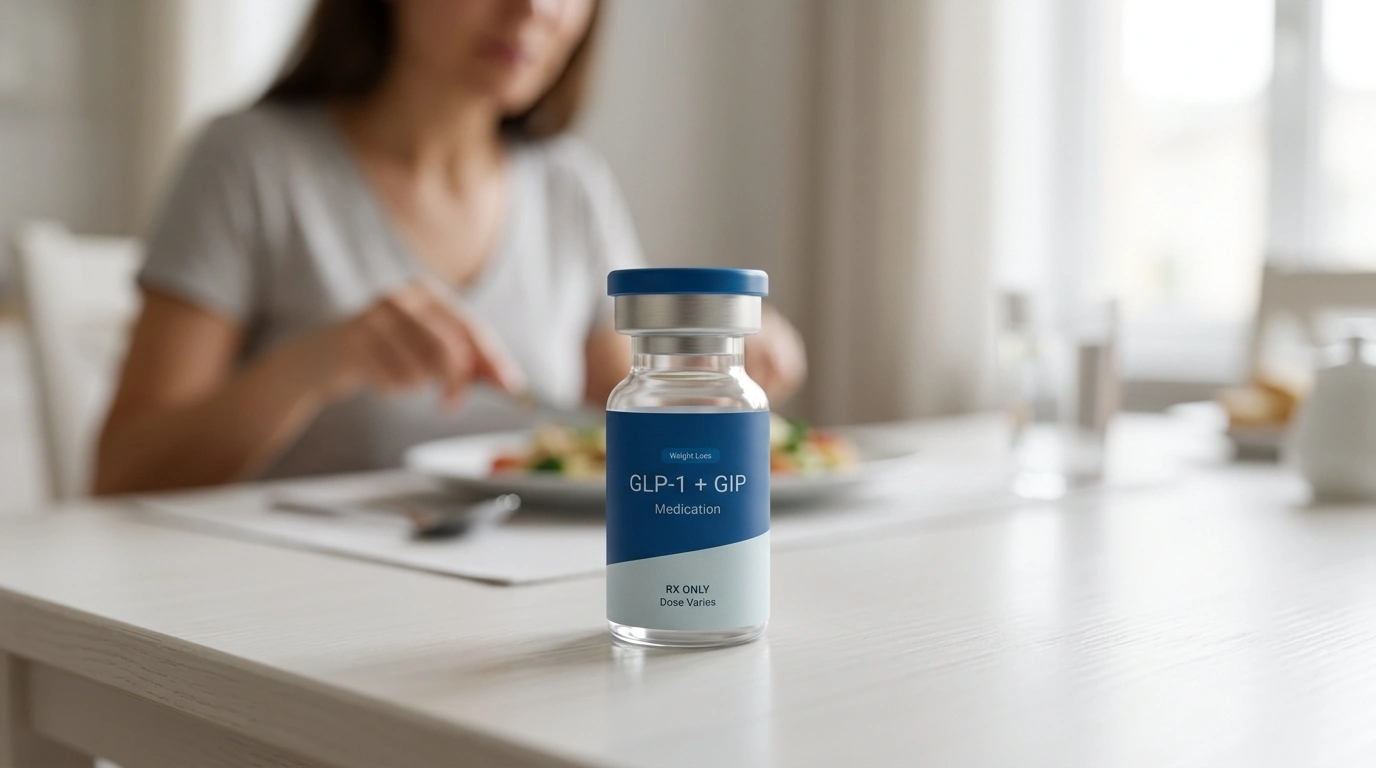
Specifically, Zepbound is a glucose-dependent insulinotropic polypeptide (GIP) receptor agonist and a glucagon-like peptide-1 (GLP-1) receptor agonist. You may have heard of GLP-1 medications like Wegovy® or Ozempic®, which mimic one hormone. Zepbound is the first medication in its class to mimic two separate hormones. For a broader overview of the hormone pathway, What is GLP-1 and How Does It Work? offers a helpful foundation.
Glucagon-like peptide-1 (GLP-1) is a hormone produced in the gut after we eat. It signals the brain to feel full and slows down the rate at which the stomach empties. This helps individuals feel satisfied with smaller portions. Glucose-dependent insulinotropic polypeptide (GIP) is another hormone that complements the effects of GLP-1. While researchers are still uncovering the full extent of GIP’s role, it is believed to enhance the body’s ability to break down fat and further suppress appetite. If you want to compare how GLP-1 education is presented across TrimRx, What Is GLP-1 Therapy and How Can It Transform Your Weight Loss Journey? is a useful companion read.
By targeting both receptors, Zepbound offers a multi-faceted approach to metabolic health. This dual-action mechanism is why tirzepatide is often referred to in medical literature as a “twincretin.” The development of a molecule that could successfully activate both pathways without significant safety concerns took years of laboratory research before it ever reached human trials.
The Journey Through Clinical Trials
A medication does not receive FDA approval overnight. The “life” of Zepbound before its 2023 approval was spent in the SURMOUNT clinical trial program. These trials were designed to test the safety and efficacy of tirzepatide specifically for weight loss in various populations.
The SURMOUNT-1 trial was one of the most significant. It was a 72-week study that followed over 2,500 adults with obesity or who were overweight with at least one weight-related condition, but who did not have diabetes. The results, published in mid-2022, showed that participants taking the highest dose of tirzepatide lost a significant percentage of their body weight compared to those taking a placebo. If you are exploring the broader tirzepatide access path, How Can I Get Tirzepatide for Weight Loss? is a natural next step.
Following SURMOUNT-1, the SURMOUNT-2 trial focused on individuals who had both obesity and type 2 diabetes. Because diabetes can often make weight loss more difficult, this trial was crucial for proving that the medication worked across different metabolic profiles. These trials provided the years of data necessary for the FDA to determine that the benefits of the medication outweighed the potential risks for chronic weight management.
Bottom line: The “age” of a medication isn’t just its approval date; it includes the years of rigorous Phase 1, 2, and 3 clinical trials that prove it is safe and effective for the public.
Comparing Timelines: Zepbound vs. Other GLP-1s
When people ask how long Zepbound has been around, they are often comparing it to other famous weight loss medications. For context, semaglutide—the active ingredient in Wegovy and Ozempic—has a slightly longer history in the public eye. If you are comparing treatment options, How Can I Get Semaglutide Injections for Weight Loss? covers that access process.
Wegovy was approved for chronic weight management in June 2021. Its sister medication, Ozempic, was approved for type 2 diabetes in 2017. This means that semaglutide has several years of “real-world” data beyond its clinical trials. Because Zepbound arrived on the weight loss scene in late 2023, it is considered the newer generation of treatment.
Being “newer” does not mean a medication is less tested. It often means the medication was designed using the lessons learned from the previous generation of drugs. Zepbound’s dual-hormone approach was an evolution of the single-hormone approach used by earlier medications.
Market Entrance and Initial Shortages
Even though Zepbound has been around since late 2023, many people found it difficult to access in its first several months. Almost immediately upon its release, the demand for tirzepatide skyrocketed. This led to Zepbound being added to the FDA’s drug shortage list shortly after its debut.
When a branded medication like Zepbound or Mounjaro is on the official shortage list, it changes the landscape for how patients can access treatment. This is where the role of compounding pharmacies becomes relevant.
During an official shortage, the FDA allows licensed compounding pharmacies to prepare “compounded” versions of the medication. Compounded tirzepatide is a customized medication prepared by a pharmacist. While compounded versions are not FDA-approved themselves, they are often produced by FDA-registered and inspected facilities to help meet the needs of patients who cannot find the branded version at their local pharmacy.
TrimRx helps patients navigate these complexities by connecting them with licensed healthcare providers. These providers can evaluate whether a patient is a candidate for tirzepatide and, if appropriate, write a prescription that can be filled through these specialized compounding pharmacies. If you are considering whether prescription treatment is the right next step, take the free assessment quiz to begin the process.
The Long-Term Safety Context
A common concern when a medication has only been “around” for a year or two is long-term safety. While Zepbound is a newer brand, the class of GLP-1 medications has been used to treat type 2 diabetes for nearly two decades. The first GLP-1 receptor agonist, exenatide, was approved by the FDA in 2005.
This means that while the specific “twincretin” molecule of tirzepatide is newer, the medical community has a deep understanding of how these types of hormones interact with the human body over long periods. We have twenty years of data showing how GLP-1 medications affect the heart, kidneys, and metabolic systems.
Furthermore, because tirzepatide was first used as Mounjaro in 2022, we now have over two years of post-market surveillance data for the molecule. This data is collected from hundreds of thousands of patients using the medication in the real world, outside of controlled clinical trials. So far, the safety profile of tirzepatide has remained consistent with what was observed during the SURMOUNT trials.
Note: If you have a personal or family history of medullary thyroid carcinoma or Multiple Endocrine Neoplasia syndrome type 2 (MEN 2), you should consult your healthcare provider, as these are contraindications for Zepbound and similar medications.
Managing the Early Stages of Treatment
For those who are just starting a program with a medication that has only been available since 2023, there is often a learning curve regarding side effects and lifestyle adjustments. Most of the side effects associated with Zepbound are gastrointestinal in nature.
Common side effects include:
- Nausea
- Diarrhea
- Vomiting
- Constipation
- Stomach pain
- Indigestion
These symptoms are usually most prominent when you first start the medication or when your provider increases your dose. Because Zepbound has a specific “escalation schedule”—meaning you start at a low dose and gradually increase every four weeks—most patients find that their bodies adjust over time.
To support this transition, some people choose to use targeted supplements. For example, the Weight Loss Boost supplement may assist in maintaining energy levels as your body adapts to a new metabolic state. While these are not required, they can be helpful tools in a comprehensive wellness plan.
How to Get Started with a Personalised Program
Starting a medication like Zepbound involves more than just getting a prescription; it requires a supervised plan tailored to your specific health profile. Because Zepbound is a powerful metabolic tool, it is essential to work with professionals who understand the nuances of the medication’s history and its effects on the body.
At TrimRx, our process is designed to be thorough yet accessible. It begins with a free assessment quiz. This quiz gathers information about your medical history, your current weight loss goals, and any previous attempts at weight management.
Step 1: Complete the online assessment. / Provide honest details about your health history and goals. Step 2: Connect with a provider. / A licensed medical professional will review your information to see if a GLP-1 or dual-agonist medication is right for you. Step 3: Receive your medication. / If prescribed, your medication—such as compounded tirzepatide—is shipped directly from an FDA-registered compounding pharmacy to your door. Step 4: Ongoing support. / You gain 24/7 access to specialized support to help you manage side effects and monitor your progress.
This telehealth-first approach removes the barriers of traditional waiting rooms and frequent in-person visits, making it easier to stay consistent with your treatment.
Why the Duration of Availability Matters
Knowing that Zepbound has been around since late 2023—and its active ingredient since early 2022—should provide a sense of balance. It is new enough to represent the “cutting edge” of weight loss science, but it has been through enough clinical testing to have a well-defined safety and efficacy profile.
When choosing a weight loss path, you are not just looking for the newest drug; you are looking for a sustainable solution. The history of Zepbound shows a transition from treating a specific disease (diabetes) to addressing the broader, complex issue of chronic weight management. This reflects a growing understanding in the medical community that obesity is a biological condition, not a lack of willpower.
By choosing a platform like ours, you are opting for a program that stays current with these scientific shifts. We ensure that our patients have access to the latest options while maintaining the high standards of medical supervision required for these treatments.
Conclusion
Zepbound has officially been around as an FDA-approved weight loss medication since November 8, 2023. While that may seem recent, the decade of research, multiple years of clinical trials, and the prior approval of tirzepatide as Mounjaro in 2022 provide a sturdy foundation of evidence for its use. It represents a significant step forward in metabolic science, offering a dual-hormone approach that was not available in previous years.
At TrimRx, our mission is to help you navigate these medical advancements with empathy and clarity. We merge clinical expertise with modern technology to deliver personalized programs that fit your life. Sustainable weight loss is a journey, and having a science-backed tool that has been rigorously tested can make all the difference in achieving your long-term health goals. If you are ready to see whether prescription treatment is a fit for you, take the free assessment quiz to get started.
Key Takeaway: Zepbound is a relatively new brand for a well-studied molecule. Its arrival marks a new era in weight management characterized by dual-hormone therapy and high clinical efficacy.
FAQ
When was Zepbound first released to the public?
Zepbound received FDA approval on November 8, 2023, and became available in United States pharmacies in December 2023. While the brand name is new, its active ingredient, tirzepatide, has been available under the name Mounjaro since May 2022.
Is Zepbound different from Mounjaro?
Both medications contain the same active ingredient, tirzepatide, and are manufactured by the same company. The primary difference is their FDA-approved use: Mounjaro is indicated for type 2 diabetes, while Zepbound is specifically indicated for chronic weight management.
How long were the clinical trials for Zepbound?
The SURMOUNT clinical trial program, which led to Zepbound’s approval, involved multiple studies lasting between 72 and 88 weeks. These trials followed thousands of participants over several years to ensure the medication was both safe and effective for long-term weight loss.
Can I get Zepbound through a telehealth platform?
Yes, you can access medications containing tirzepatide through telehealth platforms like TrimRx. After completing a medical assessment, a licensed provider determines if the medication is appropriate for you and can provide a prescription for either the branded or compounded version of the medication.
Disclaimer: This content is for informational purposes only and does not constitute medical advice. It is not intended to diagnose, treat, cure, or prevent any disease or condition. Individual results may vary. Always consult a qualified healthcare professional before starting any weight loss program or medication.

Transforming Lives, One Step at a Time
Keep reading

Can You Lower Your Zepbound Dose Without Losing Your Progress?
Often yes, and the honest caveat is that the evidence for dose reduction specifically is thinner than the evidence for stopping. We know a…
Why Is There a Bruise Where I Injected My Zepbound?
A bruise means a small blood vessel was disturbed under the skin and blood spread into the surrounding tissue. It is one of the…

My Zepbound Pen Won’t Click Past a Certain Dose
Start by checking which device you are holding, because the answer depends entirely on that. Zepbound has commonly been supplied in the United States…


