How Long Is Tirzepatide Good for in the Fridge?
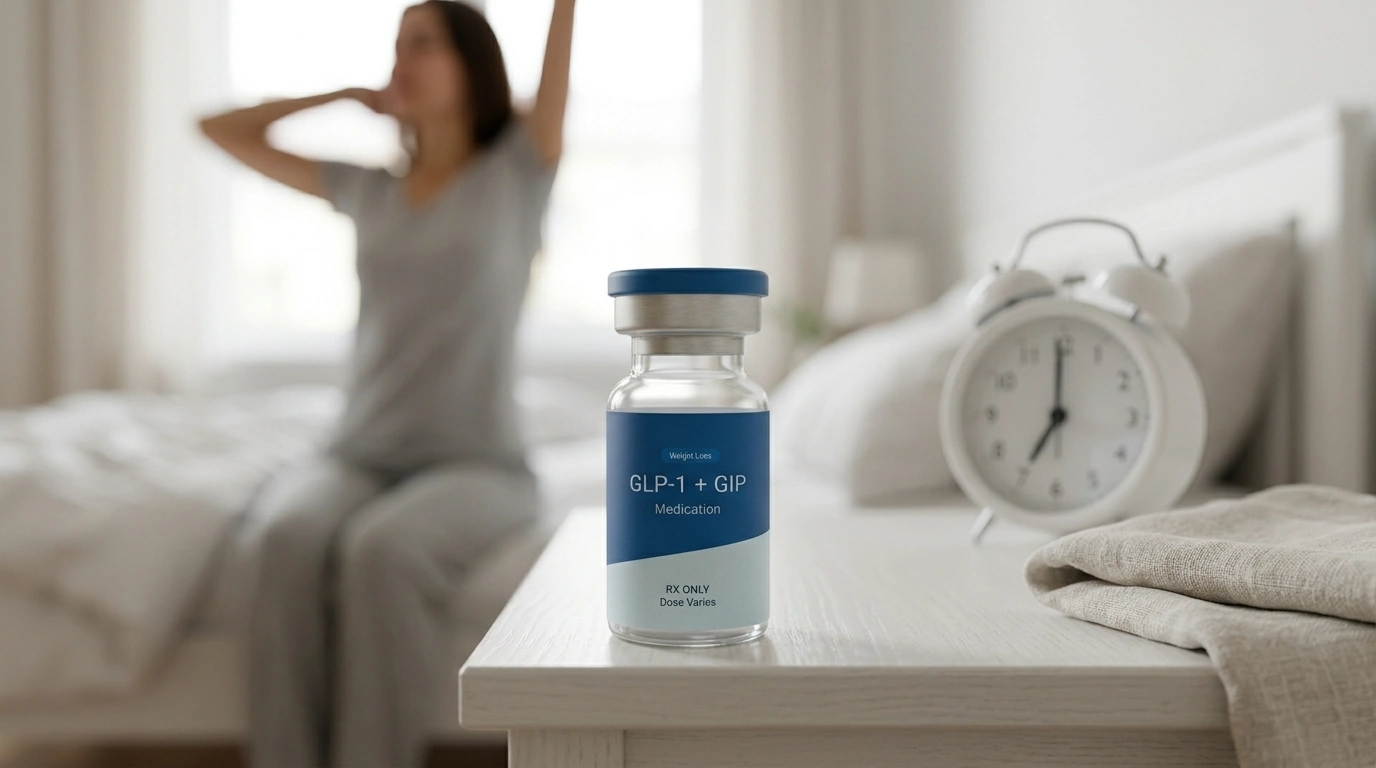
Table of Contents
- Introduction
- Understanding Tirzepatide Stability
- Refrigeration vs. Room Temperature: The Time Windows
- Why Temperature Control Matters: The Science of Denaturation
- Proper Storage Techniques at Home
- Identifying Spoiled or Degraded Medication
- Handling Disruptions: Power Outages and Travel
- Branded vs. Compounded: Storage Differences
- Common Myths About Tirzepatide Storage
- The Danger of Freezing
- Starting Your Personalized Program with TrimRx
- FAQ
Introduction
You might have felt a brief moment of concern after realizing your medication sat on the kitchen counter longer than intended. Perhaps you are preparing for a move or a long-distance trip and are worried about keeping your pens at the right temperature. These are common worries for anyone navigating the logistics of GLP-1 (glucagon-like peptide-1) therapy. At TrimRx, we know that successful weight management involves more than just the medication itself; it requires confidence in how you handle and store your treatment. This article explains exactly how long tirzepatide remains stable under different conditions, the science behind its temperature sensitivity, and how to identify if your supply is still safe to use. Understanding these storage requirements ensures your personalized program stays on track and remains effective.
Quick Answer: Unopened, branded tirzepatide (Mounjaro® or Zepbound®) is good in the refrigerator at 36°F–46°F until the expiration date printed on the label. Once removed from the fridge, it can stay at room temperature (up to 86°F) for a maximum of 21 days, after which it must be discarded.
If you are considering whether a medically supervised prescription program may be right for you, you can complete a free eligibility assessment.
Understanding Tirzepatide Stability
Tirzepatide is a sophisticated dual-agonist medication that mimics two natural hormones: GLP-1 and GIP (glucose-dependent insulinotropic polypeptide). These hormones are peptides, which are essentially short chains of amino acids. Because of this biological structure, the medication is highly sensitive to its environment. If the temperature fluctuates too much, the delicate bonds holding these amino acids together can begin to weaken or “denature.”
When a peptide denatures, it loses its specific three-dimensional shape. This shape is what allows the medication to “dock” with the receptors in your body that regulate appetite and blood sugar. If the shape changes, the medication may not work as intended. This is why following manufacturer and pharmacy storage guidelines is critical for maintaining the potency of your treatment.
For more background, read this guide to how tirzepatide works.
Refrigeration vs. Room Temperature: The Time Windows
The storage life of your medication depends heavily on whether the container is opened and whether it is a branded product or a compounded version.
Unopened Branded Medication
For unopened pens of Mounjaro® or Zepbound®, the refrigerator is the safest place for long-term storage. As long as the temperature stays between 36°F and 46°F (2°C to 8°C), the medication is guaranteed by the manufacturer until the expiration date listed on the carton. This date is usually many months, or even years, into the future from the time of purchase.
However, life happens, and you may need to keep a pen out of the fridge.
- The 21-Day Rule: You can store unopened pens at room temperature (up to 86°F or 30°C) for up to 21 days.
- The No-Return Policy: Once a branded pen has reached room temperature, it should not be returned to the refrigerator to “reset” the clock. You must use it within that 21-day window or discard it.
For a detailed explanation of refrigerator storage, review this Zepbound refrigeration guide.
Compounded Tirzepatide Vials
Compounded medications follow different stability standards than branded pens. Because compounded tirzepatide is prepared in specialized pharmacies to meet specific patient needs, it may contain different preservatives or stabilizers.
- Beyond-Use Date (BUD): Instead of a manufacturer’s expiration date, compounded vials have a Beyond-Use Date. This is the date after which the pharmacy can no longer guarantee the medication’s sterility or potency.
- Refrigeration Requirements: Most compounded tirzepatide vials require strict refrigeration at all times. Once a vial is “punctured” (after the first dose is drawn), the clock usually limits the remaining medication to 28 or 30 days, even if it stays in the fridge. This is to ensure that no bacteria have been introduced into the multi-dose vial.
You can also review this compounded GLP-1 expiration and storage guide for more information about Beyond-Use Dates.
Key Takeaway: Always prioritize refrigeration for all forms of tirzepatide, but remember that branded pens have a specific 21-day “grace period” at room temperature that does not typically apply to the same extent for compounded vials.
Why Temperature Control Matters: The Science of Denaturation
To maintain the effectiveness of your weight loss program, you must protect the structural integrity of the tirzepatide molecule. When tirzepatide gets too warm, the energy from the heat causes the molecules to vibrate. If they vibrate too much, the weak hydrogen bonds that hold the peptide in its precise “folded” shape will break.
Denatured medication is usually not toxic, but it is ineffective. If you inject a dose that has been sitting in a hot car, you might notice that your appetite returns sooner than usual or that your blood sugar levels are less stable. In some cases, heat-damaged proteins can clump together (aggregation), which may cause increased redness or irritation at the injection site.
If you are exploring a prescription program that includes provider oversight, take the free assessment quiz.
Proper Storage Techniques at Home
The “back and middle” rule is the best way to ensure your medication stays at a consistent temperature. While it might seem convenient to store your pens in the refrigerator door, this is actually the worst place for them.
Avoiding Temperature Fluctuations
- Stay away from the door: Every time you open the fridge, the door is exposed to warm room air. This causes constant temperature swings that can degrade the medication over time.
- Avoid the “cold spots”: Do not push the medication all the way to the very back wall or near the cooling vent. If the medication touches the cooling element, it could accidentally freeze.
- Use the middle shelf: The middle shelf toward the back provides the most stable and consistent environment.
Light Protection
Light is just as damaging to tirzepatide as heat. UV rays can break down the chemical bonds in the liquid. This is why the medication comes in an opaque pen or a tinted vial.
- Keep the box: Store your pens or vials inside their original cardboard packaging. This provides an extra layer of insulation and complete protection from light exposure.
For additional home-storage guidance, read this tirzepatide storage and handling guide.
Identifying Spoiled or Degraded Medication
You should perform a visual inspection before every single dose. Even if you have followed the storage rules perfectly, it is important to verify that the medication is still in good condition.
What to look for:
- Clarity: The liquid should be completely clear.
- Color: It should be colorless or have a very slight yellow tint.
- Consistency: There should be no visible particles, “flakes,” or cloudiness.
Signs of spoilage:
- Cloudiness: If the liquid looks like milk or has a “foggy” appearance, the proteins have likely clumped together.
- Color Change: If the liquid turns brown or dark yellow, it has likely been exposed to too much light or heat.
- Particulates: Visible solid bits floating in the liquid indicate that the medication is no longer stable.
Note: If you notice any of these changes, do not inject the medication. Contact your healthcare provider or pharmacy for guidance on obtaining a replacement.
For more guidance about temperature-related changes, review this article on what can happen when compounded tirzepatide is left out of the fridge.
Handling Disruptions: Power Outages and Travel
Unexpected events like a power failure or a long flight don’t have to ruin your medication supply. Planning ahead is the key to maintaining the “cold chain.”
Step-by-Step: Handling a Power Outage
- Keep the door closed: An unopened refrigerator will keep its temperature for about 4 hours.
- Check the thermometer: If you have a fridge thermometer, check if the temperature rose above 46°F.
- The 21-day countdown: If the power was out for more than 4 hours and the medication reached room temperature, mark the date. You now have 21 days to use your branded pens.
- Insulated backup: If the outage lasts for days, move the medication to a small cooler or an insulated bag with a cold pack. Ensure the medication is wrapped in a towel so it never touches the ice pack directly.
Travel Best Practices
Traveling while on a GLP-1 program is entirely manageable with the right tools.
- Carry-on only: Never put your medication in checked luggage. The cargo hold of an airplane can experience extreme temperature shifts (either freezing or dangerously hot).
- TSA compliance: You are allowed to carry liquid medications and syringes through security. Keep them in their original packaging with the prescription label to make the process smoother.
- Insulated cases: For road trips or long travel days, use a specialized medical travel case. These are designed to maintain a refrigerated temperature for several hours using gel packs.
For more practical travel tips, see this tirzepatide travel and handling resource.
Branded vs. Compounded: Storage Differences
At TrimRx, we prioritize transparency regarding the differences between medication types.
Branded Medications (Mounjaro®, Zepbound®):
- FDA-approved for specific uses (diabetes and weight management).
- Standardized stability data allows for a clear 21-day room temperature window.
- Available in single-use pens or single-dose vials.
Compounded Tirzepatide:
- Not FDA-approved.
- Prepared by FDA-registered, inspected compounding pharmacies.
- May have stricter refrigeration needs and shorter “beyond-use” dates.
- Usually provided in multi-dose vials.
Because of these differences, you must always defer to the specific instructions provided with your shipment. If your compounded vial label says “keep refrigerated,” do not use the 21-day room temperature rule that applies to branded pens.
For a broader comparison of storage requirements, read this GLP-1 refrigeration and safety guide.
Common Myths About Tirzepatide Storage
Myth: If the medication was left out for 24 hours, it’s ruined. Fact: For branded pens like Zepbound®, the medication is stable at room temperature (up to 86°F) for up to 21 days. If it was left out for only a day, it is still perfectly safe to use, provided you use it within the next 20 days.
Myth: You can freeze tirzepatide to make it last longer. Fact: Freezing permanently destroys the molecular structure of tirzepatide. Once frozen, the medication must be discarded even if it thaws and looks clear.
Myth: It’s better to inject the medication while it’s ice-cold. Fact: Many people find that injecting cold medication causes more discomfort. You can take your pen out of the fridge about 30 minutes before your injection to let it reach room temperature. This brief window does not negatively affect the 21-day stability clock.
The Danger of Freezing
Freezing is actually more damaging to tirzepatide than mild heat. When the liquid freezes, ice crystals form. These crystals act like tiny knives, physically shredding the peptide chains. Even if the medication thaws and appears liquid again, the biological activity is gone.
To prevent accidental freezing:
- Do not store medication in the freezer.
- Do not place medication directly against the back wall of the refrigerator.
- If you use a travel cooler, always place a cloth barrier between the ice pack and the medication.
For a focused explanation, read about freezing and tirzepatide storage risks.
Starting Your Personalized Program with TrimRx
At TrimRx, our mission is to help individuals embrace healthier lifestyles through a transparent and personalized approach. We believe that sustainable weight loss is achieved when clinical expertise meets modern convenience. Our telehealth platform connects you with licensed providers who supervise your program every step of the way, ensuring you have the support you need to handle medications safely and effectively.
Whether you are curious about starting a GLP-1 treatment or looking for a more streamlined way to manage your existing program, our team is here to guide you. We provide access to medications through FDA-registered compounding pharmacies, ensuring that your program is built on a foundation of quality and clinical oversight.
Bottom line: Your medication is an investment in your metabolic health. By maintaining the “cold chain” and following proper storage protocols, you ensure that every dose is as effective as the first.
If you are ready to take the next step toward your health goals, we invite you to explore our personalized weight loss programs. Our streamlined process includes a consultation with a medical professional to determine the best path for your unique health profile.
Next Step: Ready to see if you qualify for a personalized program? Take our free assessment quiz to get started.
FAQ
Can I put my tirzepatide pen back in the fridge after it has been at room temperature?
You can put branded pens like Mounjaro® back in the refrigerator, but it does not “stop” the 21-day countdown. Once the pen has reached room temperature, it must be used within 21 days, regardless of where it is stored afterward. For compounded vials, you should generally keep them refrigerated at all times to maintain sterility and potency. For more detail, read this guide to tirzepatide room-temperature storage.
What should I do if my medication was delivered and the ice packs were melted?
Most pharmacies ship medication in insulated packaging designed to maintain a safe temperature for the duration of the trip. If the ice packs are melted but the medication still feels cool to the touch, it is generally safe to place in the refrigerator immediately. If the medication feels warm or the liquid looks cloudy, contact the pharmacy or our support team for guidance before using it.
How do I dispose of tirzepatide pens or vials that have expired?
You should never throw used or expired needles and pens in the regular trash. Use an FDA-approved sharps container or a sturdy, puncture-resistant plastic container (like a laundry detergent bottle) with a tight-fitting lid. Once the container is full, follow your local community guidelines for safe disposal of medical waste.
Can I use tirzepatide if it has passed its expiration date but was always refrigerated?
No, you should not use medication after the expiration or beyond-use date has passed. Over time, the active ingredients lose their potency, meaning the dose may not be strong enough to provide the desired results. Additionally, the preservatives in the liquid may break down, increasing the risk of bacterial growth, especially in multi-dose vials.
If you are considering starting or continuing a supervised prescription program, complete a free eligibility assessment.
Disclaimer: This content is for informational purposes only and does not constitute medical advice. It is not intended to diagnose, treat, cure, or prevent any disease or condition. Individual results may vary. Always consult a qualified healthcare professional before starting any weight loss program or medication.

Transforming Lives, One Step at a Time
Keep reading
Marathon Training on Tirzepatide When You Can’t Fuel
You have a plan on the fridge and a medication that has made eating feel optional. Those two things are in genuine conflict, and…

Hormone Replacement Therapy and Tirzepatide: Is There an Interaction?
The question that matters is whether your hormone therapy is oral or transdermal, because that determines whether the one plausible interaction applies to you….

Can You Build Muscle While Losing Weight on Tirzepatide?
Possible for some people and unlikely for others, and the difference is mostly about where you are starting from. Someone new to resistance training…


