How Many Units is 10 mg of Mounjaro and Tirzepatide?
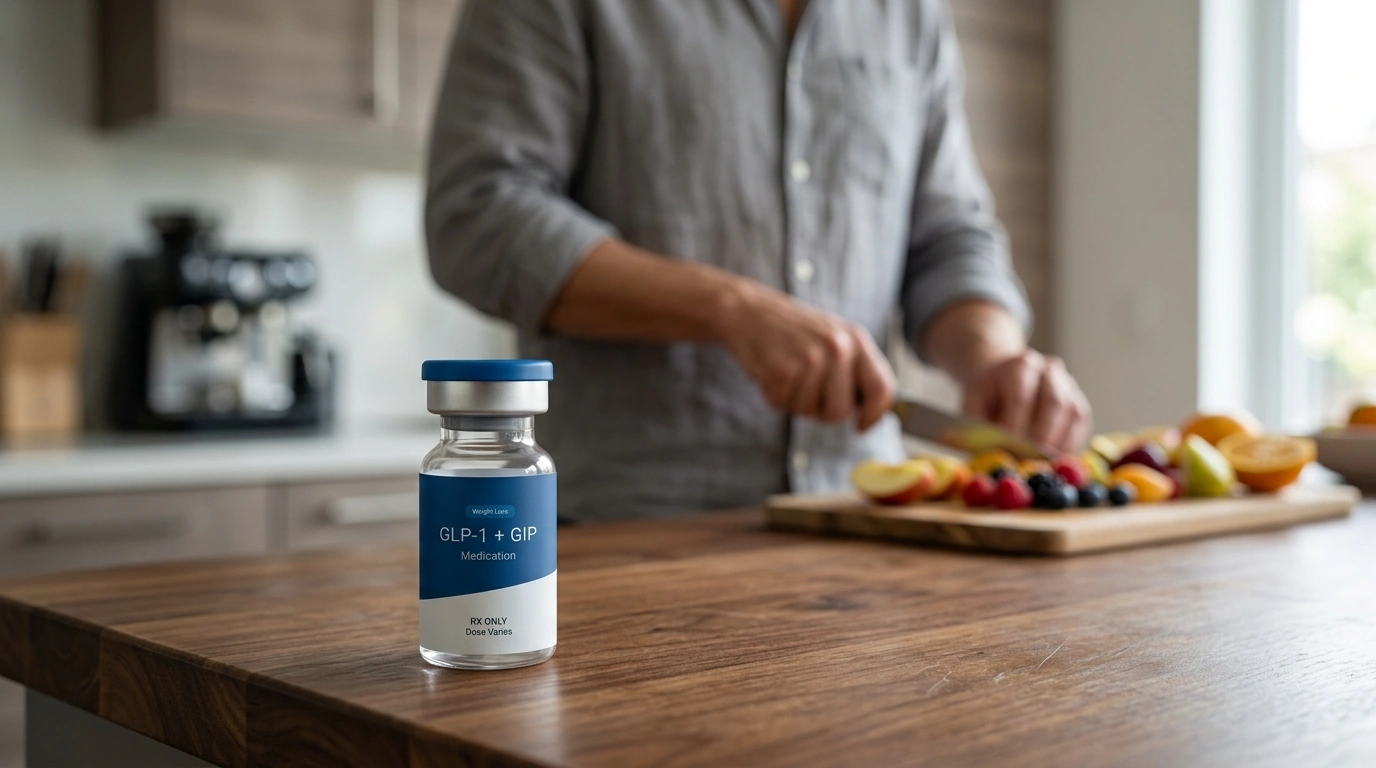
Table of Contents
- Introduction
- Understanding the Difference Between Milligrams and Units
- The Role of Concentration in Your Dosage
- Why 10 mg is a Significant Milestone
- How to Calculate Your Units Safely
- Administering a 10 mg Dose with a Syringe
- Managing Side Effects at the 10 mg Level
- The Importance of Professional Supervision
- Why Some Choose Compounded Tirzepatide
- Maximizing the Results of Your 10 mg Dose
- Transitioning Between Doses
- Safety First: Storing and Handling Your Medication
- How TrimRx Supports Your Journey
- Next Steps for Your Weight Loss Goals
- Summary of 10 mg Dosing Logic
- FAQ
Introduction
Standing in your kitchen with a vial and a syringe can feel much more complicated than using a pre-filled pen. If you have recently transitioned from branded medication to a compounded version, you might find yourself staring at the tiny markings on a needle and wondering how to translate milligrams into units. At TrimRx, we understand that the technical side of weight loss medication can be intimidating. Whether you are curious about how many units is 10 mg of Mounjaro or you are trying to understand your tirzepatide prescription, accuracy is the most important factor for your safety and success. This guide will explain the relationship between milligrams and units, the importance of medication concentration, and how a personalized program helps you navigate these details. Understanding your dosage ensures you receive the full benefit of your treatment while maintaining the highest safety standards.
If you are considering a medically supervised tirzepatide program, you can complete a free eligibility assessment.
Understanding the Difference Between Milligrams and Units
When you ask how many units is 10 mg of Mounjaro, you are actually asking two different questions about measurement. To get the answer right, you must first understand the difference between weight and volume.
Milligrams (mg) measure the weight or strength of the actual medication. In this case, 10 mg refers to the amount of tirzepatide—the active ingredient—that you are taking. Tirzepatide is a dual-acting medication that mimics two natural hormones: glucagon-like peptide-1 (GLP-1) and glucose-dependent insulinotropic polypeptide (GIP). These hormones help regulate appetite and blood sugar.
Units measure volume, specifically on a U-100 insulin syringe. On these syringes, 100 units equal 1 milliliter (mL) of liquid. When you draw medication into a syringe, the “units” tell you how much liquid is in the chamber, but they do not tell you the strength of that liquid on their own.
Key Takeaway: Milligrams measure the strength of the medicine, while units measure the volume of liquid in the syringe. You cannot know the units without knowing the concentration of the liquid.
For another explanation of this conversion, review this guide to tirzepatide doses in units.
The Role of Concentration in Your Dosage
The reason there is no single, universal answer to how many units is 10 mg of Mounjaro is because of concentration. Concentration refers to how much medication (mg) is dissolved in a specific amount of liquid (mL).
If you are using branded Mounjaro®, the medication comes in a single-dose autoinjector pen. The manufacturer has already measured the 10 mg dose into a set volume of liquid. You simply press the button, and the pen delivers the full dose. There are no “units” for the patient to calculate because the pen is not designed to be adjusted.
However, if a healthcare provider prescribes compounded tirzepatide through a platform like TrimRx, the medication typically arrives in a multi-dose vial. This medication is prepared by FDA-registered and inspected compounding pharmacies. Because different pharmacies may use different concentrations, the number of units required to reach a 10 mg dose can vary significantly.
For a broader look at the math, see this tirzepatide dosage chart with unit conversions.
Common Concentration Examples
To illustrate how concentration changes your unit count, consider these three common scenarios for a 10 mg dose of tirzepatide:
- Scenario A (20 mg/mL): If your vial contains 20 mg of medication in every 1 mL of liquid, then a 10 mg dose would be 0.5 mL. On a standard syringe, 0.5 mL is equal to 50 units.
- Scenario B (10 mg/mL): If the concentration is lower, with only 10 mg of medication per 1 mL, you would need to inject the full 1 mL. This would be 100 units.
- Scenario C (40 mg/mL): In a highly concentrated formula with 40 mg per 1 mL, a 10 mg dose would only require 0.25 mL. This would be 25 units.
As you can see, the “units” change even though the “milligrams” stay exactly the same. This is why you must always read the specific instructions on your prescription label provided by the pharmacy.
Why 10 mg is a Significant Milestone
In the world of tirzepatide and GLP-1 medications, 10 mg is considered a higher-tier maintenance dose. Most patients do not start at this level. Instead, they follow a titration schedule, which is a slow and steady increase in dosage designed to help the body adjust to the medication.
The standard titration for tirzepatide typically looks like this:
- Weeks 1-4: 2.5 mg (Starting dose to introduce the medicine)
- Weeks 5-8: 5 mg
- Weeks 9-12: 7.5 mg
- Weeks 13+: 10 mg (and higher if necessary)
By the time you reach the 10 mg dose, your body has likely become accustomed to the hormonal changes. At this stage, many individuals experience significant suppression of “food noise”—the constant intrusive thoughts about eating—and a more pronounced feeling of fullness.
Bottom line: The 10 mg dose is a powerful tool for weight management, but it requires careful measurement to ensure you are progressing safely through your treatment plan.
You can also review this starting-dose tirzepatide conversion guide to see how concentration affects earlier steps in the titration process.
How to Calculate Your Units Safely
While your healthcare provider and the pharmacy label should always be your primary sources of information, understanding the math behind your dose can provide peace of mind. To calculate the units for any dose, you can use a simple formula:
Step 1: Identify your desired dose. In this case, it is 10 mg. Step 2: Locate the concentration on your vial. This is usually written as “X mg / Y mL.” Step 3: Divide your dose by the concentration. If your vial says 20 mg/mL, you divide 10 by 20, which equals 0.5. Step 4: Convert to units. Multiply the result by 100 (since there are 100 units in 1 mL). 0.5 times 100 equals 50 units.
Note: Never perform this math and then inject without first confirming the final number with your healthcare provider or the instructions included with your prescription. A mistake in calculation can lead to taking too much or too little medication.
If you are unsure which formulation or dose may be appropriate, you can see if you qualify for a personalized program.
Administering a 10 mg Dose with a Syringe
If you are using a vial and syringe for the first time, the process requires a steady hand and a clean environment. Because 10 mg is a larger volume of medication than the starting doses, you may notice the injection takes a few seconds longer.
Preparing the Injection
First, wash your hands thoroughly and gather your supplies: the medication vial, a fresh alcohol prep pad, and a sterile U-100 syringe. Clean the rubber stopper of the vial with the alcohol pad.
Drawing the Medication
Pull the plunger of the syringe back to the “units” mark your doctor prescribed, filling the syringe with air. Insert the needle into the vial and push the air in. This creates pressure that makes it easier to draw the liquid out. Turn the vial upside down and slowly pull the plunger back to your required unit mark (e.g., 50 units). Ensure there are no large air bubbles in the syringe.
Choosing an Injection Site
The most common and effective sites for tirzepatide injections include:
- The abdomen: At least two inches away from the belly button.
- The thigh: The front or outer portion of the upper leg.
- The back of the arm: This usually requires assistance from another person.
It is important to rotate your injection sites every week. If you injected into your right thigh last week, try your left thigh or your abdomen this week. This prevents skin irritation and helps the medication absorb consistently.
Managing Side Effects at the 10 mg Level
As you move up to higher doses like 10 mg, the risk of side effects may increase slightly as the medication becomes more potent in your system. Common side effects include nausea, indigestion, and changes in bowel habits. These are usually a sign that the medication is working on your digestive system to slow down gastric emptying.
To manage these effects, focus on small, nutrient-dense meals. Staying hydrated is also essential. If you find that side effects are interfering with your daily life at the 10 mg level, your provider may suggest staying at that dose longer before moving up, or they may offer guidance on managing specific symptoms.
For additional context on gradually increasing doses, read this overview of tirzepatide dosing and titration.
Quick Answer: There is no fixed number of units for 10 mg of tirzepatide because it depends on the concentration of the liquid in your vial. Most commonly, at a concentration of 20mg/mL, 10 mg is 50 units. Always check your specific pharmacy label.
The Importance of Professional Supervision
Trying to manage these calculations on your own can be stressful. This is why a telehealth-first approach can be so beneficial. We connect you with licensed healthcare providers who oversee your progress, adjust your dosage when necessary, and ensure you understand exactly how much medication to take.
When you use a platform like ours, you aren’t just getting a prescription; you are getting a dedicated team. This includes access to specialized support and clear instructions that eliminate the guesswork. This personalized approach is designed to help you focus on your health goals rather than the math of a syringe.
To understand the steps involved, read this guide to how online GLP-1 prescriptions work.
Why Some Choose Compounded Tirzepatide
Many people search for “how many units is 10 mg of Mounjaro” because they are using compounded tirzepatide as an alternative to branded medications like Mounjaro® or Zepbound®. Branded medications are often subject to supply shortages, which can disrupt a patient’s weight loss journey.
Compounded medications are prepared by specialized pharmacies to meet a patient’s specific needs. While compounded tirzepatide is not FDA-approved, the pharmacies we work with are FDA-registered and strictly inspected. This ensures that the medication you receive meets high quality and safety standards. Using a vial and syringe also allows for more precise dosing adjustments compared to the “one-size-fits-all” approach of pre-filled pens.
Maximizing the Results of Your 10 mg Dose
The 10 mg dose of tirzepatide is a significant investment in your metabolic health. To get the most out of it, the medication should be part of a broader lifestyle strategy. This includes:
- Prioritizing Protein: As you lose weight, you want to preserve muscle mass. Aim for high-quality protein sources at every meal.
- Strength Training: Lifting weights or performing resistance exercises further protects your muscles and boosts your metabolism.
- Hydration: GLP-1 and GIP medications can sometimes dull your thirst cues. Make a conscious effort to drink plenty of water throughout the day.
- Consistent Monitoring: Keep track of how you feel, your energy levels, and your weight. Share these insights with your healthcare provider during your check-ins.
At TrimRx, we believe that medication is a tool, but your lifestyle is the foundation. Our personalized programs are designed to support both, providing you with the clinical expertise and the daily support needed for sustainable change.
For additional energy support during weight loss, you can explore the Weight Loss Boost supplement.
Transitioning Between Doses
If you are currently at a lower dose and your provider has recommended moving up to 10 mg, you might be nervous about the change. It is helpful to remember that titration is a process of discovery. You are learning how your body responds to the medicine.
Before making the jump to 10 mg, ensure you have successfully navigated the 7.5 mg dose with minimal side effects. If you are still experiencing significant nausea or discomfort at 7.5 mg, it may be worth discussing a slower transition with your healthcare provider. Your journey is unique, and there is no “correct” speed to reach the higher doses. The goal is sustainable progress, not a race to the highest number of units.
Myth: A higher dose always means faster weight loss. Fact: The “best” dose is the lowest one that provides consistent results with manageable side effects. For many, 10 mg is that “sweet spot,” but others may find success at different levels.
Safety First: Storing and Handling Your Medication
Because you are likely handling a multi-dose vial to reach your 10 mg dose, proper storage is vital. Tirzepatide should generally be kept in the refrigerator. Extreme temperatures—either too hot or too cold—can break down the peptide molecules, making the medication less effective.
Always check the liquid before drawing it into your syringe. It should be clear and colorless. If you notice any cloudiness, particles, or a change in color, do not use it. Contact your pharmacy or healthcare provider immediately for guidance.
Furthermore, never reuse a needle. Each injection requires a brand-new, sterile syringe to prevent infection and ensure the needle remains sharp for a comfortable injection. Once you have finished your injection, dispose of the needle in a puncture-resistant sharps container.
How TrimRx Supports Your Journey
Navigating the complexities of units, milligrams, and concentrations is easier when you have an empathetic and knowledgeable guide. TrimRx provides a seamless telehealth experience that removes the barriers to modern weight loss treatment. We believe in transparency and personalized care, ensuring you never feel like just another number in a system.
Our mission is to help you embrace a healthier lifestyle through a combination of science and empathy. By connecting you with licensed providers and high-quality compounding pharmacies, we ensure your program is tailored to your specific medical history and goals. From your initial assessment to your 10 mg maintenance dose, we are with you every step of the way.
Next Steps for Your Weight Loss Goals
If you are ready to take the next step in your health journey, the process is straightforward. Whether you are looking to start tirzepatide or you are seeking a more personalized approach to your current treatment, we can help.
- Complete the Assessment: Our free online quiz helps determine if you are a candidate for our program.
- Consult with a Provider: A licensed healthcare professional will review your profile and medical history.
- Receive Your Treatment: If eligible, your medication is shipped directly from an FDA-registered compounding pharmacy to your door.
- Ongoing Support: Enjoy 24/7 access to our team of specialists as you navigate your path to a healthier you.
Summary of 10 mg Dosing Logic
Understanding how many units is 10 mg of Mounjaro or tirzepatide is about more than just a number on a syringe. It is about understanding the medication’s strength and how it interacts with your body. By focusing on concentration and following professional guidance, you can ensure your treatment is both safe and effective.
Bottom line: The number of units for a 10 mg dose depends entirely on the concentration of your specific vial. Always verify your dose with your provider and your prescription label before injecting.
FAQ
How do I find the concentration of my tirzepatide vial?
The concentration is clearly printed on the pharmacy label attached to your medication box or the vial itself. It is usually written as a set of numbers like “20 mg / 1 mL” or “10 mg / 0.5 mL.” If you cannot find this information or find it confusing, contact your healthcare provider or the dispensing pharmacy before attempting to draw a dose.
Can I use a standard insulin syringe for my 10 mg dose?
Yes, most compounded tirzepatide is designed to be used with a standard U-100 insulin syringe, where 100 units equal 1 mL. However, you must ensure you are using the correct syringe type as prescribed by your doctor. Using the wrong syringe can lead to a significant dosing error.
What should I do if I accidentally take too many units?
If you realize you have taken more than your prescribed dose, contact your healthcare provider or a medical professional immediately. Taking too much tirzepatide can lead to severe gastrointestinal distress, including intense nausea, vomiting, and abdominal pain. Monitor your symptoms closely and seek emergency care if you experience signs of a severe reaction.
Why does my 10 mg dose look like a different amount of liquid than my friend’s?
This is almost always due to a difference in concentration between different compounding pharmacies. One pharmacy may provide a highly concentrated version (requiring fewer units), while another may provide a more diluted version (requiring more units). Both vials contain the same 10 mg of active medicine; only the amount of “filler” liquid is different.
If you are ready to discuss whether a supervised tirzepatide program may be appropriate for you, start with the free assessment.
Disclaimer: This content is for informational purposes only and does not constitute medical advice. It is not intended to diagnose, treat, cure, or prevent any disease or condition. Individual results may vary. Always consult a qualified healthcare professional before starting any weight loss program or medication.

Transforming Lives, One Step at a Time
Keep reading

Mounjaro Alternatives: What Else to Consider
If Mounjaro isn’t the right fit, the closest alternatives are other GLP-1 medications, chiefly semaglutide (Ozempic for diabetes, Wegovy for weight), along with a…

Mounjaro vs Zepbound: Same Drug, Two Brands
Like their semaglutide counterparts, Mounjaro and Zepbound are the same medication (tirzepatide) sold under two names for two purposes: Mounjaro is approved for type…

Retatrutide vs Mounjaro: Triple Agonist vs Dual Agonist
The core difference between retatrutide and Mounjaro comes down to how many hormone targets each hits: retatrutide activates three receptors, while Mounjaro (tirzepatide) activates…


