Cinnamon in Coffee for Weight Loss: What Our Experts Say
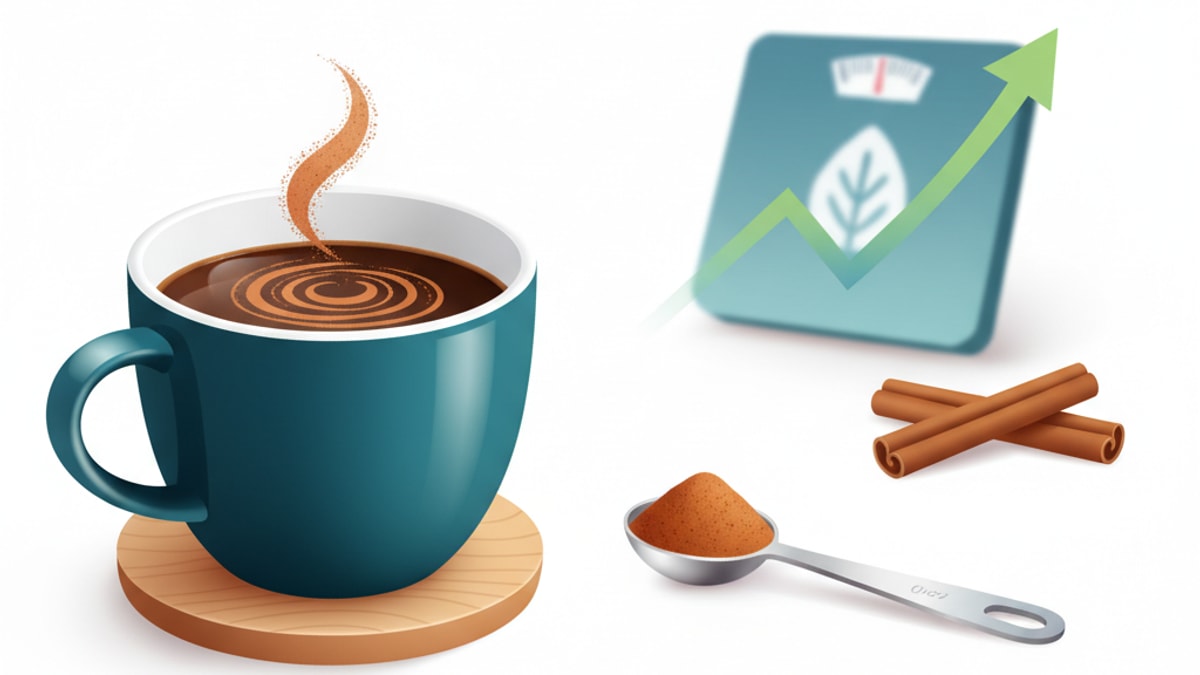
The Allure of a Simple Fix: Why Cinnamon in Coffee Became a Trend
You’ve seen it everywhere. On your social media feeds, in wellness articles, maybe even mentioned by a friend at the gym. The advice is simple, almost deceptively so: just add a dash of cinnamon to your morning coffee, and you'll unlock a powerful secret to weight loss. It’s an incredibly appealing idea, isn't it? The notion that a common, fragrant spice already sitting in your pantry could be a catalyst for shedding unwanted pounds feels like a life hack of the highest order.
Our team gets it. In a world of demanding schedules and the relentless pursuit of well-being, the promise of an easy, low-effort solution is powerful. It taps into a deep desire for results without a complete life overhaul. The ritual itself is pleasant—the warm, aromatic spice mingling with the rich scent of coffee. It feels healthy. It feels proactive. But here's the question we, as a team dedicated to the science of metabolic health, have to ask: does this popular trend stand up to clinical scrutiny? We're here to pull back the curtain, look past the viral videos, and give you an unflinching, science-backed perspective on how much cinnamon in coffee for weight loss is realistic, what it can and can't do, and what a truly effective metabolic strategy looks like.
Unpacking the Science: Does Cinnamon Actually Help with Weight Loss?
So, let’s get to the core of it. Is there any real science behind this, or is it just wishful thinking? The answer is more complex than a simple yes or no. There is, in fact, some compelling evidence suggesting cinnamon has metabolic benefits, but we can't stress this enough: these effects are often modest and supportive, not transformative.
The magic in cinnamon is largely attributed to a compound called cinnamaldehyde, which gives the spice its distinct flavor and aroma. Research has focused on a few key areas where cinnamon might lend a helping hand in weight management.
First, and perhaps most significantly, is its effect on blood sugar regulation. This is the cornerstone of the cinnamon-for-weight-loss argument. Multiple studies have shown that cinnamon can improve insulin sensitivity. Why does that matter? When your cells are more sensitive to insulin, your body needs to produce less of it to shuttle glucose from your bloodstream into your cells for energy. Lower circulating insulin levels are generally associated with less fat storage and can help reduce cravings for sugary, high-carb foods. It essentially helps your body manage carbohydrates more efficiently, preventing the dramatic blood sugar spikes and crashes that lead to energy slumps and hunger pangs. It’s a significant, sometimes dramatic shift for some people. But it's not the whole story.
Second, there's the concept of thermogenesis. Some research suggests that cinnamaldehyde can encourage fat cells to start burning energy through a process called thermogenesis. In essence, it signals the cells to get active rather than just sit there storing fat. While this sounds amazing on paper, the effect observed in studies is not potent enough to cause significant weight loss on its own. Think of it as nudging the metabolic thermostat up by a fraction of a degree, not cranking up the furnace.
Finally, cinnamon is a potent antioxidant and has anti-inflammatory properties. Chronic inflammation is increasingly being linked to obesity and metabolic dysfunction. By helping to quell systemic inflammation, cinnamon can contribute to a healthier internal environment, which is more conducive to weight loss. It's a foundational benefit that supports overall health, which is a critical, non-negotiable element of any sustainable weight loss journey.
But a huge caveat comes with the type of cinnamon you use. Most of what you find in the supermarket is Cassia cinnamon, which contains a compound called coumarin. In high doses, coumarin can be harmful to the liver. Ceylon cinnamon, often called “true” cinnamon, has much lower levels of coumarin and is the safer choice for regular consumption. We've put together a simple table to help you see the difference.
| Feature | Cassia Cinnamon | Ceylon Cinnamon |
|---|---|---|
| Also Known As | Chinese Cinnamon, Common Cinnamon | True Cinnamon, Sri Lankan Cinnamon |
| Coumarin Level | High (Up to 1%) | Negligible (Around 0.004%) |
| Flavor Profile | Strong, spicy, pungent | Mild, sweet, delicate, complex |
| Appearance | Thick, hard bark, dark reddish-brown | Thin, brittle, multi-layered quill, tan-brown |
| Primary Use | General baking and cooking | Gourmet desserts, beverages, safer for daily use |
How Much Cinnamon in Coffee for Weight Loss? The Dosage Dilemma
This brings us directly to the keyword on everyone's mind: how much? If you’re going to try this, you absolutely need to do it safely. Based on the available research and general safety guidelines, our team’s recommendation is to stick to a moderate amount.
A good starting point is about half a teaspoon (around 1 gram) per day.
Some studies have used doses ranging from 1 to 6 grams per day to see therapeutic effects, but pushing to the higher end of that range, especially with Cassia cinnamon, is where the risks start to outweigh the potential benefits. The World Health Organization suggests a tolerable daily intake of coumarin at 0.1 mg per kg of body weight. A single teaspoon of Cassia cinnamon can easily exceed that limit for a smaller individual. It's a formidable risk that most people are completely unaware of.
Let's be honest, this is crucial. You're trying to improve your health, not inadvertently harm your liver. This is why we strongly recommend opting for Ceylon cinnamon if you plan to make it a daily habit. You get the potential blood-sugar-stabilizing benefits without the coumarin-related anxiety. You can be a bit more liberal with Ceylon, but even then, more isn't necessarily better. One teaspoon (about 2-3 grams) a day is plenty to see any potential benefits without overdoing it.
So, how do you use it? Simply stir it into your black coffee or latte. Some people find it mixes in better if you make a small paste with the cinnamon and a splash of hot coffee before pouring in the rest. It can add a lovely, sugar-free flavor, which might also help you cut back on the sugar or sweetened creamers you'd normally add. That reduction in sugar intake, by itself, is a victory for weight management.
A Reality Check: Cinnamon is a Tool, Not a Silver Bullet
Now, for some professional perspective. Our experience working with thousands of individuals on their weight loss journeys has taught us one thing with absolute certainty: there are no magic bullets. Not a single one.
Cinnamon is a fantastic supportive tool. It's a great little habit. It might help smooth out your blood sugar curve and provide some antioxidant benefits. But it will not, under any circumstances, override the fundamentals of energy balance. Sprinkling cinnamon in your coffee while still consuming a calorie surplus, living a sedentary lifestyle, or ignoring underlying metabolic issues will lead to one thing: disappointment.
We've seen it work, but only as part of a larger, more intentional strategy. The people who see the best results are those who understand that sustainable weight loss is a multifaceted puzzle. It involves nutrition, movement, sleep, stress management, and, for many, addressing the deep-seated biological factors that make losing weight so incredibly difficult. Relying solely on a spice to do the heavy lifting is like trying to build a house with just a screwdriver. You need the full toolbox.
Think of it this way: the marginal benefit from cinnamon might help you feel a little less hungry mid-morning, making it easier to choose a healthy lunch. That's a win! But it won't fix hormonal resistance or a dysfunctional metabolism that's been programmed to store fat relentlessly. For that, you need a far more powerful intervention.
Beyond the Spice Rack: The Power of a Medically-Guided Approach
This is where the conversation has to shift from kitchen hacks to clinical science. At TrimrX, we focus on the biology of weight. For many people, the battle isn't about willpower; it's about biochemistry. Hormones like insulin and GLP-1 (glucagon-like peptide-1) run the show, dictating hunger, satiety, and fat storage. When these systems are out of balance, no amount of cinnamon is going to correct the course.
This is where modern medicine offers a truly revolutionary path forward. Medically-supervised programs utilizing advanced treatments like GLP-1 medications (such as Semaglutide and Tirzepatide) work by targeting these core biological drivers of weight gain. They aren't a hack; they are a profound metabolic reset. They fundamentally change the conversation between your gut, your brain, and your endocrine system.
Our approach is built on the understanding that for many, the body's set point—the weight it fiercely tries to maintain—is elevated due to these metabolic dysfunctions. A sprinkle of spice is simply not equipped to fight that powerful biological programming. A scientifically-validated medical treatment, on the other hand, is designed for that exact purpose. It works with your body's own systems to lower that set point, reduce hunger signals at their source, and improve how your body processes energy. It’s a game-changer.
How GLP-1 Treatments Outperform Simple Dietary Hacks
Let's break down why a medical approach is so much more effective than relying on minor dietary tweaks. It's not even a fair comparison. A dash of cinnamon might slightly improve insulin sensitivity. A GLP-1 medication does that and so much more.
First, these treatments powerfully suppress appetite by acting on the hunger centers in your brain. The constant 'food noise'—that relentless mental chatter about your next meal—quiets down. This allows you to make conscious, healthy food choices out of genuine preference, not desperate hunger. It puts you back in the driver's seat.
Second, they slow down gastric emptying. This means food stays in your stomach longer, promoting a sustained feeling of fullness and satisfaction after meals. You naturally eat smaller portions because you feel full faster and stay full longer. It's a simple, powerful mechanism for reducing overall calorie intake without feeling deprived.
Third, they directly stimulate the pancreas to release insulin more effectively in response to food, particularly carbohydrates. This leads to much better blood sugar control, avoiding the energy-draining spikes and crashes that cinnamon only modestly influences. This stable energy level is critical for maintaining an active lifestyle and avoiding cravings.
When you combine these effects, you get a synergistic powerhouse for weight loss that a spice simply cannot replicate. It's the difference between trying to paddle a canoe against a strong current and being in a speedboat with a powerful engine. Both are in the water, but only one is truly equipped for the journey. If you're tired of paddling and are ready to see what a real metabolic shift feels like, you can Start Your Treatment Now. Our clinical team is ready to design a plan that addresses your unique biology.
Integrating Smart Habits with Proven Science
Now, this doesn't mean you should throw your cinnamon shaker away. We're not saying that at all! A holistic approach is always the best approach. Our most successful patients are the ones who use medical treatments as the foundation and then build smart, sustainable habits on top of it.
Think of a GLP-1 program as the powerful tool that makes all the other healthy habits easier and more effective. When you're not fighting constant hunger, it's infinitely easier to meal prep healthy food. When your energy levels are stable, you're more likely to feel motivated to go for a walk or hit the gym. It creates a positive feedback loop where success breeds more success.
So, by all means, enjoy that dash of Ceylon cinnamon in your morning coffee. Appreciate it for its pleasant flavor, its antioxidant properties, and its modest support for your blood sugar. It's a wonderful part of a healthy lifestyle. But don't mistake a supportive player for the star of the show.
The real, life-changing results happen when you address the fundamental biology of your metabolism. That's the key. For so many people we work with, this is the missing piece they've been searching for for years. It’s the breakthrough that finally allows them to achieve the lasting health and weight loss they deserve. If you're curious whether a medically-supervised program is the right next step for you, we've made it easy to find out. Take our quick quiz to see if you’re a candidate for treatment.
Ultimately, your health journey is yours alone, but you don't have to navigate it with incomplete information or ineffective tools. Combining the best of what nature offers, like cinnamon, with the most powerful advances in medical science is how you create a truly unstoppable strategy for success. It's about being smart, safe, and strategic—not just hopeful.
And that’s the honest, expert take on the cinnamon in coffee trend. It's a small, potentially beneficial step. But for those seeking a giant leap forward in their health, it's time to look beyond the spice cabinet and towards proven, powerful science. We’re here when you’re ready.
Frequently Asked Questions
Which type of cinnamon is best for weight loss and coffee?
▼
We strongly recommend Ceylon cinnamon, also known as ‘true’ cinnamon. It has the same potential metabolic benefits as the more common Cassia cinnamon but contains negligible amounts of coumarin, a compound that can be harmful to the liver in high doses.
How much cinnamon should I put in my coffee daily?
▼
A safe and effective amount is about half to one full teaspoon (1-2 grams) of Ceylon cinnamon per day. We advise against exceeding this, as more is not necessarily better and high doses of Cassia cinnamon can be risky.
Will adding cinnamon to my coffee break a fast?
▼
No, a sprinkle of cinnamon in black coffee will not break your fast. It has a negligible caloric value and does not trigger a significant insulin response, making it perfectly fine for most fasting protocols.
Can I use cinnamon capsules instead of powder in coffee?
▼
Yes, you can use cinnamon capsules as an alternative. However, it’s crucial to check the label to ensure you’re getting Ceylon cinnamon and to follow the recommended dosage, as capsules are often more concentrated.
Does cinnamon actually burn belly fat?
▼
Cinnamon does not directly burn belly fat. Its primary benefit is helping to regulate blood sugar and improve insulin sensitivity, which creates a more favorable metabolic environment for fat loss when combined with a proper diet and exercise.
Are there any side effects of having too much cinnamon?
▼
Yes, consuming too much Cassia cinnamon can be harmful due to its high coumarin content, which may cause liver issues. Ceylon cinnamon is much safer, but excessive amounts of any spice can potentially cause digestive upset.
How long does it take to see weight loss results from cinnamon in coffee?
▼
You should not expect to see direct weight loss results from cinnamon alone. It’s a supportive habit, not a primary weight loss driver. Any benefits would be subtle and part of a larger, comprehensive health and wellness strategy.
Is cinnamon in coffee a replacement for medical weight loss treatments?
▼
Absolutely not. Cinnamon offers minor, supportive benefits. Medical treatments like GLP-1 medications offered by TrimrX address the fundamental biological and hormonal drivers of weight gain, offering a far more powerful and effective solution for significant, sustainable results.
Can I add milk and sugar with cinnamon to my coffee?
▼
You can, but adding sugar will counteract the blood-sugar-stabilizing benefits of the cinnamon. For weight loss purposes, we recommend pairing cinnamon with black coffee or with a splash of unsweetened milk or milk alternative.
What other spices can I add to my coffee for health benefits?
▼
Besides cinnamon, other great options include turmeric for its anti-inflammatory properties, nutmeg for its antioxidant content, and a pinch of cayenne for a potential metabolism boost. Always use them in moderation.
Does the brand of cinnamon matter?
▼
The type (Ceylon vs. Cassia) matters far more than the brand. Look for brands that explicitly label their product as ‘Ceylon’ cinnamon to ensure you’re getting the safer, low-coumarin variety for daily use.
Can cinnamon help with cravings?
▼
By helping to stabilize blood sugar levels, cinnamon can potentially reduce the sharp spikes and crashes that often lead to cravings for sugar and refined carbohydrates. However, its effect is modest compared to a medical intervention.

Transforming Lives, One Step at a Time
Keep reading
Is Bupropion an SSRI or a Different Antidepressant?
A lot of people ask the same question at some point: is bupropion an SSRI? It usually comes up after hearing about medications like…

Do You Need a Prescription for GLP-1s? The 2026 Answer
Wondering ‘do you need a prescription for glp 1’ in 2026? Yes. We explain why a doctor’s oversight is critical for safe, effective results.

How to Get GLP-1 Covered By Insurance: Our 2026 Playbook
Struggling with how to get glp-1 covered by insurance? Our 2026 guide breaks down prior authorizations, appeals, and documentation.


