How to Take Body Measurements for Weight Loss: Our Method
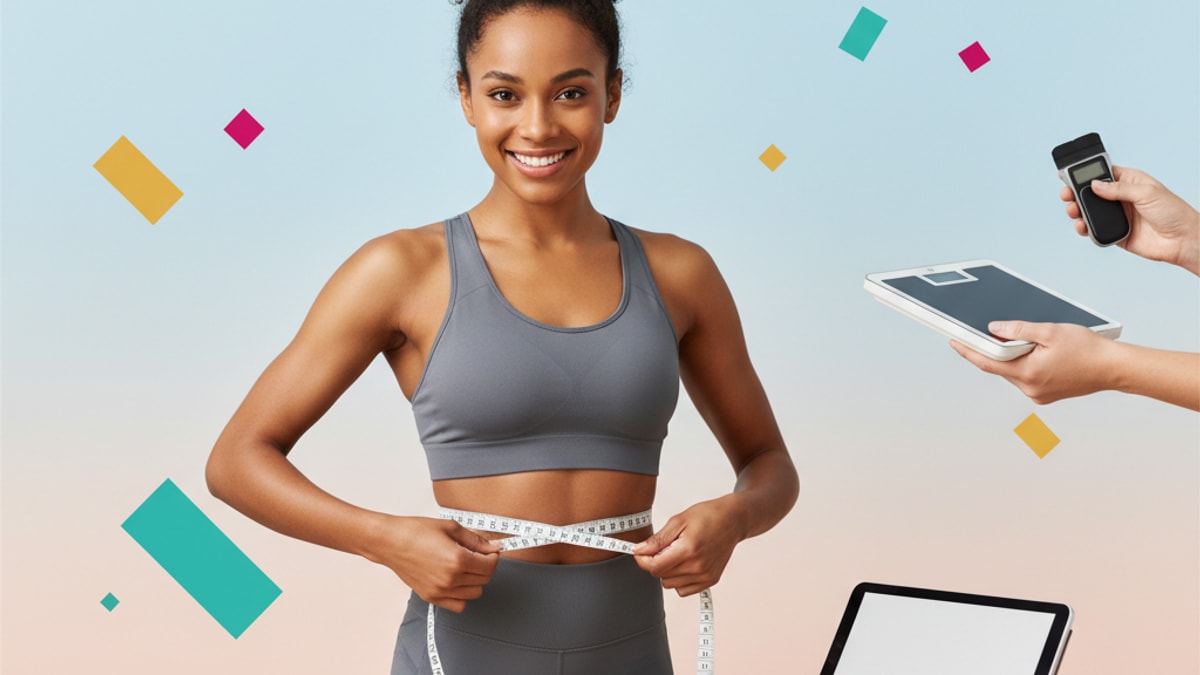
Let's be honest. The relationship most of us have with our bathroom scale is, at best, complicated. It’s a source of morning anxiety, a dispenser of fleeting joy, and, far too often, a frustratingly inaccurate narrator of our health journey. You can do everything right for a week—impeccable nutrition, consistent movement, great sleep—only to see the number tick up a pound. It’s enough to make anyone want to give up.
Here at TrimrX, our team works with individuals every single day who are embarking on significant, life-changing health transformations, often supported by advanced GLP-1 medications like Semaglutide and Tirzepatide. And one of the first things we stress is the critical need to look beyond the scale. The real, nuanced, and motivating story of your progress isn't told in pounds alone. It's told in inches. Learning how to take measurements for weight loss isn't just a task; it's a fundamental shift in how you perceive success. It's about tracking fat loss, not just weight fluctuation.
Beyond the Scale: Why Measurements Matter More Than You Think
The scale is a liar. There, we said it.
It’s a blunt instrument in a world that requires surgical precision. The number you see reflects a sprawling combination of things: body fat, muscle mass, bone density, organ weight, and—the biggest variable of all—water retention. Did you have a salty dinner last night? Your weight is up. Is it a certain time of the month? Your weight is up. Did you have a great workout and your muscles are holding onto water for repair? Believe it, your weight is probably up. It’s a chaotic and often demoralizing data point.
This is where body measurements provide an unflinching, more accurate picture of what’s actually happening. When you lose inches, particularly around your waist, you are losing body fat. Period. This is especially true for visceral fat, the dangerous type that surrounds your organs and is a key target for improvement in any serious health program. Our experience shows that on a medically-supervised plan, waist circumference often shrinks dramatically even before the scale shows a catastrophic drop. That is a massive victory.
It’s all about body recomposition. You might be losing fat while simultaneously gaining lean muscle, a fantastic outcome for your metabolism and overall health. On the scale, this might look like stagnation. A pound of muscle is significantly denser and takes up less space than a pound of fat. So, you could lose a pound of fat and gain a pound of muscle, and the scale won't budge. But your clothes will feel looser. Your waist will be smaller. The tape measure will tell you the truth. It's the data that matters.
The Essential Toolkit: What You'll Actually Need
You don’t need a high-tech lab or expensive gadgets to get this done right. The beauty of this method is its simplicity. Our team has found that the most reliable results come from the most basic tools, used with impeccable consistency.
Here’s your entire shopping list:
-
A Flexible Measuring Tape: This is the star of the show. Specifically, you want a soft, flexible tape measure, often called a tailor's or sewing tape. It should be made of a non-stretch material like fiberglass. Avoid the metal, retractable ones you find in a toolbox—they don't conform to your body's curves. Also, steer clear of old cloth tapes, as they can stretch out over time and skew your results.
-
A Notebook or App: You need a dedicated place to log your numbers. It can be a simple paper journal, a note on your phone, or a spreadsheet. The tool doesn't matter as much as the habit of using it consistently. Seeing the numbers change over weeks and months is incredibly motivating.
-
A Full-Length Mirror: This isn't for vanity; it's for accuracy. A mirror helps you ensure the tape is level and positioned correctly, especially for spots that are hard to see, like your hips.
That's it. Seriously. Don't overcomplicate it.
Setting the Stage for Impeccable Accuracy
Having the right tools is one thing; using them correctly is another entirely. The secret to meaningful measurement tracking isn't a single perfect measurement, but rather a series of perfectly consistent measurements over time. This is where the discipline comes in. We can't stress this enough: consistency is the non-negotiable element.
Here are the ground rules our team recommends to every patient for getting reliable data:
- Measure at the Same Time of Day: Your body fluctuates throughout the day. For the best results, take your measurements first thing in the morning, after you've used the restroom and before you've had anything to eat or drink. This gives you the most stable baseline.
- Mind the Tension: The tape should be snug against your skin, but it shouldn't be digging in or creating an indentation. Think of it as a gentle hug, not a stranglehold. If you have to suck in to get the number you want, you're defeating the entire purpose. Breathe normally and relax.
- Keep It Level: For circumference measurements (like your waist and hips), the tape must be parallel to the floor all the way around. This is where the mirror comes in handy. A sagging or angled tape can easily add or subtract an inch, making your data useless.
- Use Consistent Landmarks: Always measure at the exact same spot. Don't just guess where the middle of your thigh is. Use consistent, identifiable body landmarks. For your waist, is it at your navel or the narrowest point? Decide on one and stick to it. We'll outline our recommended landmarks below.
- Less is More (Clothing-Wise): For true accuracy, measure against your bare skin. If you're not comfortable with that, wear the same minimal, thin layer of clothing each time, like lightweight underwear. Measuring over jeans one week and gym shorts the next will destroy your data's integrity.
Adhering to these principles turns a random act into a scientific process. It ensures that when you see a number change, it's because your body has changed, not your method.
The Step-by-Step Measurement Protocol We Recommend
Alright, let's get down to the specifics. Here is the exact protocol we advise for a comprehensive body measurement routine. Stand with your feet together, muscles relaxed, and breathe normally.
Neck:
Place the tape around the middle of your neck. For men, this is typically just below the Adam's apple. Keep your chin up and look straight ahead.
Pro Tip from Our Team: Don't shrug or tense your shoulders. A relaxed neck posture is key for a consistent reading.
Chest (or Bust):
Position the tape so it runs across the widest part of your chest, which is usually right over the nipples. Pass it under your armpits and make sure it's straight and level across your back. Women should wear a non-padded bra or no bra for this measurement.
Pro Tip from Our Team: Take this measurement after you've exhaled normally. Don't puff out your chest or hold your breath.
Waist:
This is the most important measurement for tracking health risks associated with visceral fat. Find your true, natural waist. It’s the narrowest part of your torso, usually an inch or so above your belly button. If you're unsure, bend to one side—the crease that forms is your natural waistline. Wrap the tape around this point, keeping it level.
Pro Tip from Our Team: We strongly recommend using the natural waist over the navel. The navel's position can change slightly with weight fluctuations, while the narrowest point of your torso is a more stable anatomical landmark.
Hips:
Stand with your feet together. Wrap the tape measure around the absolute widest part of your hips and buttocks. You'll need to check the mirror to ensure the tape hasn't slipped down or ridden up in the back. This measurement is a fantastic indicator of lower-body fat loss.
Pro Tip from Our Team: Your pockets should be empty. Even a phone or wallet can throw this number off significantly.
Thighs:
Measure each thigh separately and record both numbers. Stand with your weight evenly distributed. Wrap the tape around the widest part of your upper thigh, which is typically just below the gluteal fold (where your buttock meets your leg).
Pro Tip from Our Team: Some people find it helpful to use a marker (like an eyeliner pencil) to make a small, temporary dot to ensure they hit the same spot on both legs, every time.
Calves:
While seated or standing, wrap the tape around the widest part of each calf. Again, measure and record both sides separately.
Upper Arms (Biceps):
Measure each arm separately. Let your arm hang relaxed at your side. Find the midpoint between the tip of your shoulder bone and the point of your elbow. Wrap the tape around this spot.
Pro Tip from Our Team: For fat loss tracking, we recommend measuring the arm while it's relaxed (unflexed). A flexed measurement is more for tracking muscle hypertrophy (growth), which is a different goal.
Tracking Methods: A Quick Comparison
To give you a clearer picture, here’s how different tracking methods stack up against each other. Our approach is always holistic—we believe in using a combination of tools to see the whole story.
| Method | Pros | Cons | Best For |
|---|---|---|---|
| Bathroom Scale | Quick, easy, and accessible. | Highly inaccurate for body composition; influenced by water, food, and hormones. Can be demotivating. | Tracking broad, long-term weight trends over many months, not day-to-day progress. |
| Body Measurements | Excellent for tracking fat loss and body recomposition. Highly motivating. Inexpensive. | Requires consistency and proper technique. Changes can be slower to appear than weight fluctuations. | Understanding true body shape changes and validating fat loss, especially when the scale stalls. |
| Progress Photos | Provides powerful visual evidence of change that numbers can't capture. | Subjective; lighting and angles can dramatically alter perception. Not quantifiable. | Visual motivation and seeing changes in posture, skin tone, and overall shape over time. |
| Body Fat Calipers | Directly measures subcutaneous fat. Can provide a body fat percentage estimate. Inexpensive. | High margin for error if not used by a trained professional. Measures only subcutaneous, not visceral, fat. | Advanced users who want a rough estimate of body fat percentage and are willing to learn the technique. |
Integrating Measurements with a Medically-Supervised Program
For our patients at TrimrX, body measurements aren't just a 'nice-to-have'—they are a core component of their treatment plan. When you're on a powerful medication like Semaglutide or Tirzepatide, things can change quickly. These medications are incredibly effective at targeting fat, particularly the harmful visceral fat stored around the abdomen. A shrinking waistline is one of the first and most important signs that the treatment is working exactly as it should.
This data provides invaluable feedback for our medical team. It helps us confirm that you're losing the right kind of weight (fat) while preserving metabolically active lean muscle. A falling waist-to-hip ratio is a clinical indicator of reduced cardiovascular risk, and that's a health outcome far more meaningful than any number on a scale.
Our programs are designed to be comprehensive. The medication is a formidable tool, but it achieves the best, most sustainable results when paired with positive lifestyle adjustments. Your body measurements become the tangible proof that your efforts—in nutrition, in movement, in consistency—are paying off in a measurable way. It closes the feedback loop, keeping you motivated and engaged in your own success story. If you're ready to see this kind of data-driven progress for yourself, you can find out if you're a candidate and Start Your Treatment with a plan tailored to you.
Common Mistakes We See (And How to Avoid Them)
Over the years, we've seen a few common missteps that can sabotage even the best intentions. Here’s what to watch out for:
- Sucking It In: It's tempting, we know. But pulling in your stomach or flexing gives you a false, flattering number that does nothing to track your actual progress. Relax and be honest with the tape.
- Measuring Infrequently (or Too Frequently): We recommend measuring every 2-4 weeks. Any more often, and you might not see changes, which can be discouraging. Any less often, and you lose the granular data that keeps you motivated.
- Inconsistent Tension: This is the most common error. One week you pull the tape tight, the next it's loose. Practice getting that 'snug but not compressing' feel down until it's second nature.
- Letting the Tape Sag: It’s so easy to let the tape droop in the back when measuring your chest or hips. Always, always use a mirror to double-check that it's parallel to the floor all the way around.
- Comparing Yourself to Others: Your body is unique. Where you lose fat first is determined by genetics. Your friend might lose it from their hips first, while you lose it from your waist. Focus on your trendline. This is your journey.
Ultimately, learning how to take measurements for weight loss is about shifting your focus from a single, volatile number to a rich, detailed story of your body's transformation. It’s about celebrating non-scale victories—the day your jeans fit better, the moment you notice more definition in your arms, the confidence that comes from knowing you’re getting stronger and healthier from the inside out. The scale can't tell you any of that. But the tape measure can.
Frequently Asked Questions
How often should I take my measurements for weight loss?
▼
We recommend taking your measurements every 2 to 4 weeks. Measuring too frequently can be discouraging as changes aren’t always visible week-to-week. This cadence provides enough time to see meaningful progress and establish a clear trend.
Is it better to measure in centimeters or inches?
▼
It honestly doesn’t matter, as long as you are consistent. Pick one unit of measurement and stick with it. Inches are more common in the U.S., while centimeters offer more granular increments, but consistency is the most important factor.
What if my weight goes down but my measurements don’t change?
▼
This can happen, especially in the very beginning of a weight loss journey. It often indicates an initial loss of water weight rather than significant fat loss. Stay consistent, as fat loss will follow and will be reflected in your measurements over time.
What does it mean if my measurements go up?
▼
Don’t panic! A slight increase could be due to temporary bloating, fluid retention, or muscle gain if you’ve started a new strength training routine. If the upward trend continues over several measurements, it’s a good time to review your nutrition and activity levels.
Why is my waist measurement considered so important?
▼
Your waist measurement is a key indicator of visceral fat—the harmful fat surrounding your internal organs. A reduction in waist circumference is directly linked to a lower risk of chronic diseases like heart disease and type 2 diabetes, making it a critical health marker.
Can I take my own measurements accurately?
▼
Absolutely. While having a partner can help, you can get very accurate results on your own by using a mirror to ensure the tape is level. For tricky spots like your back, standing with your back to the mirror can help you see the tape’s position.
Is it possible to lose inches but not pounds?
▼
Yes, and it’s a fantastic sign! This phenomenon, known as body recomposition, means you’re losing body fat while gaining denser lean muscle. This is a major win for your metabolism and overall health, and it’s something the scale would completely fail to report.
Does muscle really weigh more than fat?
▼
This is a common misconception. A pound of muscle weighs the same as a pound of fat—a pound is a pound. The key difference is density; muscle is about 18% denser than fat, so a pound of it takes up significantly less space in your body.
How does a GLP-1 medication like Semaglutide affect body measurements?
▼
GLP-1 medications are particularly effective at reducing visceral and abdominal fat. Patients on our programs often see a significant and rapid decrease in their waist measurement, which is a primary indicator that the treatment is successfully targeting the most harmful type of body fat.
Should I measure my arms and thighs flexed or unflexed?
▼
For tracking fat loss, we always recommend measuring limbs in a relaxed, unflexed state. Measuring while flexed is more useful for bodybuilders tracking muscle growth (hypertrophy), which is a different goal than general fat reduction.
What’s the single most common mistake people make when measuring?
▼
In our experience, the most frequent error is inconsistent tape tension. People either pull the tape too tight or leave it too loose, which completely invalidates the data. The goal is a snug fit that contours to the body without compressing the skin.

Transforming Lives, One Step at a Time
Keep reading

Do You Need a Prescription for GLP-1s? The 2026 Answer
Wondering ‘do you need a prescription for glp 1’ in 2026? Yes. We explain why a doctor’s oversight is critical for safe, effective results.

How to Get GLP-1 Covered By Insurance: Our 2026 Playbook
Struggling with how to get glp-1 covered by insurance? Our 2026 guide breaks down prior authorizations, appeals, and documentation.

Traveling with GLP-1s in 2026: Your Essential Trip-Proof Plan
Don’t let travel disrupt your GLP-1 treatment. Learn how to travel with glp 1 medications safely and stress-free in our 2026 expert guide.


