How to Take Metamucil for Weight Loss: Our Expert Take
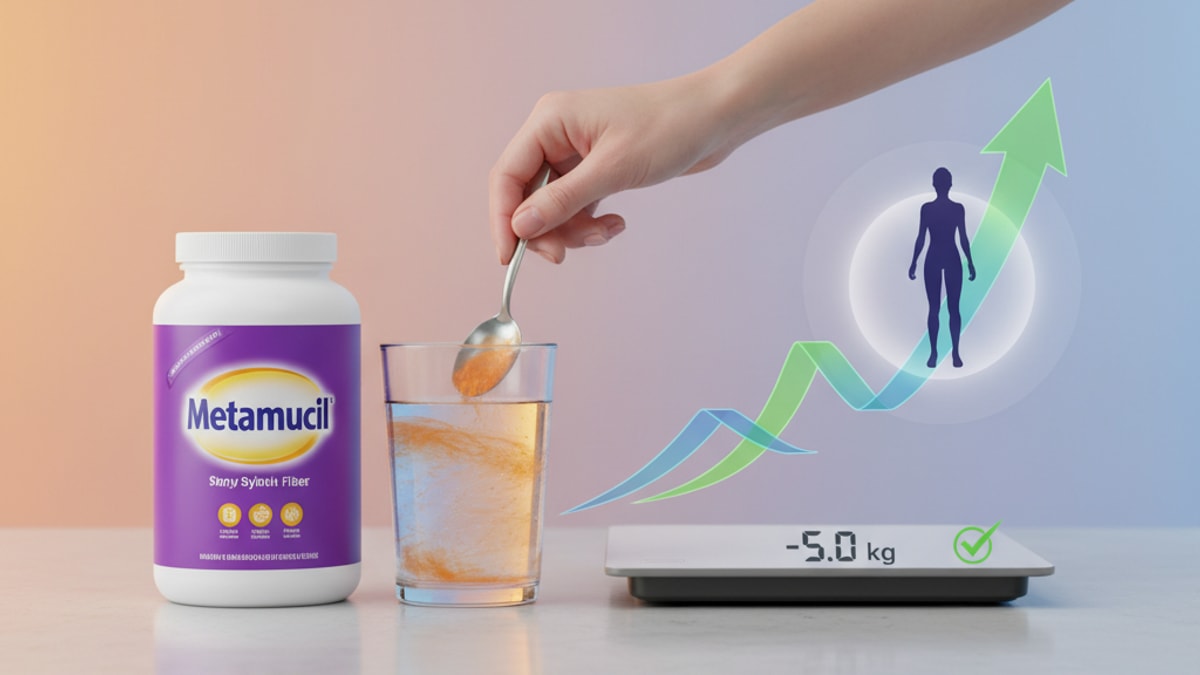
Your Guide to Using Metamucil for Weight Loss
It’s a question our team hears surprisingly often. In the sprawling, often confusing world of weight management, people are constantly searching for an edge—a simple trick, a supplement, something to make the formidable journey a little easier. And Metamucil, that familiar orange canister in the pharmacy aisle, has become a popular candidate. The idea seems simple enough: a fiber supplement that makes you feel full, so you eat less. It makes intuitive sense.
But let’s be honest. Is it really that straightforward? As a team dedicated to the science of metabolic health and medically-supervised weight loss, we believe in looking past the surface-level claims. While fiber is undeniably a critical, non-negotiable element of a healthy diet, using a supplement like Metamucil as a primary weight loss tool requires a nuanced conversation. It's not a magic bullet. We've seen that relying on it alone can often lead to frustration and stalled progress. So, let’s break down how to take Metamucil for weight loss effectively, what its limitations are, and where it fits into a truly comprehensive strategy.
So, What Exactly Is Metamucil?
Before we dive into the 'how,' we need to understand the 'what.' Metamucil’s active ingredient is psyllium husk, a type of soluble fiber derived from the seeds of the Plantago ovata plant. Think of it as a tiny, natural sponge. When you mix it with water, it swells dramatically, forming a thick, gel-like substance in your digestive tract.
This gelling action is the key to its effects. It does two primary things:
- It Adds Bulk: This gel takes up space in your stomach, which contributes to a feeling of fullness, or satiety. The physical presence of this mass sends signals to your brain that you're full, which can help curb your appetite.
- It Slows Digestion: The viscous gel also slows down the rate at which food empties from your stomach. This means you feel full for longer after a meal, potentially reducing the urge to snack between meals. It also slows the absorption of sugars, which can help moderate blood sugar spikes—a definite plus for metabolic health.
It’s a simple, elegant mechanism. And it’s why fiber, in general, is so heavily recommended for both overall health and weight management. But a supplement is a concentrated dose, and that changes the game a bit.
The Right Way: A Protocol for Taking Metamucil Safely
If you're going to incorporate Metamucil into your routine, doing it correctly is crucial for maximizing potential benefits and minimizing some rather unpleasant side effects. Our experience shows that a haphazard approach is where most people go wrong. Here's the protocol our team recommends.
Timing is Everything
Don't just drink it whenever you remember. To use it for appetite control, the timing is critical. We recommend taking your dose about 20 to 30 minutes before your main meals (like lunch and dinner). This gives the psyllium husk enough time to mix with water, expand in your stomach, and begin promoting that feeling of satiety before you start eating. Taking it with or after a meal is far less effective for appetite control because you’ve already consumed the calories.
Start Low, Go Slow
We can't stress this enough. Your digestive system needs time to adapt to a sudden, massive influx of fiber. A common mistake is starting with the full recommended dose on the package. This is a recipe for gas, bloating, and uncomfortable cramping. Your gut bacteria need to adjust.
Our recommendation? Start with half a serving (usually about one teaspoon) once a day for the first week. See how your body feels. If you're tolerating it well, you can move to a full serving once a day. After another week, you might consider adding a second dose before another meal. This slow ramp-up is the single best way to avoid digestive distress.
Hydration is Non-Negotiable
This is the most important rule. Psyllium husk works by absorbing water. If you don't provide enough water, it can't do its job properly and, in a worst-case scenario, can cause a blockage. That's not just uncomfortable; it can be dangerous. For every serving of Metamucil, you must drink a full 8-ounce glass of water with it. Mix it quickly and drink it immediately before it thickens too much.
But it doesn't stop there. You need to increase your overall water intake throughout the day as well. The fiber will continue to absorb water as it moves through your system. Aim for at least an extra glass or two of water daily on top of your usual intake. If you fail to do this, you risk constipation—the exact opposite of what most people use fiber for.
Choose Your Formula Wisely
Metamucil comes in various forms—sugar-free, with real sugar, capsules, powders. For weight loss, the choice is obvious: always opt for the sugar-free version. The original orange-flavored powder with sugar contains a significant amount of sugar and calories per serving, which completely defeats the purpose of using it for weight management. Read the label. The capsules are an option if you dislike the texture of the drink, but you still need to drink a full glass of water with them.
A Reality Check: The Hard Limits of a Fiber-First Approach
Now for the part of the conversation that often gets overlooked in online forums and quick-fix articles. Metamucil is a tool, not a cure. It can help you manage hunger, which is one battle in the war on weight. But it's just one battle.
Let's be perfectly clear: Metamucil does not burn fat. It doesn't boost your metabolism in any meaningful way. It doesn't alter the complex hormonal signals that drive fat storage and hunger cues. The weight loss that people experience from Metamucil is almost entirely secondary to a reduction in calorie intake. If feeling fuller helps you eat a smaller portion or skip a high-calorie snack, you will create a calorie deficit. And a calorie deficit leads to weight loss.
Simple, right?
Well, not exactly. The human body is incredibly adaptive. It fights back against perceived starvation. Relying solely on filling your stomach with a low-calorie gel can work for a little while, but your body's powerful hormonal systems—driven by ghrelin (the 'hunger hormone') and leptin (the 'satiety hormone')—often win out in the long run. Your brain's cravings and your metabolic rate can adjust, leading to the dreaded plateau.
Our team has consulted with countless individuals who have tried this approach. They feel great for a few weeks, lose a few pounds (often mostly water weight), and then everything grinds to a halt. Why? Because they haven't addressed the root cause of their weight gain, whether it's insulin resistance, hormonal imbalances, or ingrained metabolic patterns. Metamucil is like putting a bandage on a complex wound. It covers the problem, but it doesn't heal it.
Fiber Showdown: Psyllium vs. Other Sources
It's also worth placing Metamucil in the context of other fiber options. Psyllium is a great soluble fiber, but it's not the only player on the field. How does it stack up against other supplements and, more importantly, real food?
| Feature | Metamucil (Psyllium Husk) | Benefiber (Wheat Dextrin) | Whole Foods (Oats, Beans, Apples) |
|---|---|---|---|
| Fiber Type | Mostly Soluble | Soluble | Mix of Soluble and Insoluble |
| Mechanism | Forms a thick gel, adds significant bulk | Dissolves completely, non-thickening | Provides bulk, slows digestion, feeds gut biome |
| Satiety Effect | High (due to gelling and bulk) | Low to Moderate | High (due to volume and nutrients) |
| Best For | Aggressive appetite control, regularity | Gently boosting fiber intake without texture changes | Overall health, gut diversity, sustained energy |
| Potential Downsides | Can cause significant bloating/gas if not introduced slowly; requires a lot of water. | Less effective for feeling 'full.' | Requires preparation; higher in calories and carbs (though beneficial ones). |
As you can see, whole food sources of fiber offer a much broader spectrum of benefits, including vitamins, minerals, antioxidants, and a food source for your beneficial gut bacteria. A supplement is a targeted intervention; a bowl of oatmeal with berries is holistic nutrition. We always, always recommend a food-first approach. Use supplements to supplement an already high-quality diet, not replace it.
Beyond the Supplement: Building a Real Weight Loss Strategy
This is where we move from simple hacks to sustainable health. Using Metamucil can be a small part of a much bigger, more effective picture. A real strategy doesn't just focus on 'eating less.' It focuses on rewiring your body's relationship with food and energy.
This means:
- Prioritizing Protein: Protein is far more satiating per calorie than carbs or fat. Building your meals around lean protein sources will keep you fuller for longer, naturally.
- Managing Blood Sugar: Focusing on whole foods, including high-fiber vegetables and complex carbs, prevents the blood sugar rollercoaster that drives cravings.
- Incorporating Movement: Exercise does more than burn calories; it improves insulin sensitivity and regulates appetite hormones.
- Addressing the 'Why': Understanding the emotional and habitual triggers for eating is paramount for long-term success.
This holistic approach is effective. It's the foundation of any good plan. But for many people struggling with significant weight, especially when metabolic conditions like insulin resistance are at play, lifestyle changes alone feel like an uphill battle against their own biology.
When Biology Fights Back: The Role of Medical Weight Loss
This brings us to the core of what we do at TrimrX. We've seen firsthand that for many, willpower isn't the missing ingredient—it's a biological disadvantage. This is where modern medicine offers a revolutionary shift.
While Metamucil works by physically filling your stomach, advanced medications like GLP-1 agonists (Semaglutide and Tirzepatide) work on a completely different, more profound level. They target the body's own hormonal signaling system.
GLP-1s work by mimicking the natural hormones that tell your brain you're full. They don't just create a feeling of fullness; they fundamentally reduce appetite and cravings at the source—in the brain. They also slow stomach emptying (like fiber, but more powerfully) and improve how your body processes sugar and uses insulin. It's a multi-pronged metabolic reset.
This isn't about finding an easy way out. It's about leveling the playing field. It's about using science to correct the biological signals that have gone awry. For individuals who have tried everything else, a medically-supervised program can be the key that finally unlocks sustainable weight loss. It allows them to implement healthy lifestyle changes without constantly fighting a tidal wave of hunger and cravings.
If you feel like you're stuck in that cycle, fighting your own body's signals day after day, it may be time to explore a more powerful solution. Understanding your options is the first step. You can see if a medical approach is right for you when you Take Quiz on our site. It’s a simple way to get clarity.
So, can you take Metamucil while on a GLP-1 medication? Absolutely, and it can even be beneficial for maintaining regularity, which can sometimes be a challenge with these treatments. But the roles are clear: the medication is the primary driver of metabolic change, and the fiber is a supporting player for digestive health. If you're ready to make that fundamental shift, it's time to Start Your Treatment and work with a team that understands the science from the inside out.
Ultimately, how you take Metamucil for weight loss is with the clear understanding that it is a small, supportive habit within a much larger, more robust framework for health. It can help you feel a bit fuller before a meal. That's it. It won't fix a poor diet, it won't out-maneuver a sluggish metabolism, and it won't create the lasting hormonal changes needed for significant, long-term success. Use it wisely, with the right expectations, but never mistake this simple tool for the entire toolbox.
Frequently Asked Questions
How much weight can I realistically lose with Metamucil?
▼
Weight loss from Metamucil is highly variable and depends entirely on whether it helps you reduce your overall calorie intake. Our experience shows that most people may lose a few pounds initially, but it is not a solution for significant or long-term weight loss on its own.
Does the sugar-free version of Metamucil work the same for weight loss?
▼
Yes, and it’s the only version we would recommend for this purpose. The sugar-free formulas provide the same psyllium fiber without the added calories and sugar, which would directly counteract your weight loss efforts.
Can I take Metamucil on an empty stomach in the morning?
▼
You can, but for weight loss purposes, it’s more effective to take it 20-30 minutes before your main meals. Taking it in the morning on an empty stomach is more geared towards promoting general regularity rather than managing mealtime appetite.
Will Metamucil interfere with my other medications?
▼
It absolutely can. The thick gel it forms can slow down the absorption of many medications, making them less effective. We strongly advise taking Metamucil at least two hours before or two hours after any prescription medications or other supplements.
Is it better to take the capsules or the powder?
▼
Both deliver the same active ingredient. The powder allows for more dosage flexibility and mixes with water to begin the gelling process immediately. The capsules are more convenient and tasteless, but you must still drink a full 8-ounce glass of water with them to ensure safety and effectiveness.
What happens if I stop taking Metamucil?
▼
When you stop taking it, you’ll lose the appetite-suppressing benefit from the added bulk. If you haven’t made sustainable changes to your diet and lifestyle, it’s very likely your previous eating habits and hunger levels will return.
Can I take Metamucil with a GLP-1 medication like Semaglutide or Tirzepatide?
▼
Yes, you generally can, and it can be helpful for maintaining digestive regularity. However, it’s crucial to discuss this with your medical provider. The timing is important to avoid any absorption issues with your medication.
How long does it take for Metamucil to work for appetite control?
▼
You should feel the effects on your appetite within about 20-30 minutes of taking a dose, which is why timing it before a meal is so important. The effects on digestive regularity may take one to three days to become noticeable.
Does Metamucil help with belly fat specifically?
▼
No, it does not. It’s impossible to ‘spot reduce’ fat from any specific area of the body. Any fat loss that occurs from a calorie deficit created with the help of Metamucil will happen throughout the body, dictated by your genetics.
What’s the maximum amount of Metamucil I can take in a day?
▼
You should always follow the package directions, which typically advise up to three servings per day. Exceeding this can lead to severe digestive distress and potential nutrient absorption issues. More is not better.
Are there any people who should not take Metamucil?
▼
Yes. Individuals with a history of bowel obstructions, difficulty swallowing, or certain digestive disorders should avoid psyllium husk unless cleared by their doctor. It’s always best to consult a healthcare professional before starting any new supplement.
Will I become dependent on Metamucil for bowel regularity?
▼
While not a chemical dependency, your body can become accustomed to the high level of fiber for stimulating bowel movements. It’s always a better long-term strategy to get fiber from a diverse range of whole foods to support a healthy gut microbiome.

Transforming Lives, One Step at a Time
Keep reading

Do You Need a Prescription for GLP-1s? The 2026 Answer
Wondering ‘do you need a prescription for glp 1’ in 2026? Yes. We explain why a doctor’s oversight is critical for safe, effective results.

How to Get GLP-1 Covered By Insurance: Our 2026 Playbook
Struggling with how to get glp-1 covered by insurance? Our 2026 guide breaks down prior authorizations, appeals, and documentation.

Traveling with GLP-1s in 2026: Your Essential Trip-Proof Plan
Don’t let travel disrupt your GLP-1 treatment. Learn how to travel with glp 1 medications safely and stress-free in our 2026 expert guide.


