Lost the Weight? How to Tighten Neck Skin With Our Expert Tips
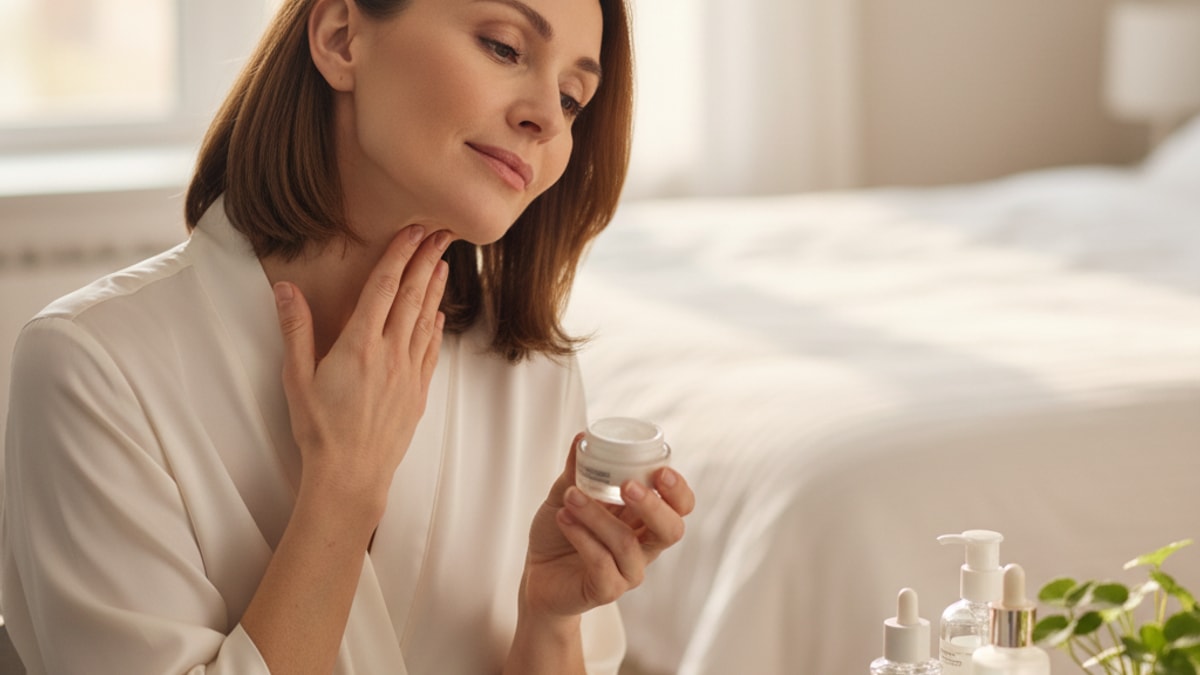
First, let's acknowledge the incredible thing you've accomplished. Significant weight loss is a formidable journey, a testament to your dedication and resilience. It’s a profound shift in your health and your life. But sometimes, after the numbers on the scale have settled, a new, frustrating challenge emerges: loose skin, particularly around the neck.
It can feel like a cruel paradox. You've done the hard work to feel healthier and more confident, yet this lingering issue can undermine that very confidence. Our team at TrimrX sees this all the time. We guide patients through transformative weight loss journeys using advanced GLP-1 medications, and we understand that the process doesn't end when you hit your target weight. Helping you navigate the 'after' is a critical, non-negotiable part of our commitment. So, let's talk about how to tighten neck skin after weight loss, not with myths or quick fixes, but with strategies grounded in science and our extensive professional experience.
Why Does Neck Skin Loosen After Weight Loss?
Understanding the 'why' is the first step toward finding the right 'how.' Your skin is a remarkable, living organ. It has incredible elasticity, primarily thanks to two critical proteins: collagen and elastin. Think of collagen as the scaffolding that gives your skin its structure and firmness, and elastin as the microscopic rubber bands that allow it to snap back into place after being stretched.
When you gain weight, your skin stretches over time to accommodate the increased volume. It’s a slow, gradual process. However, when you lose a significant amount of weight—especially with the effectiveness of modern treatments like Semaglutide and Tirzepatide—the fat volume disappears much more rapidly than the skin can often retract. The scaffolding remains stretched out. Those elastin fibers, which may have been damaged by years of being stretched, sun exposure, and the natural aging process, simply can't recoil as effectively as they once did. The result is skin laxity. It's not a failure on your part; it's a biological reality. Several factors compound this issue: the amount of weight lost, how quickly it was lost, your age (elastin production naturally declines over time), genetics, and lifestyle factors like smoking or sun exposure. The skin on the neck is also thinner and more delicate than on other parts of thebody, making it particularly susceptible.
Can You Prevent Loose Neck Skin During Weight Loss?
This is the million-dollar question, isn't it? While you might not be able to prevent it entirely, especially after massive weight loss, you can absolutely take proactive steps to mitigate the severity. We can't stress this enough: a holistic approach during your weight loss is crucial.
First, hydration. It sounds almost too simple, but it’s foundational. Well-hydrated skin is more pliable and resilient. Dehydration can make skin look and feel less elastic. We recommend our patients aim for consistent, steady water intake throughout the day. It's not just about weight loss; it's about total body and cellular health.
Second, nutrition is paramount. Your body needs the right building blocks to produce and protect collagen and elastin. This means a diet rich in high-quality protein (essential for skin structure), antioxidants (from fruits and vegetables to fight off free radical damage), and healthy fats (which support the skin's lipid barrier). We guide our patients on this because we know that weight loss medication is a powerful tool, but it works best as part of a comprehensive lifestyle change. You're not just losing weight; you're rebuilding your body from the inside out.
Finally, the rate of weight loss does play a role. A slower, more gradual loss of one to two pounds per week can give your skin more time to adapt and retract. Now, we know that with highly effective treatments like those we offer at TrimrX, weight loss can sometimes be more rapid. This is precisely why having a medical team to monitor your progress is so important. We can help manage the process and ensure you're supporting your skin's health every step of the way, even as you see fantastic results on the scale.
At-Home Strategies: Your First Line of Defense
Before exploring more intensive treatments, it's essential to maximize what you can do from the comfort of your home. Consistency here can make a noticeable difference, especially for mild to moderate laxity. Think of this as laying the groundwork for healthy, resilient skin.
Let’s be honest, no cream is a miracle in a jar. But the right topical ingredients can provide meaningful support. We've found that two ingredients are particularly powerful: retinoids and peptides. Retinoids (like retinol or the prescription-strength tretinoin) are champions of cellular turnover and have been clinically shown to stimulate collagen production over time. They are the gold standard in topical anti-aging. Peptides are short chains of amino acids that act as messengers, signaling your skin to produce more collagen. Using a well-formulated neck cream containing these ingredients daily can improve skin texture and firmness over several months. You have to be patient. We're talking months, not days.
Sunscreen is another non-negotiable. It's a preventative measure, but it's the most important one. UV radiation actively breaks down existing collagen and elastin, sabotaging any progress you're making. A broad-spectrum SPF 30 or higher, applied to your face, neck, and chest every single day, is your best defense against further degradation of your skin's structural proteins.
What about facial exercises or 'neck yoga'? The evidence here is largely anecdotal. While strengthening the underlying platysma muscle in the neck can theoretically provide a better foundation for the skin to sit on, these exercises won't directly tighten the skin itself. Our professional observation is that they are unlikely to produce dramatic results for skin laxity caused by weight loss, but they are harmless and may offer some very subtle benefits in muscle tone. Don't expect it to be a magic bullet.
The Critical Role of Collagen and Elastin
We've mentioned these proteins a few times, but it's worth diving deeper. Your entire strategy for how to tighten neck skin after weight loss should revolve around one core objective: protecting the collagen and elastin you have and stimulating the production of more.
Diet is your primary tool. You can't just eat collagen and have it go directly to your neck skin, but you can consume the nutrients your body requires to synthesize it. Vitamin C is a critical co-factor in collagen synthesis—without it, the process grinds to a halt. Think citrus fruits, bell peppers, broccoli, and strawberries. Zinc and copper are also essential minerals involved in the process, found in foods like nuts, seeds, whole grains, and shellfish. And, of course, protein provides the amino acids (like glycine and proline) that are the literal building blocks.
What about collagen supplements? The market is sprawling with powders, pills, and drinks. Research on their efficacy has been mixed but is becoming more promising. Some studies suggest that hydrolyzed collagen peptides are well-absorbed and can improve skin hydration and elasticity. If you choose to try them, our team suggests looking for a reputable brand that uses hydrolyzed Type I and III collagen and being prepared to take it consistently for at least three to six months to gauge any potential benefits. It’s a supportive measure, not a standalone solution.
Professional Non-Surgical Treatments: Stepping It Up
When at-home care isn't delivering the results you want, it's time to consider professional, non-invasive or minimally invasive treatments. This is where technology can offer a significant boost by targeting the deeper layers of the skin in a way topical products simply cannot. This is a big step, and it requires consultation with a qualified dermatologist or plastic surgeon to determine which option is right for your specific degree of laxity and skin type.
Radiofrequency (RF) treatments, like Thermage or Pellevé, use energy to create controlled heat in the dermis. This heat does two things: it causes an immediate contraction of existing collagen fibers for a subtle, initial tightening effect, and more importantly, it triggers a wound-healing response that stimulates your body to generate new collagen over the following months. It's a fantastic option for those with mild to moderate laxity who want zero downtime.
Ultherapy is another popular choice that uses focused ultrasound energy. It's unique because it allows the provider to see the layers of tissue they are treating, ensuring the energy is delivered to the precise depth where it will be most effective—often the same foundational layer addressed in a surgical facelift. It's generally considered one of the most powerful non-surgical lifting and tightening options, but it can be more uncomfortable during the procedure.
Microneedling, sometimes combined with radiofrequency (RF Microneedling), is another formidable tool. This procedure uses tiny, sterile needles to create controlled micro-injuries in the skin. Just like with RF, this process kickstarts your body's natural collagen and elastin production as it heals. It’s particularly effective for improving not just laxity but also skin texture, fine lines, and overall tone. You'll typically need a series of treatments for the best results.
Finally, laser resurfacing treatments (like Fraxel) can also help. While they are often used for texture and pigmentation, the heat they generate in the dermis also provides a collagen-stimulating benefit, leading to some skin tightening. Different lasers have different levels of intensity and associated downtime.
Comparing Non-Invasive Neck Tightening Options
Navigating these options can be overwhelming. To simplify, we've put together a quick comparison of the most common non-surgical approaches. Remember, the best choice is always determined after a personal consultation with a medical professional.
| Treatment | How It Works | Best For | Downtime | Professional Observation |
|---|---|---|---|---|
| Radiofrequency (RF) | Uses energy to heat deep skin layers, stimulating collagen. | Mild to moderate laxity, crepiness. | Minimal to none. | A great 'maintenance' or introductory treatment with high patient comfort. |
| Ultherapy | Focused ultrasound targets deep foundational layers for lifting. | Moderate laxity in patients with good underlying skin quality. | None, but some temporary redness/swelling. | Often a 'one-and-done' treatment (per year) for a noticeable lift. |
| RF Microneedling | Combines micro-injuries with radiofrequency heat for powerful collagen remodeling. | Moderate laxity, texture issues, and fine lines. | 2-5 days of redness and minor swelling. | Our team sees excellent, multifaceted results from this combination therapy. |
| Laser Resurfacing | Ablative or non-ablative light removes skin layers and heats the dermis. | Mild tightening, but exceptional for surface texture, sun damage, and wrinkles. | Varies from a few days to two weeks. | Best when surface imperfections are as much of a concern as laxity. |
When to Consider Surgical Options
We believe in an honest, unflinching approach. For some individuals, particularly those who have lost over 100 pounds or have significant skin laxity due to age and genetics, non-surgical treatments may not be able to deliver the desired outcome. In these cases, surgery is the most effective and definitive solution.
A neck lift (platysmaplasty) is a surgical procedure that removes excess, drooping skin and, in some cases, tightens the underlying neck muscles. This is the gold standard for correcting significant sagging and creating a sharper, more defined jawline and neck contour. It's an invasive procedure with significant downtime and cost, but the results are dramatic and long-lasting.
Deciding to pursue surgery is a deeply personal choice. It's the final step on the ladder of interventions. Our role at TrimrX is to help you achieve your health and weight goals safely and effectively. Part of that is providing the information you need to make empowered decisions about every aspect of your transformation, including knowing when to seek a consultation with a board-certified plastic surgeon.
How Your Medically-Supervised Journey Helps
Your entire health transformation is connected. The way you lose weight directly impacts the outcome for your skin. This is where a medically-supervised program becomes a game-changer. It's not just about getting a prescription; it's about having a team of experts who see the full picture. We monitor your rate of loss, provide critical nutritional counseling to support skin health, and help you build sustainable lifestyle habits.
We’ve designed our process to be more than just a transaction. It's a partnership. We understand the nuances of significant weight loss and the secondary challenges, like skin laxity, that can arise. That's why we're here to guide you. If you're ready to embark on a journey where every aspect of your health is considered, you can Take Quiz to see if you're a candidate for our program.
Ultimately, tackling loose neck skin is a process of patience and a multi-pronged strategy. It starts with foundational health—hydration and nutrition—moves to consistent at-home skincare, and can be powerfully accelerated with the right professional treatments. You've already proven you have the discipline and strength to achieve a major goal. This is just the next step in completing your incredible transformation. If you're ready, you can Start Your Treatment with a team that will be with you every step of the way.
Frequently Asked Questions
Do neck firming creams actually work for loose skin?
▼
They can help, but it’s important to have realistic expectations. Creams with ingredients like retinoids and peptides can stimulate collagen and improve skin texture over time. Our team views them as a supportive measure for mild laxity, not a solution for significant sagging.
How long does it take to see results from non-surgical neck tightening?
▼
Patience is key. Most non-surgical treatments like RF or Ultherapy work by stimulating your body’s own collagen production. While you might see some initial effects, the most significant results typically appear gradually over 3 to 6 months as new collagen forms.
Can exercise alone tighten loose neck skin?
▼
Unfortunately, no. Exercise can tone the underlying platysma muscle, which can provide a better foundation for the skin. However, it cannot directly shrink or tighten the skin itself, which has lost its elasticity.
Is loose skin on the neck after weight loss permanent?
▼
It depends on the severity. Mild laxity may improve over time with dedicated skincare and supportive nutrition. However, for significant sagging, the skin has often been stretched beyond its ability to fully retract, and professional or surgical intervention is usually needed for a noticeable change.
Does drinking more water help tighten skin?
▼
Hydration is foundational for skin health and elasticity. While drinking more water won’t magically tighten significantly loose skin, it ensures your skin is as pliable and resilient as possible. Our experience shows that well-hydrated skin simply functions and looks better overall.
Which is better for neck tightening: Radiofrequency or Ultherapy?
▼
It depends on your specific needs. Radiofrequency is excellent for mild-to-moderate laxity and improving crepiness with no downtime. Ultherapy uses ultrasound to go deeper, providing more of a ‘lift’ and is often better for moderate laxity, but can be more costly.
Will I have loose neck skin if I lose weight slowly?
▼
Losing weight at a slower, more gradual pace (1-2 pounds per week) can give your skin more time to retract, potentially reducing the severity of laxity. However, factors like age, genetics, and the total amount of weight lost still play a very large role.
At what point should I consider a surgical neck lift?
▼
A neck lift is typically considered when there is significant excess skin that non-surgical methods cannot adequately address. If you feel your neck skin laxity is severe and it significantly impacts your quality of life, we recommend a consultation with a board-certified plastic surgeon.
Can collagen supplements really help my neck skin?
▼
The research is promising but not yet definitive. Some studies show that hydrolyzed collagen peptides can improve skin elasticity and hydration from within. We see it as a potentially helpful supplement to a comprehensive approach, not a standalone cure.
How does smoking affect skin laxity after weight loss?
▼
Smoking is incredibly detrimental to skin elasticity. It constricts blood vessels, depriving the skin of oxygen and nutrients, and it accelerates the breakdown of collagen and elastin. Quitting smoking is one of the single best things you can do for your skin’s health.
Will my skin continue to tighten after I’ve maintained my weight?
▼
You may see some slight, gradual improvement in skin retraction for up to a year or two after stabilizing your weight. However, the majority of the natural retraction happens in the first several months. After that point, further significant tightening usually requires intervention.
Are there any risks with non-surgical neck tightening treatments?
▼
Yes, though they are generally low when performed by a qualified professional. Potential side effects can include temporary redness, swelling, bruising, and in rare cases, burns or changes in skin texture. A thorough consultation is essential to understand the risks of your chosen procedure.

Transforming Lives, One Step at a Time
Keep reading

Do You Need a Prescription for GLP-1s? The 2026 Answer
Wondering ‘do you need a prescription for glp 1’ in 2026? Yes. We explain why a doctor’s oversight is critical for safe, effective results.

How to Get GLP-1 Covered By Insurance: Our 2026 Playbook
Struggling with how to get glp-1 covered by insurance? Our 2026 guide breaks down prior authorizations, appeals, and documentation.

Traveling with GLP-1s in 2026: Your Essential Trip-Proof Plan
Don’t let travel disrupt your GLP-1 treatment. Learn how to travel with glp 1 medications safely and stress-free in our 2026 expert guide.


