How to Use a Vibration Plate for Weight Loss: A Pro’s Take
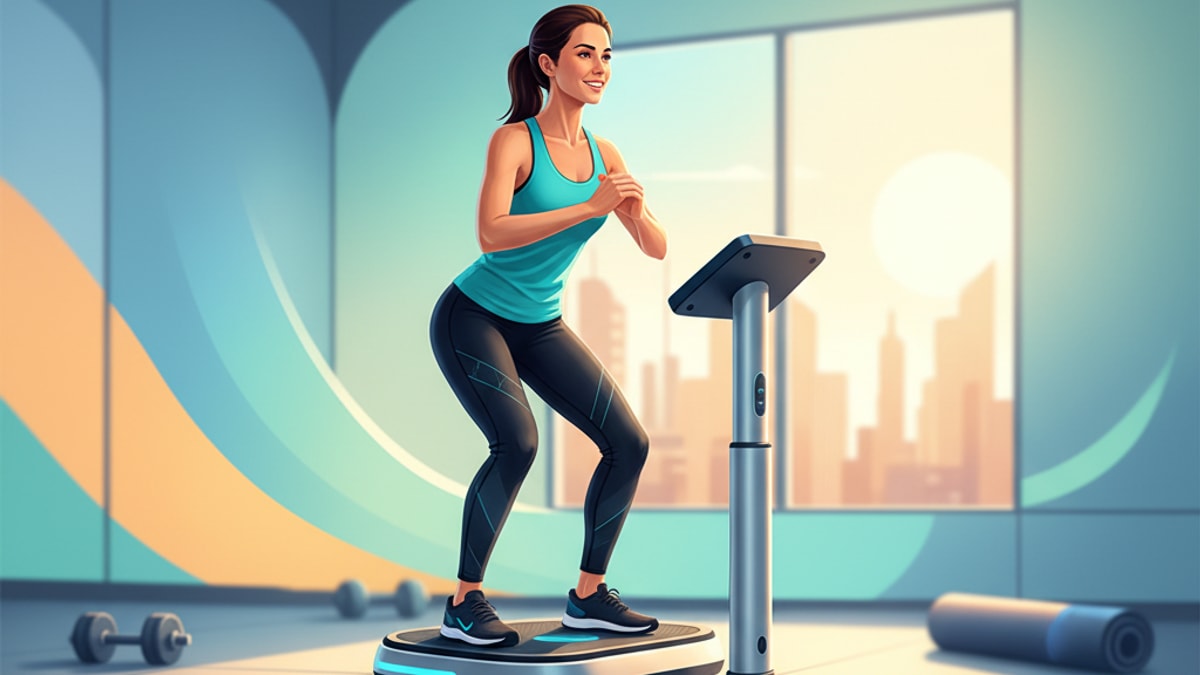
Let's be honest. The world of weight loss is sprawling and often contradictory. Every week, it seems there's a new gadget or 'miracle' workout promising to melt away pounds with minimal effort. Vibration plates have been a fixture in this landscape for years, surrounded by a mix of genuine science, impressive testimonials, and, frankly, a lot of hype. So, the big question remains: how do you use a vibration plate for weight loss in a way that actually works? Is it a gimmick, or is it a legitimate tool that can accelerate your results?
Our team has spent years at the forefront of metabolic science and medically-supervised weight loss, and here's our unfiltered take: a vibration plate can be a potent amplifier for your efforts, but it is not a magic bullet. It’s a piece of a much larger, more nuanced puzzle. Understanding how to leverage this technology correctly—and what its limitations are—is the critical, non-negotiable element that separates disappointment from real progress. We're here to cut through the noise and give you the professional playbook on making whole-body vibration a smart part of your comprehensive health strategy.
What's Really Happening When You Use a Vibration Plate?
Before we dive into the 'how,' it's crucial to understand the 'what.' When you stand on a high-quality vibration plate, it's not just shaking you randomly. It's sending specific, controlled energy waves up through your body. This technology is often referred to as Whole Body Vibration, or WBV. The platform oscillates at a particular frequency (how fast it moves) and amplitude (how far it moves), and this forces your muscles to react.
Instinctively, your body's stretch reflex kicks in. Your muscles contract and relax dozens of times per second to keep you stable. It's an involuntary response. Think about it: if you were to do a single squat, your muscles contract once. On a vibration plate set to 30 Hz, your muscles are contracting 30 times per second just to hold that same position. It's a significant, sometimes dramatic shift in muscular demand. This isn't about 'jiggling fat' off your body—that's a common and completely inaccurate myth. This is about deep, rapid muscle fiber activation.
This constant engagement does a few remarkable things:
- It recruits more muscle fibers. Your body calls on more of its resources to maintain balance and posture against the vibrations, including smaller stabilizing muscles that are often neglected in traditional workouts.
- It increases metabolic demand. This rapid-fire muscle activity requires energy. A lot of it. Your body has to burn calories to fuel these contractions, elevating your metabolic rate while you're on the machine.
- It improves circulation. The muscle-pumping action helps enhance blood flow and lymphatic drainage, which is vital for delivering nutrients, removing waste products, and reducing fluid retention.
So, forget the idea of passive shaking. We're talking about active, intense muscular work, even when you're just holding a static pose. That's the key. And it’s the foundation for how this tool can contribute to a weight loss journey.
The Connection Between Vibration, Metabolism, and Weight Loss
Now, this is where it gets interesting. How does this muscular activity translate into lost pounds? The connection is multifaceted. The immediate effect is an increase in energy expenditure. You are, without a doubt, burning more calories during a 15-minute vibration session than you would by standing still for 15 minutes. It’s a simple equation of work and energy.
But the real benefits go deeper. Consistent use of a vibration plate, especially when combined with dynamic exercises, can lead to an increase in lean muscle mass. And as our medical team constantly emphasizes, muscle is your metabolic engine. The more lean muscle you have, the more calories your body burns at rest, 24/7. This is the holy grail of sustainable weight management: improving your basal metabolic rate (BMR). A higher BMR means your body is more efficient at using energy, making it easier to create the calorie deficit required for weight loss without extreme deprivation.
However, we can't stress this enough: for individuals facing a significant weight loss challenge, exercise alone—even with advanced tools—is often an uphill battle against your body's own biology. Your body has a 'set point,' a weight range it's comfortable with, and it will fight relentlessly to stay there using powerful hormonal signals that drive hunger and slow metabolism. It's a formidable defense mechanism.
This is precisely why a holistic approach is non-negotiable. While a vibration plate can help build that metabolic engine, a medically-supervised program addresses the foundational signals that are holding you back. Modern treatments like GLP-1 medications (Semaglutide and Tirzepatide), which are the cornerstone of our programs at TrimrX, work by resetting those very signals. They help regulate appetite and improve how your body processes sugar, effectively lowering that set point. When you pair this biological reset with a tool like a vibration plate, the synergy is incredible. You're not just fighting against your body anymore; you're working with it. The exercise becomes exponentially more effective because the underlying hormonal headwind is gone.
How to Use a Vibration Plate for Weight Loss: The Right Way
Alright, let's get into the practical application. Simply standing on the machine is better than nothing, but to truly leverage it for weight loss, you need to be strategic. Our experience shows that an active approach delivers profoundly better results.
Frequency and Duration: Start Smart
More is not always better, especially when you're starting. The intense muscular stimulation can be taxing.
- Beginners: We recommend starting with 10-minute sessions, 3 times per week. This gives your body ample time to adapt and recover.
- Progression: After a few weeks, you can gradually increase the duration to 15-20 minutes per session and the frequency to 4-5 times per week. We've found that sessions longer than 20-25 minutes offer diminishing returns and can increase the risk of over-fatigue.
Settings: Find Your Frequency
Most machines allow you to adjust the frequency, measured in Hertz (Hz). Lower frequencies (around 10-20 Hz) are generally better for balance, flexibility, and massage. For stimulating muscle and boosting metabolism for weight loss, you'll want to be in a higher range.
- Weight Loss & Strength: Aim for a frequency between 25-40 Hz. This range is the sweet spot for maximizing muscle fiber recruitment without being overly jarring.
- Listen to your body. Start on the lower end of this range and see how it feels. If you feel any discomfort, back it down.
Stances and Dynamic Exercises: The Game-Changer
This is where the magic happens. Performing exercises on the plate dramatically increases the intensity and effectiveness. The basic stance is with your feet shoulder-width apart and your knees soft and bent. Never lock your knees, as this can send uncomfortable vibrations up to your head.
Here are some of the most effective exercises our team recommends:
- Squats: The absolute king of vibration plate exercises. Hold a basic squat position (thighs parallel to the floor) for 30-60 seconds. The plate will force every muscle in your legs and glutes to fire on all cylinders.
- Lunges: Place one foot on the plate and the other on the floor behind you. Lower into a lunge and hold. This is fantastic for targeting each leg individually and challenging your stability.
- Calf Raises: Stand on the plate and slowly raise up onto the balls of your feet, hold for a second, and lower back down. This is excellent for lower leg strength and circulation.
- Planks: Place your forearms on the plate and extend your legs behind you into a plank position. The vibrations will force your entire core—abs, obliques, and lower back—to engage on a whole new level.
- Push-ups: Place your hands on the plate (shoulder-width apart) and perform push-ups. This will challenge your chest, shoulders, and triceps far more than a standard push-up.
A Sample Beginner Routine (10 Minutes)
- Warm-up (off the plate): 1 minute of light stretching.
- Basic Stance: 60 seconds (knees bent).
- Squat Hold: 60 seconds.
- Rest: 30 seconds.
- Calf Raises: 60 seconds.
- Rest: 30 seconds.
- Lunge (Right Leg): 45 seconds.
- Lunge (Left Leg): 45 seconds.
- Rest: 30 seconds.
- Plank (on forearms): 45 seconds.
- Rest: 30 seconds.
- Cool-down (low frequency setting): 60 seconds in a basic stance.
This simple routine engages all the major muscle groups and takes full advantage of the machine's capabilities. Simple, right?
Choosing the Right Vibration Plate for Your Goals
Not all vibration plates are created equal. The market is flooded with options, and the differences are significant. The two primary types of motors you'll encounter are Pivotal (Oscillating) and Lineal (Vertical).
- Pivotal (Oscillating): These platforms operate like a see-saw. One side goes up while the other goes down. This motion is thought to more closely mimic the natural human gait and is often considered more gentle on the joints.
- Lineal (Vertical): These platforms move straight up and down. This motion delivers a more direct, vertical force through the body, which can be more intense and is often favored for building bone density and explosive strength.
For general fitness and weight loss, both can be effective, but many users find the pivotal motion more comfortable for longer sessions. Here’s a quick breakdown to help you decide.
| Feature | Pivotal (Oscillating) Plate | Lineal (Vertical) Plate |
|---|---|---|
| Motion | Teeter-totter, side-to-side oscillation | Straight up-and-down movement |
| Feel | Simulates walking, generally smoother feel | More direct, intense, G-force sensation |
| Primary Use | General fitness, weight loss, circulation, balance | Bone density, athletic training, strength building |
| Pros | More comfortable for beginners, less jarring on joints, good for lymphatic drainage | Potentially faster strength gains, excellent for bone health |
| Cons | May have lower maximum G-force output | Can feel more intense or jarring to some users |
| Best For | Individuals looking for a versatile machine for weight management, improved balance, and overall wellness. | Athletes or individuals specifically focused on increasing bone density and building explosive power. |
Beyond the motor type, look at the frequency range and amplitude. A good machine will offer a wide range (e.g., 5-50 Hz) and a decent amplitude (the height of the vibration). Cheaper models often have weak motors that can't maintain their frequency under load, which defeats the entire purpose. We've seen it work: investing in a quality machine makes a tangible difference.
The Biggest Mistakes We See People Make
Over the years, we've consulted with countless individuals on their wellness journeys, and we see the same patterns and pitfalls with vibration plates. Avoiding these common mistakes is crucial for safety and effectiveness.
Mistake #1: The Magic Bullet Mentality
This is the big one. Buying a vibration plate, using it for 10 minutes a day, and changing nothing else about your lifestyle is a recipe for failure. It's a powerful tool, but it cannot out-train a poor diet or overcome the complex hormonal factors driving weight gain. It must be part of a larger strategy. A strategy that includes nutrition, hydration, sleep, and for many, a medical intervention to reset the body's baseline.
Mistake #2: Passive Standing
Just standing on the plate with locked knees is not only ineffective but can also be uncomfortable, causing your head to vibrate. You must keep your knees bent to absorb the vibration in your muscles, where it belongs. Better yet, move beyond just standing. Engage your body with the dynamic exercises we discussed. Active participation is what unlocks the results.
Mistake #3: Too Much, Too Soon
The stimulation is intense. Jumping into 30-minute sessions at the highest frequency is a surefire way to cause excessive muscle fatigue or even injury. Respect the process. Start slow, let your body adapt, and build up gradually. Recovery is just as important as the workout itself.
Mistake #4: Ignoring Contraindications
Whole Body Vibration is not for everyone. We can't stress this enough. Individuals with certain conditions should avoid it or consult their doctor first. These include pregnancy, acute thrombosis (blood clots), cardiovascular disease, recent surgery, pacemakers, severe diabetes, epilepsy, or known retinal conditions. Safety must always be the first priority.
Amplifying Your Results: Pairing Vibration with a Real Strategy
So, we've established how to use the machine. We've covered the science. Now, let's tie it all together into a philosophy that actually works long-term. Think of your weight loss journey as building a house. A vibration plate is like having a high-end power tool. It can make the job of building the frame (your muscles and metabolism) faster and more efficient. But it's useless if you don't have a blueprint (your overall plan) and a solid foundation (your body's underlying biology).
This is where a comprehensive, medically-guided approach becomes the ultimate game-changer. At TrimrX, our entire focus is on fixing the foundation. The grueling road warrior hustle of modern life, demanding schedules, and high expectations wreak havoc on our metabolic health. For so many, willpower alone isn't enough to overcome the biological signals screaming for more food and less energy expenditure. It's a difficult, often moving-target objective.
That's the reality. It all comes down to biology. Our programs, which utilize FDA-registered medications like Semaglutide and Tirzepatide, are designed to work at that foundational, hormonal level. They help regulate your appetite, improve insulin sensitivity, and create a physiological environment where your body is ready and willing to let go of excess weight. When you create this state of biological cooperation, everything else you do becomes supercharged. Your sensible food choices feel easier. Your workouts, including sessions on a vibration plate, yield better and faster results. The power tool finally has a solid foundation to work on.
This approach—combining cutting-edge medical science with smart fitness technology—is how you create sustainable, life-changing results. You stop fighting a war on two fronts. If you feel like your efforts have been constantly undermined by cravings and fatigue, it might not be a lack of discipline. It's likely your biology. It might be time to stop pushing a boulder uphill and instead, get the right support to level the path ahead. If you're ready to see what a truly integrated plan can do, you can Start Your Treatment and get a strategy designed for your unique physiology.
Ultimately, a vibration plate is an excellent addition to a well-rounded fitness regimen. Use it actively, be consistent, and respect its power. But for transformative weight loss, pair that power tool with the strongest foundation possible: a medical strategy that aligns your biology with your goals. That is how you build a result that lasts.
Frequently Asked Questions
Can you use a vibration plate every day?
▼
While you could, we generally recommend against it, especially for beginners. Your muscles need time to recover and rebuild. We’ve found that 3 to 5 sessions per week provides the best balance of stimulation and recovery for most people.
How many calories do you really burn on a vibration plate?
▼
Calorie burn varies widely based on intensity, duration, and the exercises performed. While it’s more than standing still, it’s generally less than high-impact cardio like running. A 15-minute active session might burn anywhere from 50 to 200 calories, but its main benefit is metabolic stimulation and muscle toning, not just calorie burning.
Does a vibration plate help with belly fat?
▼
You can’t spot-reduce fat from any specific area, including the belly. However, by helping to increase overall lean muscle mass and boost your metabolism, a vibration plate contributes to the total-body fat loss that will eventually reduce belly fat as part of a comprehensive plan.
Is using a vibration plate safe for everyone?
▼
No, it is not. Individuals with certain conditions like pregnancy, blood clots, pacemakers, recent surgical implants, or acute hernias should avoid it. We always recommend consulting with your physician before starting any new exercise program, including WBV.
How long does it take to see results from a vibration plate?
▼
With consistent use (3-4 times a week) as part of a healthy lifestyle, most people begin to feel results like improved muscle tone and energy within 2-4 weeks. Visible weight loss results depend heavily on your nutrition and overall strategy, but the plate can certainly accelerate that process.
Can I use a vibration plate right after eating?
▼
We’d advise against it. It’s best to wait at least an hour or two after a meal. The intense vibrations can be uncomfortable on a full stomach and may interfere with digestion. Light hydration before a session is perfectly fine.
How does a vibration plate compare to a treadmill for weight loss?
▼
They serve different primary purposes. A treadmill is superior for cardiovascular conditioning and burning a high number of calories in a single session. A vibration plate excels at muscle fiber recruitment, toning, and improving circulation with low impact. They are excellent complementary tools.
Can a vibration plate really help with cellulite?
▼
Some studies and anecdotal evidence suggest it can improve the appearance of cellulite. The proposed mechanism is that the vibrations boost circulation and lymphatic drainage while strengthening the underlying muscle and connective tissue, which can lead to a smoother skin appearance over time.
What frequency (Hz) is best for weight loss?
▼
For weight loss goals, which involve muscle stimulation and metabolic enhancement, a frequency in the range of 25-40 Hz is typically most effective. Start on the lower end of this range and gradually increase as your body adapts and gets stronger.
Can a vibration plate actually build muscle?
▼
Yes, it can contribute to building and toning muscle, especially when you perform dynamic strength exercises like squats and planks on the platform. The rapid contractions stimulate muscle hypertrophy (growth), similar to resistance training, making it a great supplement to a strength program.
Should I wear shoes or be barefoot on the plate?
▼
This is largely a matter of personal preference. Being barefoot can enhance proprioception (your sense of body position), while wearing athletic shoes provides cushioning and support. We recommend trying both to see what feels most comfortable and stable for you.
Are vibration plates noisy to use at home?
▼
The noise level varies significantly by model quality. High-end machines with well-engineered motors tend to be relatively quiet, producing a low hum. Cheaper models can be louder and may rattle, so it’s a factor to consider if you live in an apartment or have sensitive neighbors.

Transforming Lives, One Step at a Time
Keep reading

Do You Need a Prescription for GLP-1s? The 2026 Answer
Wondering ‘do you need a prescription for glp 1’ in 2026? Yes. We explain why a doctor’s oversight is critical for safe, effective results.

How to Get GLP-1 Covered By Insurance: Our 2026 Playbook
Struggling with how to get glp-1 covered by insurance? Our 2026 guide breaks down prior authorizations, appeals, and documentation.

Traveling with GLP-1s in 2026: Your Essential Trip-Proof Plan
Don’t let travel disrupt your GLP-1 treatment. Learn how to travel with glp 1 medications safely and stress-free in our 2026 expert guide.


