Is 2000 Calories a Day Really the Key to Weight Loss?
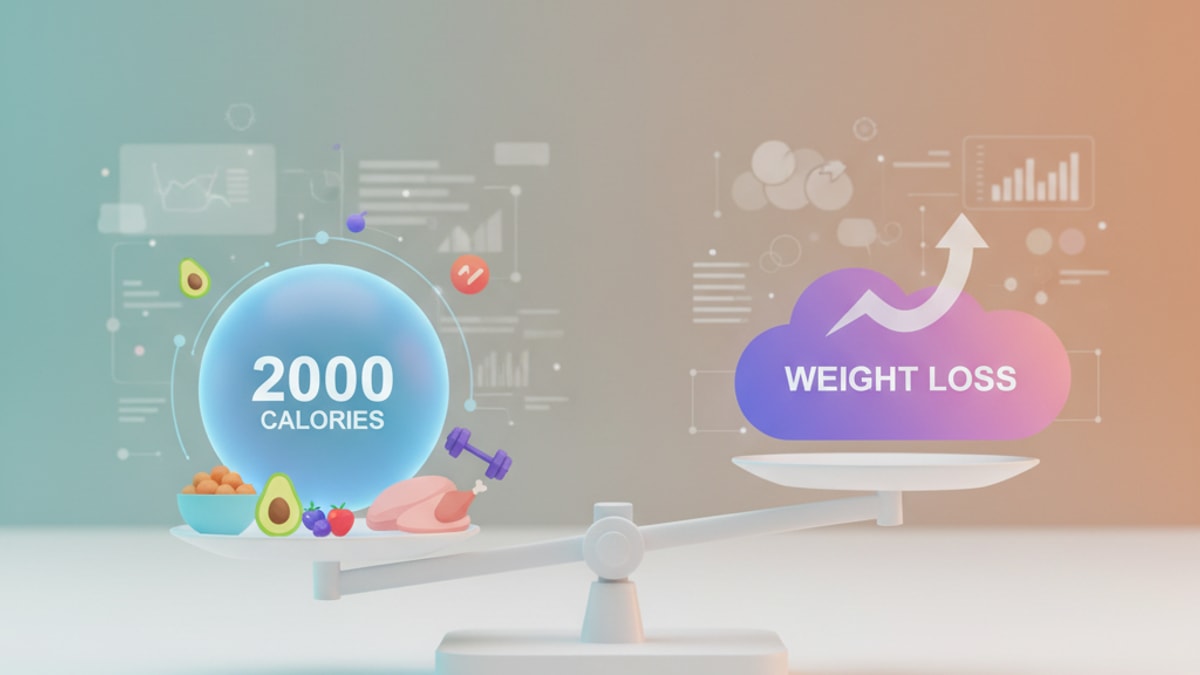
The 2000-Calorie Question We All Ask
It’s everywhere. On food labels, in magazine articles, and thrown around in casual conversations about dieting. The number 2,000. It’s been presented for so long as the default daily calorie target that it feels like an undeniable truth. So, when someone asks us, "is 2000 calories a day good for weight loss?" the answer isn't a simple yes or no. It's much more nuanced than that.
Frankly, for many people actively trying to lose weight, 2000 calories a day might be too much. For others, it could be dangerously low. The reality is that this number is a generalized guideline, an average meant to give a sprawling, diverse population a vague reference point. It’s not a personalized prescription. And when it comes to something as critical as your health and body composition, a generic number just doesn't cut it. Our team has seen firsthand how this one-size-fits-all thinking can lead to frustration, stalled progress, and a cycle of yo-yo dieting that feels impossible to break. It’s time to look past the label and understand what your body actually needs.
Why a Single Number Fails Almost Everyone
Let’s be honest, the idea of a universal calorie count is appealingly simple. But your body's energy requirement is a dynamic, deeply personal equation. It's not a static number. The primary driver of your metabolism is your Total Daily Energy Expenditure (TDEE), which is the total number of calories you burn in a day. Thinking that a single number could apply to a 6'4" male construction worker and a 5'2" female office administrator is where the logic completely falls apart.
TDEE is composed of several key factors:
-
Basal Metabolic Rate (BMR): This is the big one. It's the energy your body burns at complete rest just to keep the lights on—powering your brain, heart, lungs, and other vital organs. It accounts for a whopping 60-75% of your daily calorie burn. BMR is influenced by your age, sex, height, weight, and, most critically, your body composition. Muscle is metabolically active tissue; it burns more calories at rest than fat does. This is a non-negotiable biological fact.
-
Thermic Effect of Food (TEF): Your body uses energy to digest, absorb, and metabolize the food you eat. This accounts for about 10% of your daily burn. Interestingly, protein has a much higher thermic effect than fats or carbs, which is one reason high-protein diets can be so effective for satiety and fat loss.
-
Non-Exercise Activity Thermogenesis (NEAT): This is all the movement you do that isn't formal exercise. Fidgeting, walking to your car, typing, doing chores—it all adds up. The difference in NEAT between a sedentary person and a highly active person can be hundreds, sometimes even thousands, of calories per day. It's a hugely underestimated factor in weight management.
-
Exercise Activity Thermogenesis (EAT): This is the one we all think about—the calories you burn during intentional workouts, like running, lifting weights, or cycling.
When you see how many variables are at play, the idea of a 2000-calorie diet as a universal solution starts to look pretty flimsy. It's a shot in the dark. For some, it might accidentally create the slight caloric deficit needed for weight loss. For many others, it will miss the mark entirely, leading to either no progress or, worse, unintended weight gain.
So, When Is 2000 Calories the Right Number?
It's not that 2000 calories is never the right number. It certainly can be. The question is, for whom?
Our experience shows that 2000 calories might be an appropriate target for weight loss for someone like a moderately active 40-year-old man who is 5'10" and weighs around 220 pounds. For him, this intake would likely create a sustainable deficit of about 500-700 calories per day from his TDEE, leading to a healthy weight loss of 1-1.5 pounds per week. It could also potentially work for a very active, taller woman who engages in regular, intense exercise.
But what about a 5'4" woman who weighs 160 pounds and has a desk job? Her TDEE might be closer to 1800 calories. Eating 2000 calories a day would actually cause her to gain weight. Conversely, a highly active man who is 6'2" and muscular might have a TDEE of 3500 calories or more. For him, a 2000-calorie diet would be a crash diet—unsustainable, metabolically damaging, and destined for failure. He'd feel perpetually hungry, tired, and weak.
This is why we can't stress this enough: context is everything. Your starting point, your lifestyle, and your unique physiology are the only things that matter when determining your caloric needs. Blindly following a generic number is like trying to navigate a new city without a map. You might get lucky, but you'll most likely end up lost and frustrated.
The Hidden Dangers of an Aggressive Deficit
For those individuals for whom 2000 calories represents a significant, dramatic cut, the approach can backfire spectacularly. When your body perceives a drastic drop in energy intake, it doesn't just happily start burning fat. It initiates a series of protective measures to guard against what it interprets as starvation. This is a survival mechanism honed over millennia.
This process, often called metabolic adaptation or adaptive thermogenesis, is your body's way of becoming more 'efficient.' It slows down your metabolism to conserve energy. Your BMR drops, your NEAT often subconsciously decreases (you fidget less, you feel more lethargic), and your body fights tooth and nail to hold onto its energy stores. This is the dreaded 'plateau' that so many dieters experience. It's not a failure of willpower; it's a predictable biological response.
Beyond the metabolic slowdown, there are other formidable risks:
- Nutrient Deficiencies: Severely restricting calories makes it incredibly challenging to get the vitamins, minerals, and fiber your body needs to function optimally. This can lead to hair loss, brittle nails, poor immune function, and fatigue.
- Muscle Loss: When your body is desperate for energy and not getting enough protein, it will start breaking down metabolically active muscle tissue. This is catastrophic for long-term weight management because it further lowers your BMR, making it even easier to regain weight later.
- Hormonal Disruption: Extreme calorie restriction can wreak havoc on your hormones, affecting everything from your thyroid function (which regulates metabolism) to your reproductive health and stress levels (cortisol).
- Psychological Burnout: Let's be real. Feeling hungry, deprived, and exhausted all the time is miserable. It creates a negative relationship with food and can lead to binge-eating episodes, ultimately undoing any progress made.
This is why a slow, steady, and sustainable approach is always superior. A modest deficit of 300-500 calories is far more effective long-term than a jarring 1000-calorie plunge. It allows your body to adapt without triggering alarm bells.
It’s Not Just How Much, But What You Eat
The obsession with calorie counting often obscures a more important conversation about food quality. The source of your calories has a profound impact on your hunger levels, energy, and overall health. 200 calories from a donut and 200 calories from grilled chicken and broccoli are not the same. Not even close.
This is where understanding macronutrients—protein, carbohydrates, and fats—becomes a game-changer.
Protein is paramount. We've found that this is the single most impactful lever for our patients. Protein is highly satiating, meaning it keeps you feeling fuller for longer. It also has that higher thermic effect we mentioned, and it's essential for preserving (and building) lean muscle mass during weight loss. Prioritizing protein is a critical, non-negotiable element of any successful fat loss plan.
Fiber-rich carbohydrates (from vegetables, fruits, and whole grains) are your friend. They provide sustained energy, aid in digestion, and also contribute to feelings of fullness. Highly processed, sugary carbs, on the other hand, spike your blood sugar and insulin, leading to energy crashes and cravings just a short while later.
Healthy fats (from sources like avocados, nuts, and olive oil) are crucial for hormone production and overall health. They also slow down digestion, which helps with satiety.
Focusing on whole, nutrient-dense foods naturally helps you manage your calorie intake without feeling deprived. You can eat a much larger, more satisfying volume of food for the same number of calories. A huge salad with grilled salmon and vegetables will fill you up far more than a small bag of chips, even if the calorie count is similar. This approach (which we've refined over years) delivers real results because it works with your body's hunger signals, not against them.
Building a Plan That Actually Works for You
So, how do you move from the generic 2000-calorie guess to a truly personalized strategy? It starts with understanding your own body. You can use an online TDEE calculator to get a rough estimate, but even that is just a starting point. The best approach is data-driven and tailored to you.
Here’s a comparison of common approaches:
| Feature | Generic 2000-Calorie Diet | Personalized Calorie Plan | Medically-Supervised Program (TrimrX) |
|---|---|---|---|
| Calorie Target | Fixed at 2000 | Calculated based on individual BMR, TDEE, and goals | Precisely tailored and adjusted based on progress and biomarkers |
| Food Focus | Often just on the number, quality is secondary | Emphasizes macronutrient balance and whole foods | Focus on nutrient density, satiety, and hormonal health |
| Support System | None; completely DIY | May involve a nutritionist or coach | Continuous medical guidance from physicians and health experts |
| Adaptability | Rigid and inflexible | Can be adjusted manually as weight changes | Dynamic adjustments based on real-time data and patient feedback |
| Underlying Biology | Ignores hormonal and metabolic factors | Acknowledges metabolism but lacks medical tools | Directly addresses hormonal imbalances and appetite signals with tools like GLP-1 medication |
| Success Rate | Very low long-term success | Moderate, depends on individual adherence | Significantly higher rates of sustainable, long-term success |
While a personalized plan is a massive leap forward from a generic one, our team has found that for many people struggling with significant weight loss, there's often a biological component that diet and exercise alone can't overcome. This is where modern medicine offers a powerful new dimension of support.
Years of yo-yo dieting, hormonal imbalances, or insulin resistance can make weight loss feel like an uphill battle fought in a hurricane. Your body's own signaling systems can work against you, driving intense cravings and persistent hunger that make sticking to a calorie deficit feel impossible. It’s not a lack of willpower. It's complex biology. If you've been on this frustrating cycle, it might be time to see if a different approach is right for you. You can Take Quiz on our site to explore a medically-guided path.
The Role of Advanced Medicine in Modern Weight Loss
This is where it gets interesting. The field of weight management has undergone a monumental shift. We now have tools that can work on a biological level to support the lifestyle changes necessary for success. At TrimrX, we specialize in utilizing GLP-1 (glucagon-like peptide-1) medications like Semaglutide and Tirzepatide as part of a comprehensive, physician-supervised program.
These aren't magic pills. They are FDA-registered medications that work with your body's natural systems. GLP-1s help regulate appetite by signaling to your brain that you're full, slowing down how quickly your stomach empties, and improving how your body processes sugar. The effect is profound. Patients often report that the constant 'food noise'—the relentless thoughts about eating and cravings—finally goes quiet. This newfound control allows them to comfortably eat in a calorie deficit, make healthier food choices, and build sustainable habits without the constant, exhausting battle against their own hunger signals.
When you combine this powerful medical tool with expert guidance on nutrition, exercise, and behavior, the results can be life-changing. It bridges the gap between knowing what to do and actually being able to do it consistently. It turns a seemingly impossible objective into a manageable process. If you’re ready to stop guessing and start seeing real, sustainable progress, we recommend you Start Your Treatment with a plan designed specifically for your biology.
Ultimately, the question isn't whether 2000 calories a day is good for weight loss. The real question is: what does your body need to thrive? The answer is never a single, generic number. It's a holistic, personalized, and often medically-supported strategy that respects your unique biology. It's about moving beyond the myths and embracing a smarter, more effective path forward. One that finally puts you in control.
Frequently Asked Questions
If 2000 calories is too much for me, what should my target be?
▼
Your ideal calorie target depends on your unique TDEE (Total Daily Energy Expenditure), which is based on your age, sex, weight, height, and activity level. We recommend using a TDEE calculator as a starting point and then adjusting based on your progress, aiming for a sustainable deficit of 300-500 calories per day.
Can I lose weight on 2000 calories without exercising?
▼
It’s possible, but only if your TDEE is significantly higher than 2000 calories. However, we never recommend forgoing exercise. Physical activity is crucial for preserving muscle mass, boosting your metabolism, and supporting cardiovascular health during weight loss.
What if I’m still hungry after eating 2000 calories?
▼
This is a strong sign that the *quality* of your calories needs attention. Focus on increasing your intake of protein and fiber from whole foods like lean meats, vegetables, and legumes. These nutrients are far more satiating and can help you feel full on fewer calories.
How quickly should I expect to lose weight on a 2000-calorie diet?
▼
A safe and sustainable rate of weight loss is typically 1-2 pounds per week. If 2000 calories creates a daily deficit of 500-1000 calories for you, this is achievable. Faster loss often involves losing water weight and precious muscle mass.
Will my metabolism slow down if I eat 2000 calories a day?
▼
Metabolic adaptation can occur with any calorie deficit. However, it’s more pronounced with very large, sudden drops in intake. If 2000 calories is a modest deficit for you, the effect will be minimal, especially if you prioritize protein intake and resistance training.
Is it better to count macros or just calories?
▼
While calorie counting provides a budget, our team finds that focusing on macros (especially hitting a sufficient protein target) yields superior results. It ensures you’re not just losing weight, but preserving muscle and improving body composition, which is key for long-term success.
What role do GLP-1 medications play with a calorie-controlled diet?
▼
GLP-1 medications, like those used in TrimrX programs, work with your biology to make a calorie-controlled diet easier to follow. They help regulate appetite and reduce ‘food noise,’ allowing you to comfortably maintain a calorie deficit without a constant feeling of deprivation.
For how long should I stay on a 2000-calorie diet?
▼
You shouldn’t stay on a fixed calorie number indefinitely. As you lose weight, your TDEE will decrease, and your calorie target will need to be adjusted. A good plan is dynamic and adapts to your body’s changing needs under professional guidance.
Does my age affect whether 2000 calories is good for weight loss?
▼
Absolutely. Metabolism naturally slows with age due to changes in body composition and hormonal shifts. A 25-year-old and a 55-year-old with the same weight and height will have very different caloric needs, making personalization essential.
Can eating too few calories stall weight loss?
▼
Yes, it absolutely can. A very aggressive deficit can trigger a strong metabolic adaptation, where your body dramatically slows its calorie burn to conserve energy. This can lead to a frustrating plateau where you feel like you’re doing everything right but seeing no results.
Is it safe to start a 2000-calorie diet on my own?
▼
For most people, it’s relatively safe, but it may not be effective. For a truly safe and effective plan, especially if you have underlying health conditions, we always recommend consulting with a healthcare professional to create a strategy tailored to your specific needs.

Transforming Lives, One Step at a Time
Keep reading

Do You Need a Prescription for GLP-1s? The 2026 Answer
Wondering ‘do you need a prescription for glp 1’ in 2026? Yes. We explain why a doctor’s oversight is critical for safe, effective results.

How to Get GLP-1 Covered By Insurance: Our 2026 Playbook
Struggling with how to get glp-1 covered by insurance? Our 2026 guide breaks down prior authorizations, appeals, and documentation.

Traveling with GLP-1s in 2026: Your Essential Trip-Proof Plan
Don’t let travel disrupt your GLP-1 treatment. Learn how to travel with glp 1 medications safely and stress-free in our 2026 expert guide.


