Is Cranberry Juice Good for Weight Loss? A Biotech Perspective
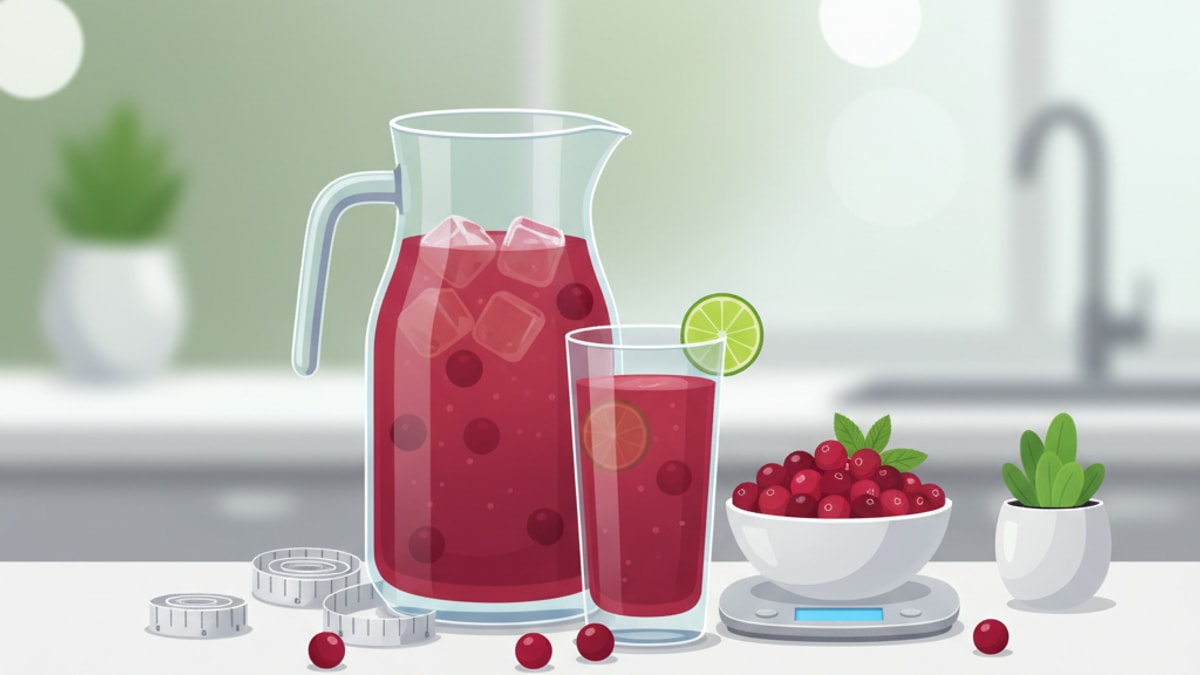
It’s one of those health questions that feels like it’s been around forever, whispered in gyms and shared across wellness blogs: is cranberry juice good for weight loss? The idea is appealing. It sounds natural, simple, and far more pleasant than a grueling diet. You drink a tart, refreshing juice, and the pounds just melt away. It's a tempting narrative.
But here at TrimrX, our entire focus is on the science of metabolic health and sustainable weight management. We work with the body's complex biological systems, leveraging powerful tools like GLP-1 medications to help our patients achieve results that last. So when a question like this pops up, our team of experts doesn't just take the popular opinion at face value. We dig deeper. We look at the molecular level, at the hormonal responses, and at the practical, real-world impact. Let's be honest, the answer is far more nuanced than a simple yes or no.
The Allure of the Cranberry Cleanse
So, where did this idea even come from? For decades, cranberry juice has been championed as a go-to remedy for urinary tract infections (UTIs), and for good reason. Cranberries contain compounds called proanthocyanidins (PACs) that can help prevent certain bacteria from sticking to the urinary tract walls. This established health halo gave the humble cranberry a powerful reputation as a 'cleansing' agent. It was a short leap for marketing departments and wellness influencers to rebrand 'cleansing' as 'detoxing' and connect that to weight loss.
The logic seems to follow a familiar path: if it can flush out bacteria, surely it can flush out fat, toxins, or whatever else is holding back your weight loss progress. This is where we need to pump the brakes. Our bodies have incredibly sophisticated detoxification systems already in place—namely, the liver and kidneys. The concept of 'flushing out fat' through a beverage is, from a biological standpoint, a fundamental misunderstanding of how metabolism works. Fat isn't just a substance to be rinsed away; it's stored energy that must be burned through a caloric deficit.
We've seen countless patients come to us frustrated after trying these kinds of quick fixes. They’ll have spent weeks diligently drinking juice, only to find the scale hasn't budged, or worse, has gone up. It’s a discouraging cycle. And it all starts with a kernel of truth—cranberries have some health benefits—that gets spun into a myth.
A Tale of Two Juices: Unsweetened vs. Cocktail
Now, this is where it gets interesting, and where most people get tripped up. Not all cranberry juice is created equal. In fact, what most people grab off the grocery store shelf is a far cry from the pure, potent fruit extract you might be imagining. The difference is staggering.
Let’s look at the labels. The vast majority of cranberry juice available is 'cranberry juice cocktail.' This is the product that has defined the flavor for generations. It’s sweet, palatable, and easy to drink. The problem? It’s often less than 30% actual cranberry juice. The rest is typically water, other fruit juice concentrates (like apple or grape), and a significant amount of added sugar, usually in the form of high-fructose corn syrup. We're talking about a sugar-sweetened beverage that happens to have some cranberry in it. Drinking this for weight loss is like trying to put out a fire with gasoline. The massive sugar load spikes your blood glucose, triggers a sharp insulin release, and promotes fat storage—the exact opposite of what you’re trying to achieve.
Pure, 100% unsweetened cranberry juice is a completely different animal. It's incredibly tart, almost unpalatably so for many people. It’s much lower in calories and contains no added sugars. This is the version that contains the concentrated benefits of the cranberry itself without the metabolic baggage. But even here, we need to be realistic. It’s not a calorie-free beverage. A cup still contains natural sugars and calories that count toward your daily intake. It's better, yes. A magic bullet? No.
To put this in perspective, our team put together a quick comparison. It’s eye-opening.
| Feature | 100% Unsweetened Cranberry Juice (8 oz) | Cranberry Juice Cocktail (8 oz) | Diet Cranberry Juice (8 oz) |
|---|---|---|---|
| Calories | ~110-120 kcal | ~140-160 kcal | ~5-10 kcal |
| Total Sugar | ~25-30g (natural) | ~30-40g (mostly added) | ~0-1g |
| Added Sugar | 0g | 25-35g | 0g |
| Primary Ingredient | Cranberry Juice | Water, High-Fructose Corn Syrup | Water, Cranberry Juice Concentrate |
| Sweetener Source | Natural fruit sugar | Corn Syrup, Cane Sugar | Artificial Sweeteners (e.g., Sucralose) |
| Our Take | The only viable option for health-conscious use, but must be consumed in moderation due to natural sugar content. Its tartness is a major barrier for many. | Metabolically damaging for weight loss goals. This is essentially a soft drink and should be avoided. We can't stress this enough. | A calorie-free alternative, but relies on artificial sweeteners, which have their own set of debated health implications and can sometimes impact appetite cues. |
Looking at this, the choice becomes clear. If you are going to incorporate cranberry juice, the only version to even consider is the 100% unsweetened kind. The 'cocktail' version is a weight loss saboteur hiding in plain sight.
The Real, Nuanced Benefits (and They're Not What You Think)
Okay, so we've established that sugary cranberry cocktail is out. But what about the pure, unsweetened stuff? Does it offer any indirect advantages on a weight loss journey? Here, the answer is a cautious 'maybe'.
First, hydration. This is a big one, and it's often overlooked. Many people mistake thirst for hunger. Staying properly hydrated can help manage appetite and keep your metabolism running efficiently. If a splash of tart, unsweetened cranberry juice in a large glass of water helps you drink more water throughout the day, that's a genuine, albeit indirect, benefit. It's not the cranberry doing the work; it's the water. The juice is just the flavor enhancer that makes hydration more appealing.
Second, polyphenols and antioxidants. Cranberries are packed with these beneficial plant compounds. Antioxidants help combat oxidative stress in the body, which is linked to chronic inflammation. Since chronic inflammation can be a factor in metabolic dysfunction and weight gain, consuming antioxidant-rich foods is a positive step for overall health. This supports a healthy internal environment, which is conducive to weight loss. But let's be clear: you can get these same (or better) antioxidant benefits from eating whole berries—cranberries, blueberries, raspberries—which also provide fiber. Fiber is a critical, non-negotiable element for weight management because it promotes satiety and slows down sugar absorption. You lose all of that when you juice the fruit.
Finally, there's some emerging research on how cranberry polyphenols might influence gut microbiota. A healthy gut microbiome is increasingly being recognized as a key player in weight regulation and metabolic health. Some studies suggest that compounds in cranberries could promote the growth of beneficial gut bacteria. This is a fascinating area of research, but it's still in its early stages. It’s far from a proven weight loss mechanism and certainly not a reason to start chugging juice. It’s a small piece of a much larger, more complex puzzle.
These are minor, supportive roles. They are not primary drivers of fat loss.
The Bigger Picture: Moving Beyond a Single Ingredient
And this really gets to the heart of the matter. The reason our team at TrimrX is so passionate about this topic is that we see people get stuck focusing on a single 'magic' ingredient. They hunt for the one food, the one supplement, the one trick that will unlock their weight loss. Whether it's cranberry juice, apple cider vinegar, or the latest exotic fruit from a faraway land, the pattern is the same.
It doesn't work.
Sustainable, meaningful weight loss is never about one thing. It's about the entire system. It’s a comprehensive, multifactorial process that involves your nutrition as a whole, your activity levels, your sleep quality, your stress management, and, crucially, your underlying biology. Your body isn't a simple machine where you can pour in a 'cleansing' juice and expect a predictable output. It's a complex, adaptive organism with intricate hormonal feedback loops that regulate everything from hunger and satiety to fat storage.
This is the reality. It all comes down to creating a holistic strategy. A strategy where a splash of unsweetened cranberry juice might play a tiny, supportive role in hydration, but where the heavy lifting is done by consistent, evidence-based principles. This means a balanced diet rich in protein, fiber, and healthy fats. It means regular physical activity. And for many, it means addressing the powerful biological forces that can make weight loss feel like an uphill battle against your own body.
When Biology Becomes the Barrier
Have you ever felt like you're doing everything right, but the scale simply refuses to cooperate? You're eating clean, you're exercising, but the progress is either painfully slow or non-existent. It’s incredibly frustrating, and it’s a story we hear every single day. This is often where biology becomes the primary obstacle. Factors like insulin resistance, hormonal imbalances, and genetic predispositions can create a formidable barrier to weight loss.
Your body can actively work against your efforts. The hormone ghrelin screams 'I'm hungry!' while leptin, the satiety hormone, fails to send the 'I'm full!' signal effectively. This isn't a failure of willpower. It's a physiological reality for millions of people. In these situations, simply trying harder isn't the answer. You need a more powerful tool—one that works with your biology, not against it.
This is precisely where modern medicine has made a significant, sometimes dramatic shift. The development of GLP-1 (glucagon-like peptide-1) receptor agonists, like Semaglutide and Tirzepatide, has been a game-changer. These aren't stimulants or old-school diet pills. They are advanced medications that work by mimicking the natural hormones in your gut that regulate appetite and blood sugar. Our experience shows that when prescribed and monitored by a medical team, they can fundamentally change the weight loss equation.
GLP-1s help to:
- Reduce Appetite: They slow down gastric emptying, making you feel fuller for longer, and directly signal to the appetite centers in your brain to reduce hunger.
- Regulate Blood Sugar: They improve your body's insulin response, which is critical for breaking the cycle of cravings and fat storage.
- Reset Your 'Set Point': They help your body adapt to a new, lower weight, making it easier to maintain your results long-term.
This approach, which we've refined over years, delivers real results because it addresses the root biological drivers of weight gain. It creates a state where your body is finally receptive to the positive changes you’re making with your diet and lifestyle. If this sounds like the support you've been missing, we recommend you Take Quiz on our site. It's a simple first step to understanding if a medical approach is right for you.
The TrimrX Philosophy: An Integrated Strategy
So, is cranberry juice good for weight loss? In its most common, sugary form, it's definitively bad for it. In its pure, unsweetened form, it's a bit player at best—a potential hydration aid with some minor antioxidant benefits, but certainly not a weight loss solution.
The real solution is to stop searching for single-ingredient miracles and start building a comprehensive, science-backed strategy. At TrimrX, we combine the power of advanced medical treatments with the essential foundations of lifestyle modification. We don't just hand you a prescription; we provide the medical guidance and support needed to ensure these powerful medications work effectively and safely for you. It's about using every tool at our disposal to help you achieve lasting health.
This is a journey, not a quick fix. It requires a partnership between you and a team that understands the deep science of metabolism. It's time to move past the myths and embrace a strategy that truly works. If you're ready to see what that looks like, you can Start Your Treatment now and connect with our team.
Ultimately, the conversation isn't really about cranberry juice. It's about what you're truly seeking: a reliable, sustainable path to a healthier weight. And that path is paved with science, support, and a realistic understanding of what it takes to change your body's biology for the better.
Frequently Asked Questions
Can drinking cranberry juice at night help with weight loss?
▼
There’s no scientific evidence to suggest that the timing of cranberry juice consumption affects weight loss. The most important factors are the type of juice (unsweetened is the only option) and the total calories and sugar you consume throughout the day.
Is 100% pure cranberry juice really better than cranberry juice cocktail?
▼
Absolutely. Cranberry juice cocktail is loaded with added sugars and is essentially a soft drink, which is counterproductive for weight loss. Pure, unsweetened cranberry juice avoids added sugars, though it still contains natural sugar and calories that need to be accounted for.
Will a cranberry juice ‘detox’ or ‘cleanse’ help me lose weight faster?
▼
The concept of a ‘detox’ for weight loss is a myth. Your liver and kidneys are your body’s natural detoxification system. Any weight lost on a juice cleanse is typically water weight and muscle, not fat, and is quickly regained.
How much unsweetened cranberry juice is safe to drink daily?
▼
If you choose to drink it, we recommend keeping it to a small serving, around 4-6 ounces per day, and potentially diluting it with water. This helps you manage the natural sugar and calorie intake while still getting the flavor.
Does cranberry juice boost metabolism?
▼
No, there is no credible evidence that cranberry juice significantly boosts metabolism to a degree that would cause weight loss. While staying hydrated is important for metabolic function, the juice itself is not a metabolic booster.
Can I just eat whole cranberries instead of drinking the juice?
▼
Yes, and our team would strongly recommend it. Eating whole cranberries provides all the same nutrients plus dietary fiber, which is stripped away during juicing. Fiber is crucial for feeling full and supporting digestive health, making it much better for weight management.
Are diet cranberry juices with artificial sweeteners a good alternative?
▼
While they are very low in calories, the long-term health effects of artificial sweeteners are still debated. Some research suggests they may alter gut bacteria and appetite signals, so we advise consuming them in moderation as part of a balanced diet.
If cranberry juice isn’t the answer, what is?
▼
Sustainable weight loss comes from a comprehensive approach including a balanced diet, regular exercise, and behavioral changes. For those with biological barriers, medically-supervised treatments like GLP-1 medications can be a highly effective component of that strategy.
Is there a link between cranberry juice and managing blood sugar?
▼
Unsweetened cranberry juice is low on the glycemic index, but the high-sugar cocktail versions will spike blood sugar significantly. For managing blood sugar, focusing on a diet rich in fiber, protein, and healthy fats is far more effective.
Can cranberry juice help reduce bloating?
▼
Cranberry juice is a natural diuretic, which can help flush excess water from your system, temporarily reducing water-retention bloating. However, it does not address the root causes of bloating, such as digestive issues, nor does it reduce body fat.
What’s more important for weight loss: calories or sugar?
▼
Both are critical. A calorie deficit is necessary for weight loss, but the source of those calories matters. High sugar intake, especially from drinks, can disrupt hormones like insulin and promote fat storage, making it much harder to lose weight even within a calorie budget.
Is organic cranberry juice better for weight loss?
▼
Organic refers to the farming method, not the nutritional content in terms of calories or sugar. An organic cranberry juice cocktail is still a high-sugar beverage. The key distinction remains ‘unsweetened’ versus ‘cocktail,’ not organic versus non-organic.

Transforming Lives, One Step at a Time
Keep reading

Do You Need a Prescription for GLP-1s? The 2026 Answer
Wondering ‘do you need a prescription for glp 1’ in 2026? Yes. We explain why a doctor’s oversight is critical for safe, effective results.

How to Get GLP-1 Covered By Insurance: Our 2026 Playbook
Struggling with how to get glp-1 covered by insurance? Our 2026 guide breaks down prior authorizations, appeals, and documentation.

Traveling with GLP-1s in 2026: Your Essential Trip-Proof Plan
Don’t let travel disrupt your GLP-1 treatment. Learn how to travel with glp 1 medications safely and stress-free in our 2026 expert guide.


