Is Intermittent Fasting Good for Weight Loss? Our Expert Take
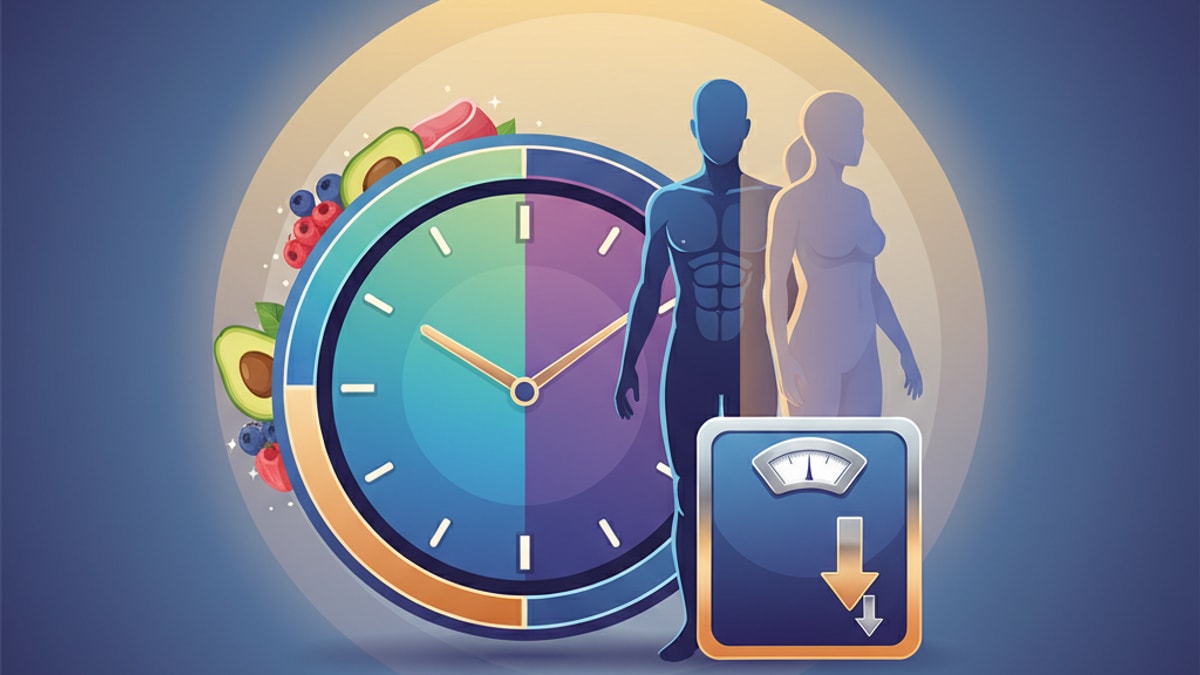
The conversation around weight loss is sprawling and, let's be honest, often confusing. Every year, a new trend seems to dominate the headlines, promising a simpler, faster path to results. Lately, intermittent fasting (IF) has been the undisputed champion of that conversation. It's everywhere. Your coworker swears by it, your favorite health influencer has a dozen videos on it, and it's touted as a revolutionary approach to shedding pounds.
But our team is constantly asked the same critical question, stripped of all the hype: is intermittent fasting good for weight loss, really? Does it work in the messy context of real life—with demanding jobs, family obligations, and unpredictable schedules? As a team dedicated to the science of metabolic health, we believe you deserve an unflinching answer. So, we're going to pull back the curtain on IF, exploring not just how it works in theory, but what its limitations are and when a more powerful, biologically-attuned approach is necessary.
First Things First: What Exactly Is Intermittent Fasting?
Before we dive into the deep end, let's get our definitions straight. It’s crucial to understand that intermittent fasting isn't a diet in the traditional sense. It doesn't tell you what to eat; it tells you when to eat. It's an eating pattern, a schedule that cycles between periods of voluntary fasting and non-fasting. The core idea is to give your body a prolonged break from digesting and processing food.
Think about it. For most of human history, food wasn't available 24/7. Our bodies are actually quite well-adapted to periods without food. The modern 'three meals plus snacks' routine is a relatively new invention. Intermittent fasting, in a way, aims to realign our eating habits with a more ancestral pattern. By consolidating your food intake into a specific window of time, you naturally create a period where your body isn't running on calories you just consumed. Simple, right?
But simple in concept doesn't always mean simple in execution. There are several popular ways to structure this eating pattern, and the one you choose can dramatically impact your experience and your results.
The Most Common Intermittent Fasting Methods
There's no single 'right' way to do IF. Over the years, several popular methods have emerged, each with its own set of rules and level of intensity. Our experience shows that the 'best' one is almost always the one a person can stick with consistently without feeling completely overwhelmed. Consistency trumps intensity every single time.
Here are the main players you'll hear about:
- The 16/8 Method (Leangains): This is by far the most popular and often the most approachable for beginners. You fast for 16 hours a day and restrict your eating to an 8-hour window. For many, this is as simple as skipping breakfast, having your first meal around noon, and finishing your last meal by 8 p.m. It feels less like a radical diet and more like a structured schedule.
- The 5:2 Diet: This approach involves eating normally for five days of the week while restricting your calorie intake to a mere 500–600 calories on two non-consecutive days. Those two 'fasting' days can be a real challenge, demanding significant willpower.
- Eat-Stop-Eat: This method involves a full 24-hour fast once or twice per week. For example, you might finish dinner at 7 p.m. on a Monday and not eat again until 7 p.m. on Tuesday. It’s effective, but a full day without food can be a formidable mental and physical hurdle for many.
- Alternate-Day Fasting: This is a more extreme version. You fast every other day. On fasting days, some versions allow for a small number of calories (around 500), while others call for zero. We've found this to be the most difficult to sustain for any meaningful length of time due to its social and logistical challenges.
To make it clearer, here’s a breakdown our team often uses to help people understand the differences:
| Method | Structure | Difficulty for Beginners | Flexibility | Our Professional Observation |
|---|---|---|---|---|
| 16/8 Method | 16-hour fast, 8-hour eating window daily | Low | High | The most sustainable and socially adaptable entry point into IF. |
| 5:2 Diet | 5 normal eating days, 2 very low-calorie days | Medium | Medium | Can be effective, but the low-calorie days require significant planning and mental fortitude. |
| Eat-Stop-Eat | One or two 24-hour fasts per week | High | Low | Psychologically challenging for many. Best suited for those already experienced with fasting. |
| Alternate-Day | Fasting or very low calories every other day | Very High | Very Low | Extremely difficult to maintain long-term and carries a higher risk of burnout and nutrient gaps. |
The Science: How Does Fasting Actually Trigger Weight Loss?
This is where it gets interesting. The weight loss associated with intermittent fasting isn't just about skipping a meal. There are real, measurable biological processes at play. We can't stress this enough: understanding the 'why' is critical to appreciating both its potential and its limitations.
First and foremost, the most straightforward mechanism is a caloric deficit. It’s not magic. By shrinking the window of time in which you eat, you often—though not always—end up consuming fewer calories overall. If your eating window is only eight hours long, it’s simply harder to fit in the same amount of food you might have grazed on over 15 or 16 hours. This reduction in energy intake is the primary driver of weight loss for most people using IF.
But that's not the whole story. The real power of fasting lies in the hormonal shifts it triggers. When you eat, particularly carbohydrates, your body releases insulin to shuttle glucose from your bloodstream into your cells for energy. Insulin is a fat-storage hormone. When insulin levels are high, your body is in 'storage mode,' and fat burning is effectively turned off. When you fast, the opposite happens. With no incoming food, your insulin levels drop significantly. This drop is a critical signal that tells your body to switch from storing fat to burning it for fuel.
It’s a profound shift.
Lower insulin levels allow your body to access its stored fat reserves more easily. Simultaneously, fasting can increase levels of norepinephrine, a hormone and neurotransmitter that signals fat cells to break down and release fatty acids into the bloodstream to be used for energy. So you have lower levels of the fat-storing hormone and higher levels of the fat-burning hormone. It's a powerful combination.
Furthermore, fasting has been shown to dramatically increase levels of Human Growth Hormone (HGH). HGH is important for preserving muscle mass and boosting metabolism, both of which are critical, non-negotiable elements of a successful weight loss journey. While some diets can lead to muscle loss alongside fat loss, the HGH boost from fasting may help mitigate this, promoting a more favorable body composition change.
The Real-World Verdict: Is It an Effective Tool?
So, with all that science, the answer must be a resounding yes, right? Is intermittent fasting good for weight loss? The answer is… it can be. For some people, it is a genuinely potent tool. Numerous studies have shown that, when compared head-to-head, intermittent fasting can lead to weight loss comparable to traditional, continuous calorie-restricted diets. For people who dislike the tedious task of calorie counting, the simple time-based rules of IF can feel liberating and much easier to follow.
However, our clinical experience has shown us a more nuanced reality. While IF works beautifully on paper, its success in the real world is entirely dependent on one thing: sustainability. We've seen countless individuals start an IF protocol with tremendous enthusiasm, only to have it fall apart weeks or months later. Life gets in the way. A late night at the office, a celebratory brunch with friends, a vacation—these normal life events can throw a rigid eating schedule into chaos.
The truth is, for many, the restrictive nature of fasting can feel isolating and, over time, becomes a source of stress rather than a tool for wellness. The hunger pangs, irritability, and low energy that can accompany the initial adaptation period can be enough to make people quit before they even experience the benefits.
And here’s something we really need to be honest about: intermittent fasting does not work for everyone. It is not a one-size-fits-all solution. Individuals with a history of eating disorders should avoid it entirely. It’s also generally not recommended for pregnant or breastfeeding women, or for those with certain medical conditions like diabetes who need to manage their blood sugar carefully. For these individuals, it can be more harmful than helpful.
When Lifestyle Changes Aren't Enough: The Biological Roadblocks
This brings us to the most important point we can make. For a significant portion of the population struggling with weight, the challenge isn't a lack of willpower or the absence of the 'perfect' eating schedule. The challenge is biological. It's a difficult, often moving-target objective. Years of metabolic dysfunction, insulin resistance, and hormonal imbalances can create a physiological state that actively resists weight loss.
Your body is wired for survival. When it senses a significant and sustained calorie deficit, it can fight back. It can slow your metabolism, increase hunger hormones like ghrelin, and decrease satiety hormones like leptin. You're not just fighting a craving; you're fighting an ancient, powerful survival mechanism. For people in this situation, simply changing when they eat is like trying to fix a complex engine problem by only changing the oil. It’s a helpful step, but it doesn't address the root cause.
This is where modern medical science offers a transformative solution. This is where we, at TrimrX, focus our expertise. We've found that for individuals who have tried everything—including meticulously planned intermittent fasting protocols—and still find themselves stuck, the issue often lies deeper, at the cellular and hormonal level.
This is precisely why GLP-1 receptor agonists like Semaglutide and Tirzepatide have become such a game-changer in medically supervised weight loss. These aren't just appetite suppressants; they are sophisticated medications that work with your body's own biology to restore balance. They target the very same hormonal pathways that make weight loss so difficult.
GLP-1s work by mimicking a natural gut hormone that tells your brain you're full, slows down how quickly your stomach empties, and helps your pancreas release the right amount of insulin. In essence, they tackle the relentless hunger and cravings that derail so many weight loss attempts. They help quiet the biological 'noise' that makes sticking to any healthy eating plan, including intermittent fasting, feel like an impossible battle.
Our approach combines this powerful medical technology with expert guidance. We don't see GLP-1s as a replacement for a healthy lifestyle, but as a formidable tool that makes a healthy lifestyle achievable and, most importantly, sustainable. When your body is no longer fighting you every step of the way, making smart food choices within a reasonable eating window becomes dramatically easier. The goal shifts from a relentless battle against hunger to a collaborative partnership with your own biology.
If you've been on the diet rollercoaster and feel like you're fighting a losing battle, it may not be your fault. Your biology could be the missing piece of the puzzle. If you're ready to explore a different path, one that addresses the underlying science of weight gain, we invite you to Take Quiz to see if our medically-supervised program is right for you. It's the first step toward breaking the cycle. You can Start Your Treatment and finally find a sustainable solution.
So, back to our original question. Is intermittent fasting good for weight loss? Yes, it can be a useful strategy for creating a calorie deficit and improving certain metabolic markers. It works well for some people. But it is not a magic cure, and it doesn't address the powerful biological forces that can make weight loss feel impossible. For a truly sustainable transformation, especially for those with significant weight to lose, a more comprehensive approach—one that aligns lifestyle, behavior, and biology—is often the key to lasting success. And that’s a reality we’re committed to helping our patients achieve.
Frequently Asked Questions
Can I drink coffee or tea during my fasting period?
▼
Yes, absolutely. Black coffee, unsweetened tea, and water are perfectly fine during a fast and can actually help manage hunger. Just be sure not to add any sugar, milk, or cream, as that will break your fast.
How long does it take to see weight loss results with intermittent fasting?
▼
Results vary greatly from person to person. Some may notice changes within a couple of weeks, while for others it may take a month or more. Consistency is the most important factor for seeing results.
Will I lose muscle mass if I do intermittent fasting?
▼
Any form of calorie restriction can lead to some muscle loss, but IF may be better at preserving it than traditional dieting. This is partly due to the increase in Human Growth Hormone (HGH) during fasting. Combining IF with adequate protein intake and resistance training is the best way to protect muscle.
Is it okay to exercise while fasting?
▼
Yes, many people exercise in a fasted state without issue. Some find it even enhances their workout. However, it’s crucial to listen to your body. If you feel dizzy or weak, it’s best to adjust your workout timing or have a small snack beforehand.
What’s the best intermittent fasting schedule to start with?
▼
Our team almost always recommends the 16/8 method for beginners. It’s the most flexible and easiest to integrate into a typical daily schedule, making it far more sustainable than more restrictive methods like 24-hour fasts.
Can women do intermittent fasting differently than men?
▼
Some research suggests women may be more sensitive to the hormonal shifts from fasting. We recommend women start slowly, perhaps with a shorter fasting window like 14 hours, and pay close attention to their energy levels and menstrual cycle.
What should I eat to break my fast?
▼
It’s best to break your fast with a balanced, easily digestible meal. Focus on protein, healthy fats, and complex carbohydrates. Avoid breaking it with a large, high-sugar meal, which can cause a blood sugar spike and digestive discomfort.
Can I combine intermittent fasting with a GLP-1 medication like Semaglutide?
▼
This is a decision that must be made with your healthcare provider. In many cases, GLP-1 medications make sticking to a structured eating plan like IF easier because they naturally regulate appetite. A medical professional can help you create a safe and effective integrated plan.
Will intermittent fasting slow down my metabolism?
▼
Short-term fasting, like the methods discussed, has actually been shown to potentially boost metabolism due to an increase in norepinephrine. However, very prolonged fasting or severe, long-term calorie restriction can eventually slow metabolism.
What are the most common mistakes people make with intermittent fasting?
▼
The biggest mistake we see is overcompensating during the eating window by binging on unhealthy foods, which negates the calorie deficit. Another common error is not drinking enough water during the fast, leading to dehydration and headaches.
Does intermittent fasting help with belly fat specifically?
▼
While you can’t spot-reduce fat from one area, intermittent fasting is effective for overall fat loss, which includes visceral belly fat. The hormonal changes, particularly the drop in insulin, are very effective at targeting this stubborn type of fat.
I tried intermittent fasting and felt terrible. What went wrong?
▼
It’s common to experience headaches, fatigue, and irritability initially, often called the ‘keto flu’ or ‘fasting flu’. This is usually temporary as your body adapts. However, if symptoms persist, it might mean the fasting window is too long for you or that IF simply isn’t the right fit for your body.

Transforming Lives, One Step at a Time
Keep reading

Do You Need a Prescription for GLP-1s? The 2026 Answer
Wondering ‘do you need a prescription for glp 1’ in 2026? Yes. We explain why a doctor’s oversight is critical for safe, effective results.

How to Get GLP-1 Covered By Insurance: Our 2026 Playbook
Struggling with how to get glp-1 covered by insurance? Our 2026 guide breaks down prior authorizations, appeals, and documentation.

Traveling with GLP-1s in 2026: Your Essential Trip-Proof Plan
Don’t let travel disrupt your GLP-1 treatment. Learn how to travel with glp 1 medications safely and stress-free in our 2026 expert guide.


