Is Protein Good for Weight Loss? An Unflinching Expert Take
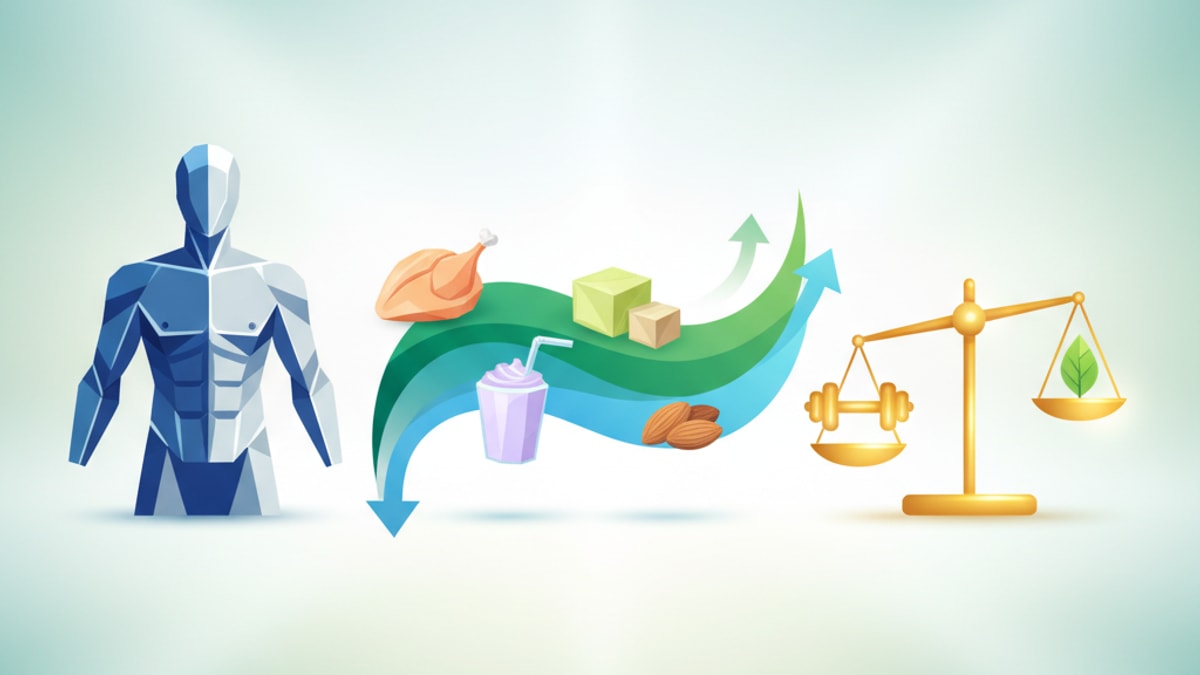
Let's get straight to it. You're here because you're wrestling with one of the most persistent questions in the entire sprawling universe of health and fitness: is protein good for weight loss? The internet is a firehose of conflicting advice, and frankly, it's exhausting. One article tells you to eat nothing but steak, while another warns that you're on a one-way track to kidney failure. It's enough to make anyone want to give up and order a pizza.
Here at TrimrX, we deal with the realities of weight management every single day. We guide patients through medically-supervised programs using advanced treatments like Semaglutide and Tirzepatide, but we know—and we can't stress this enough—that medication is only one piece of a much larger, more intricate puzzle. Lasting success, the kind that truly transforms your health, is built on a foundation of smart, sustainable lifestyle strategies. And at the very core of that foundation? You guessed it. Protein.
The Short Answer? An Emphatic Yes.
So, is protein good for weight loss? Yes. Absolutely. Unquestionably.
It’s not just helpful; it’s a critical, non-negotiable element of any successful fat loss strategy. Our team has found that when patients commit to prioritizing protein, their entire journey shifts. The process becomes less about deprivation and more about nourishment. It feels less like a battle against your own body and more like a collaboration with it. Why? Because protein works on a deep, physiological level to make a calorie deficit more achievable and far more effective. It's not magic. It's science.
Unpacking the Science: How Protein Actually Works for Fat Loss
To really understand protein's power, you have to look beyond the surface-level advice. It’s not just about 'building muscle.' The mechanisms are far more nuanced and directly impact the key challenges of losing weight: hunger, metabolic slowdown, and muscle loss. We've seen it work time and time again.
1. The Satiety Superpower: Taming Hunger Hormones
Hunger is the formidable adversary of every diet. It's relentless. Protein is your single greatest weapon against it. When you consume protein, it triggers the release of satiety hormones like peptide YY (PYY) and glucagon-like peptide-1 (GLP-1). These are powerful chemical messengers that signal to your brain that you're full and satisfied. Simultaneously, it helps suppress ghrelin, the notorious 'hunger hormone' that drives you to raid the pantry. The result is that you feel fuller for longer after a protein-rich meal compared to one high in carbs or fats. This makes it dramatically easier to eat fewer calories without feeling constantly deprived.
Now, this is where it gets particularly interesting for us. The GLP-1 hormone that protein helps stimulate is the very same hormone targeted by the advanced medications we use at TrimrX. Treatments like Semaglutide are GLP-1 receptor agonists, meaning they mimic this 'fullness' hormone's effects but on a much more potent and prolonged scale. Our experience shows that when you combine a high-protein diet with GLP-1 treatment, the synergy is incredible. The medication provides a powerful baseline of appetite control, and the protein enhances and sustains that feeling of satiety from meal to meal. It’s a one-two punch that makes sticking to your plan almost effortless.
2. The Metabolic Furnace: Thermic Effect of Food (TEF)
Did you know your body burns calories just by digesting the food you eat? This is called the Thermic Effect of Food (TEF). And here’s the kicker: protein has a much higher TEF than any other macronutrient. It's not even close.
Your body uses about 20-30% of the calories from the protein you eat just to digest and metabolize it. For carbohydrates, that number is only 5-10%, and for fats, it's a mere 0-3%. Think about that. If you eat 100 calories of pure protein, your body only gets a net of 70-80 of those calories. It's like getting a metabolic discount on your food. While this might not sound like a colossal number on its own, it adds up significantly over the course of a day, a week, and a month. It’s one of the ways your body can burn more calories around the clock, even when you’re not actively exercising. It's a subtle but persistent metabolic advantage.
3. The Muscle Shield: Preserving Your Engine
This might be the most underrated benefit of all. When you lose weight, you don't just lose fat. A significant portion of the weight dropped can be precious, metabolically active muscle tissue. This is a catastrophic long-term problem. Why? Because muscle is your body's metabolic engine. The more muscle you have, the more calories you burn at rest. Losing muscle means your metabolism slows down, making it harder to continue losing weight and frighteningly easy to regain it once your diet ends. This is the classic 'yo-yo dieting' trap so many people fall into.
Protein acts as a shield for your muscle during a calorie deficit. Providing your body with a steady supply of amino acids (the building blocks of protein) signals that it doesn't need to break down existing muscle tissue for energy. Instead, it can focus on pulling energy from your fat stores. This ensures that the weight you lose is primarily fat, not muscle. The result is a leaner, stronger, and more metabolically healthy physique at the end of your weight loss journey. It's the key to not just losing weight, but fundamentally changing your body composition for the better.
How Much Protein Do You Really Need for Weight Loss?
So, you're convinced. But how much is enough? The standard Recommended Dietary Allowance (RDA) of 0.8 grams per kilogram of body weight is designed to prevent deficiency in a sedentary person. It is absolutely not optimal for someone actively trying to lose fat while preserving muscle.
Our team, in line with the overwhelming body of scientific research, recommends a significantly higher intake for effective weight loss. A good target for most people is between 1.6 to 2.2 grams of protein per kilogram of body weight (or roughly 0.7 to 1.0 grams per pound). For a 180-pound person, that’s about 126 to 180 grams of protein per day.
Does that sound like a lot? It can be, especially if you're used to a carb-heavy diet. The key is to distribute this intake throughout the day. Instead of trying to cram it all into one or two meals, aim to include a significant protein source with every meal and snack. This approach not only makes the target more manageable but also keeps those powerful satiety signals firing all day long. And remember, this is a general guideline. Your ideal intake might vary based on your activity level, age, and overall health. That's why personalized guidance, like the kind we provide in our medically-supervised programs, is so valuable for dialing in the specifics that work for your body.
Not All Protein Is Created Equal: A Source Showdown
Once you know your target, the next question is where to get it from. The options can seem endless, from animal sources to plant-based alternatives and a whole universe of powders and bars. Let's be honest, this is crucial. The quality of your protein matters just as much as the quantity. Here’s a breakdown of the most common sources.
| Feature | Animal-Based Protein | Plant-Based Protein |
|---|---|---|
| Amino Acid Profile | Complete: Contains all 9 essential amino acids. | Often Incomplete: Most sources lack one or more essential amino acids. |
| Bioavailability | Generally higher and more easily absorbed by the body. | Can be lower due to fiber and anti-nutrients; absorption is less efficient. |
| Common Examples | Chicken breast, lean beef, fish, eggs, Greek yogurt, whey. | Lentils, chickpeas, tofu, tempeh, quinoa, beans, nuts, seeds, pea protein. |
| Key Considerations | Can be higher in saturated fat; choose lean cuts. | Often rich in fiber and micronutrients; requires combining sources (e.g., rice and beans). |
Animal Sources: These are often considered the gold standard for protein quality because they are 'complete,' meaning they contain all nine essential amino acids your body can't produce on its own. Lean options like chicken breast, turkey, fish, and egg whites are fantastic choices. Even lean red meat, in moderation, can be a great source of highly bioavailable iron and B vitamins. Dairy products like Greek yogurt and cottage cheese are also protein powerhouses.
Plant-Based Sources: For those following a vegetarian or vegan diet, getting enough high-quality protein requires a bit more strategic planning, but it's entirely achievable. The key is variety. Since most plant sources are 'incomplete,' you need to combine different foods throughout the day to ensure you're getting the full spectrum of essential amino acids. Think rice and beans, hummus and whole-wheat pita, or a lentil soup. Soy products (tofu, tempeh, edamame) and quinoa are rare exceptions, as they are complete proteins. Plant sources also come with the added bonus of high fiber content, which further boosts satiety and supports digestive health.
Protein Supplements: What about protein powders and bars? Our team views these as valuable tools, but not as the foundation of your diet. They are incredibly convenient for a post-workout recovery shake or a quick snack on a busy day. Whey and casein (from dairy) are popular and effective choices. For a plant-based option, pea, soy, or brown rice protein powders are excellent. Just be sure to read the labels—look for products with minimal added sugar and artificial ingredients.
Building the Perfect High-Protein Day: Practical Strategies from Our Team
Knowing the science is one thing; putting it into practice in the chaos of daily life is another. Here are some simple, actionable strategies we recommend to our patients to help them hit their protein goals consistently.
-
Front-Load Your Day. Start your day with a protein-rich breakfast of at least 25-30 grams. This is a game-changer. It sets your metabolic and hormonal tone for the entire day, crushing mid-morning cravings and preventing you from overeating at lunch. Swap your cereal or bagel for scrambled eggs, a Greek yogurt parfait, or a smoothie with a scoop of protein powder.
-
Anchor Every Meal. Build every lunch and dinner around a lean protein source. Don't let it be an afterthought. Whether it's grilled chicken, a piece of salmon, a lentil stew, or a block of tofu, make it the star of your plate. Fill the rest of your plate with non-starchy vegetables and a small portion of complex carbs. Simple, right?
-
Rethink Your Snacks. Most traditional snack foods (crackers, chips, granola bars) are carb-dominant and do little to satisfy real hunger. This is an easy place to score more protein. Swap them for a hard-boiled egg, a handful of almonds, a small cup of cottage cheese, or some beef jerky. These options will actually tide you over to your next meal.
-
Embrace 'Protein Boosters'. Look for small ways to add extra protein to the foods you already eat. Stir a spoonful of collagen peptides into your morning coffee. Sprinkle hemp seeds or nutritional yeast on your salads and roasted vegetables. Choose a pasta made from chickpeas or lentils instead of wheat. These little additions add up.
The Synergy: How Protein Maximizes Results with GLP-1 Treatments
This is a point we can't overstate. For individuals on a medically-supervised weight loss journey with GLP-1 treatments, a high-protein diet isn't just a helpful suggestion—it's the critical element that unlocks the best possible outcome. The medication is a formidable tool for controlling appetite and calorie intake, but the quality of those calories determines the quality of your results.
When GLP-1s reduce your appetite, you naturally eat less. If your smaller meals are still composed of low-protein, nutrient-poor foods, you risk accelerating muscle loss and becoming 'skinny fat'—weighing less on the scale but having a higher body fat percentage and a slower metabolism. This is a poor outcome. We've seen it happen.
By focusing on protein, you ensure that the weight you lose is fat. You protect your metabolic rate. You provide your body with the raw materials it needs to stay strong and functional. The medication makes it easy to stick to a calorie deficit, and the high-protein diet makes that deficit effective for true body recomposition. It's the ultimate partnership. If you're ready to see how this powerful combination of medical science and nutritional strategy can work for you, we encourage you to Start Your Treatment. Our approach is designed to deliver results that last, and it all starts with a comprehensive plan.
Common Myths and Mistakes to Avoid
Navigating the world of protein isn't without its pitfalls. A few persistent myths and common mistakes can trip people up. Let's clear the air.
Myth: "Too much protein will destroy my kidneys."
This is perhaps the most enduring myth. For individuals with pre-existing kidney disease, a lower-protein diet is often recommended. However, for people with healthy, functioning kidneys, multiple large-scale studies have shown that a high protein intake is perfectly safe. Your kidneys are incredibly efficient organs designed to filter metabolic byproducts, and a high-protein diet simply isn't a threat to them.
Myth: "Just eat protein and the fat will melt away."
We wish it were that simple. Protein is a powerful tool, but it doesn't suspend the laws of thermodynamics. To lose weight, you must be in a calorie deficit. Period. What protein does is make achieving and sustaining that deficit infinitely easier by managing hunger and boosting your metabolism. You still have to be mindful of your total intake.
Mistake: Forgetting about everything else.
A high-protein diet shouldn't be a just-protein diet. Don't fall into the trap of eating nothing but chicken breast and protein shakes. Your body also needs the fiber, vitamins, minerals, and phytonutrients found in vegetables, fruits, and healthy fats. A balanced approach is always best.
Mistake: Relying solely on supplements.
Protein powders and bars are convenient, but they should always be supplementary to a diet based on whole foods. Whole food sources of protein provide a broader range of nutrients and are generally more satiating than a liquid shake. Use supplements to fill the gaps, not to build the foundation.
The evidence is clear, and our professional experience confirms it every day. Protein is not just good for weight loss; it is an indispensable component of a successful, sustainable, and healthy fat loss journey. It works with your body's natural systems to control hunger, boost metabolism, and protect your lean muscle mass, ensuring the weight you lose is the weight you actually want to lose. It transforms the process from a grueling battle of willpower into a strategic, science-backed approach to nourishment.
Whether you're just starting out or looking to optimize a medically-supervised program, making protein the cornerstone of your nutritional strategy is one of the most impactful decisions you can make. It's not about a fad diet; it's about a fundamental shift in how you fuel your body for success. If you're curious about how to integrate this powerful principle with a comprehensive medical plan, we invite you to take our quiz to see if you're a candidate. It’s time to stop guessing and start building a body that is not just lighter, but stronger and healthier from the inside out.
Frequently Asked Questions
Will eating a lot of protein make me bulky?
▼
No, this is a common misconception, especially among women. Building significant muscle mass (bulk) requires a combination of a calorie surplus and intensive, progressive resistance training. For weight loss, a high-protein diet in a calorie deficit will help you preserve lean muscle, leading to a toned, not bulky, physique.
Is whey protein the best choice for weight loss?
▼
Whey protein is an excellent choice due to its high quality and rapid absorption, making it great for post-workout recovery. However, the ‘best’ protein depends on your needs. Slower-digesting proteins like casein or whole foods like Greek yogurt can be better for sustained satiety between meals.
How soon will I see results from increasing my protein intake?
▼
You’ll likely feel the effects on your hunger and satiety almost immediately, within the first day or two. The effects on body composition, such as fat loss and muscle preservation, become noticeable over several weeks of consistent intake combined with a calorie deficit.
Can I get enough protein for weight loss on a vegan diet?
▼
Absolutely. It requires more careful planning to ensure you’re getting all essential amino acids, but it’s entirely possible. Focus on sources like tofu, tempeh, edamame, lentils, chickpeas, quinoa, and high-quality vegan protein powders.
Is it better to eat protein before or after a workout for weight loss?
▼
For general weight loss, the most important factor is your total daily protein intake, not precise timing. However, consuming protein within a couple of hours after a workout can help with muscle repair and recovery. The priority should always be hitting your daily goal consistently.
Does protein help reduce belly fat specifically?
▼
You can’t spot-reduce fat from one area of your body. However, a high-protein diet promotes overall fat loss, which will include belly fat. Its effects on satiety and metabolism help create the necessary calorie deficit to reduce body fat everywhere, including your midsection.
What are some signs I’m not eating enough protein?
▼
Signs can include persistent hunger or cravings, feeling weak or fatigued, slow recovery from exercise, and hair or nail issues. If you’re trying to lose weight and feel like you’re losing muscle tone, that’s another key indicator.
Is a high-protein diet safe for long-term health?
▼
For individuals with healthy kidneys, a high-protein diet is considered safe for long-term adherence. It’s always best to focus on whole-food sources and maintain a balanced diet that also includes plenty of fiber from fruits and vegetables.
How does protein intake support GLP-1 treatments like Semaglutide?
▼
GLP-1 treatments significantly reduce appetite. A high-protein diet complements this by ensuring the calories you do consume are high-quality, maximizing satiety and providing the building blocks to preserve muscle mass during weight loss, leading to better body composition.
Can I have too much protein in one meal?
▼
Your body can digest and absorb a large amount of protein at once, but it’s more effective to spread your intake throughout the day. This helps maintain stable energy levels and provides a consistent stream of amino acids for muscle protein synthesis, which is ideal for muscle preservation.
Are protein bars a good snack for weight loss?
▼
They can be, but you have to read the label carefully. Many protein bars are high in sugar and calories, essentially making them candy bars with added protein. Look for bars with at least 15-20 grams of protein and minimal added sugar.

Transforming Lives, One Step at a Time
Keep reading

Do You Need a Prescription for GLP-1s? The 2026 Answer
Wondering ‘do you need a prescription for glp 1’ in 2026? Yes. We explain why a doctor’s oversight is critical for safe, effective results.

How to Get GLP-1 Covered By Insurance: Our 2026 Playbook
Struggling with how to get glp-1 covered by insurance? Our 2026 guide breaks down prior authorizations, appeals, and documentation.

Traveling with GLP-1s in 2026: Your Essential Trip-Proof Plan
Don’t let travel disrupt your GLP-1 treatment. Learn how to travel with glp 1 medications safely and stress-free in our 2026 expert guide.


