Is Sushi Actually Helping Your Weight Loss Goals?
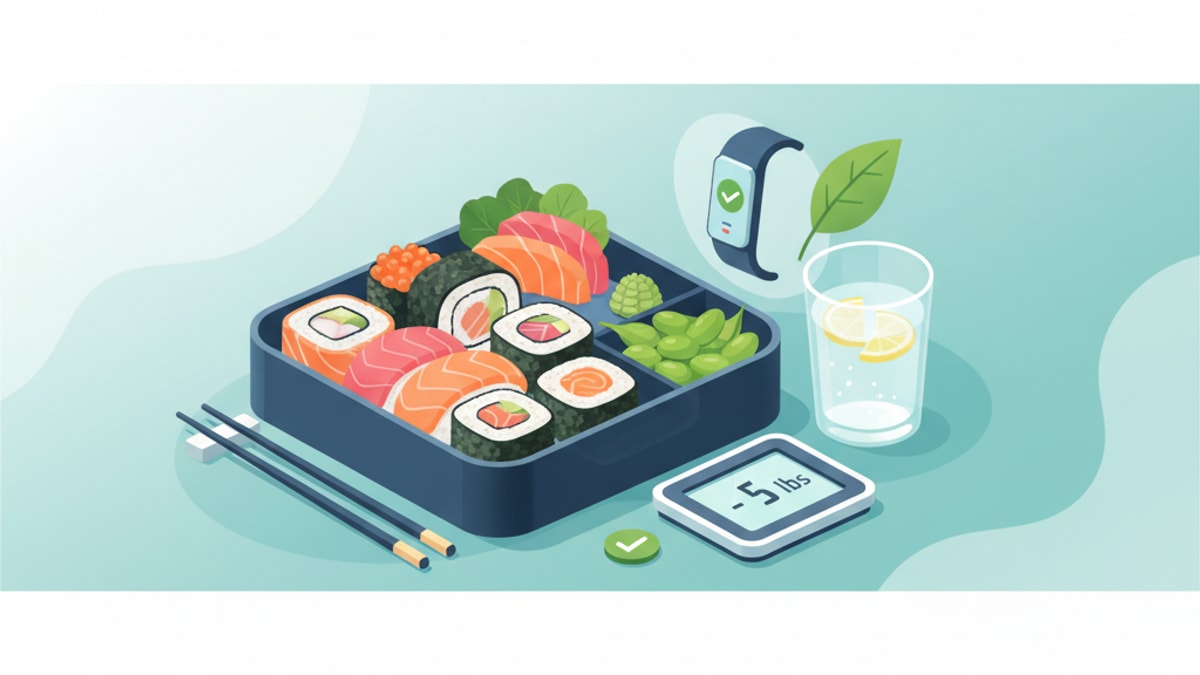
We get this question all the time. It usually comes up when someone is recounting their 'healthy' week of eating. They'll list off salads, grilled chicken, and then, with a confident nod, add 'and I even had sushi!' The assumption is clear: sushi is the quintessential health food, a guilt-free indulgence that aligns perfectly with a weight loss journey. And honestly? Sometimes it is. But very often, it’s not.
That's the difficult, often moving-target objective of modern nutrition. The line between a genuinely healthy meal and a calorie-dense dish disguised as one is blurrier than ever. Here at TrimrX, our entire focus is on the science of sustainable weight loss. We work with patients every day, guiding them through the complexities of nutrition, metabolism, and the powerful effects of GLP-1 medications. Our experience shows that understanding the nuances—the 'why' behind a food's impact—is the critical, non-negotiable element for long-term success. So, let's talk about sushi. Really talk about it.
The Great Sushi Debate: Healthy Food or Diet Saboteur?
Let’s start with the good. The foundation of traditional sushi is incredibly promising for anyone focused on their health. At its core, you have fish—a fantastic source of lean protein and, in many cases, anti-inflammatory omega-3 fatty acids. You have seaweed (nori), which is packed with minerals like iodine. And you have small amounts of vegetables, like cucumber and avocado. On paper, it looks like a nutritional dream team.
This is why it has such a stellar reputation. When you compare a simple tuna roll to, say, a cheeseburger and fries, there's no contest. But the modern sushi experience has evolved. It's sprawling. It's creative. And it’s often loaded with ingredients that can completely derail your weight loss efforts. The problem isn't the concept of sushi; it's the execution. It's the Westernized, super-sized, sauce-drenched rolls that have become the norm at so many restaurants. We've seen it work against even the most dedicated individuals.
What Makes Sushi a Potentially Great Weight Loss Food
Before we dive into the pitfalls, it's important to appreciate what makes simple, traditional sushi so beneficial. We can't stress this enough: when chosen carefully, it can be a fantastic part of your nutritional plan.
First, there's the high-quality protein. Fish like tuna, salmon, and yellowtail are packed with protein, which is essential for satiety. Protein helps you feel fuller for longer, reducing the likelihood of overeating later. Our team has found that adequate protein intake is one of the most consistent markers for successful weight management. It helps stabilize blood sugar and preserve lean muscle mass during weight loss, which is crucial for maintaining a healthy metabolism.
Then you have the healthy fats. Fatty fish are famous for their omega-3 content—specifically EPA and DHA. These fatty acids are celebrated for their heart-health benefits, but they also play a role in reducing inflammation throughout the body. Chronic inflammation is increasingly linked to metabolic dysfunction and weight gain, so incorporating anti-inflammatory foods is a smart strategy. Avocado, another common sushi ingredient, is also a great source of monounsaturated fats, which are excellent for both heart health and satiety.
Finally, portion control is built into the experience. Or at least, it's supposed to be. A single piece of nigiri or a slice from a simple maki roll is a small, manageable unit of food. This encourages mindful eating. You eat one piece at a time, allowing your brain to register fullness cues more effectively than when you’re faced with a massive plate of food. It's a more deliberate way of eating, and that alone can be a powerful tool.
The Hidden Pitfalls: Where Sushi Goes Wrong
Now, for the reality check. This is where good intentions can lead to a significant, sometimes dramatic shift in your caloric intake. The modern sushi menu is a minefield of hidden calories, refined carbohydrates, and unhealthy fats.
The biggest offender is often the rice. Most sushi is made with white rice, which is stripped of its fiber and nutrients. It's seasoned with sugar and vinegar, further increasing its simple carbohydrate load. A single sushi roll can contain up to a cup of rice, which can be the equivalent of two to three slices of white bread. This causes a rapid spike in blood sugar and insulin, which can lead to energy crashes and cravings. It's a vicious cycle. And the portion sizes are often far larger than you'd think.
Then come the sauces and tempura. Those delicious, crunchy bits in your roll? That's tempura—vegetables or seafood that have been battered and deep-fried. This adds a huge amount of unhealthy fat and calories. The same goes for the sauces drizzled on top. Spicy mayo, eel sauce, and other creamy concoctions are almost always made with full-fat mayonnaise and sugar. A single tablespoon of spicy mayo can add 100 calories. We've seen rolls that have several hundred calories from sauces alone.
Let's be honest, this is crucial. The names of the rolls are often a dead giveaway. Anything with a name like 'Dragon Roll,' 'Volcano Roll,' or 'Dynamite Roll' is almost guaranteed to be packed with tempura, cream cheese, and heavy sauces. These 'specialty' rolls can easily top 500-800 calories each, rivaling a fast-food meal. You could eat two of them and unknowingly consume a full day's worth of fat and refined carbs.
A Tale of Two Rolls: A Practical Comparison
To make this crystal clear, let's break down the nutritional difference between a smart choice and a typical specialty roll. The contrast is stark and illustrates the point perfectly. Our team put together this comparison based on average nutritional data to show you what you're really looking at.
| Feature | Smart Choice: Salmon Avocado Roll | Common Pitfall: Shrimp Tempura Roll |
|---|---|---|
| Primary Ingredients | Salmon, avocado, seaweed, small amount of rice | Deep-fried shrimp, cucumber, rice, spicy mayo, eel sauce |
| Estimated Calories | ~300-350 calories | ~500-600+ calories |
| Protein | ~10-15 grams (High-quality) | ~10-12 grams (Offset by batter) |
| Fat | ~15 grams (Mostly healthy fats from fish/avocado) | ~25-30+ grams (Mostly from frying oil and mayo) |
| Carbohydrates | ~30 grams (Mainly from rice) | ~50-60 grams (From rice, batter, and sugary sauces) |
| Key Takeaway | Balanced macronutrients, provides omega-3s, promotes satiety. | High in refined carbs, unhealthy fats, and empty calories. |
See the difference? It's not subtle. The tempura roll has nearly double the calories, double the carbs, and a much higher load of unhealthy fats. You could eat one and a half of the salmon avocado rolls for the same caloric price as one shrimp tempura roll, and you'd be getting far more nutritional benefit.
Our Team's Guide to Ordering Smarter at the Sushi Bar
So, how do you navigate the menu and enjoy sushi without sabotaging your goals? It’s absolutely possible. It just requires a little strategy. Here’s what we’ve learned and what we recommend to our patients.
-
Start with the Basics. Stick to sashimi (sliced raw fish without rice), nigiri (a slice of fish over a small bed of rice), or simple maki rolls. A simple tuna roll (tekka maki) or cucumber roll (kappa maki) is a much safer bet than a complex specialty roll.
-
Look for Brown Rice. More and more restaurants are offering brown rice as an option. If it's available, get it. The extra fiber will slow down digestion, prevent a sharp blood sugar spike, and keep you feeling full longer.
-
Go 'Naruto Style.' This is a fantastic hack. 'Naruto style' means the roll is wrapped in a thin sheet of cucumber instead of rice. It gives you all the flavor of the fillings without the heavy carb load. Not every place offers it, but it's always worth asking.
-
Beware the 'Crunch.' If you see the word 'crunchy' or 'crispy' in the description, it almost always means tempura flakes (fried batter bits) are mixed in or sprinkled on top. Steer clear.
-
Get Sauces on the Side. This is a game-changer. Ask for any sauces, especially spicy mayo or eel sauce, on the side. This puts you in control. You can dip your fork in it for a tiny bit of flavor instead of having your roll drenched in it. You'll be shocked at how few calories you consume this way.
-
Load Up on Protein and Veggies. Order a side of edamame for fiber and protein before your meal. Start with a miso soup or a simple seaweed salad (with the dressing on the side, of course). This helps fill you up so you're less likely to over-order the rolls.
-
Read the Descriptions Carefully. Don't just go by the name. Read every single ingredient listed. If you see cream cheese, tempura, or multiple sauces listed, just move on to the next option.
Beyond the Plate: How Sushi Fits into a Broader Strategy
Making smarter choices at the sushi bar is a fantastic step. It's a skill. But for many people we work with, especially those with significant weight to lose, nutrition is only one part of a much larger, more complex biological equation. You can have all the knowledge in the world, but if your body's internal signals—your hunger hormones, your metabolic rate, your insulin sensitivity—are working against you, it can feel like an impossible, uphill battle.
This is where a medical approach becomes so powerful. At TrimrX, we specialize in using advanced treatments like GLP-1 medications (Semaglutide and Tirzepatide) to fundamentally reset your body's metabolic baseline. These treatments don't just suppress appetite; they work on a deeper level to regulate blood sugar, slow digestion, and reduce the 'food noise' that leads to cravings. Our patients find that when their biology is on their side, making healthy choices like picking sashimi over a tempura roll doesn't feel like a sacrifice. It feels natural.
A comprehensive weight loss plan isn't just a diet. It's a partnership between smart lifestyle choices and medical science. If you’ve been struggling to see results despite your best efforts, it might not be a lack of willpower. It might be your biology. Understanding your options is the first step. You can see if you're a candidate by taking our quick Take Quiz on our website. For those who are ready, you can even Start Your Treatment and begin working with our medical team to build a plan that truly works.
The Role of Rice: Is It Really the Enemy?
We need to spend a little more time on the rice, because it’s the component that causes the most confusion. Is rice inherently bad? No, of course not. But the type of rice and the quantity matter immensely. As we mentioned, sushi rice is typically short-grain white rice polished of its bran and germ. This process removes most of the fiber, vitamins, and minerals. It's essentially a refined carbohydrate.
Think of it this way: one standard maki roll (cut into 6-8 pieces) contains about one cup of cooked rice. That’s around 200 calories and 45 grams of carbohydrates before you even add the fish or any other fillings. If you eat two rolls, you're looking at nearly 100 grams of carbs from rice alone. For anyone managing their blood sugar or on a carb-conscious plan, that's a formidable number.
This is why we so often recommend sashimi or Naruto-style rolls. By minimizing or eliminating the rice, you dramatically shift the macronutrient profile of your meal from carb-heavy to protein-focused. This single change can be the difference between a meal that supports your weight loss and one that stalls it. It's not about fearing carbs; it's about being strategic with them.
Sodium, Soy Sauce, and Condiments: The Sneaky Saboteurs
Finally, let's talk about sodium. A common complaint after a sushi dinner is feeling bloated and puffy the next day, and seeing the number on the scale jump up. This is almost always due to water retention from high sodium intake.
Soy sauce is the main culprit. A single tablespoon of traditional soy sauce can contain over 900mg of sodium—that's nearly 40% of the recommended daily limit for an adult. Most people use far more than one tablespoon when dipping their sushi. Pickled ginger (gari) and wasabi also contribute to the sodium load.
Even some of the 'healthy' starting options, like miso soup, are incredibly high in sodium. While it won't cause you to gain actual fat, this water retention can be discouraging and mask your real progress. Our recommendation is simple: always opt for low-sodium soy sauce. Use it sparingly. Don't let your sushi swim in it. A quick, light dip is all you need for flavor. This small habit can make a massive difference in how you feel the next day.
So, is sushi healthy for weight loss? The answer is a resounding 'it depends.' It can be an impeccable choice, full of lean protein and healthy fats. Or it can be a calorie bomb of fried ingredients, sugary sauces, and refined carbs. The power is entirely in how you order. By being an informed, strategic diner, you can absolutely make sushi a regular and enjoyable part of your journey to a healthier weight. It’s not about restriction; it’s about making smart, deliberate choices that align with your ultimate goals. When you combine that knowledge with a medically-sound strategy that addresses your underlying biology, you create a truly unstoppable formula for success. If you're ready to build that formula, our team is here to help you Start Your Treatment Now.
Frequently Asked Questions
Is sashimi the best choice for weight loss?
▼
Yes, our team generally considers sashimi an excellent choice. Since it’s just slices of raw fish without any rice, you get all the high-quality protein and healthy fats without the refined carbohydrates and added sugar, making it very effective for a weight loss plan.
How many sushi rolls should I eat if I’m trying to lose weight?
▼
We recommend focusing on quality over quantity. One well-chosen roll (like a salmon avocado or tuna cucumber roll) paired with a miso soup or edamame is often a satisfying meal. Avoid ordering multiple specialty rolls, which can quickly add up to over 1,000 calories.
Is brown rice sushi significantly better than white rice sushi?
▼
Absolutely. Brown rice retains its fiber, which slows digestion and prevents the sharp blood sugar spikes associated with white rice. Our experience shows this helps with satiety and sustained energy, making it a much smarter choice for weight management.
Are vegetarian sushi rolls healthy?
▼
They can be, but you have to be just as careful. A simple cucumber or avocado roll is great. However, many vegetarian rolls rely on tempura-fried vegetables or sweet, sugary sauces for flavor, which can make them just as high in calories as other specialty rolls.
What’s the single worst ingredient to watch out for in sushi?
▼
From a caloric standpoint, the worst offenders are the creamy sauces, like spicy mayo. They are incredibly dense in calories and unhealthy fats. A close second is anything ‘tempura’ or ‘crunchy,’ as that indicates deep-fried ingredients.
Does the high sodium in soy sauce make you gain weight?
▼
The sodium in soy sauce doesn’t cause you to gain fat, but it can cause significant temporary water retention. This can make you feel bloated and see a higher number on the scale, which can be mentally discouraging. We always advise using low-sodium soy sauce sparingly.
Is cream cheese in sushi a bad idea for weight loss?
▼
Yes, we’d strongly recommend avoiding it. Cream cheese adds a significant amount of saturated fat and calories with very little nutritional benefit. A Philadelphia roll, for example, is much less healthy than a simple roll with just fish and vegetables.
Can sushi fit into a plan that includes GLP-1 medications?
▼
Definitely. GLP-1 treatments help regulate your appetite and reduce cravings, which makes it much easier to mindfully choose healthier options like sashimi or simple rolls. Our patients find that they can enjoy the flavors of sushi in smaller, more appropriate portions that align perfectly with their health goals.
What are some good appetizers to order at a sushi restaurant?
▼
We recommend starting your meal with steamed edamame for its fiber and protein content. A simple seaweed salad (ask for dressing on the side) or a clear soup like miso soup are also good choices to help fill you up before the main course arrives.
Are hand rolls (temaki) a better choice than cut rolls (maki)?
▼
Hand rolls can be a slightly better choice because they often have a better fish-to-rice ratio. However, the same rules apply: avoid tempura fillings and creamy sauces to keep them a healthy option.
Is eel (unagi) a healthy choice?
▼
Eel itself is a nutritious fish, but it’s almost always served with a thick, sweet, and sugary glaze called eel sauce. This sauce adds a lot of sugar and calories, making it a less-than-ideal choice for weight loss. If you order it, be mindful of the sauce portion.
What about poke bowls?
▼
Poke bowls have the same potential and pitfalls as sushi. A bowl with a base of leafy greens, lots of fresh fish, and vegetables is fantastic. A bowl with a huge base of white rice, fried toppings, and heavy, creamy sauces can be a major calorie bomb. Customization is key.

Transforming Lives, One Step at a Time
Keep reading

Do You Need a Prescription for GLP-1s? The 2026 Answer
Wondering ‘do you need a prescription for glp 1’ in 2026? Yes. We explain why a doctor’s oversight is critical for safe, effective results.

How to Get GLP-1 Covered By Insurance: Our 2026 Playbook
Struggling with how to get glp-1 covered by insurance? Our 2026 guide breaks down prior authorizations, appeals, and documentation.

Traveling with GLP-1s in 2026: Your Essential Trip-Proof Plan
Don’t let travel disrupt your GLP-1 treatment. Learn how to travel with glp 1 medications safely and stress-free in our 2026 expert guide.


