Is a Treadmill Good for Weight Loss? The Unfiltered Answer.
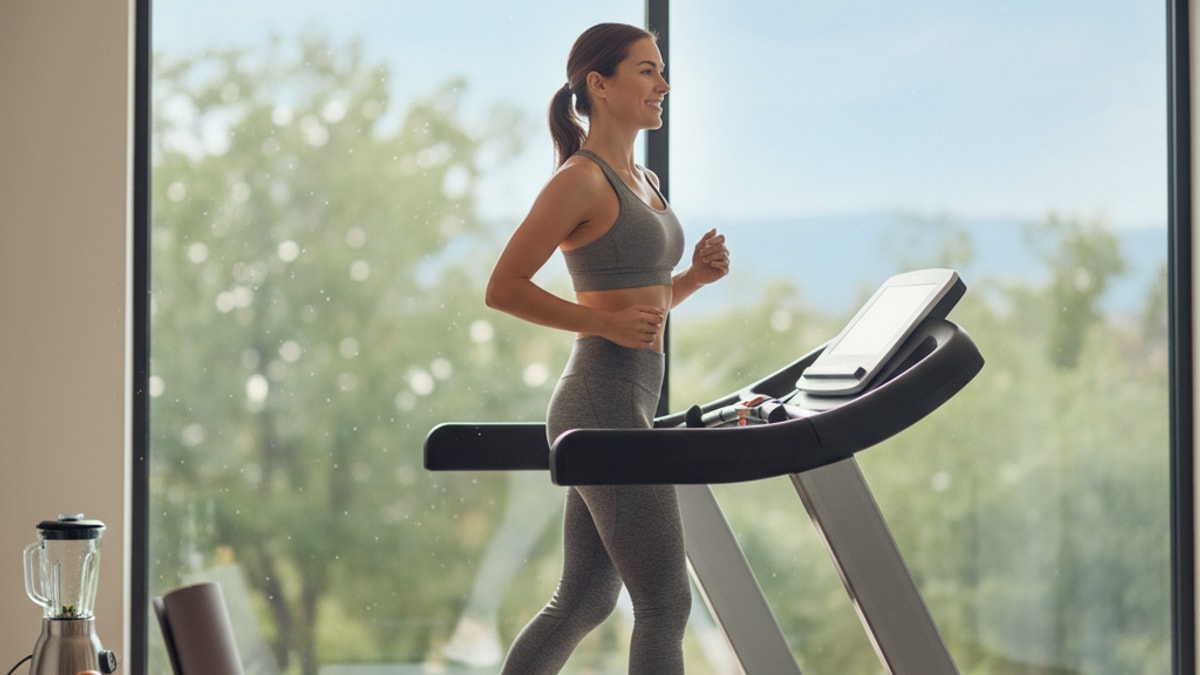
Let's get right to it. You’re asking, “is a treadmill good for weight loss?” and you’ve probably seen a dozen articles give you a vague, non-committal “it depends.”
We’re not going to do that. The short, unfiltered answer from our team is: Yes, absolutely. The treadmill can be a formidable ally in your weight loss journey. But—and this is the part that truly matters—it's not a magic wand. It's a tool. And like any powerful tool, its effectiveness depends entirely on how you use it, the strategy behind your efforts, and how it fits into your overall health picture. We've seen countless patients in our programs who have a treadmill gathering dust because they were missing the bigger strategy. So, let’s talk about that strategy.
The Real Reason Treadmills Work for Fat Loss
It seems obvious, right? You get on, you move, you burn calories. But the science behind it is a bit more nuanced and explains why it’s such a staple in gyms and homes everywhere. The core principle is creating a caloric deficit, meaning you burn more calories than you consume. The treadmill is an incredibly efficient machine for tipping that balance in your favor.
First, it offers unparalleled control. Unlike a jog through the park, you command the speed, the incline, and the duration with precision. This control allows you to keep your heart rate in the optimal fat-burning zone for sustained periods. You can’t accidentally slow down when you hit a flat road or stop for traffic. It’s just you and the machine, focused on the goal.
Second, it’s a full-body, weight-bearing exercise. Every step engages your leg muscles, your glutes, and your core. The more muscle you engage, the more energy (calories) your body has to expend. This is also fantastic for bone density, an often-overlooked benefit of consistent exercise. Our experience shows that people who incorporate weight-bearing cardio tend to see more sustainable results because they're not just burning calories; they're building a stronger, more metabolically active body.
And that brings up metabolism. Consistent treadmill use can give your resting metabolic rate (RMR) a gentle nudge upwards. Think of it this way: a well-oiled engine burns fuel more efficiently, even at idle. Regular cardio helps your body become a more efficient fat-burning machine around the clock, not just when you're on the belt. It's a small shift, but over months, it becomes a significant, sometimes dramatic, advantage.
Not All Treadmill Workouts Are Created Equal
Here’s a crucial point we can't stress enough: mindlessly plodding along at the same pace for 30 minutes every day will only get you so far. Your body is an amazing adaptation machine. It gets used to routines, becomes more efficient, and starts burning fewer calories for the same amount of work. To keep seeing results, you have to introduce variety and challenge.
This is where workout design comes in. The two most effective styles we recommend are High-Intensity Interval Training (HIIT) and Low-Intensity Steady-State (LISS).
High-Intensity Interval Training (HIIT)
This is the champion of time-efficient workouts. HIIT involves short bursts of all-out effort (like a 30-second sprint) followed by a brief recovery period (like a 60-second walk or slow jog). You repeat this cycle for 15-25 minutes.
The magic of HIIT is something called EPOC, or Excess Post-exercise Oxygen Consumption. It’s a fancy term for the “afterburn effect.” Your body has to work so hard during those intense intervals that it continues to burn calories at an elevated rate for hours after you’ve stepped off the treadmill. So, a 20-minute HIIT session might burn more total calories over 24 hours than a 40-minute steady-state jog. It’s intense, demanding, and incredibly effective.
Low-Intensity Steady-State (LISS)
Don’t discount the humble walk. LISS involves working at a lower intensity—think a brisk walk or a very light jog—for a longer duration, typically 45-60 minutes. You should be able to hold a conversation during LISS. While it doesn't create the same afterburn as HIIT, LISS is fantastic for burning fat directly during the workout itself. It's also much easier on your joints and nervous system, making it a great option for active recovery days, beginners, or those who simply can't handle the high impact of sprinting.
So, which one is better? Honestly, the best routine uses both. They tax different energy systems and provide different benefits. A balanced week might include two HIIT sessions and two or three LISS sessions. This approach (which we've refined over years) delivers real results while preventing burnout and injury.
| Feature | High-Intensity Interval Training (HIIT) | Low-Intensity Steady-State (LISS) |
|---|---|---|
| Workout Duration | Shorter (15-25 minutes) | Longer (45-60+ minutes) |
| Intensity Level | Very High (80-95% max heart rate) | Low to Moderate (50-65% max heart rate) |
| Primary Benefit | Significant "afterburn" effect (EPOC) | Burns more fat during the workout |
| Best For | Time-crunched individuals, breaking plateaus | Beginners, active recovery, stress reduction |
| Impact on Joints | High impact, requires more recovery | Low impact, sustainable for daily activity |
| Frequency | 2-3 times per week (max) | 3-5 times per week |
The Incline Button: Your Secret Weapon
Let’s be honest, that incline button is the most underutilized feature on the treadmill. Most people treat it like a decoration. We’re telling you now: it’s your secret weapon for accelerated weight loss.
Walking or running on an incline dramatically increases the workout's intensity without forcing you to run faster, which is a game-changer for people with sensitive knees or joints. Cranking up the incline forces your posterior chain—your glutes, hamstrings, and calves—to work much harder. It's like climbing a hill that never ends.
How much harder? Research has shown that walking at 4 mph on a 5% incline can burn a similar number of calories as running at the same speed on a flat surface. You get a tougher workout, build more muscle in your legs and glutes, and spare your joints the high-impact pounding of running. It’s a win-win-win.
Try the “12-3-30” workout that’s become popular for a reason: set the treadmill to a 12% incline and a 3 mph speed, and walk for 30 minutes. It’s deceptively challenging and a phenomenal fat-burner.
The Bigger Picture: When Exercise Isn't Enough
Here's the reality check. You can have the most impeccable treadmill routine in the world, but if other factors are working against you, the scale won't budge. Weight loss is a complex interplay of exercise, nutrition, sleep, stress, and, critically, your own unique biology.
We’ve worked with so many people who are doing everything “right.” They’re hitting the treadmill five days a week and eating clean, yet they’re stuck in a frustrating plateau. This is often where underlying metabolic factors come into play. Hormonal imbalances, insulin resistance, and other biological signals can make your body stubbornly hold onto fat, no matter how many miles you log.
This isn't a failure of willpower. It's a biological reality.
This is precisely where modern medicine can provide a powerful assist. For individuals facing these biological hurdles, a comprehensive, medically-supervised approach can be the key that unlocks progress. At TrimrX, we focus on this exact challenge. Our programs, which utilize advanced GLP-1 medications like Semaglutide and Tirzepatide, are designed to work with your body’s own systems. These treatments help regulate appetite, improve how your body processes sugar, and create a metabolic environment that is finally receptive to the hard work you're putting in with diet and exercise.
Think of it this way: the treadmill is your accelerator, and your diet is your fuel. But if your body's engine isn't running correctly, you're not going anywhere. A medically-supervised program helps tune that engine. When you combine the metabolic support of a program like ours with a consistent treadmill routine, the results can be truly transformative. It allows the calorie deficit you’re creating to finally translate into tangible, sustainable weight loss.
If you feel like you're spinning your wheels despite your best efforts, it might be time to look deeper. Understanding your unique biological needs is the first step. You can Take Quiz on our site to see if a medical approach is right for you.
Common Treadmill Mistakes That Sabotage Your Progress
Our team has seen it all. People with great intentions can unknowingly undermine their own efforts. Avoiding these common pitfalls is just as important as knowing what to do.
-
The Death Grip on the Handrails. We get it, it feels safer. But when you hold onto the handrails, you're supporting a significant portion of your body weight. This reduces the work your legs and core have to do, which means you burn fewer calories and get less cardiovascular benefit. Worse, it can lead to poor posture and even shoulder or neck strain. If you feel you need to hold on, it’s a sign that you should lower the speed or incline until you can move confidently hands-free.
-
The Same. Old. Workout. As we mentioned, your body adapts. If you do the same 30-minute jog at 5.5 mph every single day, your body will become so efficient at that specific task that the calorie burn will diminish over time. You must introduce variety. Change your speed, play with the incline, try a HIIT workout, or do a longer LISS session. Keep your body guessing.
-
Ignoring Form. Just because you're on a machine doesn't mean form goes out the window. Avoid overstriding (reaching your foot too far out in front of you), which can lead to shin splints and knee pain. Keep your core engaged, your shoulders back and relaxed, and your gaze forward, not down at your feet. Good posture ensures an efficient and safe workout.
-
Skipping the Warm-up and Cool-down. Jumping straight into a sprint is a recipe for injury. Always start with 5 minutes of gentle walking to get your blood flowing and muscles warm. Similarly, end your workout with a 5-minute cool-down walk, allowing your heart rate to come down gradually. This helps prevent dizziness and aids in recovery.
Building a Routine You Can Actually Stick With
The best workout plan is the one you do consistently. A perfect, grueling plan that you abandon after two weeks is useless. The key to making the treadmill a long-term part of your weight loss success is sustainability.
Start slow. If you haven't exercised in years, don't try to be a hero on day one. Begin with 20-minute walks, three times a week. That's it. Once that feels comfortable, add five minutes to your sessions or increase the incline slightly. Small, incremental progress is the secret to building lasting habits.
Find ways to make it enjoyable. Or at least, less of a chore. Create an amazing workout playlist, listen to a captivating podcast, or set up a tablet to watch your favorite show. Our team calls this “habit stacking”—pairing the activity you need to do (the treadmill workout) with an activity you want to do (watching Netflix). It tricks your brain into looking forward to it.
And finally, listen to your body. Overtraining is a real thing. If you feel exhausted, overly sore, or just burnt out, take a rest day. Recovery is when your body repairs and gets stronger. Pushing through pain often leads to injury and setbacks.
So, is a treadmill good for weight loss? It’s more than good; it’s a fantastic, reliable, and powerful tool. But it’s one part of a much larger, more personal health journey. It requires a smart strategy, consistency, and an honest understanding of your own body. When you combine that powerful tool with a comprehensive plan that addresses nutrition and your underlying biology, you’re not just hoping for change—you’re engineering it. If you're ready to build that comprehensive plan, you can Start Your Treatment now.
The machine is waiting. The real question is, what’s your strategy?
Frequently Asked Questions
How long should I be on the treadmill to lose weight?
▼
For beginners, we recommend starting with 20-30 minutes, 3-4 times a week. As your fitness improves, aim for 30-60 minutes, 4-5 times a week, incorporating a mix of both high-intensity and steady-state workouts for the best results.
Is it better to walk or run on a treadmill for fat loss?
▼
Both are effective, but they work differently. Running burns more calories per minute, but brisk walking on a high incline can burn a similar amount with less impact. A combination of both is ideal for a well-rounded, sustainable routine.
How much weight can you lose on a treadmill in a month?
▼
This varies greatly depending on your starting weight, diet, and workout intensity. A safe and sustainable goal is 1-2 pounds per week, which would be 4-8 pounds in a month. Remember, consistent effort combined with proper nutrition is key.
Will using the treadmill burn belly fat?
▼
You can’t spot-reduce fat from one specific area. However, using a treadmill helps create a calorie deficit, which leads to overall fat loss, including from the abdominal area. Combining it with a healthy diet is the most effective way to reduce belly fat.
What is the best treadmill workout for weight loss?
▼
The most effective approach is variation. Incorporate 2-3 HIIT (High-Intensity Interval Training) sessions per week to maximize calorie afterburn, and 2-3 LISS (Low-Intensity Steady-State) sessions, like walking on an incline, for direct fat burning and recovery.
Should I use the treadmill before or after weights?
▼
For fat loss, our team generally recommends doing strength training first. This uses up your glycogen stores, so when you do your treadmill workout afterward, your body is more likely to tap into fat for fuel. However, consistency is more important than timing.
Is it okay to use the treadmill every day?
▼
You can, but it’s important to vary the intensity. If you do a high-intensity workout one day, consider a low-intensity walk the next day for active recovery. Listening to your body and taking rest days when needed is crucial to prevent burnout and injury.
Why am I not losing weight even though I use the treadmill regularly?
▼
Weight loss is multifaceted. If you’re consistent with exercise but not seeing results, it could be due to your diet, or underlying metabolic factors. Sometimes, a medical approach is needed to address biological hurdles that exercise alone can’t overcome.
Does using the incline on a treadmill really make a difference?
▼
Yes, it makes a huge difference. Using the incline significantly increases calorie burn, engages more muscles (especially glutes and hamstrings), and boosts cardiovascular intensity without the high impact of running faster. It’s one of the best ways to maximize your workout.
What speed should I walk at for fat burning?
▼
A brisk walk, typically between 3.0 and 4.0 mph, is a great starting point for fat burning. The key is to keep your heart rate in a moderate zone (around 60-70% of your max) where you can still talk but are slightly breathless.
Can I lose weight just by walking on the treadmill?
▼
Absolutely. Walking is a fantastic, low-impact exercise. To make it effective for weight loss, focus on consistency, duration (aiming for 30-60 minutes), and using the incline feature to increase the challenge and calorie burn.
How do GLP-1 medications work with treadmill exercise?
▼
GLP-1 medications, which we use in our medically-supervised programs, help regulate your body’s metabolic systems and appetite. This creates an internal environment where the hard work you do on the treadmill can be far more effective, helping you break through frustrating plateaus.

Transforming Lives, One Step at a Time
Keep reading

Do You Need a Prescription for GLP-1s? The 2026 Answer
Wondering ‘do you need a prescription for glp 1’ in 2026? Yes. We explain why a doctor’s oversight is critical for safe, effective results.

How to Get GLP-1 Covered By Insurance: Our 2026 Playbook
Struggling with how to get glp-1 covered by insurance? Our 2026 guide breaks down prior authorizations, appeals, and documentation.

Traveling with GLP-1s in 2026: Your Essential Trip-Proof Plan
Don’t let travel disrupt your GLP-1 treatment. Learn how to travel with glp 1 medications safely and stress-free in our 2026 expert guide.


