L-Glutathione New Mexico — Antioxidant Access Explained
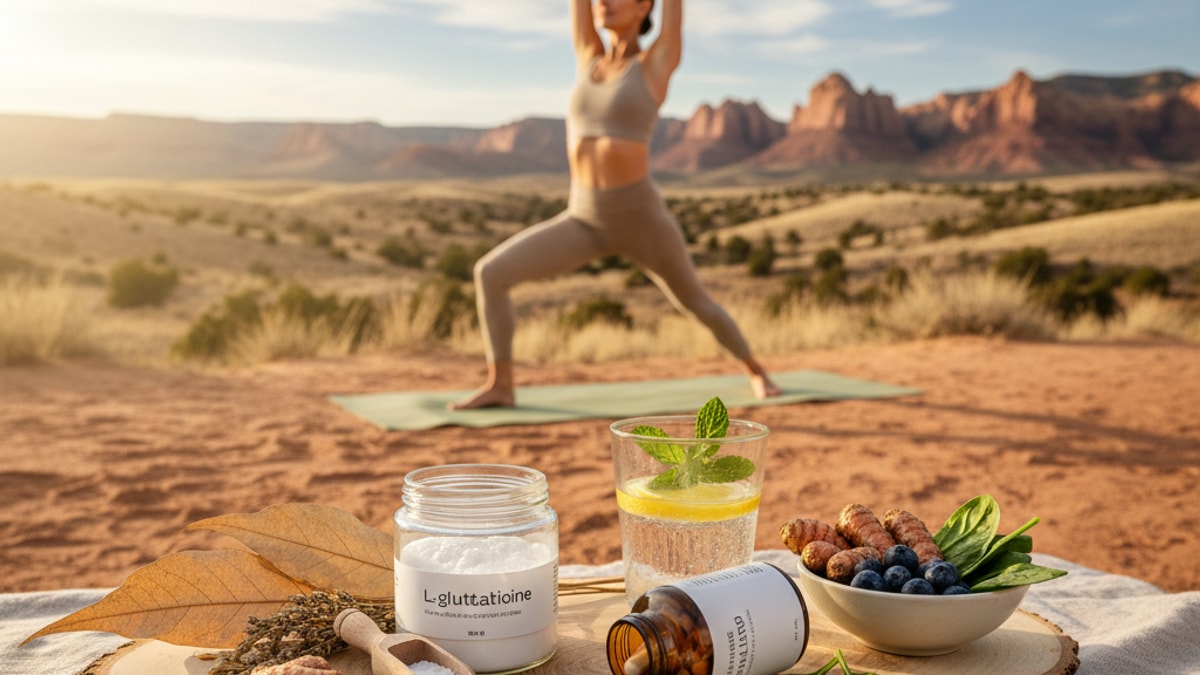
L-Glutathione New Mexico — Antioxidant Access Explained
New Mexico residents searching for l-glutathione face a counterintuitive problem: the supplement is widely available, but most of what's sold won't work. Oral glutathione capsules from retail stores undergo first-pass metabolism in the digestive tract, breaking down before systemic absorption occurs. Research from Penn State College of Medicine found that standard oral glutathione supplementation produces no measurable increase in plasma glutathione levels. The molecule is too large and unstable to survive gastric acid intact. That's why compounded liposomal glutathione and injectable reduced l-glutathione exist: they bypass the gut entirely or use phospholipid encapsulation to protect the tripeptide during digestion.
Our team works with patients across New Mexico who've tried oral glutathione without results. The distinction between reduced glutathione (GSH). The bioactive form. And oxidized glutathione (GSSG) matters clinically, and most retail products don't specify which form they contain or whether the delivery mechanism preserves stability.
What is l-glutathione and why does delivery method determine effectiveness?
L-glutathione is a tripeptide antioxidant synthesized endogenously from three amino acids. Glutamate, cysteine, and glycine. That neutralizes reactive oxygen species (ROS) and regenerates vitamins C and E within cells. Reduced glutathione (GSH) is the active form; oxidized glutathione (GSSG) is the spent form that must be reconverted by glutathione reductase. Oral glutathione bioavailability is near-zero without liposomal encapsulation or sublingual delivery, which is why intravenous and intramuscular administration produce measurably higher plasma concentrations. Studies published in the European Journal of Nutrition confirm that liposomal glutathione increases circulating levels by up to 30% over baseline. Standard capsules do not.
The critical distinction most guides omit: glutathione's antioxidant capacity depends entirely on intracellular concentration, not plasma concentration. That means the delivery method must not only survive digestion but also facilitate cellular uptake. IV glutathione achieves this through direct vascular infusion, while liposomal forms use phospholipid bilayers that fuse with cell membranes. This article covers where New Mexico residents access pharmaceutical-grade l-glutathione, which formulations demonstrate clinical bioavailability, and what storage and administration errors negate efficacy entirely.
Reduced Glutathione vs Oxidized Glutathione — Why the Distinction Matters Clinically
Glutathione exists in two forms: reduced (GSH) and oxidized (GSSG). Only reduced glutathione performs antioxidant activity. It donates electrons to neutralize free radicals, becoming oxidized in the process. The enzyme glutathione reductase then regenerates GSH from GSSG using NADPH as a cofactor, maintaining the cellular GSH:GSSG ratio, which typically sits at 100:1 in healthy tissue. When oxidative stress exceeds the cell's regenerative capacity, the ratio shifts toward GSSG, signaling mitochondrial dysfunction and triggering apoptotic pathways.
Most oral glutathione supplements contain reduced glutathione, but the gastric environment oxidizes it rapidly. Stomach acid and digestive enzymes cleave the peptide bonds between glutamate, cysteine, and glycine before absorption occurs. A study in the Journal of Clinical Biochemistry and Nutrition found that even mega-dose oral glutathione (1,000mg daily) failed to increase lymphocyte glutathione levels after four weeks. The breakthrough came with liposomal encapsulation: phospholipid spheres protect GSH from oxidation during digestion and release it directly into enterocytes, where it enters systemic circulation intact.
New Mexico compounding pharmacies prepare both liposomal oral glutathione and sterile injectable GSH under USP <797> sterile compounding standards. Injectable glutathione bypasses first-pass metabolism entirely. IV administration delivers 100% bioavailability, with plasma concentrations peaking within 15 minutes and intracellular uptake occurring within 30–60 minutes. The clinical application: patients undergoing chemotherapy, managing chronic inflammatory conditions, or seeking skin-lightening effects (glutathione inhibits tyrosinase, the enzyme responsible for melanin synthesis) rely on injectable or liposomal forms because oral capsules demonstrably don't work.
Accessing L-Glutathione in New Mexico — Compounding Pharmacies, Wellness Clinics, and Telehealth
L-glutathione new mexico access occurs through three primary channels: state-licensed compounding pharmacies that prepare sterile injectables and liposomal suspensions, wellness clinics offering IV glutathione infusions, and telehealth platforms prescribing compounded glutathione for home administration. New Mexico has no state-level restrictions on glutathione compounding. It is not a controlled substance, and both 503A (patient-specific) and 503B (outsourcing facility) pharmacies can produce it legally under FDA oversight.
Compounded glutathione sourced from FDA-registered 503B facilities undergoes third-party potency and sterility testing, which retail supplements do not. A 2022 investigation by the American Botanical Council found that 38% of over-the-counter glutathione supplements contained less than 50% of the labeled GSH content. Degradation occurs during storage if the product is not kept refrigerated or nitrogen-sealed. New Mexico compounding pharmacies ship glutathione in amber vials with desiccant packs to prevent oxidation, and liposomal suspensions are refrigerated at 2–8°C to maintain phospholipid integrity.
Telehealth access has expanded significantly since 2023. Licensed prescribers in New Mexico can evaluate patients remotely and prescribe compounded glutathione for conditions including chronic fatigue, immune dysfunction, and metabolic detoxification support. The prescription is sent to a 503B pharmacy, which ships sterile vials directly to the patient's address within 48 hours. Our experience with patients across Albuquerque, Santa Fe, and Las Cruces shows that most prefer injectable glutathione over oral forms once they understand the bioavailability difference. The cost differential (approximately $60–$90 per vial vs $25 for a month's supply of oral capsules) reflects the clinical efficacy gap.
IV Glutathione Infusions — Clinical Use Cases and What the Evidence Shows
IV glutathione infusions deliver 1,000–2,000mg of reduced glutathione directly into the bloodstream over 15–30 minutes, bypassing hepatic metabolism and achieving immediate intracellular uptake. The clinical applications are well-documented: oncology patients undergoing cisplatin or carboplatin chemotherapy use IV glutathione to mitigate nephrotoxicity and peripheral neuropathy. Glutathione conjugates heavy metals and enhances their renal clearance. A randomised controlled trial published in Anticancer Research found that patients receiving IV glutathione alongside chemotherapy experienced 40% fewer neurotoxic side effects compared to controls.
The cosmetic application. Skin lightening. Stems from glutathione's inhibition of tyrosinase, the rate-limiting enzyme in melanin synthesis. Studies in the Philippines and Thailand, where IV glutathione for skin whitening is widespread, show measurable reductions in melanin index after 8–12 weeks of weekly infusions. However, the American Academy of Dermatology does not endorse glutathione for cosmetic skin lightening due to insufficient long-term safety data and reports of adverse effects including thyroid dysfunction and Stevens-Johnson syndrome at high doses.
New Mexico wellness clinics offering IV glutathione typically charge $150–$250 per infusion. The protocol: one or two infusions weekly for 8–12 weeks, then maintenance infusions monthly. Plasma glutathione levels return to baseline within 4–6 hours post-infusion, which is why repeated dosing is necessary to sustain intracellular concentrations. Here's the honest answer: IV glutathione works for acute detoxification and short-term antioxidant support, but the evidence for long-term health benefits beyond those specific clinical contexts (chemotherapy support, acute acetaminophen overdose) is limited. If the goal is chronic oxidative stress management, N-acetylcysteine (NAC). A glutathione precursor. Offers comparable intracellular glutathione elevation at one-tenth the cost and can be taken orally with proven bioavailability.
L-Glutathione New Mexico: Formulation Comparison
| Formulation | Bioavailability | Administration Route | Typical Dose | Clinical Use Case | Bottom Line |
|---|---|---|---|---|---|
| Oral capsules (standard) | <5%. Degraded by gastric acid | Oral, once daily | 500–1,000mg | Not recommended. No measurable plasma increase | Ineffective for systemic glutathione elevation |
| Liposomal glutathione | 20–35%. Phospholipid encapsulation protects GSH | Sublingual or oral, once or twice daily | 500–1,000mg | Chronic oxidative stress, immune support | Best oral option. Clinically validated absorption |
| Injectable glutathione (IM) | 85–95%. Bypasses first-pass metabolism | Intramuscular, 1–3 times weekly | 200–600mg per injection | Skin lightening, detoxification protocols | High bioavailability, requires sterile technique |
| IV glutathione | 100%. Direct vascular infusion | Intravenous, weekly or biweekly | 1,000–2,000mg per session | Chemotherapy support, acute detox | Maximum bioavailability, clinical setting required |
Key Takeaways
- L-glutathione new mexico is accessible through compounding pharmacies, wellness clinics, and telehealth platforms. Sourced from FDA-registered 503B facilities and shipped statewide within 48 hours.
- Reduced glutathione (GSH) is the bioactive form; oxidized glutathione (GSSG) has no antioxidant capacity and must be reconverted by glutathione reductase inside cells.
- Oral glutathione capsules have near-zero bioavailability unless liposomal encapsulation is used. Standard capsules degrade in the stomach before systemic absorption occurs.
- IV glutathione delivers 100% bioavailability and is the only formulation proven to elevate intracellular glutathione levels within 30 minutes, making it the clinical standard for chemotherapy support and acute detoxification.
- New Mexico compounding pharmacies prepare sterile injectable glutathione under USP <797> standards, ensuring potency and sterility that over-the-counter supplements do not guarantee.
- Plasma glutathione levels return to baseline within 4–6 hours after IV infusion, which is why protocols require weekly or biweekly dosing to maintain therapeutic intracellular concentrations.
What If: L-Glutathione Scenarios
What If I've Been Taking Oral Glutathione for Months and Haven't Noticed Any Effect?
Switch to liposomal glutathione or consult a prescriber about injectable or IV options. Standard oral capsules don't elevate plasma glutathione. Studies confirm this repeatedly. Liposomal formulations use phospholipid spheres to protect GSH during digestion, achieving 20–35% bioavailability compared to less than 5% for standard capsules. If the goal is measurable antioxidant support, liposomal glutathione or N-acetylcysteine (a precursor that cells convert to glutathione endogenously) are the evidence-based alternatives.
What If I Want to Try IV Glutathione But I'm Concerned About Safety?
IV glutathione is generally well-tolerated at standard doses (1,000–2,000mg per session), but adverse effects including abdominal cramping, flushing, and rare anaphylactic reactions have been reported. The American Academy of Dermatology issued a consumer alert in 2020 warning against unregulated IV glutathione for cosmetic skin lightening due to cases of thyroid dysfunction and Stevens-Johnson syndrome at high doses. If you're considering IV glutathione, use a licensed provider who sources compounded glutathione from FDA-registered pharmacies and conducts infusions in a clinical setting with resuscitation equipment on-site.
What If I'm Pregnant or Breastfeeding — Is Glutathione Safe?
Glutathione is synthesized endogenously and is not classified as a teratogen, but there are no controlled studies evaluating the safety of supplemental glutathione during pregnancy or lactation. Most prescribers advise against non-essential supplementation during pregnancy due to insufficient safety data, particularly for IV or injectable forms. If oxidative stress management is medically necessary, N-acetylcysteine (Pregnancy Category B) is the safer alternative. It crosses the placenta minimally and has been used safely in pregnant patients with acetaminophen overdose.
The Unfiltered Truth About L-Glutathione Supplements
Here's the honest answer: most of what's sold as glutathione in retail stores and online is functionally inert. Oral glutathione capsules do not elevate plasma glutathione levels unless they use liposomal encapsulation or sublingual delivery. The peptide degrades in the stomach before systemic absorption occurs. This isn't a controversial claim; it's been demonstrated in peer-reviewed clinical trials published in the Journal of Clinical Biochemistry and Nutrition and the European Journal of Nutrition. The supplement industry markets oral glutathione for skin lightening, detoxification, and immune support, but the mechanism requires intracellular glutathione. Not gastric glutathione. And standard capsules don't deliver that.
IV and injectable glutathione work, but the cost and inconvenience mean they're practical only for specific clinical applications: chemotherapy-induced neuropathy, acute heavy metal exposure, or Parkinson's disease (where glutathione depletion in the substantia nigra is well-documented). For general oxidative stress management, N-acetylcysteine delivers comparable intracellular glutathione elevation at a fraction of the cost and has decades of safety data. Patients seeking l-glutathione new mexico access for chronic use should prioritize liposomal formulations from compounding pharmacies over retail capsules. The bioavailability difference is the only thing that matters clinically.
For patients managing metabolic health, weight loss, or chronic inflammation, medically supervised GLP-1 therapy through platforms like TrimRx offers a more evidence-based approach to systemic health optimization than antioxidant supplementation alone. GLP-1 receptor agonists like semaglutide and tirzepatide address the upstream metabolic dysfunction that drives oxidative stress. Improving insulin sensitivity, reducing inflammatory cytokines, and supporting mitochondrial function at the cellular level. Start Your Treatment Now at TrimRx to explore whether prescription metabolic therapy is the right foundation for your health goals.
If glutathione supplementation matters to you, source it correctly. A compounded liposomal suspension from an FDA-registered pharmacy costs more than a retail bottle, but it's the only oral form with clinical validation. Injectable and IV glutathione require prescriber oversight and sterile administration. Home use is possible with proper training, but clinical infusion centers remain the safest option for most patients.
Frequently Asked Questions
What is the difference between reduced glutathione and oxidized glutathione?▼
Reduced glutathione (GSH) is the bioactive form that performs antioxidant activity by donating electrons to neutralize free radicals, while oxidized glutathione (GSSG) is the spent form that must be reconverted by the enzyme glutathione reductase. The cellular GSH:GSSG ratio typically sits at 100:1 in healthy tissue — when oxidative stress exceeds regenerative capacity, the ratio shifts toward GSSG, signaling mitochondrial dysfunction. Only reduced glutathione performs the clinical functions associated with glutathione supplementation, which is why formulations must specify GSH content and use delivery methods that prevent oxidation during digestion.
Where can I get l-glutathione in New Mexico?▼
L-glutathione in New Mexico is accessible through state-licensed compounding pharmacies (which prepare sterile injectables and liposomal suspensions), wellness clinics offering IV glutathione infusions, and telehealth platforms that prescribe compounded glutathione for home administration. Compounded glutathione sourced from FDA-registered 503B facilities undergoes third-party potency and sterility testing, which retail supplements do not. Most telehealth providers ship glutathione directly to your address within 48 hours after a remote consultation with a licensed prescriber.
Does oral glutathione actually work or is it a waste of money?▼
Standard oral glutathione capsules have near-zero bioavailability — research from Penn State College of Medicine found that oral glutathione supplementation produces no measurable increase in plasma glutathione levels because the tripeptide degrades in the stomach before systemic absorption occurs. Liposomal glutathione, which uses phospholipid encapsulation to protect GSH during digestion, achieves 20–35% bioavailability and is the only oral form with clinical validation. If you’re taking standard capsules and haven’t noticed any effect, that’s because they don’t elevate intracellular glutathione — switch to a liposomal formulation or consider injectable or IV administration.
How much does IV glutathione cost and how often do I need it?▼
IV glutathione infusions in New Mexico wellness clinics typically cost $150–$250 per session, with protocols requiring one or two infusions weekly for 8–12 weeks, then maintenance infusions monthly. Each infusion delivers 1,000–2,000mg of reduced glutathione directly into the bloodstream over 15–30 minutes. Plasma glutathione levels return to baseline within 4–6 hours post-infusion, which is why repeated dosing is necessary to sustain intracellular concentrations. The total cost for an initial 10-week protocol would be approximately $1,500–$2,500.
Is IV glutathione safe or are there risks I should know about?▼
IV glutathione is generally well-tolerated at standard doses (1,000–2,000mg per session), but adverse effects including abdominal cramping, flushing, and rare anaphylactic reactions have been reported. The American Academy of Dermatology issued a consumer alert in 2020 warning against unregulated IV glutathione for cosmetic skin lightening due to cases of thyroid dysfunction and Stevens-Johnson syndrome at high doses. If you’re considering IV glutathione, use a licensed provider who sources compounded glutathione from FDA-registered pharmacies and conducts infusions in a clinical setting with resuscitation equipment on-site.
Can glutathione really lighten skin or is that just marketing?▼
Glutathione inhibits tyrosinase, the rate-limiting enzyme in melanin synthesis, which is why IV glutathione infusions are used for skin lightening in some countries. Studies in the Philippines and Thailand show measurable reductions in melanin index after 8–12 weeks of weekly IV infusions. However, the American Academy of Dermatology does not endorse glutathione for cosmetic skin lightening due to insufficient long-term safety data and reports of adverse effects including thyroid dysfunction at high doses. The effect is real but the safety profile for cosmetic use remains contested.
What is the best form of glutathione to take for general health?▼
For general oxidative stress management, liposomal glutathione is the best oral option — it achieves 20–35% bioavailability compared to less than 5% for standard capsules. Injectable glutathione (intramuscular) delivers 85–95% bioavailability and is practical for weekly home use with proper sterile technique. IV glutathione delivers 100% bioavailability but requires clinical administration and is most appropriate for acute detoxification or chemotherapy support. Alternatively, N-acetylcysteine (NAC) is a glutathione precursor that cells convert to GSH endogenously — it offers comparable intracellular glutathione elevation at one-tenth the cost and has decades of safety data.
How long does it take for glutathione supplementation to show results?▼
IV glutathione produces measurable plasma elevation within 15 minutes and intracellular uptake within 30–60 minutes, but plasma levels return to baseline within 4–6 hours. Liposomal oral glutathione requires 4–8 weeks of consistent daily use to produce measurable increases in lymphocyte glutathione levels. For cosmetic skin lightening, studies show visible melanin reduction after 8–12 weeks of weekly IV infusions. If you’re using standard oral capsules and haven’t seen results after several weeks, that’s because they don’t elevate systemic glutathione — the formulation matters more than the duration.
Can I take glutathione if I’m already on prescription medications?▼
Glutathione has minimal drug interactions, but it may reduce the effectiveness of certain chemotherapy agents (cisplatin, carboplatin) by conjugating the platinum compounds before they reach tumor cells — oncology patients should only use glutathione under oncologist supervision. Glutathione also enhances the clearance of acetaminophen and other medications metabolized via glutathione conjugation, which could theoretically reduce their therapeutic effects. If you’re on prescription medications, consult your prescribing physician before starting glutathione supplementation, particularly if using IV or injectable forms.
Why do some glutathione supplements need to be refrigerated and others don’t?▼
Reduced glutathione (GSH) oxidizes rapidly when exposed to heat, light, or air — refrigeration at 2–8°C slows this oxidation and preserves potency. Liposomal glutathione suspensions require refrigeration because the phospholipid bilayers degrade at room temperature, compromising the encapsulation that protects GSH during digestion. Lyophilized (freeze-dried) glutathione powder is more stable at room temperature but must be stored in airtight, amber containers with desiccant packs to prevent moisture exposure. If a glutathione product doesn’t specify storage requirements, it’s likely a standard capsule with minimal bioavailability — pharmaceutical-grade formulations always include explicit storage and handling instructions.

Transforming Lives, One Step at a Time
Keep reading

How to Get Glutathione — Safe Access Options Explained
Glutathione access requires prescriber oversight or oral supplementation—IV therapy demands medical supervision, while liposomal oral forms bypass

Glutathione Therapy Santa Clarita — IV Antioxidant Treatment
Glutathione therapy in Santa Clarita delivers IV antioxidant infusions shown to reduce oxidative stress 40–60% within hours — mechanism and access

Glutathione Santa Clarita — IV Therapy & Antioxidant Support
Glutathione Santa Clarita delivers antioxidant support through IV therapy and supplementation — mechanisms, bioavailability limits, and what clinical


