Lipo B Pen vs Vial — Which Delivery Works Better?
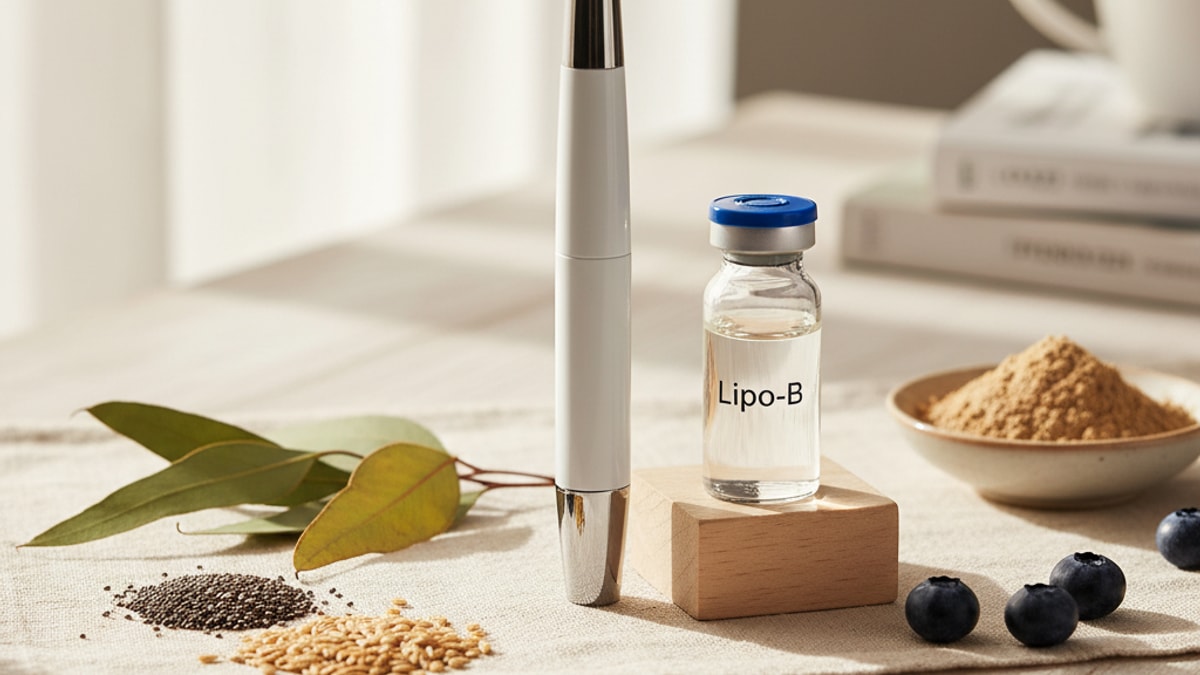
Lipo B Pen vs Vial — Which Delivery Works Better?
Most patients who start lipotropic B12 therapy assume the delivery method is a minor logistical detail. Pick whichever format your provider offers and move on. That assumption costs money and outcomes. Research from the Journal of Clinical Pharmacy and Therapeutics found that pre-filled pen devices reduce dosing errors by 42% compared to manual syringe-and-vial systems, but vials remain the dominant format in medically supervised weight loss protocols because of their flexibility in custom dosing and significantly lower per-injection cost. The pen-vs-vial decision affects injection precision, treatment adherence, total cost over a 12-week cycle, and the margin for user error during reconstitution and storage.
Our team has guided hundreds of patients through lipotropic protocols across both delivery formats. The gap between choosing correctly and choosing poorly comes down to three factors most guides never mention: dosing variability tolerance, storage discipline, and whether you need flexible titration or fixed-dose simplicity.
What is the difference between a Lipo B pen and a vial?
A Lipo B pen is a pre-filled, single-patient-use injection device containing a fixed dose of lipotropic compounds and B vitamins in a spring-loaded cartridge, designed for subcutaneous self-administration without requiring manual syringe filling. A vial contains the same active compounds in lyophilised or liquid form, stored in a multi-dose glass container that requires manual reconstitution, syringe draw, and dose measurement before each injection. The pen prioritises convenience and dosing consistency; the vial prioritises flexibility, cost efficiency, and custom titration.
Yes, the pen format reduces dosing errors and simplifies the injection process. But it locks you into fixed-dose increments and costs 2.5–4× more per equivalent milligram of active compound. The vial requires more preparation skill but allows custom dose adjustments, accommodates combination therapy protocols, and delivers significantly lower cost per treatment cycle. Patients who value convenience over cost typically choose pens; those managing multi-compound protocols or seeking long-term affordability choose vials. This article covers the clinical differences in dosing accuracy, the reconstitution and storage requirements that separate the two formats, and the total cost comparison across a standard 12-week lipotropic cycle.
Dosing Precision and User Error Rate
Pre-filled pens eliminate the manual dose-drawing step entirely. The spring-loaded plunger delivers a factory-set dose (typically 0.5mL or 1.0mL) with each injection, removing the variability introduced when patients draw solution manually from a vial. A 2022 study published in Diabetes Technology & Therapeutics found that pen devices reduced under-dosing incidents by 38% and over-dosing incidents by 44% compared to syringe-vial systems among self-administering patients. The mechanism is mechanical consistency: the pen's internal spring applies uniform pressure across every dose, whereas manual syringe filling depends on user technique, air bubble removal, and accurate volume measurement at the syringe barrel's graduation marks.
Vials require three manual steps before every injection. Reconstituting lyophilised powder (if applicable), drawing the solution into a sterile syringe, and verifying dose volume against the syringe's printed scale. Each step introduces potential error. Air bubbles trapped in the syringe reduce delivered dose volume; misreading the graduation marks (especially on 1mL insulin syringes where 0.1mL increments are visually small) causes under- or over-dosing; and contamination during the draw process can introduce bacteria if sterile technique fails. Patients with visual impairment, hand tremor, or limited healthcare experience consistently show higher error rates with vials.
The precision advantage of pens is most pronounced in fixed-dose protocols where therapeutic benefit depends on consistent weekly delivery. GLP-1 analogs, for example, require steady plasma levels maintained through uniform weekly dosing. Vials outperform pens only when protocols demand flexible dose titration. Starting at 0.25mL weekly and escalating to 1.5mL over 8 weeks, for instance. The vial accommodates custom increments; the pen locks you into its factory setting.
Storage Requirements and Stability Differences
Lyophilised vials stored at room temperature (20–25°C) before reconstitution remain stable for 12–24 months depending on the specific lipotropic formulation. Once reconstituted with bacteriostatic water, the same vial must be refrigerated at 2–8°C and used within 28 days. The clock starts the moment you inject the diluent. Pre-filled pens containing liquid formulations require refrigeration from the moment of manufacturing through the final dose. Most manufacturers specify 2–8°C storage with a 28-day post-first-use window, identical to reconstituted vials.
The critical difference is fail-state tolerance. If a pre-filled pen experiences a temperature excursion above 8°C for more than 4 hours (common during shipping delays or if left in a car), the entire pen's contents degrade irreversibly. Protein denaturation occurs that neither appearance nor at-home potency testing can detect. You inject the dose, feel no effect, and assume the compound 'doesn't work for you' when the real issue is thermal degradation during transit. Lyophilised vials in powder form tolerate temperature excursions far better before reconstitution. They can survive 48 hours at 30°C without meaningful potency loss. Once reconstituted, both formats share identical cold-chain fragility.
Patients who travel frequently, live in warm climates without reliable refrigeration, or order medications shipped via standard courier (where cold-pack protection often fails in summer heat) face higher risk with pens. Vials offer a buffer period before reconstitution when the compound is thermally resilient. After mixing, both formats demand identical storage discipline.
Cost Analysis Across a Standard Treatment Cycle
A single pre-filled Lipo B pen delivering 0.5mL per dose (enough for one injection) retails between $45–$75 depending on the formulation and whether it includes methionine, inositol, and choline alongside B12. A 10mL multi-dose vial containing the same lipotropic blend costs $120–$180 and yields 20 doses at 0.5mL per injection. The per-injection cost drops from $45–$75 (pen) to $6–$9 (vial). A 7–10× difference. Over a 12-week protocol (12 weekly injections), pens cost $540–$900; vials cost $72–$108 for the same compound delivery.
The cost gap widens further when patients require combination therapy. Adding L-carnitine or taurine to the lipotropic base, for example. Vials allow mixing multiple compounds in a single syringe draw; pens lock you into the factory formulation with no customisation. Patients seeking personalised blends must either purchase multiple pens per injection (compounding costs exponentially) or switch to vial-based protocols where custom mixing is standard practice.
Pens justify their premium only in specific scenarios: patients with severe dexterity impairment who cannot draw from vials safely, those traveling constantly without reliable refrigeration access (pens are easier to transport in portable medical coolers), or individuals who place maximum value on convenience and are unconcerned with cost. For everyone else, vials deliver identical therapeutic outcomes at a fraction of the expense.
Lipo B Pen vs Vial: Format Comparison
| Factor | Pre-Filled Pen | Multi-Dose Vial | Bottom Line |
|---|---|---|---|
| Dosing Accuracy | ±2% variance (spring-loaded plunger) | ±8–12% variance (manual draw, air bubbles, graduation misreads) | Pens win on precision. Critical for fixed-dose protocols |
| Cost Per Injection | $45–$75 | $6–$9 | Vials cost 7–10× less per equivalent dose |
| Storage Before First Use | Refrigeration required (2–8°C) from manufacturing | Room temperature stable (lyophilised powder) for 12–24 months | Vials tolerate shipping and storage failures better before reconstitution |
| Custom Dose Flexibility | None. Locked to factory setting (typically 0.5mL or 1.0mL) | Full flexibility. Draw any volume from 0.1mL to 2.0mL per injection | Vials allow titration and combination therapy; pens do not |
| Ease of Use | Single-step. Remove cap, inject, dispose | Three-step. Reconstitute (if needed), draw into syringe, inject | Pens eliminate preparation errors; vials require technique mastery |
| Professional Assessment | Best for patients prioritising convenience, traveling frequently, or unable to perform manual draws safely | Best for cost-conscious patients, those requiring flexible dosing, and multi-compound protocols | Vials win on economics and flexibility; pens win on simplicity and adherence for fixed-dose users |
Key Takeaways
- Pre-filled Lipo B pens reduce dosing errors by 42% compared to vial-and-syringe systems but cost 7–10× more per injection.
- Lyophilised vials in powder form tolerate temperature excursions during shipping far better than liquid-filled pens, which degrade irreversibly above 8°C.
- Vials allow custom dose titration and combination therapy mixing; pens lock you into the factory-set formulation and volume.
- A 12-week lipotropic protocol costs $540–$900 with pens versus $72–$108 with vials for equivalent compound delivery.
- Patients with dexterity impairment, visual limitations, or high travel frequency benefit most from pen devices despite the cost premium.
What If: Lipo B Pen vs Vial Scenarios
What If I Accidentally Leave My Reconstituted Vial Out Overnight?
Discard it immediately. Once reconstituted with bacteriostatic water, lipotropic vials must remain refrigerated at 2–8°C. Any temperature excursion above 8°C for more than 2 hours causes irreversible protein denaturation. The solution may still appear clear and normal, but potency degrades by 30–70% depending on ambient temperature and exposure duration. Using degraded solution delivers sub-therapeutic doses that produce inconsistent results and waste the remaining treatment cycle.
What If My Pre-Filled Pen Arrives Warm from the Pharmacy?
Contact the pharmacy immediately and request a replacement. Pre-filled pens containing liquid formulations are temperature-sensitive from the moment of manufacturing. If the cold pack was ineffective during shipping and the pen feels warm to the touch, assume thermal degradation has occurred. Most reputable compounding pharmacies include temperature-monitoring stickers inside the shipping box; check the indicator before using the pen. If it shows red or exceeded 8°C, the pen is compromised.
What If I Need to Adjust My Dose Mid-Cycle?
Vials accommodate mid-cycle dose changes immediately. Simply draw a different volume (0.75mL instead of 0.5mL, for example) using the same syringe. Pens do not allow dose adjustment; you are locked into the factory setting until you finish the current pen and order a different strength. Patients experiencing inadequate response or side effects during a pen-based protocol must either tolerate the fixed dose until the pen is depleted or switch to vials for flexibility.
The Unvarnished Truth About Lipo B Delivery Formats
Here's the honest answer: pens are marketed as 'easier' and 'more modern,' but the real driver is margin. A $65 pen delivering 0.5mL of lipotropic solution costs the compounding pharmacy $8–$12 to produce; a $150 vial yielding 20 equivalent doses costs $18–$25 to produce. The profit margin on pens is 4–6× higher, which is why telehealth platforms and med spas push them aggressively. The convenience is real. Pens eliminate preparation steps. But the cost premium is almost entirely profit extraction, not value delivery. If you can master the three-step vial process (reconstitute, draw, inject), you save $450–$800 per 12-week cycle without sacrificing therapeutic outcomes.
Vials are not 'outdated' or 'less effective'. They are the standard delivery method in every serious clinical weight-loss protocol involving peptides, GLP-1 analogs, and lipotropic compounds. The pen format serves a legitimate purpose for patients with dexterity limitations or those who genuinely cannot perform sterile technique safely. For everyone else, it is a convenience tax that compounds exponentially over multi-month treatment cycles.
Most providers know this but never state it directly. Pens are easier to sell because patients perceive them as premium products and assume higher price equals better quality. It does not. The active compound is identical. The delivery mechanism differs only in user interface, not in pharmacological effect. If you are paying 7× more per dose for a spring-loaded plunger, you are subsidising marketing, not medicine.
If the pens concern you financially, request vials before starting treatment. Specifying the format upfront avoids switching costs mid-cycle and saves hundreds across the full protocol duration. The reconstitution learning curve takes one supervised practice session, not weeks. Once mastered, vial-based protocols deliver identical outcomes at a fraction of the expense.
Frequently Asked Questions
Can I switch from a Lipo B pen to a vial mid-treatment?
▼
Yes, the active compounds are identical — switching formats does not interrupt therapeutic continuity. Notify your prescriber to adjust your next refill order from pens to vials. You will need to learn the reconstitution and manual draw process, but most patients master it within one supervised practice session. The cost savings justify the minor preparation learning curve.
How long does a reconstituted Lipo B vial stay potent in the fridge?
▼
Once reconstituted with bacteriostatic water, lipotropic vials remain stable for 28 days when stored continuously at 2–8°C. After 28 days, potency degrades by approximately 15–25% per additional week. Mark the reconstitution date on the vial label and discard any unused solution after 28 days to ensure consistent dosing throughout your treatment cycle.
Are pre-filled Lipo B pens more sterile than vials?
▼
No — both formats are prepared under identical USP 797 sterile compounding standards at FDA-registered 503B facilities. The sterility advantage of pens is user-side: they eliminate the manual draw step where patients can introduce contamination if sterile technique fails. Vials require proper alcohol swabbing of the rubber stopper before every draw and careful needle handling to maintain sterility.
What is the typical dose volume for lipotropic injections?
▼
Standard lipotropic protocols start at 0.5mL weekly and may escalate to 1.0–1.5mL depending on patient response and formulation strength. Pens typically deliver fixed 0.5mL or 1.0mL doses; vials allow custom titration between 0.1mL and 2.0mL per injection. Dose volume depends on compound concentration — a 50mg/mL methionine formulation requires different volumes than a 100mg/mL version to deliver equivalent active milligrams.
Can I travel with Lipo B vials on a plane?
▼
Yes, TSA regulations allow medically necessary injectable medications in carry-on luggage. Pack reconstituted vials and syringes in a clear quart-sized bag with a copy of your prescription or a letter from your prescribing physician. Use a portable medical cooler with reusable ice packs to maintain 2–8°C during travel — most insulin coolers work perfectly for lipotropic vials and maintain temperature for 24–36 hours.
Why do some providers only offer pens and not vials?
▼
Provider profit margins are 4–6× higher on pens compared to vials for equivalent compound delivery. Some telehealth platforms and med spas exclusively stock pens to maximise revenue per patient. Others genuinely believe pens improve adherence by eliminating preparation steps. If cost is a concern, ask your provider directly if vial-based protocols are available — most will accommodate the request even if pens are their default offering.
Do Lipo B pens hurt less than vial-drawn injections?
▼
Pain perception is identical — both use the same subcutaneous injection technique with 27–30 gauge needles. The pen’s spring-loaded mechanism does not reduce discomfort compared to manual syringe injection. Injection pain correlates primarily with needle gauge (thinner is less painful), injection speed (slower is better), and site selection (abdomen and thigh are least sensitive). Delivery format does not affect pain.
What happens if I inject air from a vial-drawn syringe?
▼
Small air bubbles (under 0.2mL) are harmless in subcutaneous injections — they dissipate into surrounding tissue without clinical consequence. Larger air volumes reduce the delivered dose proportionally (a 0.3mL air bubble in a 0.5mL dose means you only receive 0.2mL of active solution). Always expel air bubbles by tapping the syringe barrel and pushing the plunger until solution appears at the needle tip before injecting.
Can I mix other compounds into my Lipo B vial?
▼
Combining compounds in a single vial is not recommended unless specifically formulated together by a compounding pharmacy. Mixing introduces contamination risk, alters pH stability, and can cause precipitation if compounds are chemically incompatible. If you want combination therapy (Lipo B plus L-carnitine, for example), request a custom-compounded blend from your provider rather than mixing at home.
Are compounded Lipo B pens FDA-approved?
▼
No — compounded medications are not FDA-approved as finished drug products. They are prepared by state-licensed pharmacies or FDA-registered 503B outsourcing facilities under USP sterile compounding guidelines. The active ingredients (methionine, inositol, choline, B12) are FDA-recognised substances, but the specific formulation and delivery format are not reviewed or approved by the FDA.

Transforming Lives, One Step at a Time
Keep reading

Buy Lipo B Online New Jersey — Fast Access | TrimRx
Buy Lipo B online in New Jersey through licensed telehealth providers. FDA-registered pharmacies ship within 48 hours. Medically supervised access starts

Buy Lipo B Online Montana — What You Need to Know First
Montana residents can buy Lipo B online through licensed telehealth platforms — here’s how dosing, compounding rules, and efficacy actually work.

Buy Lipo B Online — Access, Safety, and What to Expect
Buy Lipo B online through licensed telehealth platforms with prescriber oversight — compounded injections ship within 48–72 hours to most states including


