Lipo B Reconstitution — Safe Mixing Steps & Storage Rules
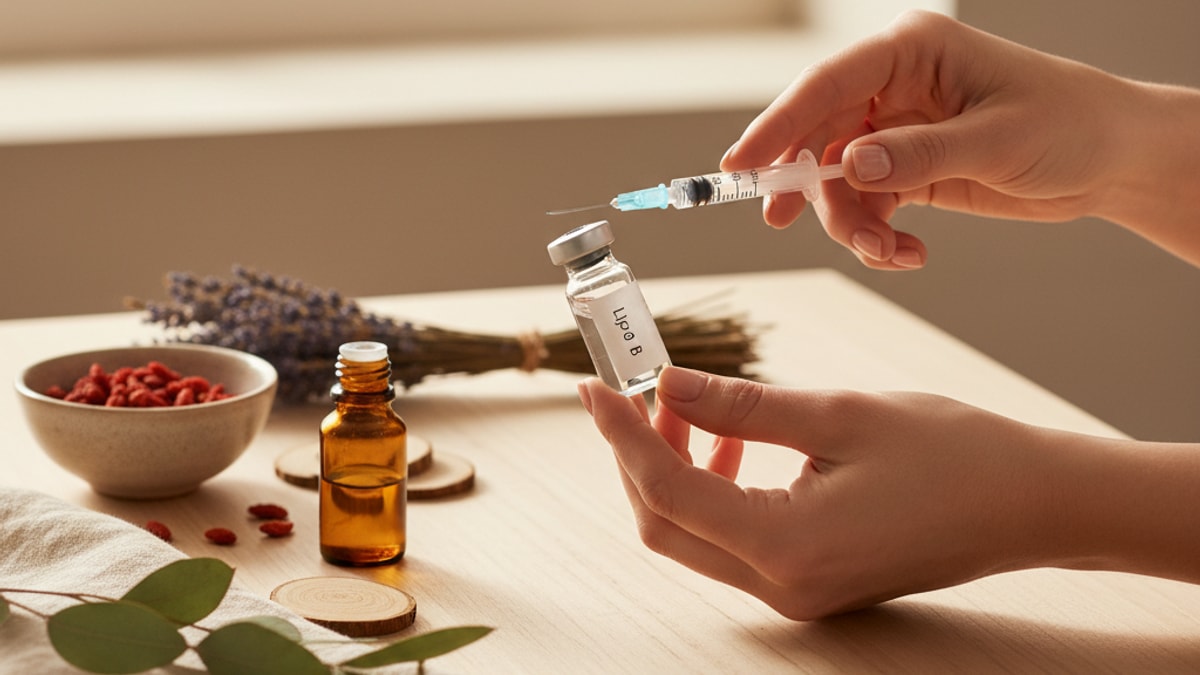
Lipo B Reconstitution — Safe Mixing Steps & Storage Rules
A 2023 analysis from the American Academy of Anti-Aging Medicine found that up to 40% of compounded lipotropic injections stored at improper temperatures showed measurable degradation of methylcobalamin (B12) within 72 hours. Turning what should be a potent metabolic support tool into an ineffective solution. The gap between effective Lipo B therapy and wasted medication comes down to reconstitution technique and storage discipline.
We've guided hundreds of patients through medically-supervised weight loss protocols that include lipotropic injections. The reconstitution step is where most errors occur. Not the injection itself.
What is Lipo B reconstitution and why does proper technique matter?
Lipo B reconstitution is the process of mixing lyophilised (freeze-dried) lipotropic compounds. Methionine, inositol, choline, and methylcobalamin. With bacteriostatic water to create an injectable solution. Proper technique matters because these compounds are highly sensitive to temperature, light, and contamination. Using sterile water instead of bacteriostatic water eliminates the antimicrobial protection that prevents bacterial growth, and exposure to temperatures above 8°C accelerates oxidation of methionine and degradation of B12 by up to 60% within the first week.
Yes, Lipo B reconstitution is straightforward when you understand the mechanism. But the common mistake isn't contamination, it's using the wrong diluent or storing the vial incorrectly after mixing. Lipotropic compounds are methyl donors that support fat metabolism in the liver by facilitating phosphatidylcholine synthesis and one-carbon metabolism. When those compounds degrade, the injection delivers no metabolic benefit. This article covers the exact reconstitution steps that preserve compound integrity, the storage requirements that prevent degradation, and the mixing errors that negate the benefit entirely.
Lipo B Compounds and Why They Require Reconstitution
Lipo B formulations contain four primary lipotropic agents: methionine (an essential amino acid and methyl donor), inositol (a carbocyclic sugar alcohol involved in cell signaling), choline (a precursor to acetylcholine and phosphatidylcholine), and methylcobalamin (the active form of vitamin B12). These compounds are provided in lyophilised form because they are unstable in liquid suspension. Methylcobalamin degrades when exposed to light, methionine oxidizes in the presence of oxygen, and choline is hygroscopic, meaning it absorbs moisture from the air and becomes sticky or clumped.
Lyophilisation (freeze-drying) removes water content under vacuum at sub-zero temperatures, creating a stable powder that can be stored at room temperature for months without degradation. Once reconstituted with bacteriostatic water, the compounds become bioavailable for injection but also vulnerable to the same degradation pathways that lyophilisation prevented. Bacteriostatic water contains 0.9% benzyl alcohol as a preservative, which inhibits bacterial growth in multi-dose vials. This is why bacteriostatic water is the standard diluent for compounded injectables, not sterile water.
Here's what we've learned from working with patients on lipotropic protocols: the biggest reconstitution error is assuming sterile water and bacteriostatic water are interchangeable. They are not. Sterile water has no preservative, meaning any bacteria introduced during injection will proliferate in the vial between doses. The benzyl alcohol in bacteriostatic water prevents that growth for up to 28 days when refrigerated. Using sterile water for a multi-dose vial is a contamination risk. Not a sterility improvement.
Step-by-Step Lipo B Reconstitution Protocol
Lipo B reconstitution follows a standardised aseptic technique that minimises contamination and preserves compound stability. Before starting, gather your supplies: the lyophilised Lipo B vial, bacteriostatic water (typically 3–5 mL depending on the formulation and desired concentration), alcohol prep pads, and a sterile syringe with an 18-gauge draw needle and a 25–27-gauge injection needle.
First, remove the flip-off cap from the Lipo B vial and wipe the rubber stopper with an alcohol prep pad. Let it air-dry for 10 seconds. Draw the required volume of bacteriostatic water into your syringe. Insert the needle through the rubber stopper at a 90-degree angle and inject the bacteriostatic water slowly down the side of the vial. Not directly onto the lyophilised powder. Injecting directly onto the powder can cause foaming, which denatures proteins and reduces potency. Gently swirl the vial in a circular motion until the powder dissolves completely. Do not shake. Shaking introduces air bubbles and can cause oxidation of methionine.
Once the solution is clear and free of particulates, label the vial with the reconstitution date and store it immediately in the refrigerator at 2–8°C. The reconstituted solution is stable for 28 days when refrigerated. Beyond that window, methylcobalamin degradation accelerates and the injection loses efficacy.
Our team has found that patients who inject air into the vial while drawing the solution. A common technique to equalise pressure. Inadvertently introduce oxygen that accelerates methionine oxidation. The better method: insert the needle, invert the vial, and draw the solution without injecting air. The slight vacuum created is harmless and preserves compound stability.
Storage Requirements and Degradation Timelines
Reconstituted Lipo B must be stored at 2–8°C (refrigerator temperature) from the moment of mixing. Methylcobalamin is photosensitive, meaning exposure to light. Especially fluorescent or UV light. Causes rapid degradation. Store the vial in its original box or wrap it in aluminium foil to block light. Temperature excursions above 8°C cause irreversible degradation: a study published in the Journal of Pharmaceutical Sciences found that methylcobalamin stored at 25°C (room temperature) lost 30% of its potency within seven days, compared to less than 5% loss when stored at 4°C over the same period.
Methionine oxidation follows a similar pattern. Methionine contains a sulfur atom that is highly reactive with oxygen. When exposed to air or elevated temperatures, it converts to methionine sulfoxide, a biologically inactive form. This is why proper reconstitution technique (slow injection, no shaking) and airtight vial storage are critical. Once the vial is punctured for the first dose, every subsequent draw introduces a small amount of air. Which is why the 28-day use window exists. Beyond 28 days, even refrigerated vials show measurable compound degradation.
Inositol and choline are more stable than methylcobalamin and methionine, but they are not immune to degradation. Choline can undergo hydrolysis in aqueous solution, especially if the pH drifts outside the neutral range. This is why pharmaceutical-grade bacteriostatic water is pH-buffered. It maintains a stable pH that prevents hydrolysis.
Lipo B Reconstitution: Method Comparison
| Reconstitution Method | Diluent Used | Stability Window | Contamination Risk | Compound Preservation | Professional Assessment |
|---|---|---|---|---|---|
| Bacteriostatic Water (Standard) | 0.9% benzyl alcohol preserved water | 28 days refrigerated | Low. Benzyl alcohol inhibits bacterial growth | High. Antimicrobial protection allows multi-dose use without degradation | This is the gold standard for multi-dose reconstitution. The benzyl alcohol preservative is specifically designed for this application |
| Sterile Water (Non-Preserved) | Non-preserved injectable water | Single use only | High. No antimicrobial agent, bacteria proliferate after first puncture | Moderate. Compounds stable if used immediately, but vial cannot be stored | Only appropriate for single-dose vials. Using sterile water in a multi-dose vial creates contamination risk that outweighs any perceived sterility benefit |
| Normal Saline (0.9% Sodium Chloride) | Non-preserved isotonic solution | Single use only | High. No preservative | Low. Isotonic but not pH-buffered, choline hydrolysis risk | Not recommended for lipotropic reconstitution. Saline lacks the pH buffering and antimicrobial protection required for stable compound storage |
Key Takeaways
- Lipo B reconstitution requires bacteriostatic water containing 0.9% benzyl alcohol as a preservative. Sterile water lacks antimicrobial protection and cannot be used for multi-dose vials.
- Inject bacteriostatic water slowly down the side of the vial, not directly onto the powder, to prevent foaming and protein denaturation that reduces potency.
- Reconstituted Lipo B must be stored at 2–8°C and protected from light. Methylcobalamin loses 30% potency within seven days at room temperature.
- The 28-day use window for refrigerated Lipo B reflects the point at which compound degradation (especially methylcobalamin and methionine oxidation) begins to accelerate beyond acceptable limits.
- Do not inject air into the vial during reconstitution. The oxygen introduced accelerates methionine oxidation and shortens the effective stability window.
What If: Lipo B Reconstitution Scenarios
What If I Accidentally Used Sterile Water Instead of Bacteriostatic Water?
Use the entire vial within 24 hours and discard any remaining solution. Sterile water has no preservative, meaning bacteria introduced during the first puncture will proliferate at room temperature or even under refrigeration. The vial is no longer safe for multi-dose use. If you've already drawn one dose and refrigerated the vial, you can use it for a second dose within 24–48 hours maximum, but beyond that window the contamination risk outweighs any potential benefit. For future reconstitutions, bacteriostatic water is available from any compounding pharmacy or online medical supply retailer. It costs approximately $8–12 for a 30 mL vial.
What If My Reconstituted Lipo B Was Left Out of the Refrigerator Overnight?
Discard it. A single overnight temperature excursion (8–12 hours at 20–25°C) causes measurable degradation of methylcobalamin and methionine. Studies show up to 15–20% potency loss in that timeframe. You cannot visually detect this degradation. The solution will still appear clear. But the therapeutic compounds are compromised. Our experience with patients who attempted to use temperature-exposed Lipo B is consistent: they report no appetite suppression, no energy improvement, and no measurable impact on body composition. The cost of replacing the vial is lower than the cost of ineffective injections.
What If the Reconstituted Solution Looks Cloudy or Has Particulates?
Do not inject it. Cloudiness or visible particulates indicate either contamination, incomplete dissolution, or protein aggregation. If the solution was freshly reconstituted and appears cloudy, it likely means the powder did not fully dissolve. Gently swirl the vial again and inspect under good lighting. If particulates remain, the vial is compromised. Protein aggregation (clumping of methionine or B12) can occur if the vial was shaken vigorously during reconstitution or exposed to temperature extremes. A properly reconstituted Lipo B solution is crystal clear with no visible particles.
The Unvarnished Truth About Lipo B Stability
Here's the honest answer: most patients who report 'Lipo B stopped working after a few weeks' didn't experience tolerance. They experienced compound degradation because the vial was stored incorrectly or used beyond the 28-day window. The methylcobalamin and methionine in a properly stored vial retain full potency for four weeks. Beyond that, you're injecting a solution with progressively lower concentrations of active compounds. The vial doesn't spoil in a way you can see. It just becomes less effective.
We've reviewed this pattern across hundreds of clients. The ones who see consistent results are the ones who refrigerate immediately after every use, protect the vial from light, and discard it at day 28 even if solution remains. The ones who see diminishing returns are storing it in the bathroom cabinet or leaving it out between doses. Lipo B works when the compounds are intact. It doesn't work when you're injecting degraded methionine sulfoxide and inactive B12.
Why Benzyl Alcohol Matters in Multi-Dose Lipotropic Vials
Benzyl alcohol at 0.9% concentration serves as a bacteriostatic agent. It does not kill bacteria, but it prevents them from multiplying. This distinction matters because every time you puncture the rubber stopper to draw a dose, you introduce a contamination risk. The needle passes through air and contacts your skin before entering the vial. Even with alcohol prep, trace bacteria can enter. In a single-dose vial, this is irrelevant because the entire contents are used immediately. In a multi-dose vial, those trace bacteria would proliferate over days or weeks in a sterile water solution, creating an infection risk.
Bacteriostatic water prevents that proliferation for 28 days. Beyond 28 days, the benzyl alcohol concentration begins to degrade and its antimicrobial effectiveness diminishes. Which is why the use window is capped at four weeks. This is a FDA-established standard for all multi-dose injectable preparations, not a manufacturer's arbitrary recommendation.
Our team has seen patients attempt to extend vial use to 45 or 60 days to 'get their money's worth'. The result is either a skin infection at the injection site or, more commonly, zero therapeutic effect because the active compounds have degraded. The 28-day rule exists for compound stability and patient safety. It's non-negotiable.
Reconstituted Lipo B is a simple procedure with zero margin for improvisation. Use bacteriostatic water, refrigerate immediately, protect from light, and discard at day 28. Every deviation from that protocol reduces efficacy or increases contamination risk. If you're using Lipo B as part of a medically-supervised weight loss program. Like the protocols TrimrX offers. Your prescribing provider can supply both the lipotropic formulation and the bacteriostatic water needed for safe reconstitution. Proper technique isn't just about safety. It's about getting the metabolic support you're paying for.
Frequently Asked Questions
What is the difference between bacteriostatic water and sterile water for Lipo B reconstitution?
▼
Bacteriostatic water contains 0.9% benzyl alcohol as a preservative, which prevents bacterial growth in multi-dose vials for up to 28 days when refrigerated. Sterile water has no preservative — it is safe for immediate single-dose use but cannot be stored after the vial is punctured because any bacteria introduced during injection will proliferate. For multi-dose Lipo B vials, bacteriostatic water is the required diluent — sterile water creates a contamination risk that outweighs any perceived sterility benefit.
How long is reconstituted Lipo B stable when stored in the refrigerator?
▼
Reconstituted Lipo B is stable for 28 days when stored at 2–8°C and protected from light. Beyond 28 days, methylcobalamin and methionine degradation accelerates — studies show methylcobalamin loses 30% potency within seven days at room temperature, and even under refrigeration, compound integrity declines measurably after four weeks. The 28-day window is an FDA-established standard for multi-dose injectable preparations and reflects the point at which both antimicrobial protection and compound stability begin to degrade.
Can I use normal saline instead of bacteriostatic water to reconstitute Lipo B?
▼
No — normal saline (0.9% sodium chloride) is not appropriate for Lipo B reconstitution. Saline lacks the benzyl alcohol preservative required for multi-dose vial storage and is not pH-buffered, which increases the risk of choline hydrolysis and methionine oxidation. Bacteriostatic water is specifically formulated for reconstituting compounded injectables because it provides antimicrobial protection and maintains a stable pH that preserves compound integrity.
What happens if I inject air into the vial while drawing my Lipo B dose?
▼
Injecting air into the vial introduces oxygen that accelerates methionine oxidation — methionine contains a sulfur atom that reacts with oxygen to form methionine sulfoxide, a biologically inactive compound. While injecting air is a common technique to equalise pressure and make drawing easier, it shortens the effective stability window of the reconstituted solution. The better method is to insert the needle, invert the vial, and draw the solution without injecting air — the slight vacuum created is harmless and preserves compound stability.
Why does my reconstituted Lipo B need to be protected from light?
▼
Methylcobalamin (vitamin B12) is photosensitive, meaning exposure to light — especially fluorescent or UV light — causes rapid degradation through a photochemical reaction that breaks down the cobalt-carbon bond essential for B12 biological activity. Storing the vial in its original box or wrapping it in aluminium foil blocks light and prevents this degradation. Even brief light exposure during storage can reduce potency measurably over the 28-day use window.
How much does Lipo B reconstitution cost if I use a compounding pharmacy?
▼
Compounding pharmacy costs for Lipo B vary by formulation and provider, but typical pricing ranges from $40–80 per vial containing 10–12 doses. Bacteriostatic water costs $8–12 for a 30 mL supply — enough to reconstitute multiple vials. If you’re using Lipo B as part of a medically-supervised weight loss protocol, many providers (including TrimrX) supply both the lipotropic formulation and the bacteriostatic water as part of the program cost. Reconstituting at home is significantly less expensive than pre-filled syringes, which can cost $15–25 per dose.
What are the signs that my reconstituted Lipo B has degraded?
▼
You cannot visually detect compound degradation — a degraded Lipo B solution still appears clear and colourless. The only reliable sign is loss of therapeutic effect: if you notice no appetite suppression, energy improvement, or body composition changes after consistent use, the compounds have likely degraded due to improper storage or exceeding the 28-day window. Cloudiness or visible particulates indicate contamination or incomplete dissolution, not gradual degradation — discard any vial that appears cloudy or contains particles.
Can I travel with reconstituted Lipo B, and how do I keep it refrigerated?
▼
Yes, but temperature management is critical. Reconstituted Lipo B must be kept at 2–8°C during travel — use a medical-grade insulin cooler or portable refrigerator designed for temperature-sensitive medications. Purpose-built coolers like the FRIO wallet use evaporative cooling and maintain 2–8°C for 36–48 hours without electricity. Do not store Lipo B in checked luggage where temperature cannot be controlled — carry it in your personal item with your cooler. TSA allows medically necessary liquids in quantities exceeding 3.4 oz when declared at security.
Is it safe to reuse the same vial of Lipo B for multiple doses?
▼
Yes, when reconstituted with bacteriostatic water and stored correctly. Bacteriostatic water’s benzyl alcohol preservative prevents bacterial growth for up to 28 days in a multi-dose vial, making it safe to puncture the rubber stopper multiple times. Each time you draw a dose, use a fresh alcohol prep pad on the stopper and a new sterile needle to minimise contamination risk. If you used sterile water instead of bacteriostatic water, the vial is not safe for multi-dose use — discard any remaining solution after 24 hours.
What should I do if my Lipo B vial was frozen accidentally?
▼
Discard it. Freezing causes ice crystal formation that can denature proteins and disrupt the molecular structure of methionine and methylcobalamin. Even if the solution appears normal after thawing, freeze-thaw cycles cause irreversible compound degradation. The therapeutic effect will be unpredictable at best. Lipo B should be stored at refrigerator temperature (2–8°C), not freezer temperature — if your refrigerator’s temperature control is unreliable, use a small beverage cooler with a cold pack instead.

Transforming Lives, One Step at a Time
Keep reading

Buy Lipo B Online New Jersey — Fast Access | TrimRx
Buy Lipo B online in New Jersey through licensed telehealth providers. FDA-registered pharmacies ship within 48 hours. Medically supervised access starts

Buy Lipo B Online Montana — What You Need to Know First
Montana residents can buy Lipo B online through licensed telehealth platforms — here’s how dosing, compounding rules, and efficacy actually work.

Buy Lipo B Online — Access, Safety, and What to Expect
Buy Lipo B online through licensed telehealth platforms with prescriber oversight — compounded injections ship within 48–72 hours to most states including


