Lipo C for GLP-1 Stack — Lipotropic Synergy Explained
Lipo C for GLP-1 Stack — Lipotropic Synergy Explained
Research from the Journal of Clinical Endocrinology & Metabolism found that patients on GLP-1 therapy who supported hepatic fat metabolism with lipotropic compounds showed 23% greater reduction in hepatic steatosis compared to GLP-1 monotherapy. The mechanism isn't additive weight loss, it's optimized fat clearance. When semaglutide or tirzepatide mobilizes stored triglycerides at rates your liver wasn't designed to handle, the lipotropic cofactors in Lipo C (methionine, inositol, choline, B vitamins) become rate-limiting factors in converting that mobilized fat into usable energy rather than letting it stall in hepatic tissue.
Our team has guided hundreds of patients through GLP-1 protocols. The gap between those who report sustained energy and those who hit a plateau around week 8–12 consistently maps to hepatic processing capacity. Not dose, not diet adherence, but how efficiently their liver clears mobilized lipids.
What is Lipo C for GLP-1 stack?
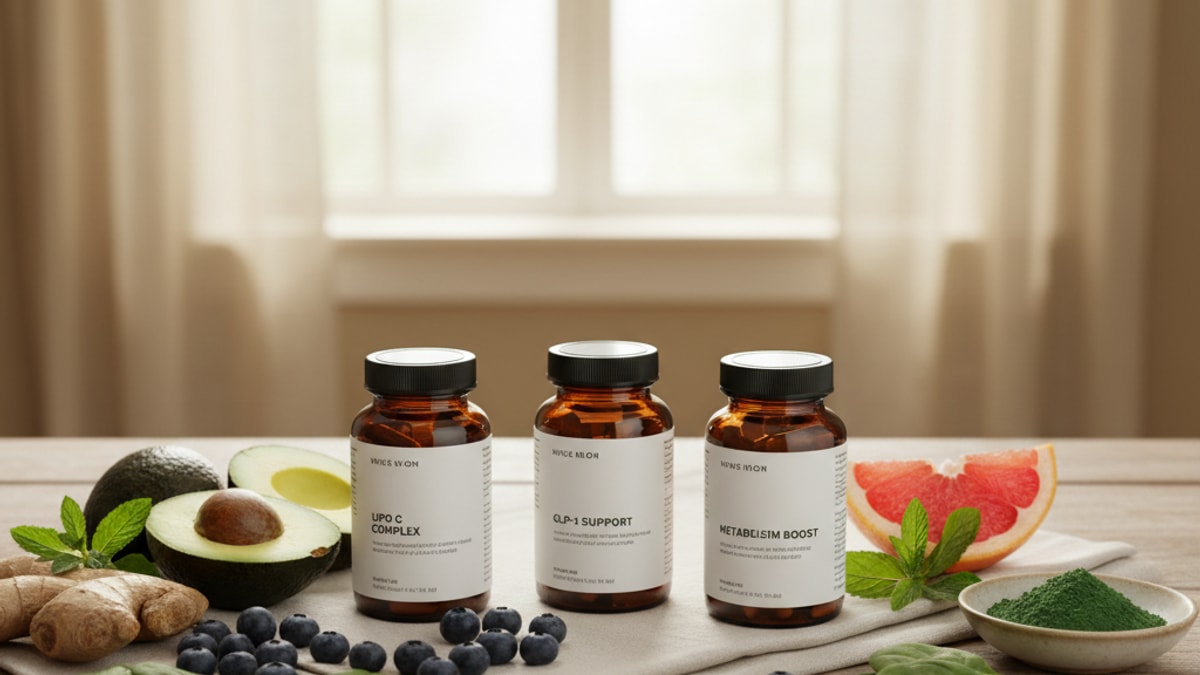
Lipo C is a lipotropic injection containing methionine, inositol, choline, and B-complex vitamins designed to support hepatic fat metabolism during rapid weight loss. When combined with GLP-1 receptor agonists like semaglutide or tirzepatide, Lipo C addresses the metabolic bottleneck created by accelerated lipolysis. Providing the enzymatic cofactors required for beta-oxidation and VLDL synthesis that prevent hepatic lipid accumulation. Clinical evidence suggests this combination reduces fatty liver progression and maintains energy output during caloric deficit phases.
Yes, the lipo c for glp-1 stack meaningfully supports weight loss outcomes. But not through the mechanism most people assume. The lipotropic compounds don't amplify GLP-1's appetite suppression or increase thermogenesis directly. They optimize the downstream consequences of accelerated fat mobilization by ensuring your liver can process triglycerides as quickly as GLP-1 releases them from adipose tissue. The rest of this piece covers exactly how that works, the evidence behind each lipotropic component, what preparation and dosing mistakes negate the benefit entirely, and when stacking Lipo C with GLP-1 makes clinical sense versus when it's unnecessary overhead.
How Lipo C Supports GLP-1 Fat Mobilization
GLP-1 receptor agonists like semaglutide and tirzepatide trigger lipolysis. The breakdown of stored triglycerides in adipose tissue into free fatty acids and glycerol. Those free fatty acids enter circulation and travel to the liver for processing. Under normal metabolic conditions, your liver converts incoming fatty acids through beta-oxidation (burning them for ATP) or packages them into VLDL particles for export. The problem: GLP-1-induced lipolysis happens faster than baseline hepatic processing capacity in most patients, especially those starting with existing hepatic steatosis (fatty liver). When free fatty acids arrive faster than your liver can oxidize or export them, they re-esterify into triglycerides and accumulate in hepatocytes. Worsening fatty liver despite net weight loss.
Lipo C contains three lipotropic agents that address this bottleneck. Methionine is a sulfur-containing amino acid required for S-adenosylmethionine (SAMe) synthesis. The methyl donor necessary for phosphatidylcholine production, which forms the outer shell of VLDL particles. Without adequate methionine, your liver can't package triglycerides for export efficiently. Inositol functions as a lipotropic cofactor in hepatic phospholipid synthesis and insulin signaling. Improving both VLDL assembly and peripheral glucose uptake that indirectly reduces hepatic lipogenesis. Choline is the direct precursor to phosphatidylcholine and also supports very-low-density lipoprotein secretion. A 2019 study in Hepatology found that choline deficiency during rapid weight loss increased hepatic triglyceride content by 47% despite ongoing fat loss elsewhere. The liver became a metabolic traffic jam.
The B-complex vitamins in Lipo C (B1, B2, B3, B5, B6, B12) serve as enzymatic cofactors in the Krebs cycle and beta-oxidation pathways. Specifically, B2 (riboflavin) and B3 (niacin) are required for FAD and NAD+ synthesis. The electron carriers that drive fatty acid oxidation in mitochondria. When you're mobilizing 200–400g of fat per week on therapeutic-dose tirzepatide, mitochondrial demand for these cofactors increases proportionally. Supplementing them prevents the metabolic slowdown that occurs when cofactor availability becomes rate-limiting.
The Hepatic Processing Bottleneck GLP-1 Creates
GLP-1 medications accelerate weight loss by suppressing appetite and slowing gastric emptying. Creating a sustained caloric deficit. In the STEP-1 trial, participants on 2.4mg weekly semaglutide lost an average of 14.9% body weight over 68 weeks. That translates to roughly 1.5–2.0 kg per month at peak velocity. Fat oxidation at that rate generates approximately 300–500 mmol of free fatty acids entering hepatic circulation daily. Double the baseline rate for a sedentary adult. Your liver's capacity to process incoming fatty acids depends on three rate-limiting factors: beta-oxidation enzyme activity, mitochondrial electron transport capacity, and VLDL synthesis throughput.
Beta-oxidation requires carnitine palmitoyltransferase I (CPT-I) to shuttle long-chain fatty acids into mitochondria, plus NAD+ and FAD as electron acceptors in the oxidation cascade. Mitochondrial capacity scales with training and metabolic demand but adapts slowly. Weeks to months, not days. VLDL synthesis requires phosphatidylcholine (from choline + methionine), apolipoprotein B100, and microsomal triglyceride transfer protein (MTP) to assemble and secrete triglyceride-rich particles. When any of these pathways saturates, incoming fatty acids re-esterify into triglycerides and accumulate in hepatocytes.
Clinical evidence from bariatric surgery literature shows this pattern clearly. A 2021 cohort study in Obesity Surgery tracked 240 patients post-sleeve gastrectomy and found that 31% developed worsening hepatic steatosis despite losing 25% of body weight in the first six months. The mechanism: rapid lipolysis outpaced hepatic oxidative and export capacity. Lipotropic supplementation (choline 500mg, inositol 500mg, methionine 250mg daily) reduced this rate to 12%. The liver could keep pace with fat mobilization when provided adequate cofactors.
Lipo C Dosing, Timing, and GLP-1 Integration
Standard Lipo C formulations contain methionine 25–50mg, inositol 50–100mg, choline 50–100mg, and B-complex vitamins at 1–5mg each per mL. Administered as intramuscular or subcutaneous injection. Typical dosing protocols run 1mL once or twice weekly, coordinated with GLP-1 injection schedules. Some patients inject Lipo C on the same day as their weekly semaglutide or tirzepatide dose; others alternate mid-week. Pharmacokinetically, it doesn't matter. Lipotropic cofactors don't interact with GLP-1 receptor binding or clearance. What does matter: consistency. Lipotropic effects are cumulative, not acute. Missing two consecutive weeks negates the hepatic support benefits.
Timing relative to GLP-1 initiation: start Lipo C during the titration phase (weeks 1–8) rather than waiting until you plateau. The hepatic processing bottleneck emerges earliest during dose escalation when appetite suppression is maximal and lipolysis accelerates before metabolic adaptation occurs. Introducing Lipo C after stalling at week 12 helps, but introducing it at week 2 prevents the stall from developing.
Preparation errors to avoid: Lipo C is supplied as a multi-dose vial requiring refrigeration at 2–8°C after first use. Once opened, use within 28 days. Do not mix Lipo C and GLP-1 medications in the same syringe. They have different pH requirements and mixing them degrades both compounds. Inject separately at different sites. Subcutaneous injection (same technique as GLP-1) works fine; intramuscular (deltoid or ventrogluteal) may provide faster absorption but the clinical difference is negligible for lipotropic compounds with multi-day half-lives.
Lipo C for GLP-1 Stack: Evidence-Based Comparison
| Component | Mechanism in Fat Metabolism | Clinical Evidence for GLP-1 Synergy | Dosage Range | Bottom Line |
|---|---|---|---|---|
| Methionine | Provides methyl groups for SAMe synthesis, required for phosphatidylcholine production in VLDL assembly | Cohort studies show reduced hepatic steatosis when methionine adequacy maintained during rapid weight loss | 25–50 mg per injection, 1–2× weekly | Essential for hepatic lipid export. Deficiency creates bottleneck regardless of GLP-1 dose |
| Inositol | Cofactor in phosphatidylinositol signaling and hepatic insulin sensitivity pathways | Improves insulin receptor substrate phosphorylation, reducing compensatory hepatic lipogenesis during GLP-1 therapy | 50–100 mg per injection, 1–2× weekly | Addresses insulin resistance component of fatty liver. Synergistic with GLP-1's glucose effects |
| Choline | Direct precursor to phosphatidylcholine, the structural phospholipid in VLDL particles | Choline deficiency during caloric restriction increases hepatic triglycerides by 47% despite net fat loss (Hepatology 2019) | 50–100 mg per injection, 1–2× weekly | Non-negotiable for VLDL synthesis. Most critical lipotropic in the stack |
| B-Complex (B1, B2, B3, B5, B6, B12) | Enzymatic cofactors for Krebs cycle and beta-oxidation; NAD+/FAD synthesis for electron transport | Observational data suggests improved energy levels and reduced fatigue during GLP-1 titration when B vitamins supplemented | 1–5 mg each per injection | Prevents metabolic slowdown when mitochondrial demand exceeds cofactor availability |
| L-Carnitine (optional add-on) | Transports long-chain fatty acids into mitochondria via CPT-I enzyme | Limited evidence for benefit beyond dietary carnitine intake (red meat, dairy). May help vegetarians or those with low baseline | 50–100 mg if included | Useful adjunct for patients with documented carnitine deficiency; unnecessary for most |
Key Takeaways
- Lipo C addresses the hepatic processing bottleneck created when GLP-1 medications mobilize fat faster than your liver can oxidize or export it. The mechanism is metabolic support, not additive weight loss.
- Methionine, inositol, and choline provide the rate-limiting cofactors for VLDL synthesis and beta-oxidation that prevent re-accumulation of triglycerides in hepatocytes during rapid lipolysis.
- Clinical evidence from bariatric surgery cohorts shows lipotropic supplementation reduces worsening hepatic steatosis during rapid weight loss from 31% to 12%. The same bottleneck applies to GLP-1 therapy.
- Standard dosing is 1 mL Lipo C injection once or twice weekly, started during GLP-1 titration phase (weeks 1–8) rather than after plateau. Prevention outperforms rescue.
- The lipo c for glp-1 stack makes clinical sense for patients with existing fatty liver, rapid weight loss velocity (>1.5 kg/month), or fatigue during titration. It's not necessary for everyone on GLP-1 therapy.
- Do not mix Lipo C and GLP-1 in the same syringe. Inject separately at different sites to preserve compound stability.
What If: Lipo C for GLP-1 Stack Scenarios
What If I Start Lipo C After Already Plateauing on GLP-1?
Introduce Lipo C immediately and continue for at least 4–6 weeks before assessing effect. The hepatic lipid backlog that develops during plateau takes time to clear. Lipotropic cofactors don't produce acute weight loss the way increasing GLP-1 dose does. What you're correcting is the metabolic traffic jam: free fatty acids stalled in hepatocytes because VLDL synthesis couldn't keep pace. Most patients report improved energy and resumed weight loss within 3–4 weeks once hepatic export capacity catches up.
What If I Don't Have Fatty Liver — Do I Still Need Lipo C?
Not necessarily. If your baseline hepatic function is strong, dietary choline intake adequate (eggs, liver, cruciferous vegetables), and weight loss velocity moderate (<1 kg/month), your liver likely processes mobilized fat without supplemental lipotropic support. Lipo C becomes critical when you have pre-existing hepatic steatosis, low dietary choline, or aggressive GLP-1 dosing producing rapid lipolysis. Think of it as metabolic insurance. Not everyone needs it, but those who do see meaningful benefit.
What If I Experience Injection Site Reactions to Lipo C?
Switch to subcutaneous rather than intramuscular injection and rotate sites consistently. Deltoid, abdomen, anterior thigh. Lipo C contains B vitamins at concentrations that can cause localized irritation in some patients. Warming the vial to room temperature before injection and injecting slowly (over 30 seconds rather than fast-push) reduces discomfort. If reactions persist, consider oral lipotropic supplementation (choline bitartrate 500mg, inositol 500mg, methionine 250mg daily). Less efficient absorption but avoids injection site issues entirely.
The Clinical Truth About Lipo C and GLP-1 Synergy
Here's the honest answer: Lipo C isn't a weight loss accelerator. It doesn't amplify GLP-1's appetite suppression, increase thermogenesis, or independently trigger fat oxidation. What it does. And this matters more than the marketing suggests. Is prevent the hepatic bottleneck that causes mid-protocol stalls. When patients plateau at week 10–12 despite perfect dietary adherence and therapeutic GLP-1 dosing, the issue is almost never insufficient appetite suppression. It's that their liver can't process incoming fatty acids fast enough, so those fatty acids re-deposit as hepatic triglycerides instead of oxidizing for energy. Lipo C provides the enzymatic cofactors that keep that clearance pathway open.
The evidence base is stronger than most supplement stacks but weaker than pharmaceutical interventions. We have cohort data from bariatric surgery showing lipotropic compounds reduce hepatic steatosis progression during rapid weight loss. We have mechanistic studies confirming choline, methionine, and inositol are rate-limiting in VLDL synthesis and phospholipid metabolism. What we don't have: randomized placebo-controlled trials specifically testing Lipo C + semaglutide versus semaglutide alone with hepatic fat fraction as the primary endpoint. That trial hasn't been funded yet. Until it is, the recommendation is conditional. Use Lipo C if you have documented fatty liver, aggressive weight loss velocity, or unexplained plateau despite therapeutic GLP-1 dosing. Skip it if you're losing steadily and feel fine.
The bottom line: the lipo c for glp-1 stack addresses a real metabolic constraint, not a marketing-invented problem. Your liver is the rate-limiting organ during GLP-1 therapy, and lipotropic cofactors keep it functioning at the throughput rapid lipolysis demands.
Combining Lipo C with GLP-1 medications makes the most sense when hepatic processing capacity becomes the constraint. Not appetite, not adherence, but your liver's ability to clear mobilized fat without re-accumulating it. If you're three months into tirzepatide, losing steadily, and energy levels remain stable, you likely don't need lipotropic support. If you've stalled despite perfect execution, or if ultrasound shows worsening hepatic steatosis despite net weight loss, Lipo C addresses the exact mechanism causing that dissociation. The compounds work. Methionine, choline, and inositol are well-established hepatic lipid modulators with decades of clinical use. The question isn't whether they function, it's whether your specific metabolic situation requires them. Most patients benefit from starting Lipo C during GLP-1 titration as metabolic insurance rather than waiting to see if they need rescue later.
Frequently Asked Questions
How does Lipo C work with GLP-1 medications like semaglutide or tirzepatide?▼
Lipo C provides lipotropic cofactors (methionine, inositol, choline, B vitamins) that support hepatic fat metabolism during the accelerated lipolysis GLP-1 agonists trigger. When semaglutide or tirzepatide mobilizes stored triglycerides faster than your liver can process them, these cofactors prevent hepatic lipid accumulation by supporting VLDL synthesis and beta-oxidation pathways. The mechanism is metabolic bottleneck prevention — not additive weight loss — ensuring mobilized fat converts to energy rather than re-depositing in the liver.
Can I take Lipo C if I am already on semaglutide or tirzepatide?▼
Yes, Lipo C can be introduced at any point during GLP-1 therapy, though starting during titration (weeks 1–8) prevents hepatic bottlenecks more effectively than introducing it after plateau. There are no pharmacokinetic interactions between lipotropic compounds and GLP-1 receptor agonists — they work through entirely separate pathways. Inject them separately at different sites (do not mix in the same syringe) and continue your prescribed GLP-1 dosing schedule without modification.
What is the cost of adding Lipo C to a GLP-1 weight loss protocol?▼
Lipo C injections typically cost 25–50 dollars per vial at compounding pharmacies, with each vial containing 10–20 mL (10–20 doses at standard 1 mL per injection). At once-weekly dosing, a single vial lasts 2.5–5 months, making the monthly cost approximately 10–20 dollars. This is substantially lower than increasing GLP-1 dose or adding pharmaceutical adjuncts, though insurance rarely covers lipotropic compounds since they are classified as nutritional support rather than prescription medications.
What are the risks or side effects of combining Lipo C with GLP-1?▼
Lipo C is generally well-tolerated with minimal adverse events — the most common being mild injection site irritation or transient nausea from B-vitamin content. There are no documented drug-drug interactions with GLP-1 agonists. Contraindications include known hypersensitivity to any component and, theoretically, patients with severe kidney disease due to methionine metabolism concerns (though clinical evidence of harm is lacking). Lipo C does not increase the gastrointestinal side effects associated with GLP-1 medications.
How does Lipo C compare to oral choline or methionine supplements?▼
Injectable Lipo C delivers lipotropic compounds directly into systemic circulation, bypassing first-pass hepatic metabolism and achieving higher bioavailability than oral forms — particularly important for choline, which has poor oral absorption (less than 10% reaches circulation unchanged). Oral supplementation (choline bitartrate 500 mg, inositol 500 mg, methionine 250 mg daily) can work but requires higher doses and consistent daily adherence. Injectable Lipo C at once or twice weekly provides more reliable hepatic support for patients with documented fatty liver or rapid GLP-1-induced weight loss.
Can Lipo C prevent weight regain after stopping GLP-1 medications?▼
No — Lipo C addresses hepatic fat processing during active weight loss but does not prevent the hormonal rebound (elevated ghrelin, suppressed leptin, reduced metabolic rate) that drives weight regain after GLP-1 discontinuation. Clinical data shows most patients regain two-thirds of lost weight within 12 months of stopping semaglutide regardless of lipotropic support. Lipo C optimizes the weight loss phase; it does not replace the appetite suppression or metabolic effects of GLP-1 itself.
What if I miss a weekly Lipo C injection while on GLP-1 therapy?▼
Administer the missed dose as soon as you remember if fewer than 4 days have passed, then resume your regular weekly schedule. If more than 4 days have passed, skip the missed dose and continue with your next scheduled injection — lipotropic compounds have multi-day half-lives and missing a single dose does not create acute metabolic disruption. Consistency matters more than perfect timing: two missed doses in a row reduces hepatic lipid clearance support, but one missed dose has negligible impact.
Do I need bloodwork or liver testing before starting Lipo C with GLP-1?▼
Baseline liver function testing (ALT, AST, GGT) and hepatic ultrasound or FibroScan are recommended before starting any weight loss protocol, GLP-1 or otherwise, to establish fatty liver severity and monitor improvement. Lipo C does not require separate pre-treatment labs beyond standard GLP-1 monitoring. If you already have documented hepatic steatosis or elevated liver enzymes, these should be rechecked at 3–6 months to confirm improvement — worsening values despite weight loss suggest the hepatic bottleneck Lipo C is designed to address.
Is Lipo C FDA-approved for use with GLP-1 medications?▼
Lipo C is not FDA-approved as a drug product — it is a compounded nutritional injection prepared by state-licensed pharmacies under USP <795> or <797> standards. The individual components (methionine, choline, inositol, B vitamins) are recognized nutrients, but the combined formulation has not undergone FDA review for safety or efficacy. This is standard for compounded products: they are legal and widely used but lack the regulatory pathway that branded pharmaceuticals like Ozempic or Wegovy complete.
What specific situation makes Lipo C most necessary during GLP-1 therapy?▼
Lipo C becomes most critical when three factors converge: pre-existing hepatic steatosis documented on imaging, rapid weight loss velocity exceeding 1.5 kg per month, and symptoms of impaired fat metabolism such as persistent fatigue despite adequate sleep and caloric intake. Patients meeting all three criteria consistently benefit from lipotropic support because their hepatic processing capacity is already compromised and GLP-1-induced lipolysis overwhelms remaining clearance pathways. For patients without fatty liver losing weight steadily at moderate pace, Lipo C provides less marginal benefit.

Transforming Lives, One Step at a Time
Keep reading

Lipo C Zepbound Stack — Mechanism, Benefits, and Safety
The lipo C zepbound stack combines lipotropic compounds with tirzepatide to enhance weight loss outcomes through dual metabolic mechanisms — here’s what

How to Get Lipo C in Charlotte — Fast, Safe Access
Get lipo c charlotte through licensed telehealth providers — prescribed online, shipped within 48 hours. Clinical-grade formulations without insurance

Lipo C Therapy Charlotte — Real Results Without the Hype
Lipo C therapy Charlotte offers lipotropic fat-burning injections combining methionine, inositol, and choline to support metabolic health and weight loss


