Metformin vs Ozempic: Which Is Better for Weight Loss?

If you’re researching medication options for weight loss, you’ve likely encountered both metformin and Ozempic. One has been around for decades and costs less than a dinner out. The other has revolutionized obesity treatment and dominates headlines. But which one actually works better, and which makes sense for your situation?
The straightforward answer: Ozempic (semaglutide) produces dramatically more weight loss than metformin. Clinical trials show semaglutide produces approximately 15% average body weight loss, while metformin produces 2-5% at best. For someone weighing 220 pounds, that’s the difference between losing roughly 33 pounds versus 5-10 pounds. In terms of raw weight loss effectiveness, there’s no real contest.
But effectiveness isn’t the only consideration. Metformin costs a fraction of what semaglutide costs, has decades of safety data, and is readily accessible. For some patients, particularly those with limited budgets or modest weight loss goals, metformin remains a reasonable option. Others might benefit from using both medications together.
This guide provides a comprehensive comparison to help you understand your options and have an informed conversation with your healthcare provider.
This guide covers:
- How each medication works (different mechanisms entirely)
- Weight loss effectiveness: what the research actually shows
- Side effect profiles and tolerability
- Cost comparison (dramatic difference)
- Who is a good candidate for each option
- Whether combining both medications makes sense
- Insurance and access considerations
- How to choose between them based on your situation
Key Takeaways
- Ozempic produces far greater weight loss (15% average) compared to metformin (2-5% average)
- Metformin costs dramatically less ($4-20/month versus $199-349/month for semaglutide)
- Different mechanisms: Metformin primarily improves insulin sensitivity; semaglutide reduces appetite through brain signaling
- Neither is FDA-approved specifically for weight loss in their standard forms (Wegovy is the weight-loss-approved semaglutide)
- Side effects differ: Both cause GI effects, but types and patterns vary
- Metformin has decades of safety data; semaglutide has years with no major concerns
- Combination therapy is possible and may provide additive benefits for some patients
- Insurance coverage differs: Metformin is covered by virtually all plans; semaglutide coverage is inconsistent
- The “better” choice depends on your goals, budget, health conditions, and individual circumstances
- For maximum weight loss, semaglutide is clearly superior; for budget-conscious modest weight loss, metformin has a role
How Each Medication Works
Understanding the different mechanisms explains why their weight loss effects differ so dramatically.
Metformin’s Mechanism
Metformin is a biguanide medication that’s been used for Type 2 diabetes since the 1950s in Europe and 1995 in the United States. It works primarily through metabolic effects:
Reduced hepatic glucose production: Metformin decreases the amount of glucose the liver produces and releases into the bloodstream, lowering fasting blood sugar levels.
Improved insulin sensitivity: The medication helps cells respond more effectively to insulin, allowing better glucose uptake from the bloodstream.
Modest appetite effects: Some research suggests metformin may slightly reduce appetite, possibly through effects on GLP-1 (the same hormone that semaglutide mimics) or through gut microbiome changes. However, these effects are much weaker than direct GLP-1 agonists.
Potential gut effects: Metformin may alter the gut microbiome and increase GLP-1 secretion modestly, contributing to its metabolic benefits.
The weight loss from metformin is largely a secondary effect of improved metabolic function rather than a primary mechanism. People lose weight partly because better insulin function reduces the drive to store fat and may slightly decrease hunger, but the effects on appetite are subtle compared to medications designed specifically for weight loss.
Semaglutide’s Mechanism
Semaglutide (Ozempic, Wegovy) is a GLP-1 receptor agonist that works through fundamentally different pathways:
Direct appetite suppression: Semaglutide acts on GLP-1 receptors in the brain’s appetite-control centers, producing substantial hunger reduction. Patients experience genuinely diminished appetite, not just willpower-based restriction.
Enhanced satiety: The medication amplifies feelings of fullness after eating, making it easier to stop eating when satisfied.
Slowed gastric emptying: Food remains in the stomach longer, prolonging feelings of fullness and reducing the urge to eat again soon.
Improved insulin secretion: When blood sugar rises, semaglutide enhances insulin release, helping manage glucose.
Reduced glucagon: The medication suppresses glucagon, a hormone that raises blood sugar.
The weight loss from semaglutide is a direct, primary effect of the medication’s action on appetite pathways. The appetite reduction is substantial and sustained, producing caloric deficits that result in significant weight loss.
Why the Difference Matters
The mechanistic difference explains the magnitude gap in weight loss results:
Metformin: Produces metabolic improvements that may incidentally support modest weight loss, but doesn’t fundamentally change appetite or eating behavior.
Semaglutide: Directly targets the biological drivers of overeating, producing profound changes in hunger and satiety that enable substantial caloric reduction.
Think of it this way: Metformin makes your metabolism work somewhat better; semaglutide changes how much you want to eat.
Weight Loss Effectiveness: The Data
The clinical evidence clearly establishes the difference in weight loss between these medications.
Metformin Weight Loss Data
Metformin produces modest weight loss in most studies:
Diabetes Prevention Program (DPP): This landmark trial compared metformin to intensive lifestyle intervention and placebo in people with prediabetes. Over approximately 3 years:
- Metformin group: 2.1 kg (4.6 pounds) average weight loss
- Lifestyle group: 5.6 kg (12.3 pounds) average weight loss
- Placebo group: 0.1 kg (0.2 pounds) average weight loss
Meta-analyses: Systematic reviews of metformin for weight loss show:
- Average weight loss of 1-3 kg (2-7 pounds) compared to placebo
- Effects are modest and variable between individuals
- Weight loss tends to occur primarily in the first year, then stabilizes
Percentage terms: Metformin typically produces 2-5% body weight loss in most studies, though some patients lose more and many lose essentially nothing.
What this means practically: For someone weighing 220 pounds:
- Average metformin result: 5-11 pounds lost (reaching 209-215 pounds)
- Many patients lose less than this or nothing at all
Semaglutide Weight Loss Data
Semaglutide produces dramatically greater weight loss:
STEP 1 trial (semaglutide 2.4mg): In adults with obesity without diabetes:
- Average weight loss: 14.9% of body weight
- 86% of participants lost at least 5%
- 69% lost at least 10%
- 50% lost at least 15%
- 32% lost at least 20%
STEP 2 trial (diabetic patients): In adults with obesity and Type 2 diabetes:
- Average weight loss: 9.6% of body weight (lower due to diabetes, but still substantial)
Ozempic trials (diabetes doses up to 2mg): Even at lower doses approved for diabetes:
- Average weight loss: 10-12% of body weight
What this means practically: For someone weighing 220 pounds:
- Average semaglutide result: 22-33 pounds lost (reaching 187-198 pounds)
- Many patients exceed these averages
Direct Comparison
| Metric | Metformin | Semaglutide |
| Average % weight loss | 2-5% | 10-15% |
| Pounds lost (220 lb person) | 5-11 lbs | 22-33 lbs |
| Patients losing 10%+ | Uncommon | ~69% |
| Patients losing 20%+ | Rare | ~32% |
The difference is approximately threefold to fivefold in favor of semaglutide for weight loss effectiveness.
Why Would Anyone Choose Metformin?
Given this data, you might wonder why metformin is even considered for weight loss. Several factors explain its continued relevance:
Cost: Metformin costs $4-20/month; semaglutide costs $199-349/month. For patients on tight budgets, metformin is dramatically more accessible.
Safety track record: Metformin has been used for over 60 years with an excellent safety profile. While semaglutide’s safety data is reassuring, metformin’s track record is longer.
Diabetes indication: For patients with Type 2 diabetes, metformin provides blood sugar control at low cost, and any weight loss is a bonus.
Availability: Metformin is readily available at any pharmacy with no insurance barriers or supply issues.
Combination potential: Some patients use metformin as a foundation, adding semaglutide if greater weight loss is needed.
Modest goals: For patients seeking only modest weight loss (5-10 pounds) with metabolic improvement, metformin might suffice.
Side Effect Comparison
Both medications cause gastrointestinal side effects, but the patterns differ.
Metformin Side Effects
Common GI effects:
- Diarrhea (most common, often persistent)
- Nausea
- Stomach pain/cramping
- Metallic taste
- Decreased appetite (mild)
Timing: GI effects often appear immediately when starting metformin and may persist for weeks to months. Some patients have ongoing GI issues throughout treatment.
Management:
- Take with food
- Start at low dose and increase gradually
- Extended-release formulation (Metformin ER) causes fewer GI effects than immediate-release
- Some patients never tolerate metformin due to persistent diarrhea
Serious but rare:
- Lactic acidosis (very rare, more likely with kidney impairment)
- Vitamin B12 deficiency with long-term use (monitor periodically)
What metformin doesn’t cause:
- Hypoglycemia (when used alone)
- Weight gain
- Significant systemic effects beyond GI tract
Semaglutide Side Effects
Common GI effects:
- Nausea (most common, usually improves over time)
- Vomiting
- Diarrhea
- Constipation
- Decreased appetite (intended effect)
Timing: GI effects are most prominent during dose increases and typically improve as the body adjusts. Many patients have minimal ongoing GI issues at stable doses.
Management:
- Follow the gradual dose titration schedule
- Eat smaller meals
- Avoid fatty, greasy foods
- Stay hydrated
- Consider slower titration if effects are problematic
Serious but rare:
- Pancreatitis (severe abdominal pain requires immediate attention)
- Gallbladder problems (weight loss increases gallstone risk)
- Thyroid tumors (animal studies; human risk uncertain; contraindicated with personal/family history of medullary thyroid carcinoma)
Other considerations:
- Hair thinning during rapid weight loss (temporary)
- Injection site reactions (minor)
Side Effect Comparison Table
| Factor | Metformin | Semaglutide |
| Most common issue | Diarrhea | Nausea |
| Timing | Often persistent | Usually improves over weeks |
| GI severity | Variable, can be limiting | Usually manageable with titration |
| Serious risks | Lactic acidosis (rare) | Pancreatitis, thyroid concerns (rare) |
| Administration | Oral pills daily | Weekly injection |
| Hypoglycemia risk | Very low (alone) | Low |
Which Is Better Tolerated?
This varies by individual:
Metformin may be better tolerated by: Patients who don’t mind daily pills and whose primary issue is nausea rather than diarrhea.
Semaglutide may be better tolerated by: Patients who can manage the titration period and prefer weekly dosing; those whose GI sensitivity is triggered more by metformin’s specific effects.
Neither medication is universally better tolerated. Some patients handle metformin fine but can’t tolerate semaglutide, and vice versa. Trial and observation determine which works for you.
Cost Comparison
The cost difference between these medications is dramatic and often determines accessibility.
Metformin Costs
Metformin is one of the least expensive prescription medications available:
Generic metformin:
- Immediate release: $4-10/month at most pharmacies
- Extended release: $10-20/month
With insurance: Usually $0-10 copay
Without insurance: Still affordable at $4-20/month
Discount programs: GoodRx and similar services make metformin extremely cheap
The cost barrier to metformin is essentially zero for most patients.
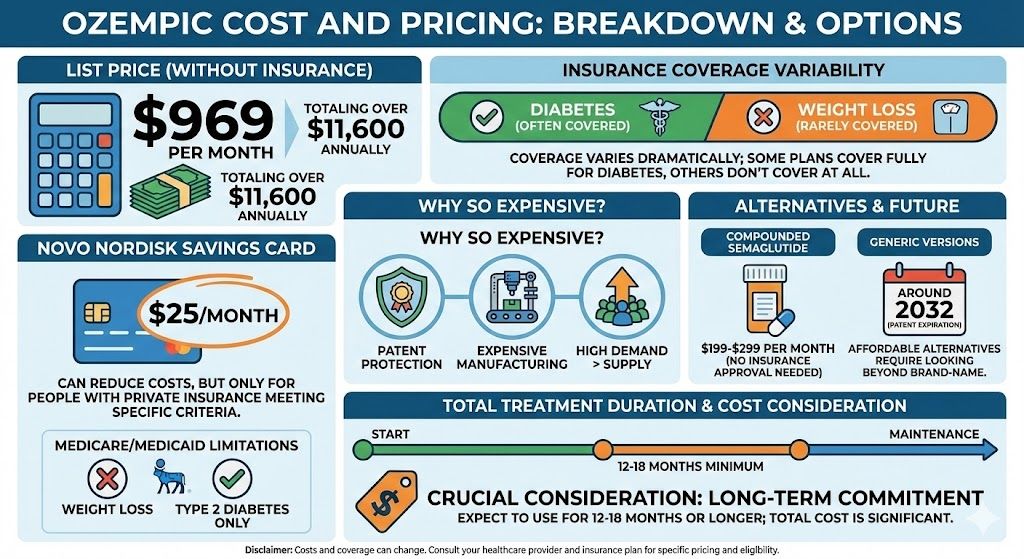
Semaglutide Costs
Semaglutide is substantially more expensive:
Brand-name (list price):
- Ozempic: ~$1,000/month
- Wegovy: ~$1,350/month
Manufacturer cash-pay programs:
- NovoCare: $349/month for either Ozempic or Wegovy
Compounded semaglutide:
- TrimRx: $199/month
With insurance: Variable; $25-100 copay if covered, but many plans don’t cover weight loss indications
Cost Comparison Table
| Factor | Metformin | Semaglutide |
| Monthly cost (cash) | $4-20 | $199-349 |
| Annual cost | $48-240 | $2,388-4,188 |
| Insurance coverage | Universal | Variable/limited |
| Financial barrier | Minimal | Significant for many |
Cost Per Pound Lost
Another way to consider cost is per unit of weight loss:
Metformin: At $10/month for 12 months ($120 total) producing 5-10 pounds loss = $12-24 per pound lost
Semaglutide: At $199/month for 12 months ($2,388 total) producing 25-35 pounds loss = $68-95 per pound lost
By this metric, metformin is more cost-efficient per pound. However, the total weight loss achievable differs dramatically, so this calculation has limitations.
The Real Cost Question
The meaningful question isn’t which costs less (obviously metformin) but whether semaglutide’s additional cost is worth its additional benefit.
If $199-349/month is manageable: Semaglutide’s dramatically greater weight loss likely justifies the cost for most patients with significant weight to lose.
If budget is severely limited: Metformin provides some benefit at minimal cost, which may be better than no treatment.
Middle ground: Some patients use metformin initially, adding or switching to semaglutide if results are inadequate and budget allows.
Who Should Choose Each Medication?
Different patient profiles suit different medication choices.
Metformin May Be the Better Choice If:
Budget is the primary constraint: If you genuinely cannot afford $199+/month for semaglutide, metformin provides some metabolic benefit at minimal cost.
You have Type 2 diabetes: Metformin is first-line treatment for diabetes, provides blood sugar control, and any weight loss is a bonus. It may make sense as a foundation with semaglutide added if needed.
You have prediabetes with modest weight goals: If your goal is primarily metabolic improvement (better blood sugar) with incidental modest weight loss, metformin may suffice.
You’re seeking minimal intervention: If you want to try medication but prefer something less potent as a first step, metformin represents a conservative approach.
You’re combining with intensive lifestyle changes: If you’re implementing significant diet and exercise changes and want pharmaceutical support, metformin can complement lifestyle intervention.
You prefer oral medication: Some patients strongly prefer pills over injections.
Semaglutide Is Likely the Better Choice If:
Significant weight loss is your goal: If you want to lose 15% or more of your body weight, semaglutide is far more likely to achieve this than metformin.
You have substantial weight to lose: Patients with BMI 35+ or 50+ pounds to lose benefit most from the more effective medication.
You’ve tried metformin without adequate results: If metformin hasn’t produced meaningful weight loss, switching to or adding semaglutide makes sense.
You have obesity-related health conditions: Conditions like sleep apnea, severe joint pain, or cardiovascular disease that would significantly improve with substantial weight loss favor the more effective medication.
Cardiovascular protection is important: Semaglutide has proven cardiovascular benefit; metformin’s cardiovascular evidence is less robust.
You can afford it: If $199-349/month is manageable in your budget, the additional effectiveness usually justifies the cost.
Eligibility Considerations
Metformin eligibility: Typically prescribed for Type 2 diabetes, prediabetes, or insulin resistance. Some providers prescribe off-label for weight loss. No BMI requirement, though patients with metabolic dysfunction benefit most.
Semaglutide eligibility: Standard criteria require BMI 30+, or BMI 27+ with weight-related health condition. Diabetes qualifies for Ozempic; obesity qualifies for Wegovy or compounded semaglutide.
For eligibility details, see our guide on who qualifies for Ozempic.
Can You Take Both Medications Together?
Combining metformin and semaglutide is common and may offer advantages.
Safety of Combination
Generally safe: Metformin and semaglutide can be taken together without direct drug interaction. The combination is commonly used, particularly in patients with Type 2 diabetes.
Different mechanisms: The medications work through different pathways, so combining them doesn’t produce overlapping mechanism concerns.
GI additive effects: Both medications cause GI side effects. Some patients experience more GI issues on combination than either alone. This is usually manageable but worth noting.
Why Combine?
Enhanced metabolic control: For diabetic patients, the combination provides better blood sugar control than either medication alone.
Potential additive weight loss: While not extensively studied specifically for weight loss, combining the metabolic benefits of metformin with the appetite effects of semaglutide may produce modestly greater weight loss than semaglutide alone.
Cost consideration: Some patients use metformin as a baseline and add semaglutide, potentially allowing lower semaglutide doses to achieve similar results (though this approach isn’t well-studied).
Established regimen: Patients already taking metformin for diabetes often add semaglutide rather than switching entirely.
Clinical Patterns
Diabetes patients: Often take both. Metformin is typically first-line, with semaglutide added for additional glucose control and weight loss.
Weight-focused patients without diabetes: May use semaglutide alone, though some providers add metformin for its modest additional metabolic benefits.
Transitioning: Some patients start with metformin, find results inadequate, then add semaglutide. The metformin may be continued or discontinued based on provider preference.
Practical Considerations
If combining:
- Start one medication first and establish tolerance before adding the second
- Monitor for excessive GI effects
- Metformin doesn’t require dose adjustment when adding semaglutide
- Semaglutide dosing follows standard titration regardless of metformin use
Insurance and Access
How you access each medication differs significantly.
Metformin Access
Insurance coverage: Virtually all insurance plans cover metformin. It’s been generic for decades and costs plans very little.
Prior authorization: Rarely required for metformin.
Pharmacy availability: Available at every pharmacy, no supply issues.
Without insurance: Affordable even without coverage ($4-20/month).
Telehealth: Easily prescribed through telehealth platforms, primary care, or specialists.
Semaglutide Access
Insurance for diabetes (Ozempic): Often covered for Type 2 diabetes, but typically requires prior authorization. Coverage varies by plan.
Insurance for weight loss (Wegovy): Less commonly covered. Many plans exclude weight loss medications. Prior authorization is required if covered.
Supply issues: Periodic shortages have affected availability, though supply has improved.
Cash-pay options:
- Brand-name: $349/month through Novo Nordisk
- Compounded: $199/month through TrimRx
Telehealth: Available through platforms like TrimRx, obesity medicine specialists, or primary care providers comfortable prescribing GLP-1 medications.
Access Comparison
| Factor | Metformin | Semaglutide |
| Insurance coverage | Universal | Variable |
| Prior authorization | Rare | Common |
| Supply availability | Always available | Occasional issues |
| Prescription ease | Very easy | May require specialist or specific platform |
| Cost without insurance | Very low | High (but compounded options exist) |
Beyond Weight Loss: Other Effects
Both medications affect health beyond weight, which may influence your choice.
Metformin’s Additional Effects
Diabetes prevention: Strong evidence for preventing progression from prediabetes to diabetes (31% reduction in DPP trial).
Blood sugar control: Primary indication; effective for Type 2 diabetes management.
Cardiovascular effects: Some evidence suggests cardiovascular benefit, though less robust than semaglutide.
Cancer research: Some studies suggest possible reduced cancer risk with long-term metformin use, though this isn’t established enough to affect prescribing.
Longevity interest: Metformin is being studied in the TAME trial for potential anti-aging effects, though results aren’t yet available.
PCOS benefits: Helpful for polycystic ovary syndrome, improving insulin resistance and sometimes menstrual regularity.
Semaglutide’s Additional Effects
Cardiovascular protection: Proven 20% reduction in major cardiovascular events in high-risk patients.
Diabetes management: Excellent glucose control with HbA1c reductions of 1.0-1.8 percentage points.
Kidney protection: The FLOW trial showed significant kidney outcome benefit for diabetic patients with kidney disease.
Liver benefits: Reduces liver fat and improves fatty liver disease markers.
Blood pressure: Typically reduces systolic blood pressure by 4-6 mmHg.
Sleep apnea: Often improves substantially with weight loss.
For detailed information, see our guide on GLP-1 for diabetes.
Comparison of Non-Weight Effects
| Effect | Metformin | Semaglutide |
| Blood sugar control | Good | Excellent |
| Cardiovascular protection | Possible | Proven |
| Kidney protection | Uncertain | Proven |
| Liver effects | Modest | Significant |
| Blood pressure | Minimal | 4-6 mmHg reduction |
Making the Decision
How do you decide between these options?
Questions to Ask Yourself
What’s my weight loss goal?
- Modest (5-10 pounds): Metformin might suffice
- Significant (20+ pounds): Semaglutide is more likely to succeed
What’s my budget reality?
- Very limited: Metformin at $10/month is accessible
- Some flexibility: Compounded semaglutide at $199/month may be achievable
- Not a concern: Brand-name semaglutide is an option
What’s my health status?
- Prediabetes with modest weight: Metformin is reasonable
- Obesity with significant health risks: Semaglutide’s additional effectiveness may be worth prioritizing
- Cardiovascular disease or high risk: Semaglutide’s proven cardiac benefit is valuable
What have I tried before?
- Nothing yet: Might start with metformin as a first step
- Metformin without adequate results: Time to consider semaglutide
- Lifestyle alone without success: Consider semaglutide for more significant impact
How important is maximum weight loss?
- Somewhat important: Either might work
- Very important: Semaglutide is the clear choice
A Practical Framework
Start with metformin if: Budget is severely constrained, goals are modest, you have diabetes or prediabetes primarily, or you want a conservative first step.
Start with semaglutide if: You want significant weight loss, can afford it, have obesity-related health conditions, or have already tried metformin without adequate success.
Consider combination if: You’re already on metformin for diabetes and want to add weight loss support, or you want potentially enhanced benefits from both mechanisms.
Having the Conversation With Your Provider
Bring these considerations to your healthcare provider:
- Your weight loss goals (specific amount or percentage)
- Your budget constraints
- Your health conditions and risks
- Your previous weight loss attempts and results
- Your preferences regarding injection versus oral medication
Your provider can help weigh these factors against your specific health profile to recommend the best approach.
Frequently Asked Questions
How much more weight will I lose on Ozempic versus metformin?
The difference is substantial. Clinical trials show semaglutide (Ozempic/Wegovy) produces approximately 15% average body weight loss, while metformin produces 2-5% on average. For a 220-pound person, this translates to roughly 33 pounds lost with semaglutide versus 5-11 pounds with metformin. About 69% of semaglutide users lose 10% or more of their body weight, while this outcome is uncommon with metformin. If significant weight loss is your goal, semaglutide is dramatically more effective.
Is metformin FDA-approved for weight loss?
No, metformin is FDA-approved for Type 2 diabetes, not weight loss. When prescribed for weight loss, it’s being used “off-label,” which is legal and common but means the FDA hasn’t formally evaluated it for this purpose. Similarly, Ozempic is approved for diabetes, not weight loss (Wegovy is the weight-loss-approved form of semaglutide). Many medications are used off-label when evidence supports their benefit.
Can I take metformin and Ozempic together?
Yes, metformin and semaglutide can be safely combined. This combination is common, particularly in patients with Type 2 diabetes where both medications contribute to blood sugar control. The medications work through different mechanisms and don’t have direct interactions. The main consideration is that both can cause GI side effects, so some patients experience more gastrointestinal issues on the combination. Start one medication first and establish tolerance before adding the second.
Why is metformin so much cheaper than Ozempic?
Metformin has been generic for decades, with multiple manufacturers producing it and fierce price competition driving costs down. Semaglutide is under patent protection, with Novo Nordisk as the sole manufacturer of brand-name versions, allowing premium pricing. Additionally, semaglutide is a complex molecule that’s more expensive to manufacture than metformin. Compounded semaglutide (at $199/month through providers like TrimRx) offers a middle ground, using the same active ingredient at lower cost than brand-name.
Will metformin help me lose weight if I don’t have diabetes?
Metformin can produce modest weight loss in people without diabetes, though results are typically limited (2-5% of body weight). It’s most effective in people with insulin resistance or prediabetes, where improving metabolic function has the greatest impact. For people with normal insulin sensitivity, metformin’s weight loss effects may be minimal. If significant weight loss is your goal and you don’t have diabetes, semaglutide would be more effective, though metformin might be considered if budget is the primary constraint.
Which has worse side effects, metformin or Ozempic?
Both medications cause gastrointestinal side effects, but the patterns differ. Metformin most commonly causes diarrhea, which can be persistent throughout treatment. Semaglutide most commonly causes nausea, which typically improves over weeks as the body adjusts. Neither is universally “worse.” Some patients tolerate metformin well but can’t handle semaglutide, and vice versa. Metformin’s extended-release formulation reduces GI effects. Semaglutide’s side effects often improve with proper titration. Serious risks exist for both but are rare.
Should I try metformin first before Ozempic?
This depends on your situation. Trying metformin first makes sense if: you have a limited budget, your goals are modest, you have prediabetes and want to start conservatively, or you want to see if a cheaper option works before committing to more expensive treatment. However, if you have significant weight to lose, obesity-related health conditions, or have already tried lifestyle modifications without success, starting with semaglutide may be more appropriate. There’s no requirement to try metformin first before semaglutide.
How long does it take to see results with each medication?
Metformin: Any weight loss typically occurs gradually over months. Blood sugar improvements appear within weeks. If you don’t see results in 3-6 months, significant improvement is unlikely. Semaglutide: Appetite changes often begin within 1-2 weeks. Meaningful weight loss (5+ pounds) typically occurs within 1-2 months. Most weight loss happens over 12-18 months. If you’ve been on therapeutic doses for 3+ months without results, the medication may not be working optimally for you.
Does insurance cover metformin or Ozempic for weight loss?
Insurance universally covers metformin for diabetes; coverage for off-label weight loss use varies but is usually accepted since the medication is so inexpensive. For semaglutide, coverage depends heavily on indication and plan. Ozempic (diabetes indication) is often covered for diabetics with prior authorization. Wegovy (weight loss indication) is covered by fewer plans, with many excluding weight loss medications entirely. If your insurance doesn’t cover semaglutide, compounded options ($199/month) or manufacturer programs ($349/month) provide alternatives.
Which is better for PCOS?
For polycystic ovary syndrome, both medications can help, but through different mechanisms. Metformin has long been used for PCOS because it improves insulin resistance, which is central to the condition. It may help with menstrual regularity and metabolic symptoms. Semaglutide produces much greater weight loss, which also improves PCOS symptoms since weight loss reduces insulin resistance and androgen levels. For women with PCOS and significant weight to lose, semaglutide likely produces greater improvement. For those primarily seeking metabolic/insulin benefits with modest weight goals, metformin may suffice. For more detail, see our guide on Ozempic for PCOS.
The Bottom Line
Comparing metformin to Ozempic for weight loss is almost unfair. Semaglutide produces approximately three to five times more weight loss than metformin. For anyone with significant weight to lose, semaglutide is the clearly more effective option.
However, “more effective” isn’t the only consideration. Metformin costs a fraction of semaglutide, has decades of safety data, and provides metabolic benefits that matter for patients with diabetes or prediabetes. For budget-constrained patients or those with modest goals, metformin remains a reasonable option.
For most patients seeking meaningful weight loss who can manage the cost, semaglutide is the better choice. For patients who cannot afford semaglutide or who primarily need diabetes management with incidental weight loss, metformin has a role. Some patients benefit from both.
The right choice depends on your goals, budget, health conditions, and individual circumstances. Discuss these options with your healthcare provider to determine the best approach for your situation.
Ready to explore semaglutide treatment? TrimRx offers consultations with licensed providers who can evaluate your eligibility and prescribe compounded semaglutide at $199/month for qualifying patients.

Transforming Lives, One Step at a Time
Keep reading

Online Ozempic Prescription Texas
You can get an Ozempic prescription online in Texas through a licensed telehealth provider without an in-person visit. Texas telehealth law allows providers to…

Online Ozempic Prescription California
You can get an Ozempic prescription online in California through a licensed telehealth provider without an in-person visit. California’s telehealth laws allow providers to…

Weight Loss Clinic Online Texas: Your Options
An online weight loss clinic in Texas gives you access to GLP-1 medications like semaglutide and tirzepatide through a fully virtual process. You complete…


