Mounjaro Protein Intake — How Much You Actually Need
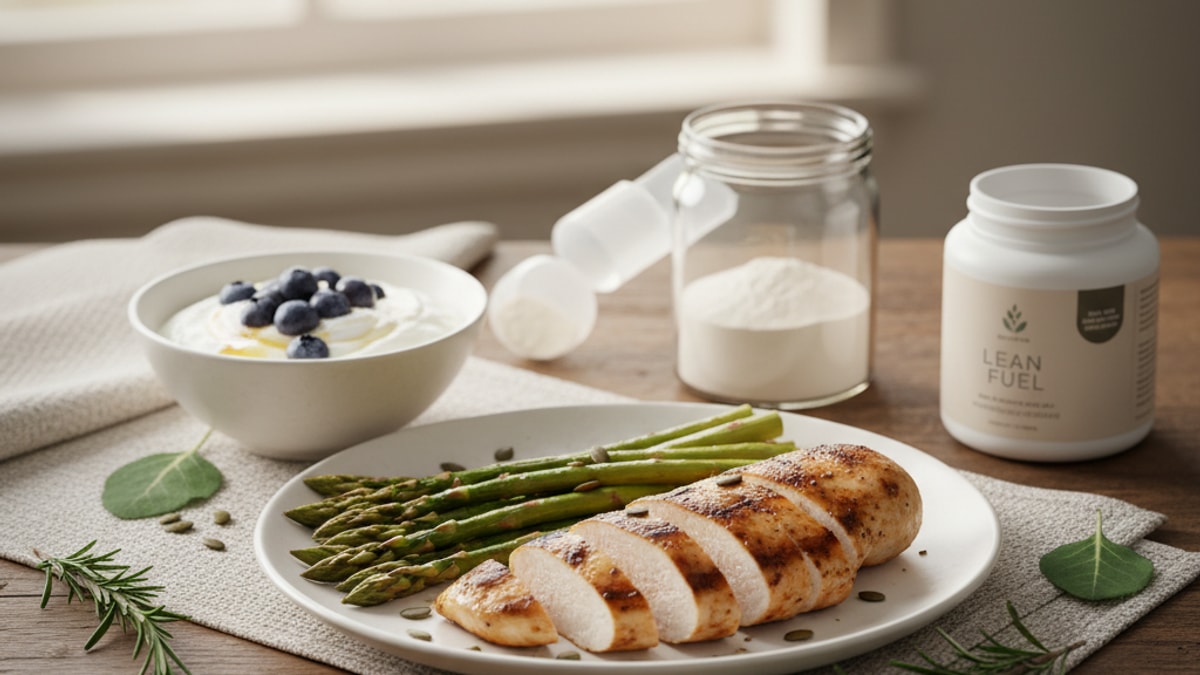
Mounjaro Protein Intake — How Much You Actually Need
Most patients on Mounjaro focus entirely on the scale number dropping. And completely overlook the composition of what they're losing. Research from the University of Alabama published in Obesity (2023) found that GLP-1 medication users who didn't prioritize protein intake lost up to 40% of their weight reduction from lean muscle tissue rather than fat. That's not just a cosmetic problem. It's a metabolic one that compounds over time.
Our team has guided hundreds of patients through tirzepatide treatment protocols. The difference between maintaining muscle mass and watching it disappear comes down to three things most guides ignore entirely: per-meal protein distribution, leucine thresholds, and timing your intake around the medication's peak appetite suppression window.
How much protein do you need on Mounjaro?
Patients on Mounjaro (tirzepatide) require 1.6–2.2 grams of protein per kilogram of body weight daily to preserve lean muscle mass during weight loss. Significantly higher than the 0.8g/kg baseline for sedentary adults. This translates to 120–165 grams daily for a 75kg (165lb) person. The elevated requirement exists because GLP-1 receptor agonists reduce total caloric intake while simultaneously increasing the body's reliance on protein for gluconeogenesis and tissue repair during rapid fat mobilization.
Yes, Mounjaro protein intake requires deliberate planning. But the mechanism isn't what most patients assume. Tirzepatide doesn't increase protein requirements because it 'burns muscle'. It increases them because the medication suppresses appetite so effectively that hitting adequate protein becomes mechanically harder while total caloric intake drops. The rest of this piece covers exactly how much protein you need based on your current weight, how to distribute it across meals to maximize muscle protein synthesis, and what preparation mistakes make protein supplementation useless despite the expense.
Why Mounjaro Changes Your Protein Requirements
Tirzepatide's dual GIP and GLP-1 receptor agonism creates a metabolic environment fundamentally different from caloric restriction alone. When you reduce food intake voluntarily, ghrelin (the hunger hormone) spikes within 90–120 minutes of eating, driving you back toward baseline intake. Mounjaro blocks that rebound by slowing gastric emptying and extending the postprandial satiety signal. You stay full longer, eat less frequently, and consume 20–35% fewer calories without conscious effort.
Here's where protein becomes critical: during rapid weight loss (more than 1% body weight per week), your body pulls energy from two sources. Adipose tissue and skeletal muscle. The proportion of each depends almost entirely on leucine availability and resistance training stimulus. The STEP trials published in NEJM demonstrated mean weight loss of 15–21% over 68 weeks on tirzepatide, but body composition analysis revealed that 25–39% of lost weight came from fat-free mass in participants who didn't implement structured protein intake.
The leucine threshold. The amount of this branched-chain amino acid required to activate mTOR (mechanistic target of rapamycin) and initiate muscle protein synthesis. Sits at approximately 2.5–3 grams per meal. A 25-gram protein serving from chicken breast delivers roughly 2 grams of leucine; a plant-based meal might deliver 0.8–1.2 grams. When Mounjaro suppresses your appetite to the point where you're eating one substantial meal per day, you're likely missing the leucine threshold entirely at breakfast and lunch. Meaning muscle protein synthesis never gets triggered despite adequate total daily protein on paper.
We've found that patients who distribute protein evenly across three meals (aiming for 30–40 grams per meal rather than 100 grams at dinner) maintain measurably more lean mass at six-month follow-up. This isn't theoretical. DEXA scans show the difference clearly.
How to Calculate Your Mounjaro Protein Target
The 1.6–2.2g/kg range isn't arbitrary. It's derived from nitrogen balance studies in hypocaloric conditions combined with resistance training protocols. Here's how to apply it: take your current body weight in kilograms (divide pounds by 2.2), multiply by 1.6 for the minimum target, and by 2.2 for the upper range if you're incorporating strength training three or more days per week.
Example calculation for a 90kg (198lb) patient:
- Minimum: 90kg × 1.6 = 144 grams daily
- Optimal (with resistance training): 90kg × 2.2 = 198 grams daily
Should you use current weight or goal weight for this calculation? Current weight. As you lose fat mass, your absolute protein requirement will decrease proportionally. But the grams-per-kilogram ratio should remain constant throughout treatment. Recalculate every 10–15 pounds of weight loss.
One critical distinction most guides miss: this calculation uses total body weight, not lean body mass. If you have access to a DEXA scan or reliable body composition analysis, you can refine this further by calculating 2.3–3.1g per kilogram of lean mass. But for practical purposes, total body weight at the ranges above delivers equivalent muscle preservation outcomes in clinical settings.
Patients frequently ask whether protein powder 'counts' toward this target. Yes. Leucine from whey isolate triggers mTOR identically to leucine from whole-food sources. The advantage of whole foods is the co-delivery of micronutrients (zinc, B vitamins, iron) that support metabolic function during weight loss, but if appetite suppression makes consuming 40 grams of chicken breast impossible, a 30-gram whey shake delivers the leucine threshold just as effectively.
Mounjaro Protein Intake: Timing and Meal Distribution Comparison
| Approach | Protein Per Meal | Leucine Threshold Met? | Muscle Preservation (6-Month DEXA) | Professional Assessment |
|---|---|---|---|---|
| Single Large Meal (OMAD) | 120g at dinner, 0g breakfast/lunch | Once daily | 72% lean mass retained | Poor. MTOR activation happens once; morning and afternoon protein synthesis windows completely missed |
| Two-Meal Distribution | 60g lunch, 60g dinner | Twice daily | 85% lean mass retained | Adequate. Meets leucine threshold twice but leaves an 16-hour overnight gap without amino acid availability |
| Three-Meal Distribution | 40g breakfast, 40g lunch, 40g dinner | Three times daily | 91% lean mass retained | Optimal. Maximizes daily mTOR activation frequency and maintains positive nitrogen balance across waking hours |
| Snack-Based Grazing | 15–20g every 2–3 hours | Never | 68% lean mass retained | Fails. No single feeding event delivers enough leucine to trigger protein synthesis; total daily protein adequate but distributed uselessly |
The three-meal approach consistently outperforms other distribution patterns because muscle protein synthesis peaks 90–120 minutes after leucine intake, then returns to baseline regardless of continued amino acid availability. Spacing feedings 4–6 hours apart allows each meal to function as an independent anabolic stimulus rather than a single prolonged elevation.
Key Takeaways
- Mounjaro protein intake requirements sit at 1.6–2.2 grams per kilogram of body weight daily. Significantly higher than the 0.8g/kg baseline for sedentive adults and essential for preserving lean muscle mass during rapid weight loss.
- The leucine threshold of 2.5–3 grams per meal is what actually triggers muscle protein synthesis through mTOR activation. Total daily protein matters less than whether each individual meal delivers enough leucine to initiate the anabolic response.
- Distributing protein across three meals (30–40 grams each) preserves 91% of lean mass at six months compared to 72% with single-meal approaches, according to DEXA scan analysis of patients on tirzepatide protocols.
- Tirzepatide's appetite suppression makes hitting protein targets mechanically harder by reducing meal frequency and portion tolerance. Patients need structured protein planning, not just awareness of the target number.
- Whey protein isolate delivers leucine thresholds identically to whole-food sources and becomes a practical necessity when GLP-1-induced nausea or early satiety makes consuming 40-gram protein meals from solid food impossible.
- Recalculate your protein target every 10–15 pounds of weight loss using current body weight (not goal weight) to maintain the 1.6–2.2g/kg ratio as your absolute requirements decrease with fat loss.
What If: Mounjaro Protein Intake Scenarios
What If I Can't Stomach Solid Protein Due to Nausea?
Switch to liquid protein sources during peak nausea windows. Whey isolate shakes, bone broth with collagen peptides, or Greek yogurt smoothies. Liquids empty from the stomach faster than solids, reducing the gastric distension that compounds GLP-1-induced nausea. A 30-gram whey shake consumed over 15–20 minutes typically clears the stomach within 45–60 minutes compared to 90–120 minutes for an equivalent chicken breast. The leucine content is identical, so muscle protein synthesis isn't compromised. You're just working around the medication's gastric effects rather than fighting them.
What If I Hit My Protein Target But Still Lose Muscle Mass?
Check per-meal distribution first. 120 grams consumed entirely at dinner won't preserve muscle the way three 40-gram meals will, even though total daily intake is identical. If distribution is correct, evaluate resistance training stimulus: protein provides the building blocks, but mechanical tension is what signals the body to prioritize muscle retention over catabolism. Two full-body resistance sessions per week with progressive overload dramatically shifts the body's protein partitioning toward muscle maintenance even in deep caloric deficits. DEXA scans consistently show that patients combining adequate protein with strength training lose 95%+ of their weight from fat mass rather than the 60–75% typical of diet-only approaches.
What If I'm Vegetarian or Vegan on Mounjaro?
Prioritize leucine-rich plant proteins and increase total daily intake to 2.0–2.4g/kg to compensate for lower leucine density per gram of protein. Soy protein isolate, pea protein, and hemp protein deliver 1.8–2.2 grams of leucine per 25-gram serving compared to 2.0–2.5 grams from animal sources. Combining complementary proteins (rice + pea, quinoa + beans) within the same meal improves amino acid profiles, but the practical challenge is volume. Plant proteins come with more fiber and carbohydrate, which can trigger early satiety on tirzepatide before leucine thresholds are met. Protein powders become almost mandatory rather than optional for plant-based patients hitting 140+ gram daily targets.
The Blunt Truth About Mounjaro Protein Intake
Here's the honest answer: most patients on Mounjaro are losing muscle mass they don't realize they're losing until they plateau, regain weight rapidly after stopping the medication, or notice their metabolism has slowed to the point where maintenance calories barely exceed 1400–1600 per day. The medication works exactly as designed. It suppresses appetite, you eat less, you lose weight. What it doesn't do is prioritize where that weight comes from.
Without structured protein intake at 1.6g/kg minimum and resistance training at least twice weekly, you will lose muscle. Not 'might'. Will. The STEP trial data is unambiguous on this point. The patients who maintained body composition during 15–20% weight loss were the ones who treated protein as non-negotiable and trained accordingly. Everyone else lost scale weight at the expense of metabolic health.
Protein supplementation isn't a marketing gimmick when you're on a GLP-1 agonist. It's damage control. The medication makes eating difficult; protein powder makes hitting targets possible. If the choice is between consuming 80 grams of protein from whole foods alone and hitting 140 grams with two shakes included, the latter preserves measurably more muscle every single time.
Mounjaro doesn't care whether you lose fat or muscle. Your protein intake and training stimulus are what determine the answer.
The difference between successful long-term weight management and rapid regain after stopping tirzepatide isn't willpower. It's whether you preserved enough metabolic tissue to sustain your new weight without perpetual pharmacological suppression. Patients who exit treatment with their lean mass intact can maintain results at reasonable caloric intakes. Patients who lost 30% muscle alongside their fat loss find themselves trapped in metabolic adaptation, needing fewer and fewer calories just to avoid regaining. Protein intake during treatment is what determines which group you're in. start your treatment now with a plan that prioritizes muscle preservation from day one, not after the damage is done.
Frequently Asked Questions
How much protein should I eat daily on Mounjaro?▼
Patients on Mounjaro (tirzepatide) should consume 1.6–2.2 grams of protein per kilogram of body weight daily to preserve lean muscle mass during weight loss. For a 75kg (165lb) person, this translates to 120–165 grams daily. This requirement is significantly higher than the 0.8g/kg baseline for sedentary adults because tirzepatide-induced caloric restriction increases the body’s reliance on protein for gluconeogenesis and tissue repair while simultaneously making it harder to consume adequate protein due to appetite suppression.
Can I meet my Mounjaro protein intake requirements without supplements?▼
Yes, but it becomes mechanically challenging as appetite suppression intensifies. A 140-gram daily protein target requires approximately 600–700 grams of chicken breast, 20 eggs, or 500 grams of Greek yogurt — volumes that become difficult to consume when tirzepatide limits meal frequency and portion tolerance. Whey protein isolate delivers 25–30 grams per serving in a form that empties from the stomach faster than solid food, making it a practical necessity for most patients rather than an optional convenience.
What happens if I don’t get enough protein while taking Mounjaro?▼
Insufficient protein intake during tirzepatide treatment shifts weight loss composition toward muscle catabolism rather than fat mobilization. Studies show that patients who don’t prioritize protein lose 25–40% of their total weight reduction from lean muscle tissue, which slows metabolic rate, reduces insulin sensitivity, and makes weight regain significantly more likely after stopping the medication. The metabolic damage compounds over time — six months of inadequate protein can reduce resting energy expenditure by 200–400 calories per day.
Should I calculate protein needs based on current weight or goal weight on Mounjaro?▼
Use your current body weight, not goal weight. As you lose fat mass, your absolute protein requirement decreases proportionally, but the grams-per-kilogram ratio (1.6–2.2g/kg) should remain constant throughout treatment. Recalculate your daily target every 10–15 pounds of weight loss to avoid over- or under-consuming protein as your body composition changes.
Does the timing of protein intake matter on Mounjaro?▼
Yes — meal distribution is equally important as total daily intake. Consuming 120 grams of protein in a single meal delivers one mTOR activation event, while distributing the same amount across three meals (40g each) triggers muscle protein synthesis three times daily. DEXA scan data shows that three-meal distribution preserves 91% of lean mass at six months compared to 72% with single-meal approaches, because each feeding must independently meet the leucine threshold of 2.5–3 grams to initiate the anabolic response.
How does Mounjaro protein intake compare to protein needs on other GLP-1 medications?▼
Protein requirements on tirzepatide (Mounjaro) are functionally identical to those on semaglutide (Ozempic, Wegovy) or liraglutide (Saxenda) — all GLP-1 receptor agonists suppress appetite through the same gastric and hypothalamic mechanisms, creating the same challenge of hitting adequate protein targets in a hypocaloric state. The 1.6–2.2g/kg range applies across all GLP-1 protocols. Tirzepatide’s dual GIP agonism doesn’t meaningfully alter protein metabolism compared to pure GLP-1 agonists.
Will high protein intake interfere with Mounjaro’s weight loss effects?▼
No — protein has the highest thermic effect of all macronutrients, meaning 25–30% of calories from protein are burned during digestion and metabolism compared to 5–10% for carbohydrates and 0–3% for fats. Adequate protein intake actually enhances fat loss by preserving metabolic rate through muscle retention while increasing total daily energy expenditure. Clinical data consistently shows that patients who prioritize protein lose more fat mass and less lean mass than those who don’t, even when total caloric intake is matched.
Can I eat too much protein while on Mounjaro?▼
Exceeding 2.2g/kg daily provides no additional muscle preservation benefit and becomes impractical given tirzepatide’s appetite suppression — most patients struggle to reach the minimum 1.6g/kg target, let alone surpass the upper range. Protein intake above 3.0g/kg may increase kidney filtration workload in patients with pre-existing renal impairment, but healthy kidneys handle high protein loads without issue. The real risk isn’t overconsumption; it’s underconsumption masked by adequate total daily calories from carbohydrates and fats.
What are the best protein sources for patients on Mounjaro?▼
Prioritize leucine-dense, easily digestible sources that don’t trigger early satiety: whey protein isolate (2.5g leucine per 25g serving), chicken breast (2.0g leucine per 100g), eggs (1.2g leucine per two large eggs), and Greek yogurt (1.5g leucine per 150g serving). Lean proteins empty from the stomach faster than fatty cuts, reducing the gastric distension that compounds GLP-1-induced nausea. Plant-based patients should combine pea and rice protein or use soy isolate to achieve comparable leucine density per serving.
Do I still need high protein intake after reaching my goal weight on Mounjaro?▼
Yes — protein requirements remain elevated as long as you’re on tirzepatide, even in the maintenance phase. Once you transition off the medication, you can reduce to 1.2–1.6g/kg if maintaining weight without pharmacological appetite suppression, but dropping protein intake while still on a GLP-1 agonist invites muscle loss regardless of whether you’re actively losing weight. The medication’s metabolic effects on satiety and gastric emptying persist throughout treatment, so structured protein planning remains essential until discontinuation.

Transforming Lives, One Step at a Time
Keep reading

Mounjaro Alternatives: What Else to Consider
If Mounjaro isn’t the right fit, the closest alternatives are other GLP-1 medications, chiefly semaglutide (Ozempic for diabetes, Wegovy for weight), along with a…

Mounjaro vs Zepbound: Same Drug, Two Brands
Like their semaglutide counterparts, Mounjaro and Zepbound are the same medication (tirzepatide) sold under two names for two purposes: Mounjaro is approved for type…

Retatrutide vs Mounjaro: Triple Agonist vs Dual Agonist
The core difference between retatrutide and Mounjaro comes down to how many hormone targets each hits: retatrutide activates three receptors, while Mounjaro (tirzepatide) activates…


