Can I Keep My Mounjaro Pen Out of the Fridge?
Introduction
It is a common moment of late-night panic: you walk into the kitchen and realize your medication pen has been sitting on the counter for hours. When you are focused on a health journey, every detail feels critical, and the thought of a ruined dose can be incredibly stressful. You may wonder if the medication is still safe to use or if you have just lost an expensive part of your treatment. At TrimRx, we believe that understanding the practical side of your medication is just as important as the clinical results.
This post will clarify exactly how long your medication can stay at room temperature, why the “cold chain” is so important, and how to tell if a pen is no longer safe to use. While refrigeration is the gold standard for long-term storage, the manufacturer has built in some flexibility for the realities of daily life. Knowing these rules helps you protect the efficacy of your treatment and maintain your progress without unnecessary worry.
If you are also comparing general storage requirements across GLP-1 medications, our guide to whether GLP-1 medications have to be refrigerated provides additional context.
Quick Answer: A Mounjaro® single-dose pen can be kept at room temperature (up to 86°F or 30°C) for up to 21 days. If it is exposed to temperatures higher than this or kept out longer than 21 days, it must be discarded. Never use a pen that has been frozen.
The Standard Storage Requirements for GLP-1 + GIP Medications
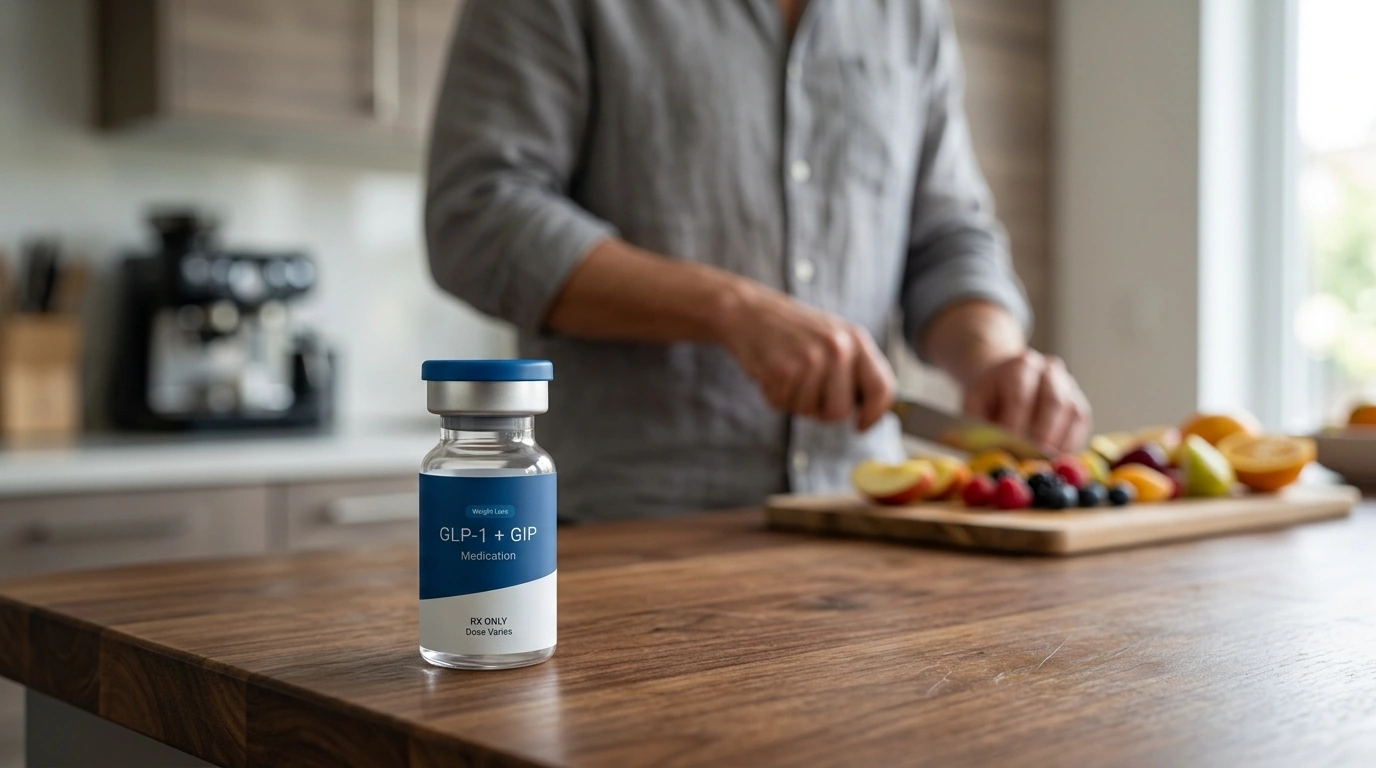
Proper storage is essential for maintaining the biological integrity of your medication. Mounjaro® is a dual-agonist medication, meaning it mimics two different hormones in the body: glucagon-like peptide-1 (GLP-1) and glucose-dependent insulinotropic polypeptide (GIP). These molecules are essentially small proteins, known as peptides, which are highly sensitive to their environment.
Under ideal conditions, your pens should be stored in the refrigerator between 36°F and 46°F (2°C to 8°C). Keeping the medication cold slows down the natural breakdown of these protein chains. When stored continuously in the fridge, the medication remains effective until the expiration date printed on the carton. However, the manufacturer understands that patients travel, experience power outages, or simply forget to put a pen away. Because of this, the medication is stable at room temperature for a limited time.
For more practical guidance, review this home storage guide for compounded semaglutide or tirzepatide.
The 21-Day Room Temperature Window
For the single-dose pens commonly used in the United States, the safety window is exactly 21 days. This means that once a pen reaches room temperature, the countdown begins. You have three weeks to use that medication before the protein structure may begin to degrade significantly.
It is important to understand that the room temperature rule is cumulative. If you take a pen out for two days, put it back, and then take it out for another week, those days add up. However, the most common recommendation from healthcare providers is that once a pen has reached room temperature, it is best to leave it out and use it as your next dose within that 21-day window.
Key Takeaway: The 21-day limit is a hard safety threshold. Even if the liquid looks clear after 22 days, the microscopic structure of the peptides may have changed, potentially making the dose less effective.
If you are considering prescription treatment and want to discuss whether a personalized program may fit your health profile, you can complete a free eligibility assessment.
Why Temperature Affects Your Medication
The science of peptide stability is the reason why the refrigerator is so important. Proteins are 3D structures. To work correctly, the tirzepatide molecule must maintain a very specific shape so it can “lock” into the receptors in your body. When a protein is exposed to too much heat, it undergoes a process called denaturation.
During denaturation, the molecule essentially “unfolds” or loses its shape. While a denatured peptide is not usually toxic or poisonous, it becomes biologically inactive. This means you might perform the injection perfectly, but your body is not receiving the metabolic signals required to manage blood sugar or support weight loss. If you use a pen that has been stored incorrectly, you might find that your appetite suppression is weaker or your results seem to stall.
For a closer look at temperature, light, freezing, and other factors, read about tirzepatide storage, travel, and handling.
Identifying Your Specific Medication Format
Not all pens follow the exact same storage rules, so you must verify which version you have. In the United States, the most common format is the single-dose pen, which is discarded after one use and follows the 21-day rule. However, in other regions or through different programs, you may encounter the KwikPen® or multi-dose vials.
- Single-Dose Pens: 21 days at room temperature (up to 86°F).
- KwikPens / Multi-Dose Vials: Some versions of these can stay out for up to 30 days.
- Compounded Tirzepatide: Often has stricter requirements because it may not contain the same preservatives as branded versions.
Always check the specific patient information leaflet that comes with your shipment. If you are using a personalized program through a platform like ours, your provider or the pharmacy will include specific handling instructions for your medication.
Compounded products can have different beyond-use dates and storage instructions, so our overview of compounded tirzepatide shelf life and storage may help you prepare questions for your pharmacy.
The Danger of Extreme Heat
The 21-day room temperature rule only applies if the environment stays at or below 86°F (30°C). This is a critical distinction. If your medication is exposed to temperatures higher than this, the 21-day window is no longer valid. Heat is the enemy of peptide stability and can ruin a dose in a very short amount of time.
Common scenarios where heat can ruin medication include:
- Leaving a pen in a parked car (even for a few minutes in summer).
- Setting a pen on a windowsill in direct sunlight.
- Storing medication in a bag near a heater or in a hot bathroom.
If your medication has been exposed to extreme heat, do not use it. The breakdown of the peptides happens much faster at high temperatures, and there is no way to “save” the dose by cooling it back down once it has been overheated.
The Freezing Fiasco: Why Cold Can Also Be a Problem
While heat is dangerous, freezing is often even more destructive to GLP-1 + GIP medications. You should never store your pens in the freezer, and you should be careful about where you place them in the refrigerator. If a pen is pushed to the very back of the fridge near the cooling element, it can accidentally freeze.
Freezing causes ice crystals to form within the liquid. These crystals physically shear and destroy the delicate peptide molecules. Even if the pen thaws and the liquid looks normal, the medication is likely ruined.
Note: If you see any signs that a pen has been frozen—such as ice crystals, a slushy appearance, or even if you just suspect it froze—you must discard it.
For more detail on preventing accidental freezing, see this GLP-1 refrigeration and storage guide.
Visual Signs of Spoiled Medication
Before every injection, you must perform a visual inspection of the liquid. The medication should always be clear and colorless, looking essentially like water. If the appearance has changed, it is a definitive sign that the medication should not be used.
Watch for these four red flags:
- Cloudiness: The liquid should never look milky or hazy.
- Particles: If you see “strings,” flakes, or tiny specks floating in the liquid, the proteins have likely clumped together.
- Color Changes: Any tint of brown, yellow, or pink is a sign of chemical degradation.
- Frozen Residue: Any remaining ice or a “cloudy” look after thawing indicates freezing damage.
If you notice any of these signs, contact your healthcare provider or pharmacist immediately for guidance on a replacement.
How to Manage a Power Outage
If your power goes out, your first goal is to protect the “cold chain” for as long as possible. A standard refrigerator can usually keep its temperature for about four hours if the door stays closed.
If the power is out for longer than four hours, follow these steps:
- Keep the door shut: Every time you open the fridge, you lose several degrees of cooling.
- Use a cooler: If you have ice or gel packs, move your medication pens into a small insulated cooler.
- Protect from freezing: Do not let the pens touch the ice or gel packs directly, as this could freeze the medication. Wrap the pens in a towel first.
- Start the clock: If the pens do reach room temperature, mark the date. You now have 21 days to use those pens.
If you need broader guidance about what to do when storage conditions change, read what to do when compounded tirzepatide is not refrigerated.
Traveling with Your Medication
Travel is the most common reason the refrigerator rule gets broken, but it doesn’t have to be a source of stress. Depending on the length of your trip, you may not even need to keep the pens cold. If your trip is shorter than 21 days, you can simply keep the pen in your carry-on bag and use it as scheduled.
For longer trips or travel to hot climates, consider these best practices:
- Use an insulated pouch: Many companies sell small cases designed for insulin pens that work perfectly for GLP-1 + GIP pens.
- Avoid checked luggage: The cargo hold of a plane can experience extreme temperature changes and pressure shifts. Always keep your medication in your carry-on.
- Hotel fridges: Be cautious with hotel mini-fridges. They are often unreliable and can either be too warm or accidentally freeze items. It is often safer to keep the pen at room temperature in a dark drawer than to risk it freezing in a cheap hotel fridge.
Our guide to storing and traveling with your GLP-1 covers carry-on storage, documentation, and common travel problems.
Storage Considerations for Compounded Tirzepatide
If you are using a personalized program that includes compounded tirzepatide, your storage rules may be different. Compounded medications are prepared by specialized pharmacies and may come in a vial rather than a pre-filled pen. Because every time a needle enters a vial there is a small risk of introducing air or contaminants, these medications often have more stringent refrigeration requirements.
Most compounding pharmacies recommend that their products remain refrigerated at all times to ensure the longest possible shelf life. At TrimRx, we connect patients with licensed providers and pharmacies that provide clear, written instructions for every shipment. Always follow the specific “Use By” date on your compounded vial, as it may be shorter than the expiration date on a branded pen.
If you are still deciding whether prescription treatment is appropriate for you, you can start the free assessment process.
Step-by-Step: What to Do If You Left Your Pen Out
If you find a pen has been left out, follow this simple process to decide your next move.
- Step 1: Check the temperature. Was the room significantly hotter than 86°F? If yes, discard the pen. If no, move to the next step.
- Step 2: Calculate the time. Has it been out for more than 21 days? If yes, discard the pen. If no, it is likely still safe.
- Step 3: Inspect the liquid. Is it clear and colorless? If it shows any cloudiness or particles, discard it immediately.
- Step 4: Label the pen. Use a piece of tape or a marker to write the “discard date” (21 days from the moment it was left out) on the carton.
- Step 5: Contact your provider. When in doubt, always consult a licensed healthcare professional. They can help you determine if the dose is still viable based on your specific environmental conditions.
The TrimRx Approach to Medication Management
We understand that the logistics of a weight loss journey can be overwhelming. From tracking your doses to worrying about storage, there are a lot of moving parts. Our mission is to simplify this process by providing not just the medication, but the support system you need to stay on track.
Our programs are designed to be telehealth-first, meaning you have access to a team that can answer these practical questions whenever they arise. Whether you are curious about eligibility for a GLP-1 + GIP program or need advice on handling a missed dose due to storage issues, we are here to provide science-backed, empathetic guidance.
Summary of Storage Best Practices
Maintaining your medication’s potency is a small but vital part of your overall success. By following these basic guidelines, you can ensure that every dose you take is working at its full potential to support your metabolic health.
- Keep pens in the original box to protect them from light.
- Store in the middle of the refrigerator, away from the back wall where it might freeze.
- Label your “out of fridge” date immediately to avoid guessing.
- Always inspect the liquid for clarity before every injection.
- When traveling, keep your pens in your carry-on luggage.
Bottom line: Your medication is a delicate protein. While the 21-day room temperature rule is a helpful safety net for life’s little accidents, the refrigerator is always the best place for long-term storage.
Conclusion
Managing a medication like tirzepatide requires a bit of planning, but it shouldn’t be a source of constant anxiety. The 21-day room temperature window provides a generous buffer for most travel, power outages, and minor mistakes. By understanding the science of why temperature matters and knowing the visual signs of spoilage, you can protect your treatment and stay focused on your goals.
At TrimRx, we are committed to helping you navigate the complexities of modern weight loss with transparency and expertise. Sustainable results are achieved when science meets personalized support. If you have questions about whether a personalized program is right for you, or if you want to explore your options for medically supervised weight management, we invite you to take the next step.
- Understand the rules: Keep your medication cool, dark, and never frozen.
- Stay vigilant: Perform a visual check before every dose.
- Get support: Use our resources to navigate the practical side of your journey.
Ready to see if you qualify for a personalized treatment program? Take the free assessment quiz today to get started on a plan tailored to your unique health profile.
FAQ
Can I put Mounjaro back in the fridge after it has been at room temperature?
Yes, you can return a pen to the refrigerator after it has reached room temperature, but this does not “reset” the 21-day clock. The room temperature limit is cumulative; once the medication has warmed up, it has started its countdown toward potential degradation. You should still aim to use that pen within 21 days of the first time it was left out.
What should I do if my medication arrives and the ice packs are melted?
If the pens still feel cool to the touch and the liquid is clear and colorless, they are generally safe to use. Most pharmacies pack shipments to withstand a certain amount of transit time even if the ice packs melt. However, if the pens feel hot or the shipment was significantly delayed, you should contact the pharmacy or your provider immediately before using the medication.
Is it dangerous to use Mounjaro that was left out for 25 days?
While it is unlikely to be toxic, it is not recommended to use the medication past the 21-day room temperature window. The primary risk is that the medication will be significantly less effective because the protein molecules have begun to break down. Using a compromised dose can make it difficult for your provider to accurately assess your progress and adjust your treatment plan.
Can I use a frozen gel pack to travel with my pens?
You can use a gel pack, but you must ensure it does not touch the pen directly. If the pen gets too cold and freezes, the medication will be ruined. Always wrap your pens in a protective layer, such as a hand towel or bubble wrap, before placing them in a cooler bag with frozen packs.
TrimRX does not practice medicine or prescribe medications. Compounded medications are not FDA-approved and are not evaluated by the FDA for safety or efficacy. Results vary by individual and are not guaranteed.
Disclaimer: This content is for informational purposes only and does not constitute medical advice. It is not intended to diagnose, treat, cure, or prevent any disease or condition. Individual results may vary. Always consult a qualified healthcare professional before starting any weight loss program or medication.

Transforming Lives, One Step at a Time
Keep reading

When You and Your Spouse Are Both on Mounjaro
It is increasingly common for both people in a couple to be on the same medication. Sometimes one partner starts and the other follows…

Black Friday Shopping on Mounjaro
For a lot of families, Black Friday is a tradition: lining up before dawn, racing through stores with a list, and shopping until the…

Mounjaro Alternatives: What Else to Consider
If Mounjaro isn’t the right fit, the closest alternatives are other GLP-1 medications, chiefly semaglutide (Ozempic for diabetes, Wegovy for weight), along with a…


