My Zepbound Pen Won’t Click Past a Certain Dose
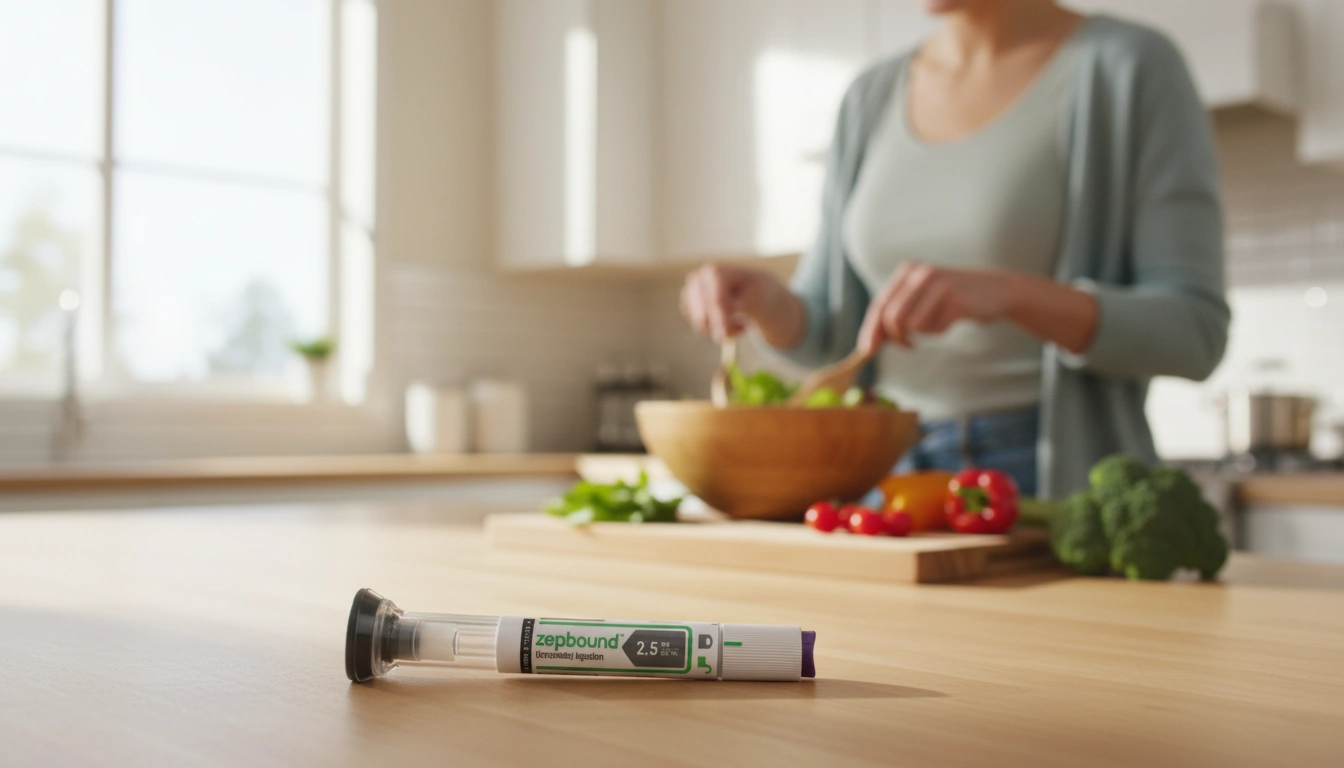
Start by checking which device you are holding, because the answer depends entirely on that. Zepbound has commonly been supplied in the United States as a single-dose autoinjector, a device with no dial at all. If yours does not dial, that is not a fault. Each pen contains one fixed dose, and there is nothing to adjust. If your pen does dial and stops short, you are most likely holding a multi-dose pen from a compounding pharmacy, and the stop is telling you either that the pen is low or that you have reached its maximum setting.
Device availability changes over time and varies by market, so the authoritative source is the instructions for use that came in your box. If those differ from anything here, follow them.
First: which device do you have?
A single-dose autoinjector
Look for a pen with no numbered dose window and no dial ring. You remove a cap, place it against the skin, and press. The dose is set at the factory.
If this is what you have, there is no dial to be stuck. Two things get mistaken for a jam:
The device will not fire until it is pressed flat against skin. Most autoinjectors have a safety that requires firm, full contact. Pressing at an angle, or not hard enough, feels like a device that will not engage.
The lock or cap is still in place. Removing the base cap is a required step and easy to overlook when you are new to it.
If you have pressed firmly and flat against the skin and nothing happens, stop and contact the pharmacy or manufacturer. Do not try again on a second site with the same device.
A multi-dose dial pen
If yours has a numbered window and a dial that clicks, it is a multi-dose device, most often supplied by a compounding pharmacy. Everything below applies.
Why a multi-dose pen stops short
The pen is running low
The dial is mechanically limited by the volume remaining. When less is left than the dose you are asking for, the counter stops at what is available. Compare the number where it stopped against your prescribed dose. If it stopped short, the pen is low, not broken.
Call your pharmacy or provider rather than improvising. Taking a partial dose, or completing it from a second pen, is a clinical decision that depends on your dose and where you are in titration.
You have reached the pen’s maximum
Pens are configured for a dose range. Dialing past the top of that range is not possible.
Consider this scenario: a patient is moved up to a higher tirzepatide dose at a check-in, has an older pen still in the fridge, and reaches for it out of habit. The dial refuses to go past the previous dose. The pen is working exactly as designed. It is simply the wrong pen for the new prescription, and the new strength should have arrived as a separate device.
Check the strength printed on the label against the dose you were told to take. If they do not match, that is your answer. Our guide to when to increase your tirzepatide dose explains how the step-up usually runs and what should arrive with it.
The pen is cold
Straight from the refrigerator the mechanism is stiffer. Let it sit fifteen to thirty minutes at room temperature before you handle it. This also makes the injection less uncomfortable.
Your thumb is on the dose button
Pressure on the button engages the delivery mechanism and can make the dial feel locked. Reposition your grip so your dialing hand is not pressing the end of the pen.
Why dose steps are fixed rather than continuous
People sometimes assume a stuck dial means they should be able to dial anywhere between doses. Tirzepatide is not designed that way. Clinical trials that established its effect on body weight used defined dose levels reached through a set escalation schedule, and the devices reflect those levels. Dosing between steps is not a supported approach, and the pen enforcing that is a feature rather than a limitation.
This also means a dose increase should always come with a conversation and usually with a different device, not with a dial adjustment on the pen you already have.
Brand versus compounded, and why the device differs
The molecule is the same. The presentation is not. Branded tirzepatide has typically been supplied in single-dose formats, while compounded tirzepatide more often arrives as a multi-dose vial or pen. That difference explains most of the confusion in this article, because instructions written for one format do not apply to the other.
If you are unsure which category your prescription falls into, or what practical differences follow from it, we broke it down in compounded tirzepatide versus brand-name Mounjaro.
People switching between products encounter this most often, since the device changes at the same time as the medication. Our guide to switching from Mounjaro to Zepbound covers what else changes in that transition.
What not to do
Do not force the dial. Enough torque to overcome a mechanical stop can damage the ratchet, leaving a pen that still turns but no longer measures accurately. An obviously stuck pen is a better problem than a quietly inaccurate one.
Do not use two devices to reach a higher dose. Combining pens to construct a dose you were not prescribed is not a workaround, it is an overdose risk.
Do not fire an autoinjector into the air to test it. You will waste the dose.
Do not skip the call. A device problem that delays your injection is worth a conversation, because the right response may not be simply injecting late.
When to call
Contact the pharmacy or manufacturer if the dial catches irregularly or feels gritty, if the counter and window do not align, if the dial spins without the counter moving, or if an autoinjector will not fire against skin. Contact your provider if the problem will delay your dose, if you are unsure whether to take a partial amount, or if this coincides with a dose increase.
The short version
Check the device first. No dial means nothing is stuck. If it does dial and stops, it is low, at its maximum, cold, or being pressed while turned. Forcing it is the only response that can make things worse.
If sorting out the device and the dosing plan in one call sounds better than doing it in two, TrimRx coordinates prescription, pharmacy, and provider access together.
This information is for educational purposes and is not medical advice. Consult with a healthcare provider before starting any medication. Individual results may vary.

Transforming Lives, One Step at a Time
Keep reading

Fitness Test Coming Up on Zepbound? Protecting Strength and Endurance
The date changes what you should do, and the most useful adjustments are about fuel and timing rather than about the medication itself. Performance…

Best Diet for Zepbound to Maximize Weight Loss
If you recently started using Zepbound or you are thinking about it, you probably have one big question: what should you eat? The truth…
Lost Weight on Zepbound With a CPAP? When to Recheck Your Settings
Probably yes, and this is a conversation to have with your sleep clinician rather than a change to make yourself. Weight loss can reduce…


