NAD+ Cost Kentucky — Pricing & Access Guide | TrimRx
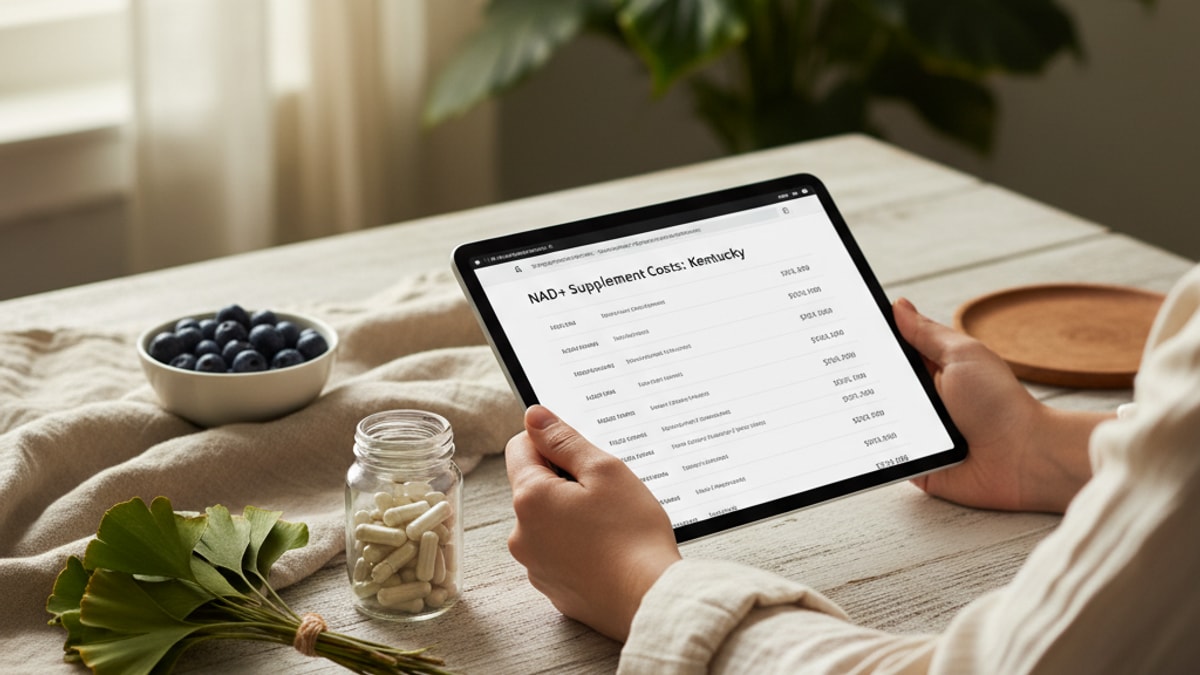
NAD+ Cost Kentucky — Pricing & Access Guide | TrimRx
A 500mg NAD+ IV infusion at a Louisville wellness clinic costs $850. A 100mg subcutaneous injection kit delivered to your home in Lexington costs $75. Both deliver therapeutic NAD+ levels. But the price per milligram differs by more than 1,000%. The gap isn't quality or efficacy. It's delivery overhead. IV clinics bill for nursing staff, infusion room time, and facility costs that home-based injection protocols eliminate entirely. For Kentucky residents evaluating NAD+ therapy, the real question isn't 'how much does it cost'. It's 'which delivery method fits your budget and schedule without sacrificing outcomes.'
Our team works directly with patients navigating this exact decision across Kentucky. The pricing confusion is legitimate. NAD+ isn't standardised the way prescription medications are, and wellness clinics rarely publish transparent fee schedules. What we've found matters most: understanding the three core delivery methods (IV, intramuscular, subcutaneous), knowing what dosage protocols clinicians actually prescribe, and identifying which access pathways. Telehealth-supported injection protocols, in-clinic IV series, or oral supplementation. Deliver measurable NAD+ elevation at a price point you can sustain long-term.
What does NAD+ therapy cost in Kentucky, and what determines the price difference between delivery methods?
NAD+ therapy in Kentucky ranges from $50 for subcutaneous injection kits to $1,200 for high-dose IV infusions, with pricing driven primarily by delivery method, clinical overhead, and whether the protocol requires in-person administration. IV therapy costs $600–$1,200 per session due to nursing staff, infusion time, and facility fees. Injectable NAD+ (intramuscular or subcutaneous) costs $50–$200 per dose when self-administered at home through telehealth-supported programs. Oral NAD+ precursors like nicotinamide riboside (NR) or nicotinamide mononucleotide (NMN) cost $40–$120 per month but achieve lower bioavailability. Typically 10–30% of IV absorption rates.
NAD+ Delivery Methods and Cost Structure in Kentucky
The price you pay for NAD+ therapy depends almost entirely on how the compound reaches your bloodstream. IV infusions require clinical infrastructure. Licensed nursing staff, sterile infusion rooms, and 2–4 hours of supervised administration time per session. Kentucky wellness clinics in Louisville, Lexington, and Bowling Green charge $600–$1,200 per IV session, with multi-session packages (4–6 infusions) sometimes discounted to $500–$800 per session. The NAD+ molecule itself costs $20–$40 wholesale for a 500mg dose. The remaining $560–$1,160 covers labor, facility overhead, and liability insurance.
Intramuscular (IM) and subcutaneous (SC) NAD+ injections eliminate facility costs by shifting administration to the patient. Telehealth providers like TrimRx prescribe NAD+ injection kits that patients self-administer at home after virtual training. A typical 100mg subcutaneous injection costs $50–$150, including the NAD+ solution, bacteriostatic water for reconstitution, syringes, and alcohol swabs. The bioavailability difference between IM/SC and IV is minimal. Both bypass first-pass hepatic metabolism and achieve near-complete absorption, with SC injections producing slightly slower but sustained plasma NAD+ elevation compared to IV boluses.
Oral NAD+ precursors. NR (nicotinamide riboside) and NMN (nicotinamide mononucleotide). Cost $40–$120 per month for maintenance dosing (300–1,000mg daily). These compounds convert to NAD+ through salvage pathways after absorption in the small intestine, but bioavailability is substantially lower than parenteral routes. Research published in Nature Communications found that oral NR achieved approximately 12–15% of the NAD+ tissue elevation produced by equivalent-dose IV infusions, meaning oral supplementation requires higher doses over longer periods to produce comparable effects. For patients prioritising convenience over peak NAD+ levels, oral routes remain viable. But cost-per-milligram absorbed favours injectable protocols.
Dosage Protocols and Pricing Tiers for NAD+ Therapy
Clinical NAD+ protocols in Kentucky follow dosage ranges validated in published research. 250–1,000mg per session for IV therapy, 50–200mg per dose for IM/SC injections, and 300–1,000mg daily for oral precursors. Dosing frequency depends on therapeutic intent: acute energy restoration or cognitive support typically uses 500–750mg IV infusions administered 2–3 times weekly for 4–6 weeks (total cost $4,800–$14,400), while maintenance protocols shift to 100mg SC injections weekly or biweekly ($200–$600 per month).
Higher IV doses (750–1,000mg) don't proportionally increase cost. Most clinics tier pricing by infusion time rather than milligram quantity. A 500mg infusion administered over 3 hours costs roughly the same as a 750mg infusion over 4 hours ($700–$900), because nursing time is the primary cost driver. This creates a pricing inefficiency: patients seeking higher NAD+ exposure pay marginally more for significantly greater dosage. Conversely, subcutaneous protocols scale linearly. Doubling your weekly injection from 50mg to 100mg doubles the supply cost from $75 to $150 per month, because there's no labor differential.
Oral NR and NMN dosing follows a different calculation. Maintenance protocols typically recommend 300–500mg daily (cost $40–$80/month), while therapeutic protocols targeting mitochondrial dysfunction or age-related NAD+ decline use 1,000mg+ daily ($100–$150/month). The challenge with oral dosing is absorption variability. Gastric pH, food intake, and gut microbiome composition all influence bioavailability, making plasma NAD+ levels less predictable than parenteral routes. For patients willing to tolerate dosing uncertainty in exchange for convenience, oral precursors remain the lowest-cost entry point.
Insurance Coverage and Out-of-Pocket Reality for Kentucky Residents
NAD+ therapy is not FDA-approved for any specific medical condition, which means commercial insurance plans, Medicare, and Kentucky Medicaid classify it as wellness therapy rather than medically necessary treatment. Zero Kentucky insurers cover NAD+ IV infusions, injectable protocols, or oral precursor supplements as standard benefits. Some clinics attempt prior authorisation for off-label NAD+ use in chronic fatigue syndrome, fibromyalgia, or post-acute viral syndromes, but approval rates remain below 5% even with detailed clinical documentation.
Flexible Spending Accounts (FSAs) and Health Savings Accounts (HSAs) sometimes reimburse NAD+ therapy if prescribed by a licensed physician and documented as treatment for a diagnosed condition. Not general wellness. Kentucky residents using HSA funds for NAD+ should request itemised receipts that include the prescribing physician's NPI, diagnosis code (typically R53.82 for chronic fatigue), and treatment rationale. Even with HSA reimbursement, patients front the full cost and manage documentation independently.
Telehealth NAD+ providers like TrimRx structure pricing to reduce out-of-pocket burden: monthly subscription models ($150–$300/month) that include virtual consultations, prescription management, and shipped injection supplies. This eliminates per-session fees and makes budgeting predictable. In-clinic IV series often offer prepaid packages (six sessions for $3,600–$4,800) that reduce per-infusion cost but require upfront payment. For Kentucky residents without $4,000+ available immediately, subscription-based injection protocols offer the most accessible entry point.
NAD+ Cost Kentucky: IV vs Injectable vs Oral Comparison
| Delivery Method | Cost Per Dose | Bioavailability | Administration Time | Frequency | Monthly Cost Range |
|---|---|---|---|---|---|
| IV Infusion (500mg) | $600–$1,200 | ~100% (direct bloodstream) | 2–4 hours in-clinic | 1–3x weekly | $2,400–$14,400 |
| Subcutaneous Injection (100mg) | $50–$150 | ~95% (bypasses first-pass) | 5 minutes at home | 1–2x weekly | $200–$1,200 |
| Intramuscular Injection (100mg) | $75–$200 | ~95% (bypasses first-pass) | 5 minutes at home | 1–2x weekly | $300–$1,600 |
| Oral NR/NMN (500mg daily) | $1.30–$4 per day | 10–30% (hepatic first-pass) | Instant (swallow capsule) | Daily | $40–$120 |
| Professional Assessment | IV offers peak plasma NAD+ but costs 8–12× more than SC injections for comparable weekly exposure. SC injections deliver 90%+ bioavailability at home without facility fees. Oral precursors are convenient but require 3–5× higher doses to match parenteral NAD+ elevation, making cost-per-milligram absorbed comparable to injections. |
Key Takeaways
- NAD+ therapy in Kentucky costs $50–$1,200 per session depending on delivery method, with IV infusions at $600–$1,200, subcutaneous injections at $50–$150, and oral precursors at $40–$120 monthly.
- IV therapy's higher cost reflects clinical overhead (nursing, facility, administration time) rather than NAD+ potency. The molecule itself costs $20–$40 wholesale per 500mg dose.
- Subcutaneous and intramuscular injections achieve ~95% bioavailability compared to IV's 100%, making self-administered protocols cost-effective without sacrificing therapeutic NAD+ levels.
- Oral NAD+ precursors (NR, NMN) cost less upfront but require 3–5× higher doses to match parenteral absorption due to 10–30% bioavailability from first-pass hepatic metabolism.
- Kentucky insurers do not cover NAD+ therapy as standard benefits. Patients pay out-of-pocket or use HSA/FSA funds if prescribed for documented medical conditions with diagnosis codes.
- Telehealth-supported injection protocols from providers like TrimRx reduce monthly NAD+ costs to $150–$300 through subscription models that include consultations, prescriptions, and shipped supplies.
What If: NAD+ Cost Kentucky Scenarios
What If I Can't Afford $800 IV Infusions But Want Therapeutic NAD+ Levels?
Switch to subcutaneous injection protocols prescribed through telehealth providers. A 100mg SC injection twice weekly delivers cumulative NAD+ exposure comparable to a single 500mg IV infusion at one-fifth the monthly cost ($200–$400 vs $2,400–$3,600). Bioavailability remains above 95% because SC administration bypasses hepatic first-pass metabolism just like IV. The only difference is slower absorption kinetics, which some patients prefer for sustained energy rather than the acute peak-and-crash pattern IV infusions sometimes produce. TrimRx and similar telehealth platforms provide injection training via video call, written protocols, and ongoing prescription management for $150–$300 monthly, making this the most cost-effective route to consistent NAD+ supplementation.
What If My Insurance Denied Coverage for NAD+ Therapy?
Appeal using a letter of medical necessity (LMN) from your prescribing physician that documents a specific diagnosis. Chronic fatigue syndrome (ICD-10 G93.3), fibromyalgia (M79.7), or post-viral fatigue (B34.9). And explains why NAD+ therapy addresses underlying mitochondrial dysfunction not responsive to standard treatments. Include peer-reviewed citations (studies from journals like Cell Metabolism or Aging Cell) demonstrating NAD+ depletion in your diagnosed condition. Even with an LMN, approval rates for NAD+ remain below 10%, so simultaneous enrollment in a telehealth SC injection program ensures you're not delaying treatment during the 30–60 day appeals process. HSA/FSA funds can reimburse NAD+ if prescribed with diagnosis codes. Submit itemised receipts with prescriber NPI and ICD-10 codes to your account administrator.
What If I Want to Start with Oral NAD+ Precursors Before Trying Injections?
Begin with 500mg daily NR or NMN for 8–12 weeks and monitor subjective energy, sleep quality, and cognitive clarity. If you notice meaningful improvement, oral precursors may meet your needs at $60–$100 monthly without injection logistics. If effects plateau or remain minimal, transition to 50–100mg SC injections weekly. The bioavailability jump from 15% (oral) to 95% (SC) often produces noticeable differences within 2–3 weeks. Kentucky residents using this staged approach through TrimRx can start oral supplementation, then add SC injections without restarting consultations or paperwork, because the prescribing relationship already exists. This avoids overcommitting financially to a delivery method before confirming NAD+ therapy itself produces subjective benefits for you individually.
The Unfiltered Truth About NAD+ Pricing in Kentucky
Here's what most NAD+ clinics won't say upfront: the $900 IV infusion you're quoted isn't nine times more effective than a $100 SC injection. It's nine times more expensive to administer. The NAD+ molecule is identical. Bioavailability differs by less than 5%. You're paying for the clinic's real estate, staffing, and liability insurance, not superior outcomes. If your goal is sustained NAD+ elevation over months, home-based SC injections deliver equivalent tissue NAD+ levels at a fraction of the cost because you're eliminating facility overhead entirely. IV therapy makes sense for patients who medically cannot self-inject or who want supervised administration for peace of mind. But it's not inherently more therapeutic. Most patients switching from clinic IV to home SC report no loss of benefit and significant cost relief. The dosing frequency required to match one 500mg IV with SC injections (two 100mg doses weekly) still costs $200–$400 monthly versus $2,400–$4,800 for weekly IV sessions. The math is unambiguous.
Kentucky clinics offering NAD+ rarely publish pricing online because the margins are high and transparency invites comparison shopping. Wellness services operate outside insurance rate negotiation, so providers set prices based on what the market will bear rather than cost-plus calculations. When a clinic quotes $1,200 for a 750mg infusion that contains $35 of NAD+ and requires 3.5 hours of nursing time billed internally at $40/hour, you're seeing a markup that wouldn't survive in a price-transparent market. Telehealth providers disrupted this model by proving patients can safely reconstitute and inject NAD+ at home with virtual training. Once that became established, the 'must be done in-clinic' justification collapsed.
If NAD+ therapy feels essential to you, start with the lowest-cost method that achieves therapeutic bioavailability and adjust upward only if results justify the expense. For 90% of Kentucky residents, that means SC injections through telehealth platforms like TrimRx. The remaining 10% who genuinely benefit from clinic IV typically have complicating factors. Severe needle aversion, compromised immune systems requiring sterile environments, or insurance-covered diagnoses where IV documentation strengthens disability claims. Everyone else is paying for convenience or clinic ambiance, not medical necessity.
NAD+ therapy works. The research on mitochondrial function, cellular energy production, and age-related NAD+ decline is robust. But the pricing structure in Kentucky's wellness industry is designed to maximise revenue per patient visit, not to make sustained therapy accessible. Recognise that distinction before committing to multi-thousand-dollar IV packages. The therapeutic outcome you want is available at one-tenth the cost if you're willing to self-administer at home with remote clinical oversight. That's not a compromise. It's the same intervention delivered without the markup. Start your treatment now to explore telehealth-supported NAD+ protocols that fit Kentucky budgets without sacrificing clinical quality.
Frequently Asked Questions
How much does NAD+ IV therapy cost in Kentucky?▼
NAD+ IV therapy in Kentucky costs $600 to $1,200 per session depending on the clinic, dosage (typically 250–1,000mg), and infusion duration (2–4 hours). Multi-session packages (4–6 infusions) sometimes reduce per-session cost to $500–$800. The NAD+ compound itself costs $20–$40 wholesale per 500mg dose — the remaining cost covers nursing staff, facility overhead, and administration time. Louisville and Lexington wellness clinics represent the majority of IV NAD+ providers in the state.
Can I get NAD+ injections at home in Kentucky instead of going to a clinic?▼
Yes — telehealth providers like TrimRx prescribe subcutaneous or intramuscular NAD+ injection kits that Kentucky residents self-administer at home after virtual training. A typical kit includes NAD+ powder, bacteriostatic water, syringes, and alcohol swabs, costing $50–$150 per dose. Bioavailability for self-administered SC injections is approximately 95%, comparable to IV infusions, because both routes bypass first-pass hepatic metabolism. Monthly costs range from $200 to $600 depending on dosing frequency (once or twice weekly).
Does insurance cover NAD+ therapy in Kentucky?▼
No — Kentucky commercial insurers, Medicare, and Medicaid do not cover NAD+ therapy as a standard benefit because it is not FDA-approved for any specific medical condition. Prior authorisation attempts for off-label use in chronic fatigue or fibromyalgia have approval rates below 5%. However, Health Savings Accounts (HSAs) and Flexible Spending Accounts (FSAs) may reimburse NAD+ therapy if prescribed by a licensed physician with documented diagnosis codes like R53.82 (chronic fatigue). Patients pay out-of-pocket and submit itemised receipts for HSA/FSA reimbursement.
What is the difference between NAD+ injections and oral NAD+ supplements?▼
NAD+ injections (intramuscular or subcutaneous) achieve 90–95% bioavailability by bypassing first-pass hepatic metabolism, while oral NAD+ precursors like nicotinamide riboside (NR) and nicotinamide mononucleotide (NMN) achieve 10–30% bioavailability after intestinal absorption and liver conversion. Research published in Nature Communications found oral NR produced approximately 12–15% of the tissue NAD+ elevation achieved by equivalent-dose IV infusions. Oral precursors cost $40–$120 monthly but require 3–5× higher doses to match parenteral NAD+ levels. Injections cost more per dose ($50–$200) but deliver predictable plasma NAD+ elevation.
How often do I need NAD+ therapy to see results?▼
Acute NAD+ protocols for energy restoration or cognitive support typically use 500–750mg IV infusions or 100–200mg SC injections administered 2–3 times weekly for 4–6 weeks. Maintenance protocols shift to weekly or biweekly 100mg SC injections or daily oral NR/NMN (300–1,000mg). Subjective improvements in energy, mental clarity, and sleep quality are reported within 2–4 weeks of consistent dosing, though individual response varies based on baseline NAD+ depletion, mitochondrial function, and lifestyle factors like diet and exercise.
Are NAD+ injections safe to do at home without medical supervision?▼
Yes, when prescribed by a licensed physician through telehealth platforms and administered following sterile injection technique. Subcutaneous NAD+ injections carry minimal risk — adverse events are rare and typically limited to mild injection site reactions (redness, soreness) that resolve within 24–48 hours. Telehealth providers like TrimRx provide video-based injection training, written protocols, and ongoing access to prescribing clinicians for questions. Patients with bleeding disorders, severe needle phobia, or immunocompromised conditions should pursue in-clinic IV administration with direct nursing supervision instead.
What is the cheapest way to get NAD+ therapy in Kentucky?▼
The lowest-cost NAD+ therapy in Kentucky is oral nicotinamide riboside (NR) or nicotinamide mononucleotide (NMN) supplementation at $40–$120 monthly for maintenance dosing (300–1,000mg daily). However, bioavailability is substantially lower than injections (10–30% vs 95%), requiring higher doses over longer periods to achieve comparable NAD+ elevation. For cost-effective therapeutic NAD+ levels, subcutaneous injection protocols through telehealth providers cost $150–$300 monthly including consultations and supplies — approximately one-tenth the cost of weekly IV infusions ($2,400–$4,800 monthly).
Do Kentucky wellness clinics offer payment plans for NAD+ IV therapy?▼
Some Kentucky wellness clinics offer prepaid multi-session packages (4–6 infusions for $2,400–$4,800) that reduce per-session cost but require full upfront payment. Monthly payment plans or financing through third-party medical credit providers (CareCredit, Alphaeon) are occasionally available but depend on clinic policy and patient creditworthiness. Telehealth-supported SC injection protocols avoid large upfront costs by operating on monthly subscription models ($150–$300/month) that include consultations, prescriptions, and shipped supplies — making budgeting predictable without credit applications.
Can I use my HSA or FSA to pay for NAD+ therapy?▼
Yes, if NAD+ therapy is prescribed by a licensed physician for a documented medical condition with a diagnosis code (e.g., G93.3 for chronic fatigue syndrome, M79.7 for fibromyalgia). Submit itemised receipts that include the prescribing physician’s NPI, diagnosis code, and treatment rationale to your HSA/FSA administrator for reimbursement. Not all administrators approve NAD+ claims automatically — appeal with a letter of medical necessity if initially denied. Even with HSA/FSA reimbursement, patients front the full cost and manage documentation independently.
How does NAD+ injection cost compare to oral NAD+ precursors per milligram of absorbed NAD+?▼
Subcutaneous NAD+ injections cost approximately $0.50–$1.50 per milligram absorbed (based on 95% bioavailability from a $50–$150 dose containing 100mg). Oral NR at 500mg daily ($60–$100 monthly) with 15% bioavailability delivers 75mg absorbed NAD+ daily, costing $0.80–$1.33 per milligram absorbed. The cost-per-milligram absorbed is comparable, but SC injections produce predictable plasma NAD+ levels within hours, while oral precursors require sustained daily dosing over weeks to accumulate tissue NAD+ elevation. For patients prioritising rapid therapeutic response, injections remain the preferred route despite similar per-milligram economics.

Transforming Lives, One Step at a Time
Keep reading

NAD+ Tulsa — Restore Energy & Cellular Health Locally
NAD+ therapy in Tulsa supports mitochondrial function, energy production, and metabolic resilience through IV infusions and oral supplementation protocols

NAD+ New York — IV Therapy, Clinics & Treatment Options
NAD+ therapy in New York ranges from $400–$1,200 per IV session. Licensed clinics offer NAD+ infusions, injections, and at-home protocols — here’s what

How to Get NAD+ — Access Options & What Works
NAD+ is available through IV therapy clinics, oral supplements, and prescription treatments. Each delivery method offers different absorption rates and


