How to Split Mounjaro Doses Safely and Effectively
Introduction
Starting a weight loss journey with Mounjaro® can feel like a major milestone in taking control of your metabolic health. However, as many individuals progress through their treatment, they may face challenges such as intense side effects, medication shortages, or the desire to manage their treatment more precisely. These hurdles often lead to a common question: how to split Mounjaro doses. While the idea of stretching a prescription or reducing a dose by splitting it seems like a practical solution, the process is far more complex than it appears. If you’re wondering whether a different GLP-1 approach may fit your needs better, you can take the free assessment quiz.
At TrimRx, we focus on providing the evidence-based information you need to navigate these decisions safely. This article will examine the mechanics of the medication delivery system, the significant safety risks associated with DIY dose splitting, and how personalized programs can offer a safer, more flexible alternative. If you want a broader overview of how GLP-1 medications are used in care plans, see our guide on what GLP-1 is and how it can transform weight loss. Making informed choices about your medication is essential for achieving sustainable results without compromising your well-being.
Quick Answer: Splitting a Mounjaro® dose is not recommended because the medication is delivered via a single-use, factory-sealed autoinjector designed to release the entire contents at once. Attempting to dismantle the pen or transfer the liquid to another container can lead to contamination, inaccurate dosing, and loss of medication stability.
Understanding the Mounjaro Delivery System
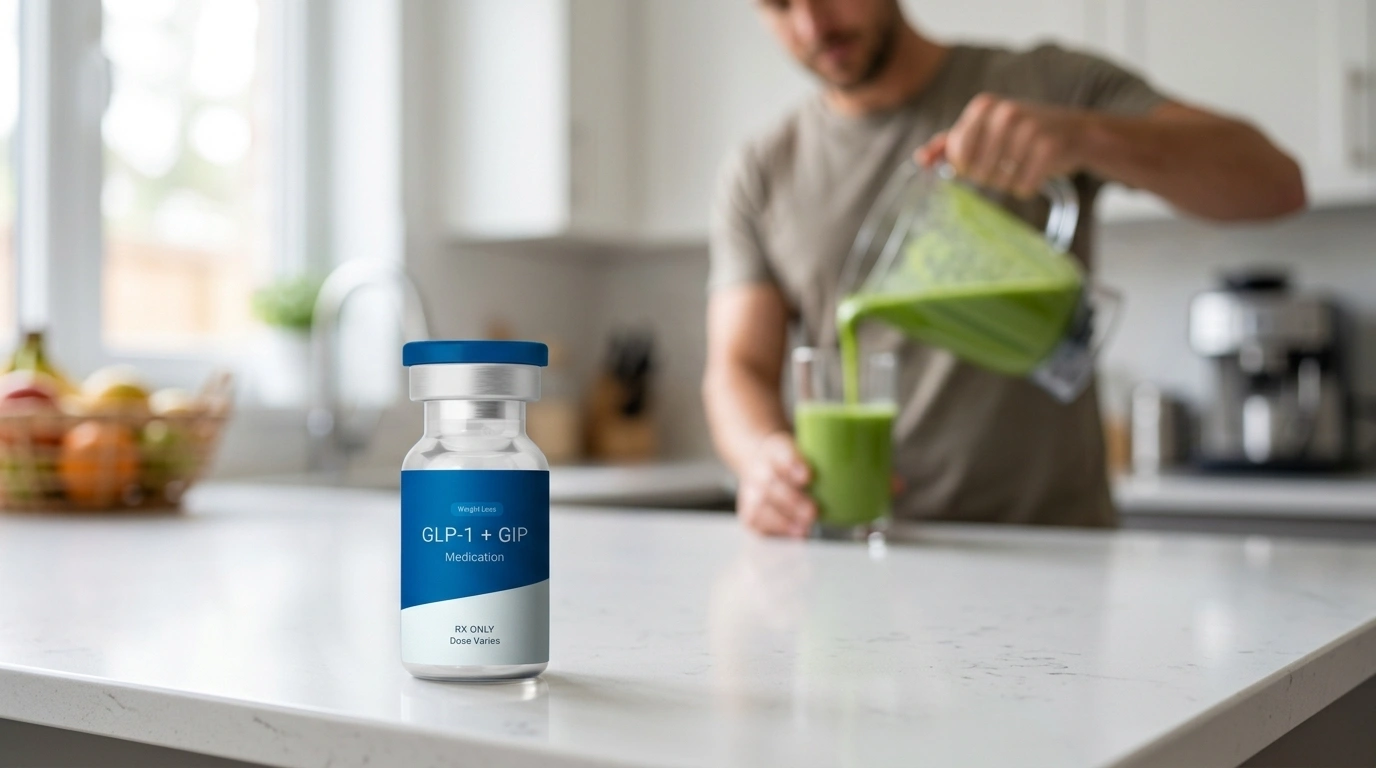
To understand why a dose is difficult to split, it helps to look at how the medication is packaged. Mounjaro® is a brand-name medication containing tirzepatide. Tirzepatide is a dual-agonist, meaning it is a molecule that targets both glucagon-like peptide-1 (GLP-1) and glucose-dependent insulinotropic polypeptide (GIP) receptors. These hormones work together to regulate blood sugar, slow gastric emptying, and signal fullness to the brain. For a deeper look at how tirzepatide fits into weight loss care, read our post on how to get tirzepatide for weight loss.
The branded version of this medication is almost exclusively distributed in the United States as a single-dose autoinjector pen. This device is engineered for simplicity and safety, but its design is inherently “all or nothing.”
The Autoinjector Mechanism
The autoinjector consists of a pre-filled glass syringe housed inside a plastic mechanical sleeve. It features a hidden needle and a spring-loaded trigger. When you press the pen against your skin and unlock the trigger, the spring forcefully pushes the plunger forward. This deploys the needle and the entire volume of the liquid medication in a matter of seconds.
Because this mechanism is a closed, automated system, there is no dial to select a partial dose. Unlike some other diabetes or weight loss medications that come in multi-dose pens with adjustable dials, this pen is designed to be used once and then discarded.
Why the Fixed-Dose Design Matters
The design serves a specific clinical purpose. It ensures that every patient receives the exact amount prescribed by their provider without the risk of human error in measurement. However, this same design makes the question of how to split Mounjaro doses problematic for the average user. Attempting to stop the pen halfway through an injection is physically impossible due to the speed and force of the spring mechanism.
The Risks of DIY Dose Splitting
When individuals seek ways to split their dose, they often turn to online forums for “hacks.” These usually involve deconstructing the pen or “milking” the medication into a separate sterile vial. While these methods may seem clever, they introduce several layers of medical risk.
Loss of Sterility and Infection Risk
The liquid inside the autoinjector is sterile. This means it is free from bacteria and other microorganisms. The moment the medication is exposed to the air or transferred to a non-factory container, that sterility is compromised. Injecting a contaminated substance into your subcutaneous tissue (the fat layer under the skin) can lead to serious complications.
- Abscesses: These are painful collections of pus that may require surgical drainage.
- Cellulitis: This is a serious bacterial skin infection that can spread quickly.
- Systemic Infections: In rare cases, bacteria can enter the bloodstream, leading to conditions that require hospitalization.
Inaccurate Dosing
Accurate dosing is the cornerstone of metabolic treatment. Tirzepatide is a potent molecule measured in milligrams (mg). When you attempt to transfer medication from an autoinjector into a secondary vial and then draw it back into a traditional syringe, the margin for error is high.
If you accidentally inject too much, you may experience severe gastrointestinal distress. This includes protracted vomiting or dehydration. If you inject too little, the medication may not reach the therapeutic threshold. This means it won’t effectively manage your appetite or blood sugar, effectively stalling your progress.
Medication Degradation
The chemical stability of tirzepatide depends on its environment. The glass and rubber seals within the original pen are specifically designed to keep the molecule stable. Transferring the liquid to a different vial or exposing it to light and varying temperatures can cause the medication to break down. This may render it less effective or entirely inert.
Key Takeaway: The Mounjaro® autoinjector is a closed system. Any attempt to bypass the mechanical design to split a dose increases the risk of infection, inaccurate dosing, and chemical degradation of the medication.
Why People Consider Splitting Their Dose
Understanding the motivations behind this question helps us address the underlying issues more effectively. Most people considering how to split Mounjaro doses fall into one of three categories.
Managing Side Effects
Some individuals find that the standard titration schedule is too aggressive for their bodies. Titration is the process of gradually increasing the dose every four weeks to allow the body to adjust. They may experience nausea, fatigue, or indigestion. If side effects are becoming difficult to manage, it may be time to complete the free assessment quiz and review a more personalized plan with a licensed provider.
Navigating Medication Shortages
Supply chain issues have affected many GLP-1 and GIP medications. If a person can only find a higher dose, such as 10 mg or 15 mg, while they are currently prescribed a lower dose, they may feel tempted to split the higher-dose pen. They do this to make the medication last longer or to match their current prescription.
Addressing Financial Concerns
The cost of branded medications can be a significant burden. Some people believe that by buying the highest available dose and splitting it into smaller doses, they can reduce their monthly expenses. While the logic is understandable, the safety risks usually outweigh the potential savings.
A Safer Alternative: Compounded Tirzepatide
For those who need more flexibility in their dosing or are concerned about the limitations of autoinjectors, there is another path. Compounded tirzepatide is a version of the medication prepared by specialized pharmacies. To learn more about the broader treatment approach, our post on what GLP-1 treatment is and how it can help you achieve your weight loss goals is a helpful next read.
What Is Compounding?
Compounding is the process of creating a customized medication to meet the specific needs of an individual. While compounded tirzepatide is not FDA-approved, it is prepared and shipped by FDA-registered, inspected compounding pharmacies. These pharmacies must adhere to strict quality and safety standards.
The Advantage of Multi-Dose Vials
One of the primary reasons individuals choose a program like the one offered through TrimRx is the delivery method. Unlike the branded autoinjector, compounded tirzepatide typically arrives in a multi-dose glass vial. This format allows for several benefits.
Precise Titration
Because you use a traditional syringe to draw the medication, your healthcare provider can instruct you to take a very specific volume. This makes it possible to increase your dose in smaller increments if you are sensitive to side effects.
Less Waste
If your provider determines you need to stay at a lower dose for an extra week, you can simply draw less from the vial. You aren’t locked into a pre-set amount by a mechanical pen.
Reduced Complexity
There is no need for “pen hacking.” The medication is already designed for manual measurement and injection. This eliminates the risk of breaking a mechanical device or losing medication during a difficult transfer process.
Bottom line: Compounded tirzepatide offers the dosing flexibility that many people seek when they attempt to split Mounjaro® pens, but it does so through a delivery system designed for safety and accuracy.
How Personalized Telehealth Programs Solve the Dosing Dilemma
Navigating the complexities of tirzepatide or semaglutide treatment is much easier when you have professional guidance. We provide a platform that connects you with licensed healthcare providers who understand the nuances of these medications. If you are ready to see whether a prescription program is a fit, you can take the free assessment quiz.
Personalized Treatment Plans
Every metabolic profile is unique. A standard titration schedule might work for one person but cause significant distress for another. Through our platform, a provider can tailor your dosage based on your weight loss goals, your health history, and how your body reacts to the medication. This level of personalization is difficult to achieve with a one-size-fits-all autoinjector.
Ongoing Clinical Support
When you are part of a supervised program, you don’t have to guess how to manage side effects. You have 24/7 access to a team that can provide clinical advice. If you are struggling with nausea or want to discuss a dose adjustment, you can consult with a professional rather than looking for risky workarounds online.
Reliable Access to Medication
We partner with high-quality compounding pharmacies to help ensure a consistent supply of medication. This reduces the panic that often leads people to consider splitting doses during shortages. You receive your medication shipped directly to your door, with all the necessary supplies for safe administration.
How to Transition to a Managed Program
If you have been struggling with the limitations of autoinjectors, the next step is to seek a more flexible, medically supervised approach.
Step 1: Complete the Online Assessment
Start by taking the free assessment quiz. This helps gather information about your BMI, medical history, and weight loss goals.
Step 2: Connect with a Licensed Provider
A healthcare professional will review your profile to determine if you are a candidate for GLP-1 or GIP therapy. They will discuss the benefits and potential side effects of medications like compounded tirzepatide or compounded semaglutide.
Step 3: Receive Your Personalized Plan
If approved, your provider will write a prescription tailored to your needs. This plan includes the specific starting dose and a roadmap for how your dose will change over time.
Step 4: Medication Delivery and Support
Your medication is prepared by an FDA-registered, inspected compounding pharmacy and shipped to you. You will also receive guidance on how to use a syringe for precise dosing, ensuring you never have to worry about how to split a fixed-dose pen.
Managing Your Journey Safely
Weight loss is a marathon, not a sprint. While it may be tempting to find shortcuts like dose splitting to save money or manage symptoms, the long-term risks to your health are not worth it.
Myth: “Splitting a Mounjaro® pen is just as safe as using a vial because it’s the same medicine.” Fact: The medicine may be the same, but the delivery system is not. Once the sealed environment of an autoinjector is breached, the medication is no longer guaranteed to be sterile or chemically stable.
Focus on Nutrient Support
Regardless of your dose, supporting your body with the right nutrients is essential. Medications that slow digestion can sometimes lead to gaps in nutrition. Many patients find that using a supplement like GLP-1 Daily Support can help fill these gaps and manage the transition as their body adapts to metabolic changes. For a closer look at supplement support during treatment, see our article on what GLP-1 support is and how it can transform your weight loss journey.
Listen to Your Body
If you feel the urge to split a dose because the side effects are too strong, that is a signal from your body that needs to be addressed by a professional. A provider can adjust your plan legally and safely. Sustainable weight loss happens when your treatment plan matches your body’s unique pace.
The TrimRx Approach
At TrimRx, our mission is to help individuals embrace healthier lifestyles through science, empathy, and a transparent, personalized approach to sustainable weight loss. We believe that everyone deserves access to high-quality care without the barriers of traditional office visits or the risks of unmanaged medication adjustments. By combining modern telehealth technology with clinical expertise, we empower you to take control of your health with confidence. If you want a structured next step, complete the free assessment quiz.
FAQ
Can I use a Mounjaro pen twice?
No, the Mounjaro® autoinjector is a single-use device. Once the trigger is pressed, the needle deploys and the entire dose is released immediately. The internal spring mechanism cannot be reset or stopped, and the needle is not designed to be reused safely. For a broader explanation of how these medications work in care plans, our post on what GLP-1 medication is and how it can transform your weight loss journey may be helpful.
How do I split a 10mg Mounjaro pen?
You should not attempt to split a 10mg Mounjaro® pen or any other dose of this branded medication. Because the pen is a factory-sealed autoinjector, any attempt to extract the medication into a different container compromises its sterility and chemical stability. If you need a different dose, you should consult your healthcare provider for a new prescription.
Is compounded tirzepatide easier to dose than branded pens?
Compounded tirzepatide is often considered more flexible for dosing because it typically comes in a multi-dose vial rather than a fixed-dose autoinjector. This allows a patient, under the guidance of a provider, to draw an exact milligram amount using a syringe. This format makes it much easier to adjust doses in smaller increments to manage side effects.
What happens if I take the wrong dose of Mounjaro?
Taking a dose higher than what your body is prepared for can lead to severe nausea, vomiting, and abdominal pain. If you accidentally take too much or attempt to split a dose and end up with an inaccurate amount, you should contact your healthcare provider or seek medical attention if symptoms become severe. If you want to explore a weight-loss plan that includes clinical guidance from the start, you can take the free assessment quiz.
Disclaimer: This content is for informational purposes only and does not constitute medical advice. It is not intended to diagnose, treat, cure, or prevent any disease or condition. Individual results may vary. Always consult a qualified healthcare professional before starting any weight loss program or medication.

Transforming Lives, One Step at a Time
Keep reading

Mounjaro Alternatives: What Else to Consider
If Mounjaro isn’t the right fit, the closest alternatives are other GLP-1 medications, chiefly semaglutide (Ozempic for diabetes, Wegovy for weight), along with a…

Mounjaro vs Zepbound: Same Drug, Two Brands
Like their semaglutide counterparts, Mounjaro and Zepbound are the same medication (tirzepatide) sold under two names for two purposes: Mounjaro is approved for type…

Retatrutide vs Mounjaro: Triple Agonist vs Dual Agonist
The core difference between retatrutide and Mounjaro comes down to how many hormone targets each hits: retatrutide activates three receptors, while Mounjaro (tirzepatide) activates…


