Does Ozempic Need Pen Needles? What You Need to Know

Introduction
Standing in front of a mirror with a new prescription box can feel like a mix of hope and mild anxiety. For many, the transition to using a GLP-1 medication like Ozempic® is a significant step toward better metabolic health, but it often comes with practical questions about the mechanics of the injection. The most common question we hear from those starting this journey is simple: does Ozempic® need pen needles? If you’re still figuring out whether prescription treatment is the right next step, you can take the free assessment quiz to see what personalized program fits you best.
The short answer is yes, but the details of how these needles work, which ones are compatible, and how to use them safely are essential for a stress-free experience. At TrimRx, we believe that understanding the “how” of your treatment is just as important as the medication itself. If you want a deeper look at the medication behind the pen, our guide on how semaglutide works for weight loss is a helpful place to start.
Understanding the Ozempic Pen Mechanism
Ozempic® is a glucagon-like peptide-1 (GLP-1) receptor agonist that is delivered via a multi-dose injection pen. A GLP-1 receptor agonist is a class of medication that mimics a natural hormone in your body. If you want a broader overview of the medication class itself, our article on what GLP-1 is breaks down the basics in plain language. This hormone helps regulate blood sugar levels and slows down the speed at which your stomach empties, which may support weight loss by helping you feel full longer. Unlike some medications that come in a traditional vial and syringe format, this medication uses a sophisticated, pre-filled pen device designed for ease of use.
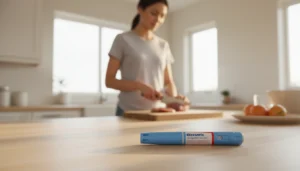
The pen itself contains the medication, but it does not have a built-in needle. Instead, it features a threaded tip where a disposable pen needle must be attached for each weekly dose. This design is intended to maintain the sterility of the medication while allowing you to use the same pen for several weeks. Because the needle is extremely thin—often compared to the thickness of a few strands of human hair—the injection process is generally much less intimidating than people expect.
Key Takeaway: The Ozempic® pen is a delivery device that requires a new, external pen needle to be attached for every single injection to ensure safety and dosage accuracy.
Does Ozempic Come With Needles?
Every new box of Ozempic® includes a supply of needles specifically intended for use with that pen. You do not typically need to purchase needles separately when you first pick up your prescription. The manufacturer includes NovoFine® Plus needles, which are designed to fit the specific threading of the pen. However, the number of needles included depends entirely on the dose and the specific pen size you have been prescribed.
There are currently three primary pen configurations, each containing a different amount of medication and a corresponding number of needles:
- The 2 mg/3 mL Pen: This is often the starting pen for those new to the medication. It is used for the 0.25 mg initiation doses and the 0.5 mg maintenance doses. Because this pen is used for several weeks of titration (gradually increasing the dose), it typically comes with 6 needles.
- The 4 mg/3 mL Pen: This pen is designed for those on a 1 mg weekly maintenance dose. Since the pen contains four 1 mg doses, the box includes 4 needles.
- The 8 mg/3 mL Pen: Reserved for the 2 mg weekly maintenance dose, this pen also contains four doses and includes 4 needles.
It is important to remember that you must use a fresh needle for every injection. Even if you are using the same pen for a month, you should never reuse a needle. The counts provided in the box are calculated to ensure you have exactly what you need for the medication available in that specific pen, plus a small margin for error in the starter pens.
Understanding Pen Needle Anatomy
To understand why these needles are used, it helps to look at the three main parts of a standard pen needle. While the needle itself is the part that enters the skin, the entire assembly is designed to protect the user and keep the medication sterile.
- The Hub: This is the plastic base that screws onto the tip of the pen. It contains a small internal needle that pierces the rubber seal of the medication pen when you twist it on.
- The Cannula: This is the actual needle. Most GLP-1 medications use “ultra-fine” cannulas.
- The Shields: Each needle comes with two covers. The outer needle cap is the larger plastic piece used to handle the needle safely. The inner needle cap is a smaller, often colored piece that sits directly over the needle. Both must be removed before the injection can take place.
The “gauge” of the needle refers to its thickness. In the world of medical needles, a higher gauge number means a thinner needle. The needles provided with Ozempic® are typically 32 gauge (32G). For a closer look at how injection treatments are discussed more broadly, our article on GLP-1 injections explained may be useful. For comparison, a standard needle used for drawing blood is often a 21G or 22G. A 32G needle is significantly thinner, which is why many patients report feeling very little to no sensation during the injection.
Compatible Replacement Options
While the box comes with needles, you may occasionally find yourself needing a replacement. Whether a needle was dropped, contaminated, or damaged during a priming check, it is helpful to know which “universal fit” needles are compatible with the pen.
The Ozempic® pen is designed to work with needles up to 8 mm in length. The standard included needle is 4 mm long, which is the ideal length for a subcutaneous injection—meaning an injection into the fatty tissue just below the skin, rather than into a muscle.
| Needle Brand | Gauge | Length | Compatibility |
|---|---|---|---|
| NovoFine® Plus | 32G | 4 mm | Original manufacturer match |
| BD Nano™ Ultra-Fine™ | 32G | 4 mm | High compatibility, widely available |
| Droplet® Pen Needles | 32G | 4 mm | Standard universal fit |
| Easy Touch® | 31G/32G | 4 mm to 6 mm | Budget-friendly universal option |
Note: If you choose a replacement needle, we recommend sticking to the 32G 4 mm or 32G 6 mm sizes. A 4 mm needle is generally sufficient for most body types to reach the subcutaneous layer. Using a needle longer than 8 mm is not recommended by the manufacturer, as it may increase the risk of injecting into the muscle, which can change how the medication is absorbed.
Why You Might Need Extra Pen Needles
There are several practical reasons why the needles provided in the box might not be enough. While the manufacturer tries to match the needle count to the dose count, real-world scenarios often require a backup.
Priming errors are a frequent reason for needing an extra needle. When you use a brand-new pen for the first time, you must perform a “flow check” to ensure the device is working correctly. This involves turning the dose selector to the flow check symbol and pressing the button until a drop of liquid appears at the needle tip. If a drop doesn’t appear after several attempts, the instructions suggest changing the needle and trying again. This process can quickly use up your supply.
Accidental contamination is another factor. If you remove the inner needle cap and the needle touches a surface—like a countertop or your clothing—it is no longer sterile. To prevent infection, you should discard that needle immediately and use a new one. Similarly, if you accidentally bend the needle while trying to attach it to the hub, it must be replaced.
Travel and logistics also play a role. Many people prefer to keep a small “go-bag” of supplies for travel. If you are splitting your time between two locations, you might want to keep a box of extra needles in each spot to ensure you never miss a dose because you forgot to pack the small plastic caps.
Quick Answer: Yes, Ozempic® requires pen needles for every dose. While enough needles are usually included in the box for the number of doses in the pen, extra universal 32G 4mm needles can be purchased if a needle is lost or damaged.
How to Safely Attach and Prime Your Needle
Properly attaching the needle is the most critical step in ensuring you receive the correct dose. If the needle is not seated correctly, the medication might leak, or the pen mechanism might jam.
Step 1: Prepare the Pen
Wash your hands thoroughly. Remove the pen cap and wipe the rubber seal at the tip with an alcohol swab. This ensures that no bacteria are pushed into the medication when the needle pierces the seal.
Step 2: Attach the Needle
Take a new needle and peel off the paper tab. Push the needle straight onto the pen and turn it until it is tight. It should feel secure but do not over-tighten, as this can make it difficult to remove later.
Step 3: Perform the Flow Check (New Pens Only)
If this is the first time you are using this specific pen, turn the dose selector until you see the flow check symbol (which looks like a small line and a drop). Point the needle upward and press the dose button. Look for a drop of liquid at the needle tip. Once you see the drop, you are ready to select your actual dose.
Step 4: Select and Inject
Turn the dose selector to your prescribed dose (e.g., 0.25 mg or 0.5 mg). Choose an injection site—the front of the thighs, the abdomen (at least two inches from the belly button), or the back of the upper arms are the recommended spots. Clean the skin with alcohol, insert the needle straight in, and press the button.
Step 5: The Six-Second Rule
After the dose counter reaches zero, do not pull the needle out immediately. Keep the needle in your skin and count slowly to six. This ensures that the full volume of the medication has been dispensed into the subcutaneous tissue. Once you have counted to six, you can safely remove the needle.
Injection Best Practices and Site Rotation
To minimize discomfort and ensure the medication works effectively, you should rotate your injection sites weekly. Injecting into the exact same spot every week can cause the tissue to harden or develop small lumps, a condition known as lipohypertrophy. This can interfere with how your body absorbs the medication.
A simple way to manage this is to use a “clock” method on your abdomen or to alternate between your left and right thigh each week. You don’t need to change the general area (e.g., you can stay with the abdomen for months), but you should move the actual injection point by at least an inch each time.
If you feel nervous about the needle, remember that the 32G needles are incredibly small. Most people find that the “pinch” of the alcohol swab or the pressure of the pen against the skin is more noticeable than the needle itself. For those with a significant needle phobia, focusing on slow, deep breaths during the six-second hold can help calm the nervous system and make the process feel routine within a few weeks.
Needle Disposal and Sharps Safety
Used needles are considered biohazardous waste and must be disposed of according to specific safety guidelines. You should never throw used needles directly into your household trash or recycling bin. This protects sanitation workers, family members, and pets from accidental needle sticks.
The Gold Standard for disposal is an FDA-cleared sharps container. These are puncture-resistant plastic containers with a secure lid. However, if you do not have one, the FDA allows for the use of certain household containers. A heavy-duty plastic container, such as an empty laundry detergent bottle, is a common alternative. It must be leak-resistant, able to stand upright, and have a tight-fitting, puncture-resistant lid.
When your container is about three-quarters full, you should seal it with heavy-duty tape and label it “SHARPS – DO NOT RECYCLE.” Disposal rules vary by state and even by county. Some areas allow you to drop them off at designated collection sites, like pharmacies or hospitals, while others have specific “mail-back” programs. Checking your local community guidelines ensures you are staying compliant with local laws.
Key Takeaway: Proper needle disposal is a legal and safety requirement. Always use a puncture-resistant container and never attempt to recap a needle with the small inner cap, as this is when most accidental needle sticks occur.
Common Misconceptions About Pen Needles
There are several myths surrounding pen needles that can lead to confusion or even safety risks. Clearing these up is essential for anyone managing their weight loss journey through a telehealth platform.
Myth: You can reuse the same needle for the whole month if only you are using it. Fact: Needles are designed for single use only. Reusing a needle dulls the tip, making the injection more painful. More importantly, it can lead to bacterial contamination of the medication inside the pen and increase your risk of skin infections.
Another common misconception is that the length of the needle determines how well the medication works. Some people worry that a 4 mm needle is “too short” to reach the right spot. In reality, the subcutaneous fat layer is very close to the surface. If you want a broader look at treatment experiences and what can happen after starting, our article on GLP-1 side effects in 2026 is worth a read. Clinical studies have shown that 4 mm needles are just as effective as longer needles for delivering GLP-1 medications, but with a significantly lower risk of accidentally hitting a muscle.
Finally, some assume that all pen needles are the same. While many are “universal,” the quality of the “lubrication” on the needle and the precision of the tip can vary between brands. If you find that your injections are consistently uncomfortable, it may be worth trying a different brand of high-quality, ultra-fine needles like those from BD or Novo Nordisk.
Managing Side Effects and Support
While the focus today is on the needles, the medication itself can sometimes cause side effects like nausea or localized skin irritation. If you notice redness, itching, or a small bump at the injection site, this is often a minor reaction to the needle or the medication. For people who want added nutritional support while managing appetite changes, the GLP-1 Daily Support supplement is designed to fit alongside a GLP-1 routine. However, if these symptoms persist or if you develop a rash, it is important to consult with your healthcare provider.
Our approach at TrimRx emphasizes that you are never alone in this process. Whether you have questions about your dosage, how to handle a missed dose, or how to manage digestive side effects, having access to a dedicated team makes a difference. If you are looking for a broader overview of practical side-effect management, our guide to Semaglutide Side Effects: Complete Guide and Management Tips offers a useful next step. Personalized programs are designed to adapt to your body’s specific needs, ensuring that your path to better health is as smooth as possible.
If you are using a compounded version of these medications, such as Compounded Semaglutide or Compounded Tirzepatide, the delivery method might differ. Some compounded medications are provided in traditional vials and require a separate syringe and needle, rather than a pen. Always follow the specific instructions provided by your clinical team and the pharmacy that fulfilled your prescription.
The Importance of a Personalized Program
Success in weight management is rarely about the medication alone; it is about the system of support surrounding it. A telehealth-first approach allows for constant communication and adjustment. If you want a clearer roadmap for starting your own weight loss journey, our article on how to start a weight loss journey that actually lasts is a strong companion read. This is particularly helpful when you are first learning the logistics of injections and pen needles.
At TrimRx, we focus on the whole person. Our programs are designed to be transparent and accessible, providing the clinical expertise you need without the frustration of waiting rooms or hidden fees. For readers who want added support for energy and daily momentum while working on weight management, the Weight Loss Boost supplement is another option to consider. By merging modern technology with medical supervision, we help you stay consistent with your treatment, which is the most important factor in achieving sustainable results.
Whether you are just starting your research or are ready to begin, having a clear understanding of the tools—like your pen needles—is the first step toward confidence. From the first assessment to your long-term maintenance, our goal is to provide the science-backed guidance you need to embrace a healthier lifestyle.
Summary of Action Steps
If you are preparing for your first dose, keep this checklist handy to ensure everything goes smoothly:
- Check your box: Confirm you have the correct number of needles for the doses in your pen.
- Inspect the needle: Ensure the paper tab is intact before use.
- Practice site rotation: Have a plan for where you will inject each week to avoid skin irritation.
- Set up disposal: Have your sharps container ready before you even attach the first needle.
- Prime new pens: Always perform the flow check on a brand-new pen to ensure medication is moving.
- Count to six: Keep the needle in for a full six seconds after the dose counter hits zero.
Bottom line: While Ozempic® requires pen needles, the process is designed to be user-friendly, and the ultra-fine needles provided make the experience much more comfortable than traditional injections.
FAQ
Can I buy Ozempic needles over the counter?
In many states, you can purchase universal 32G 4mm pen needles over the counter at your local pharmacy. However, some states require a prescription for any type of medical needle or syringe, so it is best to check with your pharmacist or healthcare provider if you need extra supplies. If you are considering prescription treatment and want to see whether you qualify, you can take the free assessment quiz to get started.
What should I do if I run out of needles before the pen is empty?
If you run out of needles, do not attempt to reuse an old one. You can ask your doctor for a prescription for “universal fit pen needles” or purchase a compatible brand like BD Nano™ or NovoFine® at a pharmacy. Most universal needles will fit the threading of the Ozempic® pen.
Is it normal for a drop of liquid to remain on the needle after injection?
Yes, it is common to see a tiny drop of liquid on the needle tip after you remove it from your skin. As long as you followed the “six-second rule” and held the button down until the counter reached zero, you have received your full dose. The remaining drop is simply a small amount of residual fluid in the needle hub.
Does the needle size affect how much weight I lose?
No, the needle size (gauge and length) does not impact the effectiveness of the medication or your weight loss outcomes. As long as the needle is at least 4 mm long and reaches the subcutaneous fat layer, the medication will be absorbed correctly. The 32G 4mm size is standard because it provides the best balance of comfort and effectiveness.
TrimRx provides a modern, empathetic approach to metabolic health. We believe that everyone deserves access to science-backed weight loss tools and personalized medical guidance. By combining advanced telehealth technology with a dedicated team of specialists, we empower you to take control of your health journey with transparency and support. If you’re ready to explore prescription options, you can take the free assessment quiz and see what fits your goals.
If you are ready to take the next step toward your health goals, we invite you to take our free assessment quiz to see which personalized program is right for you. For those looking to optimize their current routine, our GLP-1 Daily Support supplements are available for immediate purchase to help you feel your best every day.
Disclaimer: This content is for informational purposes only and does not constitute medical advice. It is not intended to diagnose, treat, cure, or prevent any disease or condition. Individual results may vary. Always consult a qualified healthcare professional before starting any weight loss program or medication.

Transforming Lives, One Step at a Time
Keep reading
Regained Weight After Stopping Ozempic? Don’t Restart at Your Old Dose
No. Whatever else you do, do not pick up where you left off. Tolerance to a GLP-1 is not assumed to persist through a…

Eating Less Than Ever on Ozempic but the Scale Won’t Move
Whatever else is true here, the answer is not to eat less. That needs saying first, because it is the direction this situation pushes…

Two Months on the Same Ozempic Dose With No Change: Is It Working?
Two months is long enough. Under four weeks is noise, four to eight weeks is a maybe, and eight weeks of a genuinely flat…


