Ozempic and Keto: Can You Combine Them?

Some patients arrive at GLP-1 treatment already committed to a ketogenic diet. Others discover keto after starting Ozempic and wonder whether combining the two makes sense. It’s a reasonable question, and the answer is more nuanced than a simple yes or no. The short version: yes, you can combine them, and some patients do well with this approach. But there are real physiological considerations, a few risks worth knowing about, and some practical realities that affect whether this combination is sustainable for most people.
What Each Approach Does Independently
Before getting into the combination, it’s worth being clear on what each does on its own.
Ozempic (semaglutide) is a GLP-1 receptor agonist that reduces appetite, slows gastric emptying, and improves insulin sensitivity. It produces weight loss primarily by reducing caloric intake through appetite suppression. It doesn’t prescribe a particular macronutrient ratio, meaning it works regardless of whether you’re eating low-carb, high-carb, or anything in between.
Ketogenic dieting restricts carbohydrates to roughly 20-50 grams per day, forcing the body to shift its primary fuel source from glucose to ketones derived from fat. It produces weight loss through caloric restriction (appetite tends to decrease on keto, partly due to the satiating effect of fat and protein) and metabolic changes associated with low insulin levels and high fat oxidation.
Both approaches reduce appetite. Both can produce meaningful weight loss. The question is what happens when you layer them together.
The Case for Combining Them
There are a few genuine arguments for pairing Ozempic with a ketogenic diet.
Complementary appetite suppression. Ozempic reduces hunger through GLP-1 receptor signaling. Ketogenic diets reduce hunger partly through hormonal effects (lower insulin, higher ketones) and partly through the high satiety value of fat and protein. Some patients find the combination produces very effective appetite control, making it easier to maintain a caloric deficit without feeling deprived.
Improved blood sugar stability. Ketogenic diets dramatically reduce glucose variability by limiting carbohydrate intake. Ozempic also stabilizes blood sugar. For patients with insulin resistance or prediabetes, this combination can produce particularly clean metabolic results, with fewer blood sugar spikes and crashes.
Accelerated fat loss in the short term. The early weeks of keto involve significant glycogen depletion and associated water weight loss, which can feel motivating. Paired with Ozempic’s appetite suppression, some patients report faster initial results than they’d seen on either approach alone.
A 2020 study published in Obesity Reviews found that low-carbohydrate dietary patterns enhanced the metabolic effects of GLP-1 receptor agonists in patients with type 2 diabetes and obesity, with greater improvements in glycemic control and weight loss than either intervention alone (Batch JT et al., Obesity Reviews, 2020, https://onlinelibrary.wiley.com/doi/10.1111/obr.12987).
The Risks and Challenges Worth Knowing
The combination isn’t without complications. A few things to be aware of before going this route.
Excessive caloric restriction. Ozempic suppresses appetite significantly on its own. A ketogenic diet also tends to reduce hunger. Together, some patients find they’re eating very little, sometimes dangerously little. Inadequate caloric intake causes muscle loss, nutrient deficiencies, fatigue, and metabolic adaptation that can slow weight loss over time. If you’re combining these approaches, tracking food intake at least loosely helps ensure you’re not undershooting your needs.
Electrolyte imbalances. Ketogenic diets cause significant shifts in electrolyte balance, particularly sodium, potassium, and magnesium, as glycogen stores deplete and insulin levels drop. Ozempic-associated nausea and reduced food intake can compound this. The “keto flu” symptoms (headache, fatigue, muscle cramps) may feel more pronounced when combined with GLP-1 side effects during early treatment.
Gastrointestinal overlap. Both Ozempic and ketogenic diets can cause gastrointestinal symptoms. Ozempic commonly causes nausea, especially early on. High-fat ketogenic diets can cause diarrhea or constipation depending on fiber intake and individual tolerance. Some patients find the combination produces more GI discomfort than either alone, particularly in the first few weeks.
Sustainability questions. Ketogenic dieting is restrictive. Many patients maintain it successfully for months but struggle with long-term adherence. Ozempic is typically a long-term medication. If you rely on keto to maximize Ozempic’s effects and then discontinue keto, you may experience a transition period where results feel inconsistent. Building eating habits that are sustainable whether or not you’re strictly ketogenic tends to produce more durable outcomes.
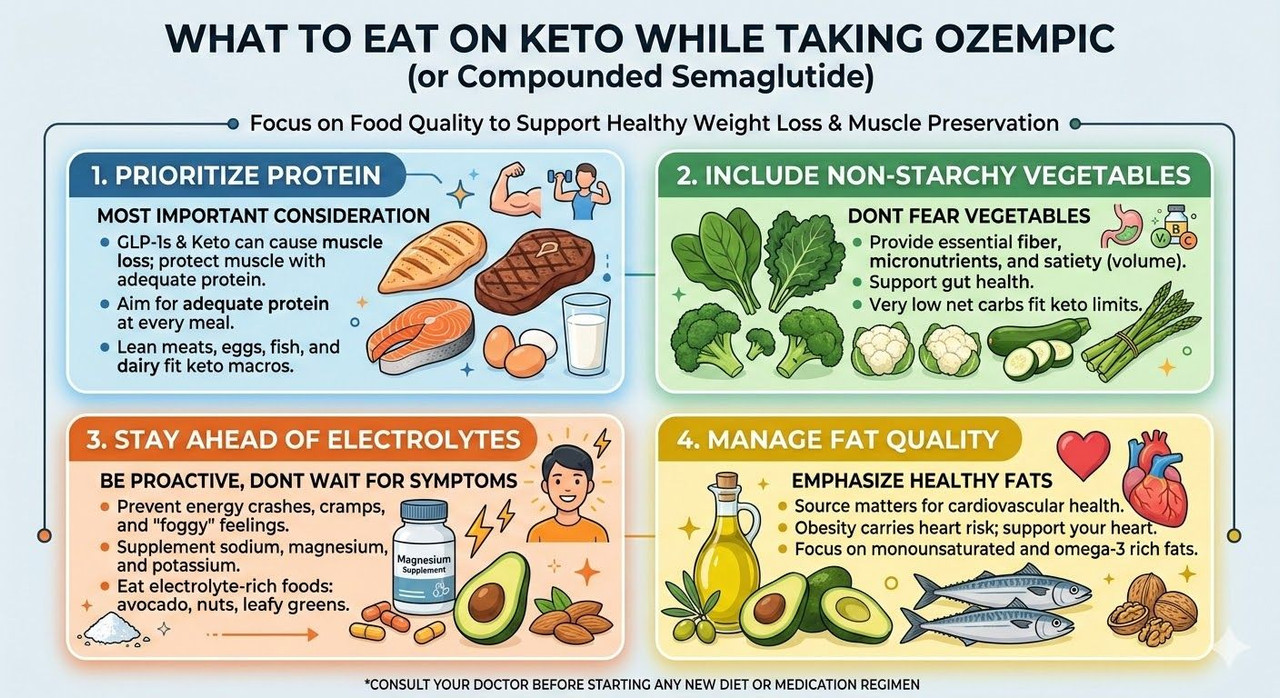
What to Eat on Keto While Taking Ozempic
If you decide to combine these approaches, the quality of your food choices matters more, not less, because your overall intake will likely be lower.
Prioritize protein. This is the most important nutritional consideration. GLP-1-associated weight loss includes some muscle loss alongside fat loss, and ketogenic diets that are low in protein accelerate this. Aim for adequate protein at every meal, lean meats, eggs, fish, and dairy all fit within ketogenic macros and support muscle preservation. Patients on compounded semaglutide who prioritize protein consistently tend to preserve lean mass better through the weight loss process.
Don’t fear non-starchy vegetables. Some people go too minimal with vegetables on keto, worrying about carbohydrate counts. Leafy greens, broccoli, cauliflower, zucchini, and similar vegetables are low enough in net carbs to fit easily within ketogenic limits while providing fiber, micronutrients, and volume that help with satiety and gut health.
Stay ahead of electrolytes. Don’t wait until you feel crampy or foggy to address electrolytes. Proactive supplementation of sodium, magnesium, and potassium, or regular consumption of electrolyte-rich foods like avocado, leafy greens, and nuts, helps prevent the energy crashes that derail adherence.
Manage fat quality. Ketogenic diets are high in fat by definition, but the source matters. Emphasizing monounsaturated and omega-3 rich fats (olive oil, avocados, fatty fish, nuts) over saturated fats from processed sources supports cardiovascular health, which is relevant given that obesity often comes with elevated cardiovascular risk.
How This Compares to Other Dietary Approaches on Ozempic
Keto is one of several dietary patterns patients pair with GLP-1 medications. Intermittent fasting is another popular combination. If you’re curious how that pairing works compared to keto, GLP-1 and intermittent fasting covers the overlap, the benefits, and the practical considerations in detail.
The honest truth is that Ozempic works across dietary patterns. The research doesn’t show that any single diet dramatically outperforms others when combined with GLP-1 treatment, as long as overall caloric intake is appropriate and protein is adequate. The best dietary approach is the one you can sustain. If keto fits your food preferences, lifestyle, and metabolic goals, it’s a reasonable pairing. If it feels like an added burden on top of medication adjustments, a more flexible approach may serve you better long-term.
Talking to Your Provider Before Combining Approaches
If you’re already on Ozempic or considering starting it, and you want to follow a ketogenic diet, let your provider know. This is particularly important if you have type 2 diabetes and take medications that lower blood sugar, because combining keto with GLP-1 treatment can produce hypoglycemia in patients on insulin or sulfonylureas. Your provider may need to adjust your diabetes medications as your blood sugar improves.
For patients exploring their options with compounded tirzepatide, similar considerations apply. Tirzepatide’s dual GLP-1 and GIP receptor action produces greater average weight loss, and the appetite suppression can be even more pronounced, making intentional nutrition planning even more important when combining with a restrictive dietary approach.
If you’re ready to explore whether GLP-1 treatment is right for your situation, start your assessment here.
This information is for educational purposes and is not medical advice. Consult with a healthcare provider before starting any medication. Individual results may vary.

Transforming Lives, One Step at a Time
Keep reading

Vegetarian on Ozempic: Nutrition Considerations That Actually Matter
Most nutrition guidance for GLP-1 medications assumes the patient eats meat. Protein recommendations default to chicken breast and eggs. Meal examples involve ground turkey….

Ozempic for Athletes: Performance Considerations Before You Start
The conversation around GLP-1 medications has expanded well beyond its origins in diabetes management and general obesity treatment. Athletes, recreational competitors, and highly active…

Fibromyalgia and Ozempic: What Patients Are Reporting
Fibromyalgia is one of the more misunderstood conditions in medicine. It’s real, it’s debilitating, and for years it was dismissed or minimized by providers…


