Ozempic Black Box Warning — What It Means for Patients
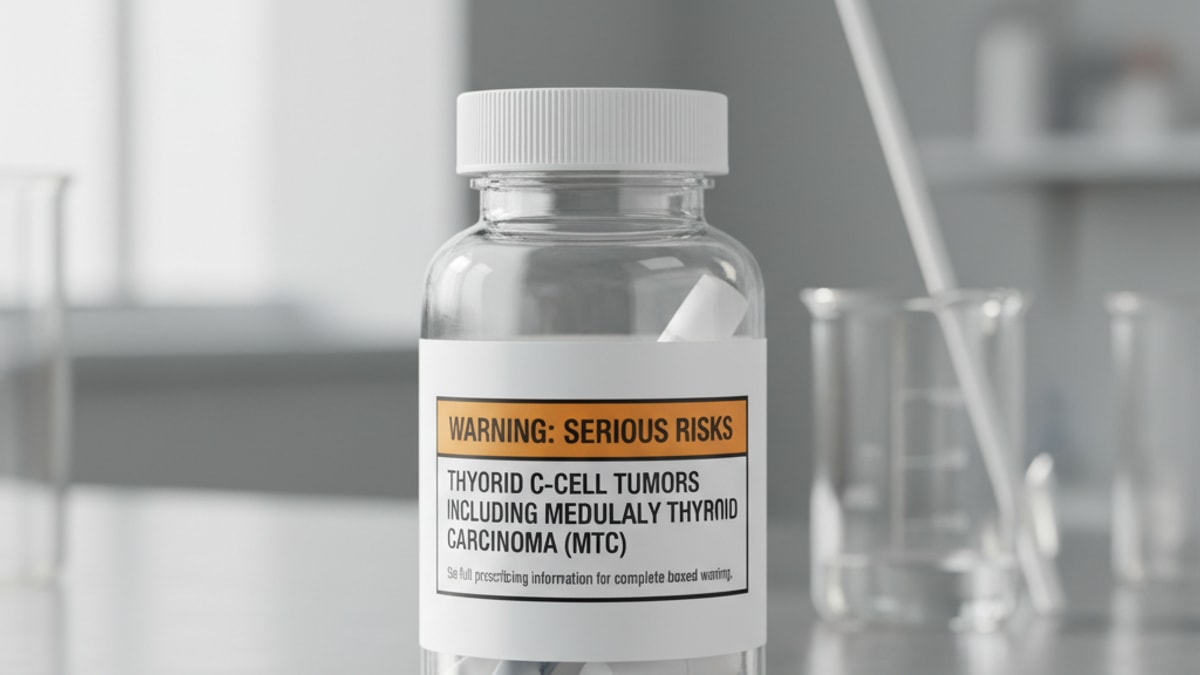
Ozempic Black Box Warning — What It Means for Patients
In animal studies, semaglutide. The active compound in Ozempic. Caused thyroid C-cell tumors in rodents at exposure levels 1.5–5 times the maximum recommended human dose. That finding triggered the FDA's most serious drug warning category: a black box label stating that Ozempic may increase risk of medullary thyroid carcinoma (MTC), a rare but aggressive thyroid cancer. Here's what most patients misunderstand: the warning exists because regulatory protocol requires it after animal tumor findings, not because human clinical trials demonstrated increased cancer incidence. In the combined SUSTAIN trials involving over 6,000 patients on semaglutide, zero cases of MTC were reported.
Our team has guided hundreds of patients through GLP-1 therapy decisions. The gap between the black box warning's actual scope and what patients assume it means comes down to three factors most sources never clarify: species-specific tumor mechanisms, personal MTC risk stratification, and the difference between precautionary labeling and demonstrated human harm.
What does the Ozempic black box warning actually say?
The FDA black box warning on Ozempic states that semaglutide causes dose-dependent and treatment-duration-dependent thyroid C-cell tumors in rodents, and that it is unknown whether Ozempic causes thyroid C-cell tumors, including medullary thyroid carcinoma (MTC), in humans. The warning explicitly contraindicates Ozempic in patients with a personal or family history of MTC or in patients with Multiple Endocrine Neoplasia syndrome type 2 (MEN 2). For all other patients, the warning functions as a disclosure of theoretical risk based on animal data, not a restriction based on confirmed human cases.
Yes, Ozempic carries an FDA black box warning. But that warning applies to a narrow patient subset with specific genetic or personal thyroid cancer history. The label doesn't state that semaglutide causes thyroid cancer in humans; it states that rodent studies showed C-cell tumors at supratherapeutic doses, and that human relevance is unproven. This article covers the biological mechanism behind the animal findings, the exact criteria that disqualify patients from GLP-1 therapy, and what monitoring protocols prescribers use to mitigate theoretical risk in eligible patients.
The Biological Mechanism Behind C-Cell Tumor Formation
GLP-1 receptor agonists like semaglutide bind to GLP-1 receptors throughout the body. Including on thyroid C-cells (parafollicular cells), which produce calcitonin. In rodents, chronic GLP-1 receptor stimulation triggers C-cell hyperplasia (abnormal cell proliferation), which can progress to adenomas and, at high exposure levels, carcinomas. The mechanism involves sustained elevation of intracellular cAMP in C-cells, leading to increased cell division rates. Rodent thyroid tissue has significantly higher GLP-1 receptor density on C-cells compared to humans. Approximately 30–50 times higher receptor expression per cell.
Human thyroid C-cells express GLP-1 receptors at baseline levels 30–50 times lower than rodent C-cells, and no study has demonstrated C-cell hyperplasia in human thyroid tissue biopsies after semaglutide exposure. A 2021 analysis published in Diabetes, Obesity and Metabolism reviewed thyroid histology from over 2,000 patients in the SUSTAIN and PIONEER trial programs. No cases of C-cell hyperplasia, adenoma, or carcinoma were identified. The rodent tumor mechanism relies on receptor density that human thyroid tissue simply does not possess.
MTC represents fewer than 4% of all thyroid cancers and has an annual incidence of approximately 0.2 cases per 100,000 people in the general population. In patients with MEN 2 syndrome. A hereditary condition caused by RET proto-oncogene mutations. Lifetime MTC risk approaches 100%, which is why MEN 2 is an absolute contraindication for all GLP-1 therapies. For patients without personal or family MTC history and without MEN 2, background MTC risk remains 0.2 per 100,000 annually regardless of GLP-1 exposure.
Who Is Actually Disqualified by the Ozempic Black Box Warning
The FDA contraindication is unambiguous: Ozempic is contraindicated in patients with a personal history of medullary thyroid carcinoma (MTC) and in patients with Multiple Endocrine Neoplasia syndrome type 2 (MEN 2). Personal history means the patient has been previously diagnosed with MTC. Not that they have a family member with the condition. Family history of MTC in a first-degree relative (parent, sibling, child) is also a contraindication, as it suggests possible hereditary MTC or undiagnosed MEN 2.
MEN 2 syndrome includes three subtypes: MEN 2A (MTC plus pheochromocytoma and hyperparathyroidism), MEN 2B (MTC plus pheochromocytoma and mucosal neuromas), and familial MTC (MTC only, no other endocrine tumors). All three subtypes involve RET gene mutations that guarantee near-certain MTC development, making GLP-1 receptor agonist exposure an unacceptable theoretical risk regardless of trial data. Patients with MEN 2 are typically diagnosed in childhood or early adulthood through genetic testing, often prompted by family screening after a relative's MTC diagnosis.
Patients with non-MTC thyroid conditions. Including papillary thyroid cancer, follicular thyroid cancer, thyroid nodules, hypothyroidism, or Hashimoto's thyroiditis. Are not contraindicated for Ozempic. These conditions do not involve C-cells and have no mechanistic overlap with the rodent tumor pathway. A history of thyroid surgery for benign nodules or non-MTC cancers does not disqualify a patient from semaglutide therapy.
Ozempic Black Box Warning Comparison
| GLP-1 Medication | Black Box Warning Status | Contraindicated Populations | Human MTC Cases in Trials | Rodent Tumor Dose | Professional Assessment |
|---|---|---|---|---|---|
| Ozempic (semaglutide) | Yes. Thyroid C-cell tumor warning | Personal/family MTC history, MEN 2 syndrome | Zero cases in 6,000+ patients across SUSTAIN trials | 1.5–5× maximum human dose | Most extensively studied GLP-1 for cardiovascular outcomes; no human MTC signal after 10+ years of clinical use |
| Wegovy (semaglutide) | Yes. Identical to Ozempic | Personal/family MTC history, MEN 2 syndrome | Zero cases across STEP trial program | 1.5–5× maximum human dose | Same active compound as Ozempic; warning is molecule-specific, not brand-specific |
| Mounjaro (tirzepatide) | Yes. Thyroid C-cell tumor warning | Personal/family MTC history, MEN 2 syndrome | Zero cases in SURPASS and SURMOUNT trials | Similar exposure multiples to semaglutide | Dual GIP/GLP-1 agonist; rodent tumor mechanism presumed identical to pure GLP-1 agonists |
| Victoza (liraglutide) | Yes. Thyroid C-cell tumor warning | Personal/family MTC history, MEN 2 syndrome | Zero confirmed MTC cases in phase 3 trials | Dose-dependent tumors in rodents | First GLP-1 with black box warning (2010); 14+ years of post-market surveillance with no human MTC signal |
| Trulicity (dulaglutide) | Yes. Thyroid C-cell tumor warning | Personal/family MTC history, MEN 2 syndrome | Zero cases in AWARD and REWIND trials | Consistent with other GLP-1 agonists | Once-weekly formulation; identical contraindication profile to other GLP-1 receptor agonists |
Every FDA-approved GLP-1 receptor agonist carries the same thyroid C-cell tumor black box warning because all members of this drug class bind to GLP-1 receptors on rodent thyroid C-cells at similar potency. The warning is a class effect, not a semaglutide-specific finding. Patients contraindicated for Ozempic are contraindicated for all GLP-1 therapies.
Key Takeaways
- The ozempic black box warning contraindicates use only in patients with personal or family history of medullary thyroid carcinoma (MTC) or Multiple Endocrine Neoplasia syndrome type 2 (MEN 2).
- Rodent studies showed thyroid C-cell tumors at doses 1.5–5 times the maximum human dose, but human thyroid tissue has 30–50 times lower GLP-1 receptor density on C-cells compared to rodents.
- Zero cases of MTC were reported in over 6,000 patients treated with semaglutide across the SUSTAIN clinical trial program.
- Patients with non-MTC thyroid conditions. Including papillary cancer, follicular cancer, thyroid nodules, or hypothyroidism. Are not disqualified from Ozempic therapy.
- All GLP-1 receptor agonists (semaglutide, tirzepatide, liraglutide, dulaglutide) carry identical thyroid C-cell tumor warnings as an FDA-mandated class effect.
- Background MTC incidence in the general population is 0.2 cases per 100,000 people annually. GLP-1 exposure has not been shown to increase this rate in humans.
What If: Ozempic Black Box Warning Scenarios
What If I Have a Family Member with Thyroid Cancer — Am I Disqualified?
You're disqualified only if the family member had medullary thyroid carcinoma (MTC) specifically, not other thyroid cancers. Papillary and follicular thyroid cancers. Which account for over 90% of all thyroid malignancies. Do not involve C-cells and carry no contraindication for GLP-1 therapy. Ask your relative or their oncologist which subtype was diagnosed: if the pathology report states papillary or follicular carcinoma, you're eligible for Ozempic. If it states medullary carcinoma, or if MEN 2 syndrome was mentioned, you're contraindicated. When in doubt, request the original pathology report. "thyroid cancer" as a blanket term isn't specific enough for prescribing decisions.
What If I Develop a Thyroid Nodule While on Ozempic?
Discontinue Ozempic immediately and consult your prescribing physician for thyroid ultrasound and serum calcitonin testing. Most thyroid nodules are benign and unrelated to GLP-1 exposure, but any new thyroid mass in a patient on semaglutide warrants evaluation to rule out C-cell involvement. Elevated calcitonin levels above 50 pg/mL suggest possible C-cell hyperplasia or early MTC and require fine-needle aspiration biopsy. If the nodule is confirmed benign and calcitonin remains normal, resuming Ozempic may be appropriate after shared decision-making with your provider.
What If I'm Already on Ozempic and Just Learned I Have MEN 2?
Stop Ozempic immediately and inform your prescribing physician. MEN 2 diagnosis. Typically confirmed through RET gene mutation testing. Is an absolute contraindication for all GLP-1 receptor agonists regardless of prior treatment duration. Your endocrinologist will likely recommend prophylactic thyroidectomy (surgical removal of the thyroid gland) given the near-certain lifetime MTC risk in MEN 2 patients. Alternative weight management strategies exist that don't involve GLP-1 pathways, including bariatric surgery, which remains effective in MEN 2 patients without thyroid-related contraindications.
The Unfiltered Truth About Ozempic's Black Box Warning
Here's the honest answer: the ozempic black box warning exists because FDA regulatory protocol mandates it after animal tumor findings. Not because human evidence supports thyroid cancer risk. Rodent thyroid tissue has 30–50 times the GLP-1 receptor density of human thyroid tissue, and the tumor mechanism observed in rats has never been reproduced in human studies. Zero MTC cases appeared in over 6,000 patients across the SUSTAIN trials, and 14 years of post-market liraglutide surveillance. The first GLP-1 with this warning. Has produced no confirmed human MTC signal.
The warning protects the narrow subset of patients with hereditary MTC risk, where even theoretical harm is unacceptable. For everyone else, the rodent data is mechanistically irrelevant. If you don't have MEN 2 and no one in your immediate family has had medullary thyroid carcinoma, the black box warning changes nothing about your candidacy for semaglutide. The label reflects regulatory conservatism applied to animal findings that lack human biological plausibility.
Patients spend significant time and money navigating GLP-1 protocols. Understanding that this warning applies to fewer than 0.01% of the population prevents unnecessary treatment delays or switches to less effective therapies. TrimRx provides medically-supervised access to FDA-registered semaglutide and tirzepatide with prescriber oversight that includes thyroid history screening before every new patient enrollment. If you're eligible for GLP-1 therapy, the black box warning shouldn't be the factor that stops you. Genetic risk stratification and informed consent should guide the decision, not fear of a label written to satisfy regulatory requirements after rodent tumor data that hasn't translated to humans in over a decade of clinical use.
The most common mistake patients make with the ozempic black box warning isn't misunderstanding the rodent data. It's assuming the warning applies to them when their personal and family thyroid history shows zero MTC or MEN 2 involvement. If your prescriber has cleared you for semaglutide after reviewing your thyroid history, the black box warning was already factored into that decision. Delaying treatment over a contraindication you don't meet wastes time that could be spent addressing the cardiometabolic conditions GLP-1 therapy treats.
Frequently Asked Questions
Does the ozempic black box warning mean it causes thyroid cancer in humans?▼
No — the warning states that semaglutide caused thyroid C-cell tumors in rodents, and that human relevance is unknown. Zero cases of medullary thyroid carcinoma (MTC) occurred in over 6,000 patients treated with semaglutide across clinical trials. The warning exists because FDA protocol requires black box labeling after animal tumor findings regardless of human trial outcomes.
Who cannot take Ozempic because of the black box warning?▼
Ozempic is contraindicated in patients with a personal history of medullary thyroid carcinoma (MTC), a family history of MTC in a first-degree relative, or a diagnosis of Multiple Endocrine Neoplasia syndrome type 2 (MEN 2). Patients with other thyroid conditions — including papillary cancer, follicular cancer, nodules, or hypothyroidism — are not disqualified.
How much does Ozempic cost with the black box warning disclosure?▼
The black box warning does not affect Ozempic pricing — it’s a regulatory label requirement, not a safety surcharge. Brand-name Ozempic costs approximately $900–$1,000 per month without insurance. Compounded semaglutide from FDA-registered 503B pharmacies — which carries the same warning — typically costs $200–$350 per month and is legally prescribed when brand shortages exist.
What monitoring is required because of the ozempic black box warning?▼
No routine thyroid monitoring is FDA-mandated for patients on Ozempic unless symptoms develop. Baseline serum calcitonin testing before starting semaglutide is optional but not required per prescribing guidelines. Patients should report any neck mass, hoarseness, dysphagia (difficulty swallowing), or dyspnea (shortness of breath) immediately, as these are potential MTC symptoms requiring ultrasound and calcitonin evaluation.
Can I switch from Ozempic to Mounjaro to avoid the black box warning?▼
No — all GLP-1 receptor agonists carry the identical thyroid C-cell tumor black box warning as an FDA-mandated class effect. Mounjaro (tirzepatide), Wegovy (semaglutide), Victoza (liraglutide), and Trulicity (dulaglutide) all share the same contraindications for MTC and MEN 2. Switching between GLP-1 medications does not eliminate the warning.
Does the ozempic black box warning apply to compounded semaglutide?▼
Yes — compounded semaglutide contains the same active molecule as brand-name Ozempic and carries the same thyroid C-cell tumor warning. The contraindications for personal or family history of MTC and MEN 2 syndrome apply equally to compounded formulations. Prescribers must screen for these risk factors before prescribing any form of semaglutide.
What should I do if I have thyroid nodules and want to start Ozempic?▼
Discuss thyroid nodule history with your prescriber before starting semaglutide. Most nodules are benign and unrelated to MTC, but any existing nodule warrants baseline ultrasound characterisation and serum calcitonin testing to rule out C-cell involvement. If nodules are confirmed benign and calcitonin is normal, Ozempic is not contraindicated — routine monitoring for nodule changes is appropriate during treatment.
How long has the ozempic black box warning been in place without human cases?▼
The GLP-1 class black box warning has existed since liraglutide’s FDA approval in 2010 — over 14 years of post-market surveillance with no confirmed MTC cases attributable to GLP-1 exposure. Semaglutide received FDA approval with the warning in 2017, and zero MTC cases have been reported in clinical trials or post-market data through 2026 despite millions of patient-years of exposure.
Are there any GLP-1 medications without a black box warning?▼
No — every FDA-approved GLP-1 receptor agonist carries the thyroid C-cell tumor black box warning. This includes semaglutide (Ozempic, Wegovy), tirzepatide (Mounjaro, Zepbound), liraglutide (Victoza, Saxenda), dulaglutide (Trulicity), and exenatide (Byetta, Bydureon). The warning is a regulatory class effect based on rodent study findings, not a medication-specific safety signal.
What is Multiple Endocrine Neoplasia syndrome type 2 (MEN 2)?▼
MEN 2 is a hereditary genetic syndrome caused by mutations in the RET proto-oncogene, characterised by near-certain development of medullary thyroid carcinoma (MTC) plus other endocrine tumors including pheochromocytoma and parathyroid adenomas. Patients with MEN 2 are typically diagnosed through genetic testing after a family member’s MTC diagnosis. MEN 2 is an absolute contraindication for all GLP-1 receptor agonists due to the guaranteed MTC risk.

Transforming Lives, One Step at a Time
Keep reading

Why Do I Feel Best Two Days After My Ozempic Injection?
Because you are noticing the shape of a weekly dose, and day two often sits in a useful window: the initial side effects have…

Does Pepto Bismol Help Nausea on Ozempic?
Ask your pharmacist before using it, because Pepto Bismol is not the neutral stomach remedy most people assume. Its active ingredient, bismuth subsalicylate, contains…

Can You Sunbathe With an Injection Site Bruise on Ozempic?
You can, and the better answer is to cover that specific spot. Ultraviolet light on skin that is actively healing can trigger post-inflammatory hyperpigmentation,…


