Ozempic Diet Plan: Optimizing Nutrition for Maximum Weight Loss
You’ve been on Ozempic for a few weeks, and while your appetite is dramatically reduced, you’re feeling lost about how to structure your eating. You know you need a plan that works with the medication’s effects, but you’re not sure how many calories to target, how to organize meals throughout the week, or whether you should follow a specific diet approach like low-carb or Mediterranean.
Here’s what you need to know: a structured Ozempic diet plan focuses on high protein intake (25 to 35% of calories), moderate healthy fats (20 to 30% of calories), and controlled carbohydrates (35 to 45% of calories) from whole food sources. Most people achieve optimal results with 1,200 to 1,600 calories daily, distributed across 4 to 5 smaller meals that accommodate slowed gastric emptying. The plan should evolve as you progress through treatment, with stricter structure during active weight loss and more flexibility during maintenance.
This guide provides complete diet planning strategies for Ozempic users, including calorie and macronutrient targets for different body sizes, detailed weekly meal plans with shopping lists, approaches for different dietary preferences, strategies for different phases of treatment, and systems for tracking and optimizing your results over time.
Key Takeaways: Ozempic Diet Planning
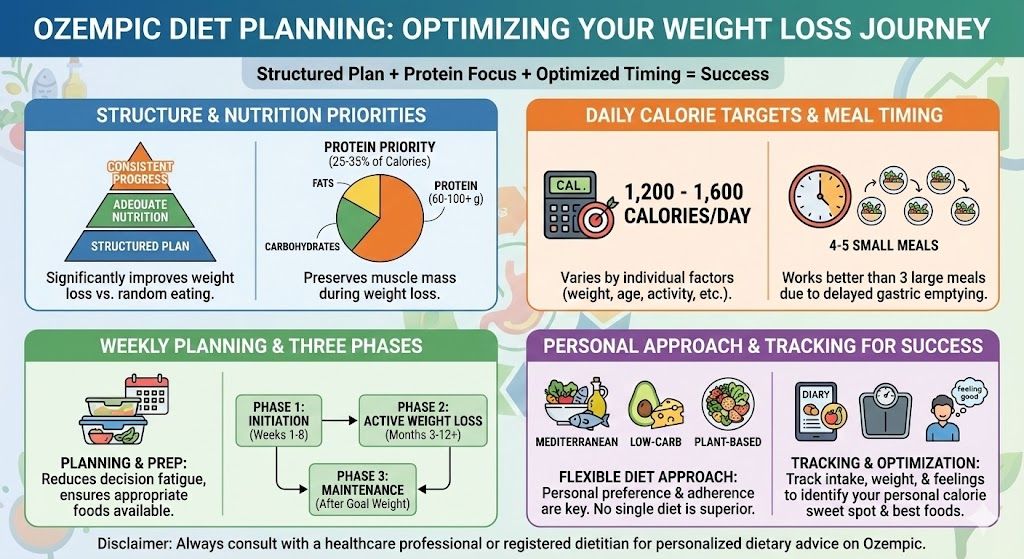
- A structured diet plan significantly improves weight loss results compared to eating randomly based on reduced appetite alone, helping ensure adequate nutrition and consistent progress.
- Protein should comprise 25 to 35% of daily calories (or 60 to 100+ grams absolute), making it the highest priority macronutrient for preserving muscle during weight loss.
- Most people achieve optimal results with daily calorie targets of 1,200 to 1,600 calories, though this varies based on starting weight, gender, age, activity level, and metabolic rate.
- Meal timing matters more on Ozempic than with typical diets: 4 to 5 smaller meals work better than 3 large meals due to delayed gastric emptying.
- Weekly meal planning and prep reduces decision fatigue and ensures you have appropriate foods available when appetite is unpredictable and often very low.
- The diet plan should evolve through three phases: initiation (first 8 weeks), active weight loss (months 3 to 12+), and maintenance (after reaching goal weight).
- No single diet approach (low-carb, Mediterranean, plant-based) is definitively superior on Ozempic, making personal preference and adherence more important than the specific dietary framework.
- Tracking intake, weight, and how you feel allows optimization over time, identifying your personal calorie sweet spot and foods that work best for your body.
Understanding Your Calorie and Macronutrient Targets
Before creating meal plans, you need to establish appropriate calorie and macronutrient targets for your situation.
Determining Your Calorie Target
Your appropriate calorie level depends on several factors including your starting weight, goal weight, age, gender, activity level, and metabolic rate. Here are general guidelines:
For people starting at 200+ pounds: Begin with 1,400 to 1,600 calories daily. This provides adequate nutrition while creating a substantial deficit for weight loss.
For people starting at 150 to 200 pounds: Target 1,200 to 1,400 calories daily. This range supports steady weight loss without excessively slowing metabolism.
For people starting under 150 pounds or approaching goal weight: Aim for 1,200 to 1,300 calories daily. Very low calorie intake (under 1,200) typically isn’t recommended unless under direct medical supervision.
These are starting points. Monitor your weight loss rate and adjust accordingly. Optimal weight loss is 1 to 2 pounds per week consistently. Faster loss risks excessive muscle loss, while slower progress might indicate calories are too high.
Men typically need 200 to 300 more calories than women of similar size due to higher muscle mass and metabolic rate. Active individuals need more calories than sedentary people.
Macronutrient Distribution
Rather than just counting calories, dividing those calories appropriately between protein, fats, and carbohydrates optimizes results.
Protein: 25 to 35% of calories, or 60 to 100+ grams absolute (whichever is higher). On a 1,400 calorie diet, this means 350 to 490 calories from protein, or 88 to 123 grams. Protein preservation of muscle mass makes this the most critical macronutrient.
Fat: 20 to 30% of calories. On a 1,400 calorie diet, this means 280 to 420 calories from fat, or 31 to 47 grams. Adequate fat supports hormone production and nutrient absorption, but excessive fat triggers nausea on Ozempic.
Carbohydrates: 35 to 45% of calories. On a 1,400 calorie diet, this means 490 to 630 calories from carbohydrates, or 123 to 158 grams. Focus on complex carbohydrates from whole grains, vegetables, and fruits rather than simple sugars.
This distribution provides balanced nutrition while emphasizing the protein critical for maintaining lean mass during weight loss.
Adjusting Targets Over Time
As you lose weight, your calorie needs decrease. A body that weighs 180 pounds burns fewer calories than one that weighs 220 pounds, even doing the same activities.
Recalculate your calorie target every 15 to 20 pounds of weight loss. Reduce by approximately 50 to 100 calories at each recalculation to maintain consistent progress.
If weight loss stalls for 3 to 4 weeks despite adherence to your plan, reduce calories by 100 to 150 or increase activity rather than maintaining the same approach indefinitely.
Conversely, if you’re losing more than 2 pounds weekly consistently, add 100 to 200 calories to slow the rate and preserve more muscle mass.
Structuring Your Daily Eating Pattern
How you distribute your calories throughout the day matters as much as the total amount you eat.
The Case for Smaller, More Frequent Meals
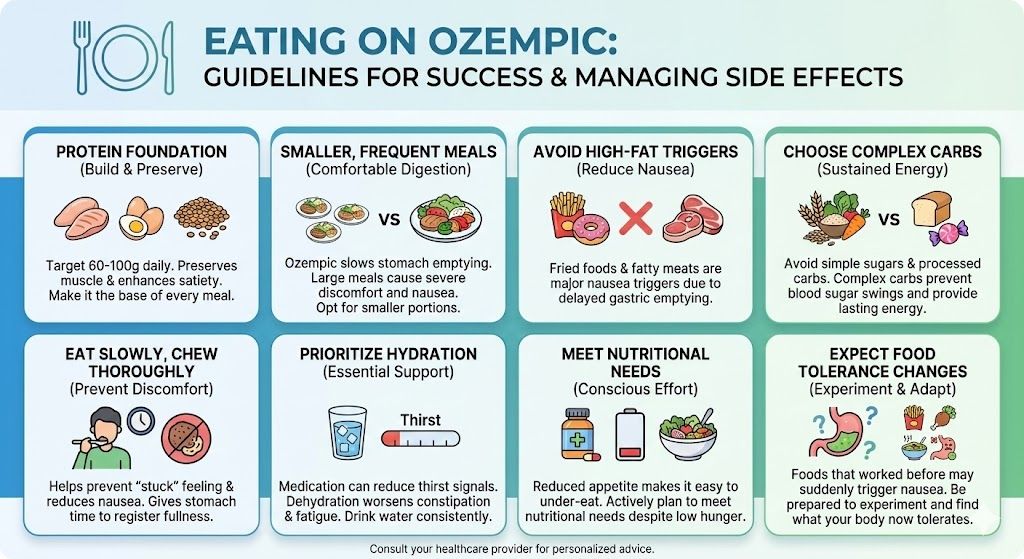
Traditional diet advice often emphasizes three meals daily, but this pattern doesn’t work well with Ozempic’s effects on gastric emptying. Large meals sit uncomfortably in your stomach for hours, causing fullness that extends far beyond the meal.
Smaller meals eaten more frequently accommodate delayed emptying while ensuring you meet nutritional needs. Most people do best with 4 to 5 eating occasions daily, each containing 250 to 400 calories.
A typical structure might be:
- Breakfast: 300 to 350 calories (7:00 to 8:00 AM)
- Mid-morning snack: 150 to 200 calories (10:00 to 11:00 AM)
- Lunch: 350 to 400 calories (1:00 to 2:00 PM)
- Afternoon snack: 150 to 200 calories (4:00 to 5:00 PM)
- Dinner: 300 to 350 calories (7:00 to 8:00 PM)
This pattern maintains steady energy, prevents excessive hunger between meals, and keeps you from overfilling your stomach at any single sitting.
Protein Distribution
Distribute protein evenly throughout the day rather than loading it all into one or two meals. Aim for 20 to 30 grams at each main meal and 10 to 15 grams at snacks.
This distribution optimizes muscle protein synthesis, which happens most effectively when amino acids are available regularly rather than in one large bolus.
Front-Loading vs Even Distribution
Many people find their appetite is best in the morning and early afternoon, declining significantly by evening. This pattern intensifies in the first few days after the weekly injection.
If this describes your experience, front-load calories toward breakfast and lunch, accepting that dinner might be lighter. A distribution like 400 calories at breakfast, 400 at lunch, and 250 at dinner with small snacks totaling 200 to 300 calories accommodates this pattern.
Others maintain relatively consistent appetite throughout the day and do fine with even distribution. Experiment to find what works for your body’s hunger and fullness patterns.
Meal Timing Considerations
Eat your first meal within 1 to 2 hours of waking to jumpstart your metabolism and provide energy for the day. Skipping breakfast might seem appealing when you’re not hungry, but it often leads to inadequate total intake by day’s end.
Space meals approximately 3 to 4 hours apart. This prevents excessive hunger while giving your stomach time to empty partially between eating occasions.
Finish your last meal at least 3 hours before bed. Eating too close to bedtime with delayed gastric emptying can cause acid reflux, discomfort, and sleep disruption.
Phase 1: Initiation Diet Plan (Weeks 1-8)
The first 8 weeks on Ozempic require special dietary attention as your body adjusts to the medication.
Goals for Initiation Phase
During initiation, your primary goals are adjusting to reduced appetite, identifying foods you tolerate well, establishing meal planning habits, minimizing side effects through dietary choices, and beginning steady weight loss without excessive restriction.
This isn’t the time to aim for maximum weight loss at any cost. Focus on building sustainable habits and managing side effects while achieving moderate weight loss of 1 to 1.5 pounds weekly.
Recommended Calorie Level
Start at the higher end of your target range. If your eventual goal is 1,300 calories, begin with 1,400 to 1,500 during initiation. This provides a buffer while you’re learning and prevents excessive side effects from combining aggressive calorie restriction with a new medication.
Food Focus During Initiation
Emphasize easily digestible proteins like chicken breast, white fish, eggs, and Greek yogurt. Avoid fatty meats and fried proteins that commonly trigger nausea.
Include simple, well-cooked vegetables that are easy to digest. Steamed or roasted vegetables work better than raw vegetables initially for many people.
Choose bland to moderately seasoned foods. Very spicy, heavily seasoned, or strongly flavored foods can aggravate nausea when you’re adjusting to the medication.
Focus on simple preparations. Complex recipes with multiple ingredients make it harder to identify problem foods if you experience discomfort.
Sample Week 1-8 Meal Plan (1,400 calories)
Monday through Sunday structure:
Breakfast (350 calories):
- 2 scrambled eggs (140 cal, 12g protein)
- 1 slice whole grain toast (80 cal, 4g protein)
- 1/2 cup berries (40 cal, 1g protein)
- 6 oz Greek yogurt (90 cal, 18g protein) Total: 350 cal, 35g protein
Mid-Morning Snack (150 calories):
- Medium apple (95 cal, 0g protein)
- 1 tablespoon almond butter (55 cal, 3.5g protein) Total: 150 cal, 3.5g protein
Lunch (400 calories):
- 4 oz grilled chicken breast (185 cal, 35g protein)
- 2 cups mixed greens with vegetables (40 cal, 2g protein)
- 1/2 cup quinoa (110 cal, 4g protein)
- 1 tablespoon olive oil dressing (65 cal, 0g protein) Total: 400 cal, 41g protein
Afternoon Snack (150 calories):
- 1/2 cup cottage cheese (90 cal, 14g protein)
- 1/2 cup strawberries (60 cal, 1g protein) Total: 150 cal, 15g protein
Dinner (350 calories):
- 4 oz baked white fish (140 cal, 28g protein)
- 1 cup steamed broccoli (55 cal, 4g protein)
- 1/2 sweet potato, baked (90 cal, 2g protein)
- 1 teaspoon olive oil on vegetables (40 cal, 0g protein)
- Small side salad (25 cal, 1g protein) Total: 350 cal, 35g protein
Daily Total: 1,400 calories, 129.5g protein (37% of calories)
Initiation Phase Shopping List
Proteins: Chicken breasts (3-4 lbs), white fish fillets (2 lbs), eggs (2 dozen), Greek yogurt (plain, multiple containers), cottage cheese, lean turkey breast
Vegetables: Mixed salad greens, spinach, broccoli, green beans, bell peppers, tomatoes, cucumbers, carrots, zucchini
Fruits: Berries (strawberries, blueberries), apples, bananas, oranges
Grains: Whole grain bread, quinoa, brown rice, oatmeal
Fats: Olive oil, almond butter, avocado (1-2)
Seasonings: Salt, pepper, garlic powder, lemon, herbs (basil, oregano, thyme)
Managing Common Initiation Challenges
If nausea is significant, rely more heavily on cold foods like smoothies, yogurt, and cottage cheese. Reduce or eliminate added fats temporarily.
If constipation develops, gradually increase fiber from vegetables and fruits. Add prunes or prune juice if needed. Ensure adequate water intake (64+ ounces daily).
If appetite is extremely low, use protein shakes to supplement solid meals. A simple shake with protein powder, unsweetened almond milk, and berries provides nutrition when eating solid food is difficult.
Phase 2: Active Weight Loss Diet Plan (Months 3-12+)
Once you’ve adjusted to the medication and established baseline habits, optimize your diet plan for maximum sustainable weight loss.
Goals for Active Weight Loss Phase
During this phase, focus on consistent 1 to 2 pound weekly weight loss, maintaining or building muscle mass through adequate protein, establishing meal prep routines that make adherence easy, expanding your food repertoire while maintaining core principles, and periodically recalculating calorie needs as weight decreases.
Adjusting Calorie Levels
If you started at 1,400 to 1,500 calories during initiation, reduce to 1,200 to 1,400 during active weight loss if needed for continued progress. Monitor your rate of loss and adjust accordingly.
Remember that as you lose weight, your calorie needs decrease. Recalculate every 15 to 20 pounds of loss.
Expanded Food Variety
You should now know which foods you tolerate well. Expand beyond the safe basics of initiation to include more variety while maintaining the core principles of high protein, moderate fat, and quality carbohydrates.
Try new protein sources like different fish varieties, lean beef occasionally, various preparations of chicken and turkey, plant-based proteins like tofu and tempeh, and different egg preparations.
Experiment with different vegetables including raw vegetables if you tolerate them, different cooking methods (roasting, grilling, steaming), vegetable-based soups and stews, and cruciferous vegetables in moderate amounts.
Include different whole grains like farro, bulgur, barley, wild rice, and whole wheat pasta in controlled portions.
Sample Week Active Weight Loss Meal Plan (1,300 calories)
Monday:
Breakfast (300 cal, 30g protein):
- Veggie egg white omelet (3 egg whites, vegetables)
- 1 slice whole grain toast
- Small orange
Snack (150 cal, 20g protein):
- Protein shake with berries
Lunch (400 cal, 35g protein):
- Turkey and avocado lettuce wraps
- Cherry tomatoes and cucumber
- Small apple
Snack (100 cal, 10g protein):
- 2 hard-boiled eggs
Dinner (350 cal, 30g protein):
- Grilled salmon
- Roasted Brussels sprouts
- Small portion quinoa
Tuesday:
Breakfast (300 cal, 25g protein):
- Greek yogurt parfait with berries and 1 tablespoon almonds
- Hard-boiled egg on the side
Snack (150 cal, 25g protein):
- Cottage cheese with diced pineapple
Lunch (400 cal, 35g protein):
- Grilled chicken Caesar salad (light dressing)
- Whole grain roll (small)
Snack (100 cal, 5g protein):
- Sliced bell peppers with 2 tablespoons hummus
Dinner (350 cal, 35g protein):
- Turkey meatballs in marinara sauce
- Zucchini noodles
- Side salad
Wednesday:
Breakfast (300 cal, 28g protein):
- Protein oatmeal (oats cooked with protein powder)
- 1 tablespoon almond butter mixed in
- Sliced banana
Snack (150 cal, 18g protein):
- Greek yogurt with chia seeds
Lunch (400 cal, 38g protein):
- Tuna salad (made with Greek yogurt) on mixed greens
- Whole grain crackers (small portion)
- Baby carrots
Snack (100 cal, 8g protein):
- String cheese with small apple
Dinner (350 cal, 32g protein):
- Baked cod with lemon
- Steamed broccoli and cauliflower
- 1/2 cup brown rice
Thursday:
Breakfast (300 cal, 30g protein):
- Scrambled eggs (2 whole eggs) with spinach and tomatoes
- 1 slice whole grain toast
- Small grapefruit
Snack (150 cal, 20g protein):
- Protein smoothie (protein powder, almond milk, spinach, berries)
Lunch (400 cal, 36g protein):
- Chicken stir-fry with vegetables
- Small portion brown rice
Snack (100 cal, 10g protein):
- Edamame (1/2 cup)
Dinner (350 cal, 30g protein):
- Lean sirloin steak (3 oz)
- Grilled asparagus
- Small sweet potato
Friday:
Breakfast (300 cal, 25g protein):
- Veggie and cheese egg muffins (pre-made, 2 muffins)
- Side of berries
- Small Greek yogurt
Snack (150 cal, 20g protein):
- Protein bar (choose one with <5g sugar)
Lunch (400 cal, 35g protein):
- Mediterranean bowl: grilled chicken, cucumbers, tomatoes, olives, feta, quinoa
Snack (100 cal, 8g protein):
- Turkey roll-ups (turkey wrapped around cucumber)
Dinner (350 cal, 32g protein):
- Shrimp scampi with zucchini noodles
- Side salad with light vinaigrette
Saturday:
Breakfast (300 cal, 28g protein):
- Breakfast burrito bowl: scrambled eggs, black beans, salsa, small amount cheese
Snack (150 cal, 18g protein):
- Cottage cheese with sliced peaches
Lunch (400 cal, 36g protein):
- Grilled chicken sandwich on whole grain bread
- Side salad
- Apple
Snack (100 cal, 7g protein):
- Handful almonds
Dinner (350 cal, 33g protein):
- Baked chicken breast with herbs
- Roasted root vegetables
- Small portion wild rice
Sunday:
Breakfast (300 cal, 30g protein):
- Smoked salmon (2 oz) on whole grain toast
- Side of berries
- Greek yogurt
Snack (150 cal, 20g protein):
- Protein shake
Lunch (400 cal, 35g protein):
- Hearty lentil soup (2 cups)
- Side salad
- Whole grain crackers (small portion)
Snack (100 cal, 10g protein):
- Hard-boiled eggs (2)
Dinner (350 cal, 30g protein):
- Turkey chili with beans
- Small portion brown rice
- Side salad
Active Weight Loss Shopping List (Weekly)
Proteins: Chicken breasts (2 lbs), turkey breast (1 lb), salmon fillets (4), white fish (4 fillets), shrimp (1 lb), lean ground turkey (1 lb), eggs (2 dozen), Greek yogurt (7 containers), cottage cheese (2 containers), protein powder, turkey slices for wraps
Vegetables: Mixed greens (2 large containers), spinach, broccoli, Brussels sprouts, cauliflower, zucchini (4), bell peppers (4), cherry tomatoes (2 containers), cucumbers (4), asparagus (2 bunches), carrots
Fruits: Berries (3 containers mixed), apples (6), bananas (4), oranges (4), grapefruit (2), peaches or pineapple
Grains: Whole grain bread (1 loaf), quinoa, brown rice, wild rice, oatmeal
Legumes: Black beans (canned), lentils (dried or canned), chickpeas
Healthy fats: Avocado (2), almonds, almond butter, olive oil, olives
Dairy: Feta cheese, string cheese, small amount shredded cheese
Seasonings: Fresh herbs, garlic, lemon, marinara sauce (low-sugar), salsa
Meal Prep Strategy
Set aside 2 to 3 hours on Sunday for meal prep. This investment makes weekday adherence dramatically easier.
Prep proteins in bulk: Grill or bake several chicken breasts, cook a batch of hard-boiled eggs, prepare turkey meatballs, cook ground turkey for multiple uses.
Pre-chop vegetables: Wash and chop vegetables for salads and snacks. Store in containers for easy access throughout the week.
Batch cook grains: Cook a large batch of quinoa, brown rice, or other grains. Portion into containers for easy additions to meals.
Assemble grab-and-go options: Make egg muffins, portion out Greek yogurt with toppings separated, prepare protein shakes or smoothie ingredients in individual bags ready to blend.
Pre-portion snacks: Divide nuts, cut vegetables, and other snacks into individual portions to prevent overeating and make tracking easy.
Alternative Diet Approaches on Ozempic
While the balanced approach above works well, some people prefer specific dietary frameworks. Here’s how to adapt popular approaches to work with Ozempic.
Mediterranean Diet Adaptation
The Mediterranean diet emphasizes fish, olive oil, vegetables, fruits, whole grains, legumes, and moderate amounts of poultry and dairy. It aligns well with Ozempic’s needs.
Adaptations for Ozempic: Use olive oil sparingly (1-2 teaspoons per meal) rather than liberally as traditional Mediterranean eating suggests, to avoid nausea from excess fat. Emphasize fish and lean proteins more than the standard Mediterranean diet. Include legumes as both protein and carbohydrate sources.
Sample day (1,400 calories):
- Breakfast: Greek yogurt with walnuts and honey, berries
- Snack: Hummus with vegetables
- Lunch: Grilled fish with quinoa tabbouleh, mixed greens
- Snack: Small handful almonds with an orange
- Dinner: Chicken souvlaki with roasted vegetables, small portion whole grain pita
Lower-Carbohydrate Approach
Some people prefer restricting carbohydrates to 50 to 100 grams daily while increasing protein and healthy fats.
Adaptations for Ozempic: Keep fats moderate (30-35% of calories) rather than very high as some low-carb diets suggest. Focus on lean proteins rather than fatty cuts. Include fiber-rich vegetables to prevent constipation, which is already a risk on Ozempic.
Sample day (1,400 calories, ~75g carbs):
- Breakfast: Scrambled eggs with cheese, avocado, tomatoes
- Snack: String cheese with celery
- Lunch: Grilled chicken over large salad with olive oil dressing
- Snack: Greek yogurt
- Dinner: Salmon with roasted broccoli and cauliflower
Plant-Based Approach
Plant-based eating can work on Ozempic with attention to protein sources.
Adaptations for Ozempic: Prioritize protein-rich plant foods: tofu, tempeh, seitan, legumes, quinoa. Consider plant-based protein powder to help meet protein targets (80g+ daily). Watch for excess fiber causing bloating, introduce high-fiber foods gradually.
Sample day (1,400 calories):
- Breakfast: Tofu scramble with vegetables, whole grain toast, berries
- Snack: Protein smoothie with plant-based protein powder
- Lunch: Lentil soup with side salad
- Snack: Edamame
- Dinner: Stir-fried tempeh with vegetables over quinoa
Intermittent Fasting Integration
Some people combine Ozempic with intermittent fasting, though this isn’t necessary since the medication already suppresses appetite significantly.
If you choose to try intermittent fasting, use a moderate approach like 14:10 or 16:8 (fasting for 14-16 hours, eating within a 10-8 hour window). Ensure you’re still meeting protein and calorie minimums within your eating window.
A 16:8 approach might involve eating from noon to 8 PM, having lunch, afternoon snack, and dinner within that window while skipping breakfast. However, many people find their appetite is actually best in the morning on Ozempic, making breakfast skipping counterproductive.
The key with any alternative approach is ensuring adequate protein intake, avoiding excessive dietary fat that triggers nausea, meeting minimum calorie needs, and maintaining consistency you can sustain long-term.
Phase 3: Maintenance Diet Plan (After Reaching Goal Weight)
Once you reach your goal weight, transition to a maintenance approach that sustains your results.
Goals for Maintenance Phase
During maintenance, focus on stabilizing at your goal weight, preventing weight regain, transitioning to sustainable long-term eating, potentially increasing calories slightly while maintaining weight, and developing intuitive eating skills that work with your reduced appetite.
Calorie Adjustment for Maintenance
Maintenance calories are typically 200 to 400 calories higher than active weight loss levels. If you lost weight on 1,300 calories, maintenance might be 1,500 to 1,700 calories.
Add calories gradually, increasing by 100 to 150 calories every 2 weeks while monitoring weight. Find the level where weight remains stable.
Maintenance Meal Structure
You can be slightly more flexible with meal timing and structure during maintenance. Some people transition to 3 meals plus 1-2 snacks rather than the 4-5 smaller eating occasions used during active weight loss.
However, maintain the core principles that worked during weight loss: high protein at every meal, moderate healthy fats, quality carbohydrates, and avoiding foods that trigger discomfort.
Sample Maintenance Week (1,600 calories)
The structure is similar to active weight loss but with slightly larger portions, additional snacks, or more flexibility for occasional treats.
Example additions to bring 1,300 calories to 1,600:
- Increase protein portions by 1 oz at lunch and dinner (adds ~140 calories)
- Add a third daily snack (adds ~150 calories)
- Increase healthy fats slightly (extra 1/2 tablespoon olive oil daily, adds ~60 calories)
- Include small dessert once or twice weekly (adds ~100-150 calories on those days)
Monitoring and Adjusting
Weigh yourself weekly during maintenance. Weight fluctuations of 2-3 pounds are normal, but if you see a consistent upward trend of 5+ pounds, return to active weight loss calorie levels temporarily to reverse the gain.
Continue tracking intake at least occasionally (a few days per month) to ensure portions haven’t crept up unconsciously.
Planning for the Long Term
Many people require ongoing Ozempic or other medication to maintain weight loss. Research shows significant weight regain when semaglutide is discontinued. Our guide to stopping Ozempic covers this topic.
If you plan to remain on medication long-term, maintenance eating patterns should be sustainable indefinitely. This means finding a balance between structure and flexibility that you can maintain for years.
If you plan to discontinue medication eventually, work with your healthcare provider on a gradual dose reduction plan while simultaneously tightening your diet structure to compensate for returning appetite.
Tracking and Optimization Strategies
Systematic tracking helps you understand what works for your body and allows optimization over time.
What to Track
Track daily food intake including all meals, snacks, and beverages with calories and macronutrients (protein especially). Note your daily body weight (morning, after bathroom, before eating). Record how you feel including energy levels, hunger patterns, digestive issues, and mood. Document weekly injection dates to correlate with appetite and weight changes.
Tools for Tracking
MyFitnessPal, Cronometer, or Lose It apps provide comprehensive food tracking with barcode scanning, recipe saving, and macro tracking. These apps make logging quick and accurate.
Use a digital food scale to weigh portions initially until you develop accurate portion estimation skills. Measuring cups and spoons work for liquids and some foods but weight is more accurate for solid foods.
A simple spreadsheet or notebook works for tracking weight trends, measurements, and how you feel. Some people prefer analog tracking over digital.
Analyzing Your Data
Review your tracking weekly. Look for patterns like days when weight loss was better or worse, foods that consistently correlate with discomfort or good energy, calorie levels that produce optimal weight loss without excessive hunger or fatigue, and protein targets that seem to support best results.
Every 4 weeks, analyze longer-term trends. Calculate your average weekly weight loss. Assess whether you’re hitting protein targets consistently. Identify any foods you ate frequently that might be hindering progress.
Optimizing Based on Findings
If weight loss has slowed, options include reducing calories by 100-150, ensuring you’re actually hitting your stated targets (not underestimating intake), increasing activity level, or adjusting macronutrient balance.
If you’re losing weight too quickly (over 2 pounds weekly consistently), increase calories slightly to preserve more muscle mass.
If certain foods consistently cause problems, eliminate them. If others always feel good, include them more often.
If hunger is excessive at certain times, redistribute calories to put more food when you’re naturally hungrier.
Periodic Assessment
Every 3 months, conduct a comprehensive assessment including weight lost so far, changes in measurements and how clothes fit, energy levels compared to when you started, whether you’re maintaining muscle strength, and how sustainable your current eating pattern feels.
Adjust your plan based on these assessments. What worked during the first 10 pounds of weight loss might need modification for the next 20 pounds.
Troubleshooting Common Diet Plan Challenges
Even with good planning, challenges arise. Here’s how to address them.
Challenge: Can’t Meet Protein Targets
Solutions: Use protein shakes to supplement solid food. Choose Greek yogurt (18-20g protein per cup) over regular yogurt (6-8g). Add protein powder to oatmeal, smoothies, or coffee. Choose higher-protein bread and pasta options. Add cottage cheese as a snack (14g per 1/2 cup). Consider plant-based protein sources like edamame (17g per cup).
Challenge: Constant Nausea Prevents Eating
Solutions: Focus on cold, bland foods temporarily. Use liquid nutrition (protein shakes, smoothies, broths). Eliminate all dietary fat temporarily and gradually reintroduce. Try ginger tea or ginger candies. Eat smaller, more frequent mini-meals (6-8 per day). Consult your doctor about anti-nausea medication. Our guide to managing Ozempic nausea provides comprehensive strategies.
Challenge: Extreme Appetite Suppression Leading to Under-Eating
Solutions: Set alarms to remind yourself to eat. Track calories to ensure you’re hitting minimums (1,200+). Use calorie-dense but healthy foods in small portions (nuts, nut butters, avocado). Focus on liquid calories through protein shakes and smoothies. Schedule meals like appointments that aren’t optional.
Challenge: Hunger Returns Too Strongly at Week’s End
Solutions: This is normal as medication levels decline. Adjust meal timing to include extra snacks on days 5-7 of your cycle. Keep low-calorie, high-volume foods readily available (vegetables, air-popped popcorn). Plan more structured meals toward the end of each week. Consider whether your dose needs adjustment.
Challenge: No Weight Loss Despite Following the Plan
Solutions: Verify portion sizes with a food scale. Track honestly including “tastes” and cooking oils. Recalculate calorie needs based on current weight. Check for hidden calories in beverages, sauces, and condiments. Assess whether you need a dose increase. Consider whether you’re retaining water (common with new exercise routines). Give it time, plateaus lasting 2-3 weeks are normal.
Challenge: Weight Loss Has Stopped
Solutions: Reduce calories by 100-150. Increase daily movement and exercise. Assess if you’re eating enough (paradoxically, too little slows metabolism). Review your dosage with your provider. Try varying your diet to break routines. Be patient, true plateaus sometimes break on their own after several weeks.
Challenge: Social Events and Restaurants
Solutions: Preview restaurant menus online and plan your order in advance. Eat a small protein-rich snack before events to take edge off hunger. At restaurants, request grilled proteins, vegetables instead of starches, dressing/sauce on side, and immediately box half the portion. At social events, focus conversation over food, position yourself away from food tables, bring a healthy dish to share, and keep a beverage in hand to reduce eating out of habit.
Challenge: Meal Prep Feels Overwhelming
Solutions: Start small with just 2-3 days of meals prepped. Use simple recipes requiring few ingredients. Buy pre-cut vegetables and pre-cooked proteins to save time. Make double batches of dinners and save leftovers for lunch. Use slow cooker or instant pot for hands-off cooking. Accept that perfection isn’t necessary, having some meals prepped beats none.
Combining Diet with Exercise
Exercise enhances weight loss and helps maintain muscle mass, but it requires dietary consideration.
Exercise Timing and Fueling
On Ozempic with reduced appetite, you might not feel you need pre-workout food. However, exercising on an empty stomach can lead to poor performance and muscle breakdown.
Have a small, easily digestible snack 30-60 minutes before exercise: A banana with 1 tablespoon nut butter, a small protein shake, or Greek yogurt with berries provide energy without sitting heavily.
After strength training, prioritize protein within 1-2 hours to support muscle recovery. This might be your next scheduled meal or a protein shake if a meal isn’t imminent.
Adjusting Calories for Activity
If you exercise regularly (3-5 times weekly), you may need slightly higher calorie intake than sedentary individuals to fuel workouts and recovery while still losing weight.
Add 100-200 calories on workout days, primarily from protein and carbohydrates to fuel and recover from activity. This might mean an extra protein shake or a larger portion of quinoa with lunch.
Protein Needs with Exercise
Strength training increases protein needs. If you’re lifting weights or doing resistance exercise 3+ times weekly, target the higher end of protein recommendations (100-120g daily or 0.8-1.0g per pound ideal body weight).
Preventing Muscle Loss
The primary dietary strategy for preventing muscle loss during weight loss is adequate protein. Combined with resistance exercise, this preserves lean mass while preferentially losing fat.
Don’t crash diet. Losing more than 2 pounds weekly consistently increases the risk that you’re losing excessive muscle along with fat.
Frequently Asked Questions
How many calories should I eat on Ozempic?
Most people achieve optimal results with 1,200 to 1,600 calories daily on Ozempic, though the specific target depends on your starting weight, goal weight, age, gender, activity level, and metabolic rate. People starting at higher weights (200+ pounds) typically begin around 1,400 to 1,600 calories, while those starting at lower weights or approaching goal weight aim for 1,200 to 1,400 calories. The optimal range creates steady weight loss of 1 to 2 pounds weekly without excessive hunger, fatigue, or muscle loss. Eating below 1,000 to 1,200 calories makes meeting protein and nutrient needs very difficult and can slow metabolism. Monitor your weight loss rate and adjust calories accordingly, reducing by 100 to 150 if progress stalls or increasing if you’re losing more than 2 pounds weekly consistently.
Do I need to follow a specific diet like keto or low-carb on Ozempic?
No, you don’t need to follow any specific diet framework like keto, low-carb, Mediterranean, or paleo on Ozempic. The medication works through appetite suppression regardless of your diet composition. The most important factors are adequate protein intake (60-100+ grams daily), staying within appropriate calorie targets, avoiding high-fat foods that trigger nausea, and choosing whole foods over processed options. Some people prefer structured approaches like Mediterranean or moderate low-carb and achieve excellent results, while others do well with balanced macronutrients. Personal preference and adherence matter more than the specific dietary framework. Choose an approach you can sustain long-term rather than following a restrictive diet you’ll eventually abandon.
How much protein should I eat on Ozempic?
Target 60 to 100+ grams of protein daily on Ozempic, or approximately 0.7 to 1.0 grams per pound of ideal body weight. Protein should comprise 25 to 35% of your daily calories. For someone eating 1,400 calories daily, this means 88 to 123 grams of protein. Adequate protein is crucial during weight loss to preserve muscle mass, which maintains metabolism and physical function. Distribute protein throughout the day, aiming for 20 to 30 grams at each main meal and 10 to 15 grams at snacks. This distribution optimizes muscle protein synthesis better than consuming all protein in one or two large doses. If meeting protein goals through food is difficult, supplement with protein shakes or powders to bridge gaps.
Can I eat carbs on Ozempic or should I avoid them?
Yes, you can eat carbohydrates on Ozempic. Carbohydrates aren’t inherently problematic for weight loss as long as you’re in a calorie deficit. The key is choosing quality carbohydrate sources like whole grains (quinoa, brown rice, oatmeal), starchy vegetables (sweet potatoes), legumes (beans, lentils), and fruits rather than simple sugars and refined carbohydrates (white bread, candy, sugary drinks). Most people do well with carbohydrates comprising 35 to 45% of their daily calories, which provides energy while leaving room for adequate protein and healthy fats. Some people prefer lower carbohydrate intake (20-30% of calories) and that’s fine too. The primary dietary factors for weight loss success on Ozempic are total calories, adequate protein, and avoiding high-fat foods that trigger nausea, not carbohydrate restriction specifically.
What should I eat right after my weekly Ozempic injection?
Appetite is typically most suppressed in the first 1 to 3 days after your weekly injection. During this time, focus on easily digestible, protein-rich foods even if you need to eat very small amounts. Good options include protein shakes or smoothies, Greek yogurt, scrambled eggs, chicken breast, white fish, cottage cheese, and broth-based soups. Avoid high-fat, heavy, or strongly flavored foods that commonly trigger nausea when your stomach emptying is most delayed. If solid food is completely unappealing, rely on liquid nutrition temporarily to ensure you’re getting adequate protein and calories. Many people find their appetite increases slightly as the week progresses toward their next injection, making eating more normally easier by days 4 to 7 of the dosing cycle.
Should I eat even when I’m not hungry on Ozempic?
Yes, you should eat adequate calories and protein even when you’re not experiencing hunger signals on Ozempic. The medication’s appetite suppression can be so strong that if you only ate when truly hungry, you’d chronically under-eat, leading to excessive muscle loss, metabolic slowdown, nutrient deficiencies, and fatigue. Think of eating as a necessary function like taking medication rather than something you only do when hungry. Schedule meals at regular times and eat planned portions regardless of hunger levels. Focus on protein at every eating occasion to preserve muscle mass. Use tracking apps to verify you’re meeting minimum calorie targets (1,200+) and protein goals (60-100+ grams). The medication removes unreliable hunger signals, requiring conscious effort to nourish your body appropriately.
How should my diet change as I increase my Ozempic dose?
The fundamental dietary principles remain the same regardless of dose: prioritize protein, avoid high-fat foods, stay within calorie targets, and eat smaller, more frequent meals. However, appetite suppression typically intensifies with dose increases, meaning you’ll need to be even more conscious about meeting protein and calorie minimums since natural hunger won’t guide you adequately. Side effects like nausea often intensify temporarily after dose increases, requiring you to temporarily focus on gentler, more easily digestible foods until your body adjusts at the new dose level. Some people who tolerated a wider variety of foods at lower doses find they need to stick with simpler preparations at higher doses. Be patient and expect a 2 to 3 week adjustment period after each dose increase. Our semaglutide dosing guide covers the titration schedule in detail.
What foods should I avoid completely on Ozempic?
No foods are absolutely forbidden on Ozempic, but high-fat foods commonly trigger nausea and digestive discomfort due to delayed gastric emptying. Minimize or avoid fried foods (fries, fried chicken), fatty meats (ribeye, pork belly, bacon), cream-based sauces and soups, full-fat dairy products, and fast food with hidden fats. Also limit simple sugars and refined carbohydrates (candy, cookies, sugary drinks, white bread) which provide empty calories without satiety. Very spicy foods and carbonated beverages cause problems for some people. However, individual tolerance varies significantly. A food that triggers severe nausea in one person might be perfectly fine for another. Pay attention to your body’s responses and avoid foods that consistently cause you discomfort, while understanding that these problematic foods may change as you adjust to the medication.
Do I need to meal prep or can I plan meals day by day?
While you can plan meals day by day, most people find that meal prepping significantly improves adherence and results on Ozempic. When appetite is unpredictable and often very low, having pre-prepared, portion-controlled meals removes decision fatigue and ensures appropriate foods are immediately available. Meal prep doesn’t need to be elaborate. Even basic steps like pre-cooking proteins, pre-chopping vegetables, and assembling grab-and-go snacks dramatically simplifies weekday eating. Many people prep 3 to 5 days of meals during a 2 to 3 hour session on weekends. If full meal prep feels overwhelming, start small by preparing just breakfasts and snacks, or prepping components (proteins and grains) rather than complete meals. The reduced appetite on Ozempic makes you less likely to seek out food when hungry, so having planned, ready food prevents both overeating convenience foods and under-eating from lack of preparation.
How long should I follow an Ozempic diet plan?
You should maintain structured eating principles throughout your entire time on Ozempic, which for many people means 12 to 18+ months during active weight loss followed by indefinite maintenance. The diet plan evolves through phases (initiation, active weight loss, maintenance) but the core principles of adequate protein, controlled calories, avoiding problematic foods, and smaller frequent meals remain relevant as long as you’re using the medication. Many people require ongoing Ozempic or other medication to maintain weight loss, as discontinuation often leads to significant weight regain. If you plan to stay on medication long-term, your eating patterns should be sustainable indefinitely rather than a temporary “diet.” Even if you eventually discontinue Ozempic, the structured eating habits you develop provide a foundation for maintaining results through nutrition and lifestyle after the medication’s appetite suppression effects are gone.
Building Your Sustainable Ozempic Diet Plan
A structured diet plan transforms Ozempic from a medication that suppresses appetite into a comprehensive weight loss system that optimizes results while maintaining health. The medication removes unreliable hunger signals, making conscious planning essential rather than optional.
The most successful approach emphasizes adequate protein at every meal, controlled portions that accommodate delayed gastric emptying, whole food sources over processed options, consistent meal timing that becomes routine, and tracking that allows optimization over time. This structure provides guardrails that prevent both over-eating and the more common problem of chronic under-eating that leads to muscle loss and metabolic slowdown.
Your specific plan should be tailored to your starting point, preferences, and lifestyle while maintaining the core principles that work for most people. Whether you follow the balanced approach outlined here, adapt it toward Mediterranean or lower-carb preferences, or use a plant-based framework, consistency and adequate nutrition matter more than the specific dietary label.
Remember that your diet plan should evolve as you progress through treatment. What works during the first month might need adjustment by month six. Calorie needs decrease as weight decreases. Foods you tolerate change. Appetite patterns shift. Regular assessment and adjustment keep your plan optimized for continued progress.
Whether you’re using brand-name Ozempic or compounded semaglutide at $199 monthly through TrimRx, a structured diet plan maximizes your investment in treatment. For those considering tirzepatide as an alternative, these same dietary principles apply, with compounded tirzepatide at $349 monthly offering another effective option paired with the same nutritional framework.
Get started with comprehensive medical support, detailed nutritional guidance, and convenient online access to GLP-1 treatment that includes structured planning and ongoing support throughout your weight loss journey. A powerful medication combined with an optimized diet plan creates the ideal conditions for achieving and maintaining your healthiest weight.

Transforming Lives, One Step at a Time
Keep reading

Online Ozempic Prescription Texas
You can get an Ozempic prescription online in Texas through a licensed telehealth provider without an in-person visit. Texas telehealth law allows providers to…

Online Ozempic Prescription California
You can get an Ozempic prescription online in California through a licensed telehealth provider without an in-person visit. California’s telehealth laws allow providers to…
Weight Loss Clinic Online Texas: Your Options
An online weight loss clinic in Texas gives you access to GLP-1 medications like semaglutide and tirzepatide through a fully virtual process. You complete…


