Ozempic Face: What It Is and How to Prevent It

“Ozempic face” refers to the facial volume loss, sagging skin, and aged appearance that can occur after rapid weight loss on GLP-1 medications like semaglutide or tirzepatide.
According to a systematic review published in 2025, patients with significant weight loss may look up to 5 years older than peers who haven’t experienced similar weight changes.
The term was coined by celebrity dermatologist Dr. Paul Jarrod Frank after treating numerous patients experiencing these facial changes. While “Ozempic face” isn’t a medical diagnosis, it describes a real phenomenon that affects many people using weight loss medications.
What Causes Ozempic Face
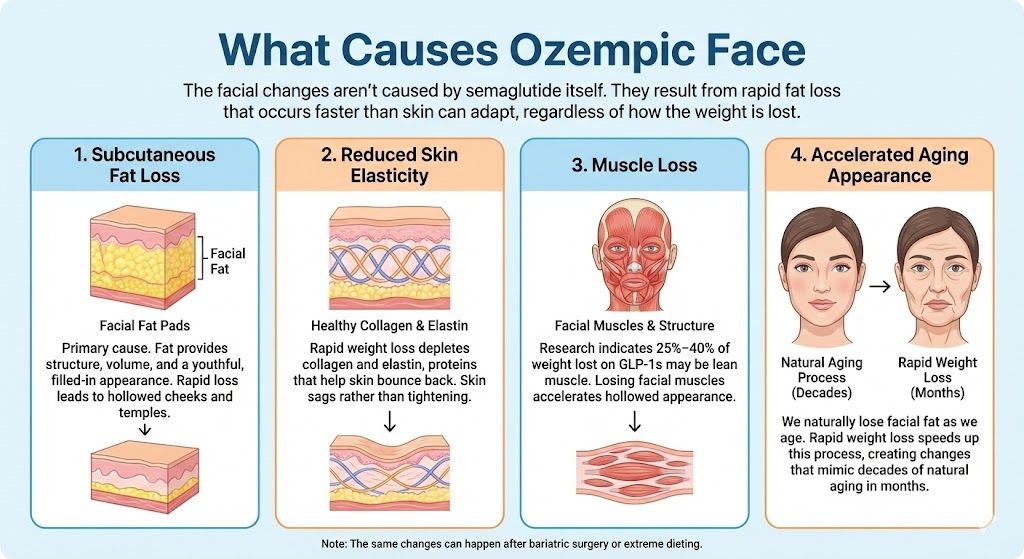
The facial changes aren’t caused by semaglutide itself. They result from rapid fat loss that occurs faster than skin can adapt, regardless of how the weight is lost. The same changes can happen after bariatric surgery, extreme dieting, or any method that produces significant weight loss quickly.
Several factors contribute to the appearance:
Subcutaneous fat loss is the primary cause. The fat beneath your facial skin provides structure, volume, and a youthful, filled-in appearance. When you lose weight rapidly, this facial fat decreases along with body fat, leading to hollowed cheeks and temples.
Reduced skin elasticity occurs because rapid weight loss depletes collagen and elastin, the proteins that help skin bounce back. Without adequate time to adapt, skin sags rather than tightening to match your new contours.
Muscle loss compounds the problem. Research indicates that 25% to 40% of weight lost on GLP-1 medications may be lean muscle mass rather than fat. Facial muscles contribute to structure and support, so losing them accelerates the hollowed appearance.
Accelerated aging appearance happens because we naturally lose facial fat as we age. Rapid weight loss essentially speeds up this process, creating changes that mimic decades of natural aging in months.
Common Signs of Ozempic Face
People experiencing facial changes from weight loss medications typically notice:
- Hollowed or sunken cheeks
- More prominent cheekbones and facial bones
- Sunken temples
- Sagging skin around the jawline
- More visible nasolabial folds (lines from nose to mouth corners)
- Increased wrinkles and fine lines
- Dark circles or hollows under the eyes
- Looser skin around the neck and jaw
These changes are often most noticeable in the mid-face area, where fat pads provide much of the youthful fullness that gets lost during rapid weight loss.
Who Is Most at Risk
Not everyone who takes GLP-1 medications experiences significant facial changes. Several factors increase risk:
Age matters significantly. Older adults have less collagen and elastin, making skin less able to retract after fat loss. Younger people with more elastic skin are better able to adapt to changes in underlying fat volume.
The speed of weight loss directly correlates with facial changes. Losing weight very quickly gives skin no time to adjust, while more gradual weight loss allows some adaptation.
The amount of weight lost plays a role. Losing 50 or more pounds creates more dramatic facial changes than losing 20 pounds, simply because more fat disappears from everywhere, including the face.
Starting facial fullness affects outcomes. People who naturally carry more fat in their face may notice more dramatic changes than those who started with leaner facial features.
Genetics influence how your skin responds to fat loss and how quickly it can rebuild collagen and tighten.
How to Minimize Ozempic Face
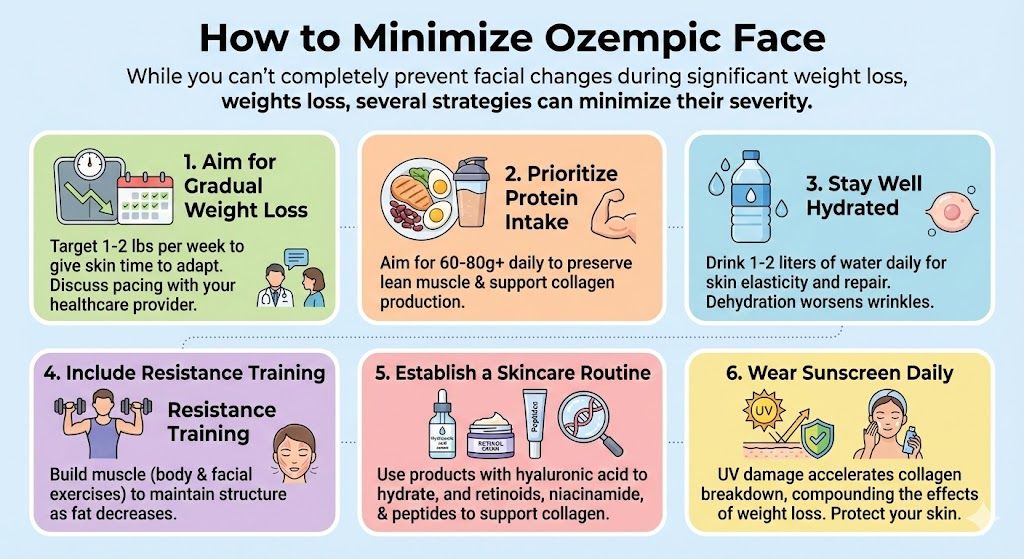
While you can’t completely prevent facial changes during significant weight loss, several strategies can minimize their severity.
Aim for gradual weight loss rather than maximizing the rate of loss. Cleveland Clinic recommends targeting 1 to 2 pounds per week when possible. This gives skin more time to adapt to changes in underlying fat. Discuss pacing with your healthcare provider before adjusting doses.
Prioritize protein intake to preserve lean muscle mass. Aim for at least 60 to 80 grams daily, or more based on your provider’s recommendations. Protein supports both muscle retention and collagen production.
Stay well hydrated by drinking 1 to 2 liters of water daily. Dehydration makes skin appear more wrinkled and less plump, while adequate hydration supports skin elasticity and the body’s natural repair processes.
Include resistance training in your exercise routine. Building muscle throughout your body, including facial muscles through regular chewing and facial exercises, helps maintain structure as fat decreases.
Establish a skincare routine that supports skin health. Products containing hyaluronic acid help hydrate and plump skin, while retinoids, niacinamide, and peptides support collagen production and may slow visible aging.
Wear sunscreen daily. UV damage accelerates collagen breakdown, compounding the effects of weight loss on skin elasticity.
Treatment Options for Facial Volume Loss
If facial changes have already occurred, several treatments can restore volume and improve appearance:
Dermal fillers are the most common treatment. Injectable hyaluronic acid fillers can restore lost volume in cheeks, temples, under-eyes, and along the jawline. Results are temporary (typically 6 to 18 months) but provide immediate improvement.
Biostimulatory treatments like Sculptra or Radiesse stimulate your own collagen production over time, providing more gradual and potentially longer-lasting improvement than traditional fillers.
Microneedling and radiofrequency treatments can improve skin texture and stimulate collagen production, helping tighten mildly loose skin.
Fat transfer procedures use fat harvested from another area of your body to restore facial volume. Results can be more permanent than fillers, though the procedure is more invasive.
Surgical options like facelifts address significant skin laxity that non-surgical treatments can’t correct. Most experts recommend waiting until weight has stabilized before considering surgery.
Will Ozempic Face Go Away
The answer depends on several factors:
If you maintain your weight loss, facial changes will likely persist. The subcutaneous fat that provided facial volume is gone, and skin that has lost elasticity generally doesn’t fully recover on its own.
If you regain the weight, facial fullness typically returns as fat is redistributed. However, skin elasticity may not fully recover, and fat distribution during regain doesn’t always match the original pattern.
Younger individuals with better skin elasticity may see some natural improvement over time as skin gradually adapts to the new facial contours.
With treatment, significant improvement is possible regardless of whether weight is maintained, regained, or continues to decrease.
The Trade-Off Conversation
For many people considering GLP-1 medications, the potential for facial changes represents one factor in a larger decision. The health benefits of weight loss, including reduced risk of diabetes, heart disease, and other obesity-related conditions, are substantial and well-documented.
Facial changes are a cosmetic concern, not a health risk. Many people find the trade-off worthwhile, especially given that treatments exist to address facial volume loss if desired.
Having realistic expectations helps. Knowing that some facial changes may occur allows you to implement preventive strategies from the start and plan for potential treatments if needed.
Ozempic Face vs. Other GLP-1 Medications
The term “Ozempic face” has become a catch-all, but these facial changes can occur with any GLP-1 medication or weight loss method that produces rapid, significant results. Users of Wegovy, Mounjaro, and Zepbound report similar experiences.
The phenomenon isn’t about the specific medication. It’s about the rate and amount of fat loss. Any intervention that helps you lose substantial weight quickly carries similar risk of facial volume loss.
When to Talk to Your Provider
Discuss facial changes with your healthcare provider if:
- You’re noticing significant facial volume loss and want to explore treatment options
- You’re concerned about the rate of weight loss and want to discuss pacing
- You’re experiencing other symptoms beyond expected facial changes
- You want recommendations for dermatologists or aesthetic providers who specialize in post-weight-loss facial rejuvenation
Your provider can help you weigh the benefits of weight loss against cosmetic concerns and connect you with appropriate specialists if desired.
Getting Started With GLP-1 Medications
If you’re considering semaglutide or tirzepatide for weight loss, understanding potential facial changes helps you make an informed decision and take preventive steps from the beginning.
TrimRx offers telehealth consultations for compounded GLP-1 medications at accessible prices. Our providers can discuss realistic expectations, prevention strategies, and help you develop a plan that balances weight loss goals with other considerations.
Take the intake quiz to see if you qualify.
The Bottom Line
“Ozempic face” describes real facial changes that can occur during rapid weight loss on GLP-1 medications. The phenomenon results from fat loss, reduced skin elasticity, and muscle loss, not the medications themselves. While you can’t completely prevent facial changes during significant weight loss, strategies like gradual pacing, adequate protein intake, hydration, and resistance training can minimize their severity. If changes do occur, multiple treatment options exist to restore facial volume and improve appearance.
For most people, the substantial health benefits of weight loss outweigh cosmetic concerns, especially when preventive measures and treatment options are available. Understanding what to expect allows you to make an informed decision and take proactive steps throughout your weight loss journey.
This information is for educational purposes and is not medical advice. Consult with a healthcare provider before starting any medication. Individual results may vary.

Transforming Lives, One Step at a Time
Keep reading

Ozempic Face: How to Prevent and Minimize Facial Changes
Ozempic face refers to the gaunt, hollowed, or aged appearance that some patients develop during rapid weight loss on semaglutide. It’s not a direct…
How to Lose Belly Fat on Ozempic: Why It Comes Off First
One of the most consistent things patients report on Ozempic is that belly fat seems to come off before fat in other areas. That’s…

How Ozempic Changes Your Body Beyond the Scale
Ozempic changes your body in ways that go well beyond what the scale shows. Within the first few weeks, appetite signaling shifts, gastric emptying…


