Ozempic Nausea: How to Prevent and Manage This Common Side Effect
If you’re taking Ozempic or considering starting it, the possibility of nausea probably concerns you. Maybe you’ve heard stories about people feeling queasy for weeks, or you’re already experiencing nausea yourself and wondering when it will improve. The uncertainty can be stressful, sometimes more so than the nausea itself.
Here’s what you need to know upfront: nausea is the most common side effect of Ozempic, affecting roughly 20% to 44% of people depending on the dose. However, it’s usually manageable and temporary. For most people, nausea is worst during the first week after starting treatment or increasing doses, then improves significantly over the following 2 to 3 weeks. With the right strategies, you can minimize both the frequency and intensity of nausea throughout your treatment.
This guide focuses specifically on understanding, preventing, and managing Ozempic-related nausea. You’ll learn exactly why it happens, when to expect it, proven strategies that actually work, and what to do if standard approaches aren’t helping.
Key Takeaways: Ozempic Nausea
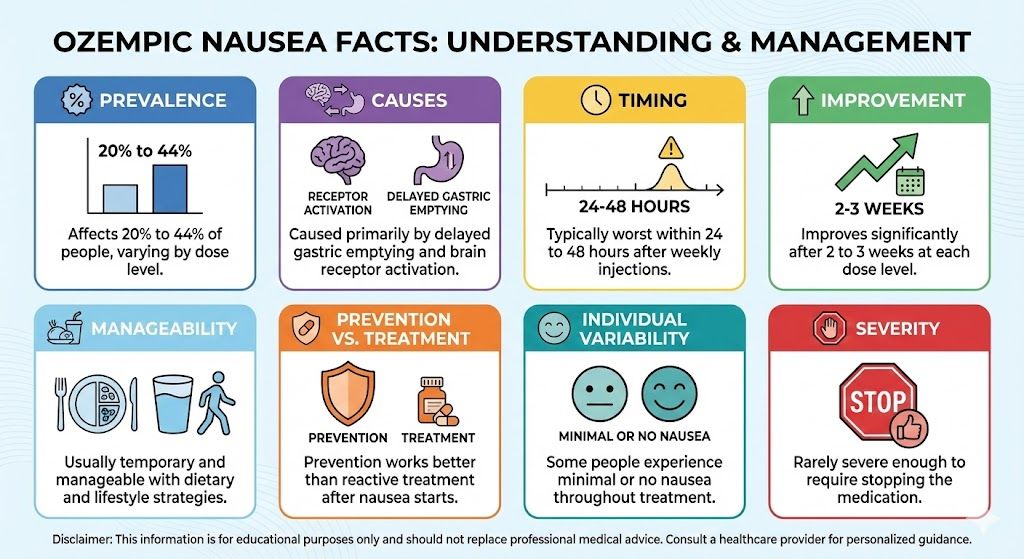
- Nausea affects 20% to 44% of people taking Ozempic, varying by dose level
- Caused primarily by delayed gastric emptying and brain receptor activation
- Typically worst within 24 to 48 hours after weekly injections
- Improves significantly after 2 to 3 weeks at each dose level
- Usually temporary and manageable with dietary and lifestyle strategies
- Prevention works better than reactive treatment after nausea starts
- Some people experience minimal or no nausea throughout treatment
- Rarely severe enough to require stopping the medication
Why Ozempic Causes Nausea
Understanding the mechanism behind nausea helps you prevent and manage it more effectively.
Ozempic contains semaglutide, a GLP-1 receptor agonist that mimics a hormone your intestines naturally produce after eating. When you inject semaglutide, it activates GLP-1 receptors throughout your body, creating several effects that can trigger nausea.
The primary cause is delayed gastric emptying. Ozempic significantly slows how quickly food moves from your stomach into your small intestine. This is actually one way the medication helps with weight loss because you feel full longer after eating. However, when food sits in your stomach for extended periods, it creates uncomfortable fullness that can tip into nausea, particularly if you eat normal-sized portions.
Think of your stomach like a slow-draining sink. Normally, food drains into your intestines at a steady pace. On Ozempic, that drain slows considerably. If you keep adding food at the same rate as before, the sink backs up, creating discomfort.
Ozempic also activates GLP-1 receptors in your brainstem, an area that controls nausea responses. This direct brain activation can trigger feelings of queasiness independent of how much food is in your stomach. Some people feel nauseated even on an empty stomach, particularly in the morning after their injection.
The medication affects gut motility throughout your entire digestive tract, not just your stomach. These changes in how your intestines move and process food contribute to various digestive sensations including nausea.
Additionally, when you start eating significantly less food due to appetite suppression, your body undergoes metabolic adjustments. These changes, particularly in the early weeks, can contribute to feelings of nausea similar to what some people experience during fasting or very low-calorie diets.
For comprehensive information about all Ozempic side effects beyond just nausea, see our complete guide to semaglutide side effects.
When Ozempic Nausea Occurs: Timeline and Patterns
Nausea follows predictable patterns throughout treatment. Knowing what to expect helps you prepare and recognize that your experience is normal.
First Week on 0.25 mg Starting Dose
Most people notice their first bout of nausea within 24 to 48 hours of their initial injection. The nausea is usually mild to moderate at the starting dose. You might feel slightly queasy, particularly in the morning or after eating. Some people describe it as similar to mild motion sickness or early pregnancy nausea.
The intensity typically peaks on days 1 or 2 after injection, then gradually improves over days 3 through 6. By day 7 when your next injection is due, many people feel close to normal.
Not everyone experiences nausea during the first week. Some people sail through with no issues at all. If you’re one of them, consider yourself fortunate, but remain aware that nausea might appear when you increase doses later.
Weeks 2 Through 4 at Starting Dose
Good news: by your second injection at 0.25 mg, nausea often improves noticeably. Your body is adapting. The nausea that felt uncomfortable after your first injection usually becomes milder or shorter-lived after your second, third, and fourth injections at the same dose.
By week 4 at the starting dose, many people experience minimal nausea or none at all. Your digestive system has had a month to adjust to Ozempic’s effects.
First Dose Increase to 0.5 mg
When you increase from 0.25 mg to 0.5 mg, expect nausea to return. This pattern repeats with each dose increase throughout treatment. The first injection at the new 0.5 mg dose often brings back nausea similar to what you experienced when you first started, though you might handle it better with experience.
The nausea after increasing usually follows the same pattern: worst in days 1 to 2, gradual improvement over days 3 to 6, then relatively normal by day 7. Each subsequent injection at 0.5 mg typically produces less nausea as you adapt to this dose level.
Subsequent Dose Increases
The pattern continues with each escalation. When you go from 0.5 mg to 1 mg, nausea resurfaces for the first week or two, then improves. The jump to 2 mg brings another round. Each increase temporarily reactivates nausea, followed by adaptation and improvement.
Interestingly, many people find that later dose increases don’t produce worse nausea than earlier ones, even though the doses are higher. By the time you’re increasing to 1 mg or 2 mg, your body has had months of exposure to GLP-1 activation. You’ve also developed effective coping strategies.
Long-Term Pattern at Stable Doses
Once you reach your maintenance dose and stay there for several months, most people experience minimal nausea. You might have occasional mild queasiness, particularly if you eat too much at once or consume especially rich foods, but the persistent daily nausea that characterized the early weeks usually resolves completely.
Some people continue having mild nausea for the first day or two after each weekly injection even after months on the same dose. This is less common but not abnormal. The nausea typically remains manageable and predictable at this point.
For detailed month-by-month information about what to expect throughout treatment, see our complete guide to semaglutide weight loss results.
Prevention Strategies: Stopping Nausea Before It Starts
Prevention works better than trying to fix nausea after it’s already bothering you. These strategies help minimize nausea from the beginning.
Start with Smaller Meals Immediately
Don’t wait until nausea forces you to change your eating patterns. From your very first injection, begin eating smaller, more frequent meals. Replace three large meals with five or six smaller eating occasions throughout the day.
Each meal should be modest enough that you feel satisfied but not overly full. A good rule of thumb: eat until you’re about 80% full, not 100% full. This gives your slowed stomach capacity to handle the food without becoming uncomfortably distended.
Choose Gentle Foods Initially
During the first few days after each injection, especially at new dose levels, stick with bland, easy-to-digest foods. Crackers, toast, white rice, bananas, plain chicken breast, baked potatoes without heavy toppings, and clear broths are gentle options that typically sit well.
You’re not permanently restricted to bland foods. Once you adapt to your dose and nausea improves, you can gradually reintroduce more varied foods. But during those high-risk first few days, keeping things simple helps.
Avoid Trigger Foods
Fatty, greasy, or fried foods are common nausea triggers on Ozempic. The high fat content slows digestion even further, which on top of Ozempic’s gastric emptying delay creates a perfect storm for nausea. Pizza, burgers, fried chicken, and heavy cream-based dishes often cause problems.
Spicy foods can irritate your already-sensitive stomach. Very sweet foods sometimes trigger nausea. Strong-smelling foods might suddenly bother you when they didn’t before.
Pay attention to your individual triggers and avoid them proactively, particularly during high-risk nausea windows.
Stay Consistently Hydrated
Dehydration significantly worsens nausea. Many people don’t realize they’re mildly dehydrated, but even slight dehydration amplifies queasiness. Drink water consistently throughout every day, not just when you feel thirsty.
Aim for at least 64 ounces daily, more if you’re physically active or live in hot climates. Small, frequent sips work better than trying to drink large amounts at once. Room temperature or slightly warm water often sits better than very cold water when you’re already nauseated.
Time Your Injection Strategically
Many people find that taking their Ozempic injection in the evening, preferably after dinner, helps minimize disruption from nausea. The peak nausea period occurs overnight while you’re sleeping or during the next morning when you can potentially take it easier.
By afternoon, the worst has typically passed. If your work schedule is flexible or you have the option to rest during the day after injections, morning injections might work fine. Experiment to find what timing fits your lifestyle and symptom pattern best.
Don’t Lie Down After Eating
Lying flat within 1 to 2 hours of eating can trigger or worsen nausea. Food sitting in your slowed stomach can reflux back toward your esophagus when you’re horizontal, creating both nausea and heartburn.
Stay upright or at least propped up at a 45-degree angle for at least 90 minutes after eating. If you must lie down, use pillows to maintain some elevation.
Manage Stress
Stress worsens nausea. The week you start Ozempic or increase doses, try to minimize other stressors if possible. Don’t schedule major deadlines, stressful events, or anxiety-inducing activities during your peak nausea days if you can avoid it.
Incorporate stress-reduction techniques like deep breathing, meditation, gentle yoga, or other relaxation practices. Even 10 minutes of calm breathing when nausea strikes can help settle your stomach.
Active Management: What to Do When Nausea Occurs
Despite your best prevention efforts, nausea might still occur. These strategies help manage it when it does.
Ginger in Various Forms
Ginger has legitimate anti-nausea properties backed by research. When nausea strikes, try ginger tea made from fresh ginger root (grate about a tablespoon into hot water), ginger candies or chews you can suck on, ginger capsules or supplements (typically 250 mg to 500 mg), or real ginger ale made with actual ginger (not just ginger flavoring).
Keep ginger candies readily available to use at the first sign of queasiness. Many people find that sucking on ginger candy while nausea is building can prevent it from becoming severe.
Peppermint
Peppermint has stomach-settling properties for many people. Peppermint tea, peppermint candies, or even smelling peppermint essential oil can provide relief. Some people keep peppermint oil on hand to inhale when nausea hits.
Acupressure
The P6 or Nei Guan acupressure point on your inner wrist has been shown to help with nausea. It’s located about three finger-widths below your wrist crease, between the two tendons.
Apply firm pressure to this point for several minutes when nauseated. Sea-Bands, elastic wristbands with a plastic button that applies pressure to this point, work for some people. They’re inexpensive and available at most pharmacies.
Fresh Air and Cool Temperatures
Getting outside or opening a window often helps. Cool, fresh air can settle your stomach when you’re feeling queasy. If you can’t go outside, try pointing a fan toward your face.
Overheating worsens nausea. If you’re warm, remove layers, lower the thermostat, or use cold compresses on your forehead and back of neck.
Avoid Strong Smells
Cooking odors, perfumes, cleaning products, and other strong scents can trigger or intensify nausea on Ozempic. If possible, avoid being around strong smells during your high-risk nausea periods.
If you must cook, use exhaust fans, keep windows open, and choose less aromatic cooking methods. Ask others in your household to avoid wearing strong fragrances during your peak nausea days.
Small Amounts of Bland Food
Surprisingly, eating a little bit of bland food sometimes helps settle nausea better than an empty stomach. Saltine crackers, plain toast, or a few spoonfuls of applesauce can help. The key is small amounts. Don’t force yourself to eat if you truly feel like you might vomit, but gentle foods in tiny quantities often help.
Distraction
When nausea isn’t severe, distraction can help. Engage in activities that occupy your mind: watch a show, read, work on a puzzle, or talk with someone. Sometimes focusing on the nausea makes it feel worse.
Rest in a Comfortable Position
If nausea is intense, rest with your head elevated. Lie on your left side if possible, as this can help with digestion. Close your eyes and breathe slowly and deeply. Sometimes sleep is the best medicine, allowing your body to process the medication while you’re unconscious.
When to Consider Anti-Nausea Medications
If dietary and behavioral strategies aren’t providing adequate relief, medications can help.
Over-the-Counter Options
Vitamin B6 (pyridoxine) in doses of 25 mg to 50 mg taken before your injection has mild anti-nausea properties. It’s generally safe and worth trying. Ginger supplements are available in standardized doses (typically 250 mg capsules). These are stronger than ginger tea or candies.
Antihistamines like meclizine (Dramamine, Bonine) or dimenhydrinate can help with nausea, though they cause drowsiness. These might be good options for taking in the evening if nausea is keeping you awake.
Prescription Medications
If over-the-counter options aren’t sufficient, discuss prescription anti-nausea medications with your provider. Common options include ondansetron (Zofran), which is highly effective for nausea without causing significant drowsiness. Doses of 4 mg to 8 mg work well for most people.
Promethazine (Phenergan) is very effective but causes substantial drowsiness. It works well for nighttime use. Metoclopramide (Reglan) helps nausea and speeds gastric emptying, potentially addressing one of Ozempic’s mechanisms. However, it has potential side effects including anxiety and movement disorders with long-term use.
Prochlorperazine (Compazine) is another effective option, though it can cause drowsiness and other side effects.
Strategic Use of Medications
Many people use anti-nausea medications strategically rather than continuously. Taking ondansetron just during the first 2 to 3 days after each injection or dose increase gets you through the worst period without needing medication constantly.
Some people keep anti-nausea medication on hand and use it only when nausea becomes severe or interferes with work or important activities. This as-needed approach often works well.
Discuss with your provider which medication and strategy make the most sense for your situation.
For comparison of Ozempic to its weight loss formulation Wegovy, see our detailed Wegovy vs Ozempic guide.
Does Ozempic Nausea Go Away?
The question everyone asks: will the nausea eventually stop?
For most people, yes. Nausea typically improves substantially or resolves completely after 2 to 3 weeks at each dose level. Your digestive system adapts to Ozempic’s effects. The delayed gastric emptying still happens, but your body adjusts to it, and the nausea that initially accompanied it fades.
By the time you’ve been at your maintenance dose for several months, most people experience minimal or no nausea. You’ve fully adapted to the medication’s effects.
However, individual variation exists. Some people continue experiencing mild nausea intermittently even after months on the same dose. This might happen for a day or two after each injection, or when eating certain foods, or seemingly at random.
A small percentage of people struggle with persistent nausea throughout treatment. For them, the nausea never fully resolves even with dose adjustments and management strategies. This group might need to either tolerate ongoing mild nausea (if they find the weight loss benefits worth it) or discontinue Ozempic in favor of alternatives.
The good news is that persistent severe nausea is uncommon. Most people who stick with treatment through the initial adjustment periods find that nausea becomes a minor issue or disappears entirely.
Factors That Affect Nausea Severity
Several factors influence how much nausea you’ll experience and how long it lasts.
Individual Sensitivity
Some people simply have more sensitive stomachs than others. If you’ve historically been prone to motion sickness, had severe morning sickness during pregnancy, or generally experience nausea easily, you’re more likely to struggle with Ozempic nausea.
Conversely, if you’ve never been particularly nausea-prone, you might sail through Ozempic with minimal issues.
Dose Level
Higher doses generally cause more nausea. The starting 0.25 mg dose produces nausea in about 15% to 20% of people. At 0.5 mg, this increases to 20% to 25%. At 1 mg, roughly 25% to 30% experience nausea. At the maximum 2 mg dose, about 30% to 40% report nausea.
These percentages reflect overall reporting throughout treatment, not persistent nausea at those doses.
Rate of Dose Escalation
People who increase doses too quickly tend to experience more severe nausea. The standard 4-week intervals between increases exist for good reason. Rushing through the titration to reach higher doses faster typically backfires, producing worse side effects without improving long-term outcomes.
Conversely, some people who take 6 to 8 weeks at each dose level before increasing experience milder nausea because their bodies have more time to adapt fully.
Eating Habits
People who continue eating large portions despite feeling full experience worse nausea than those who adjust their eating immediately. If you ignore satiety signals and force down normal-sized meals, you’re setting yourself up for significant discomfort.
Those who proactively switch to smaller meals from day one typically have much better experiences.
Hydration Status
Even mild dehydration amplifies nausea. People who stay well-hydrated throughout treatment consistently report less severe nausea than those who don’t prioritize fluid intake.
Overall Health Status
Other health conditions can influence nausea severity. People with pre-existing gastroparesis (slow stomach emptying) might struggle more. Those with anxiety disorders might experience more nausea due to the mind-gut connection. People with GERD might find their reflux worsens, contributing to nausea.
Concurrent Medications
Some medications can worsen nausea when combined with Ozempic. Pain medications, particularly opioids, slow gastric emptying and can intensify nausea. Certain antibiotics cause nausea independently. Iron supplements often cause stomach upset.
Review all your medications with your provider to identify potential contributors to nausea.
Comparing Ozempic Nausea to Other GLP-1 Medications
Understanding how Ozempic’s nausea compares to alternatives provides useful context.
Ozempic vs Mounjaro/Zepbound (Tirzepatide)
Tirzepatide causes nausea slightly more frequently than semaglutide. Clinical trials show about 40% to 45% of people on tirzepatide experience nausea at higher doses compared to 30% to 40% with semaglutide.
The dual GLP-1/GIP action of tirzepatide creates somewhat stronger gastrointestinal effects. However, the difference isn’t dramatic. Many people tolerate both similarly, and some who struggle with one actually do better on the other.
For comprehensive comparison, see our Mounjaro vs Ozempic guide.
Ozempic vs Saxenda (Liraglutide)
Liraglutide requires daily injections and has a shorter duration of action than semaglutide. Some people find the daily dosing creates more consistent but milder nausea throughout each day rather than the peaked pattern with weekly Ozempic. Others find liraglutide worse because they deal with injection side effects daily rather than weekly.
The nausea frequency is similar between both medications, around 40% of users, but the daily versus weekly pattern creates different experiences.
Individual Variation Matters Most
While population-level statistics show some differences between medications, individual response varies tremendously. Some people who can’t tolerate Ozempic due to nausea do fine on tirzepatide or liraglutide. Others have the opposite experience.
If Ozempic nausea is truly intolerable despite all management strategies, trying a different GLP-1 medication might be worth discussing with your provider.
When Ozempic Nausea Requires Medical Attention
Most nausea is uncomfortable but not dangerous. However, certain situations warrant contacting your healthcare provider.
Severe Persistent Nausea
If nausea is so severe that you can’t eat or drink anything for 24 hours, contact your provider. This level of nausea isn’t normal even during adjustment periods.
Persistent Vomiting
Occasional vomiting during the first few days at a new dose can happen. However, if you’re vomiting multiple times daily or can’t keep fluids down, seek medical attention. Severe vomiting can lead to dangerous dehydration.
Signs of Dehydration
Watch for decreased urination or very dark urine, extreme fatigue and weakness, dizziness when standing, dry mouth and skin, and confusion or difficulty concentrating. These signs mean you need medical evaluation.
Nausea Accompanied by Severe Pain
If nausea comes with severe abdominal pain, particularly in the upper abdomen radiating to your back, seek immediate medical attention. This could indicate pancreatitis, a rare but serious complication.
Nausea That Doesn’t Improve
If you’ve been at the same dose for 4 to 6 weeks and nausea hasn’t improved at all, discuss this with your provider. While some people have persistent mild nausea, complete lack of improvement warrants evaluation.
Significant Weight Loss from Nausea
If nausea prevents adequate eating to the point where you’re losing weight too rapidly or showing signs of malnutrition (hair loss, extreme fatigue, muscle weakness), this needs addressing.
Alternative Approaches If Standard Strategies Fail
If you’ve tried everything and nausea remains intolerable, you have options.
Dose Adjustment Strategies
Stay at your current dose longer before increasing. Some people need 6 to 8 weeks at each level rather than 4. Temporarily reduce to your previous dose if nausea at a new level is overwhelming. After a few weeks at the lower dose, try increasing again. Consider staying at a lower dose long-term if it provides good weight loss with manageable side effects.
Not everyone needs maximum doses. Some people do great at 0.5 mg or 1 mg. If nausea is preventing you from tolerating higher doses, a lower dose you can actually take consistently might produce better outcomes than a higher dose you can’t tolerate.
Switch Formulations
Consider switching to Wegovy, the weight loss formulation of the same medication. While the active ingredient is identical, having doses specifically designed for weight loss (including the 2.4 mg maximum) sometimes makes titration easier.
Some people anecdotally report differences between brand-name and compounded versions, though chemically they should be identical. Compounded semaglutide at $199 monthly through TrimRx provides an affordable alternative worth trying.
Try a Different GLP-1 Medication
Tirzepatide, despite causing slightly more nausea on average, might work better for you individually. Some people who struggled with semaglutide nausea tolerate tirzepatide fine.
Compounded tirzepatide at $349 monthly offers an affordable way to try this alternative.
Non-Medication Approaches
If GLP-1 medications prove intolerable due to nausea, traditional weight loss approaches remain effective. Diet, exercise, behavioral therapy, and lifestyle modifications work for many people. These approaches take more effort but avoid medication side effects.
Frequently Asked Questions
How long does Ozempic nausea last?
For most people, nausea is worst during the first 1 to 3 weeks at each dose level, particularly within 24 to 48 hours after injections. It typically improves significantly after 2 to 3 weeks at a stable dose as your body adapts. Some people continue experiencing mild nausea intermittently, but severe persistent nausea is uncommon. After several months at your maintenance dose, many people experience minimal or no nausea.
Does Ozempic nausea go away completely?
For most people, yes. Nausea usually resolves or becomes minimal after adapting to each dose level. After several months at a stable maintenance dose, many people experience no nausea at all or only mild queasiness occasionally. However, some people continue having mild nausea intermittently even after months of treatment. Complete resolution is common but not universal.
What helps with Ozempic nausea?
Effective strategies include eating smaller, more frequent meals rather than large portions, choosing bland, easy-to-digest foods especially in the first days after injections, staying very well hydrated throughout each day, trying ginger in various forms (tea, candies, supplements), avoiding fatty, greasy, or spicy foods, not lying down immediately after eating, timing injections for evenings so peak nausea occurs during sleep, and using anti-nausea medications when needed.
Why does Ozempic cause nausea?
Ozempic causes nausea primarily by slowing gastric emptying, meaning food stays in your stomach much longer than usual. This creates uncomfortable fullness that can become nausea, especially if you eat normal portions. The medication also activates GLP-1 receptors in your brainstem that control nausea responses, directly triggering queasiness. Changes in gut motility and metabolic adjustments during rapid weight loss also contribute.
When is Ozempic nausea worst?
Nausea is typically worst within 24 to 48 hours after your weekly injection, then gradually improves over the following days. It’s usually most intense during the first week at a new dose level, particularly when you first start treatment or increase doses. Many people notice nausea peaks in the morning or after eating. The first injection at each new dose level typically produces the strongest nausea.
Can you take Zofran with Ozempic?
Yes, ondansetron (Zofran) can be taken with Ozempic and is commonly prescribed to manage nausea. Many people use Zofran strategically during the first few days after dose increases when nausea is worst. Typical doses are 4 mg to 8 mg as needed. Discuss with your healthcare provider to determine if this is appropriate for your situation and what dosing schedule makes sense.
Is nausea worse at higher Ozempic doses?
Generally yes. Higher doses cause nausea more frequently. The starting 0.25 mg dose produces nausea in about 15% to 20% of people, while the maximum 2 mg dose causes nausea in 30% to 40%. However, the severity at higher doses often isn’t worse than at lower doses because your body has had months to adapt. The temporary nausea when first increasing to a new dose feels similar regardless of whether you’re going from 0.25 mg to 0.5 mg or from 1 mg to 2 mg.
Does eating help or worsen Ozempic nausea?
It depends on what and how much you eat. Small amounts of bland food often help settle mild nausea better than an empty stomach. However, eating large portions or rich foods when you’re already nauseated typically makes it worse because your slowed stomach can’t handle the volume. The key is eating small amounts of gentle foods when mildly nauseated, but avoiding eating if nausea is severe or you feel like you might vomit.
How long after stopping Ozempic does nausea go away?
Nausea typically improves within 1 to 2 weeks after your last injection as medication levels decline in your system. Since semaglutide has a half-life of about 7 days, it takes approximately 5 weeks for complete clearance. Most people notice significant improvement in nausea within the first 2 weeks after stopping, with complete resolution by weeks 3 to 4.
Can you prevent Ozempic nausea?
While you can’t completely prevent nausea, you can significantly minimize its frequency and severity. Start eating smaller meals immediately from your first injection, choose bland foods during high-risk nausea periods, stay very well hydrated, follow the gradual dose escalation schedule carefully, time injections strategically (many prefer evenings), avoid trigger foods like fatty or spicy items, and don’t lie down after eating. These preventive strategies work much better than trying to manage nausea after it starts.
Making Ozempic Nausea Manageable
Nausea is the most common Ozempic side effect, but for most people, it’s temporary and manageable with the right approach. Understanding that nausea peaks during the first few days after injections, improves within 2 to 3 weeks at each dose, and often resolves completely at stable doses helps you maintain perspective during challenging adjustment periods.
The key to success involves proactive prevention starting from day one rather than reacting to nausea after it becomes severe, realistic expectations about the timeline for improvement, willingness to adjust eating habits immediately rather than fighting against the medication’s effects, and open communication with your healthcare provider about what’s working and what isn’t.
Most people who stick with Ozempic through the initial nausea-prone weeks achieve significant weight loss that makes the temporary discomfort worthwhile. The nausea that feels overwhelming during your first few weeks typically becomes a distant memory once you’ve adapted to your maintenance dose.
Whether you’re using brand-name Ozempic or more affordable alternatives like compounded semaglutide at $199 monthly through TrimRx, the nausea patterns and management strategies remain the same. Get started with comprehensive medical support and guidance on effectively preventing and managing nausea throughout every stage of your weight loss journey.

Transforming Lives, One Step at a Time
Keep reading
How Online GLP-1 Prescriptions Work: From Consult to Delivery
The idea of getting a prescription for a GLP-1 medication without setting foot in a doctor’s office still surprises some people. It shouldn’t. Telehealth…

How to Verify a Compounding Pharmacy Is Safe and Legitimate
The growth of the compounded GLP-1 market has brought something genuinely useful to patients who couldn’t otherwise afford semaglutide or tirzepatide. It has also…

What Is a Compounding Pharmacy and How Does It Work?
If you’ve been researching GLP-1 medications like semaglutide or tirzepatide, you’ve probably come across the term “compounding pharmacy” more than once. It gets used…


