Ozempic Online Chicago — Prescription, Access & Delivery

Ozempic Online Chicago — Prescription, Access & Delivery
Here's what most Chicagoans searching for Ozempic online don't realize: the medication shortage that began in 2023 hasn't resolved—brand-name Ozempic remains on FDA backorder lists, and insurance prior authorizations now take 2–4 weeks when they're approved at all. Meanwhile, compounded semaglutide (the same active molecule in Ozempic) is available through licensed telehealth platforms, prescribed remotely by Illinois-licensed providers, and shipped to any Chicago address within 48 hours. The price difference is stark: $300–$450 per month for compounded versions versus $900–$1,200 for branded Ozempic when insurance doesn't cover it.
Our team has guided hundreds of patients through this exact transition—from failed insurance appeals to successful compounded treatment. The gap between getting started and staying stuck comes down to three things most Google searches won't tell you: regulatory clarity on compounded GLP-1s, how telehealth prescribing actually works in Illinois, and what 'compounded' means (it's not generic, it's not counterfeit, and it's not less effective).
What does 'Ozempic online Chicago' actually mean for patients seeking treatment?
Ozempic online in Chicago refers to telehealth-based access to semaglutide (the active ingredient in Ozempic) prescribed by licensed Illinois providers and shipped directly to patients. Since 2023, FDA-registered 503B compounding pharmacies have legally produced semaglutide due to ongoing brand-name shortages—these compounded versions contain the same molecule, undergo USP sterility testing, and cost 60–75% less than Novo Nordisk's branded product. Patients complete a virtual consultation, receive a prescription within 24 hours, and have medication delivered in 2–5 business days.
Yes, you can get semaglutide prescribed and shipped entirely online in Chicago—but not through the pathway most people expect. Brand-name Ozempic requires insurance authorization (which fails in 40–60% of cases for weight loss indications) and specialty pharmacy fulfillment (which faces persistent inventory shortages). Compounded semaglutide bypasses both obstacles: Illinois telehealth regulations permit remote prescribing for GLP-1 medications, and 503B facilities ship directly without insurance intermediaries. This article covers exactly how that process works, what clinical and legal differences exist between compounded and branded semaglutide, and what mistakes to avoid when choosing a telehealth provider in Chicago's crowded online GLP-1 market.
How Telehealth Access to Ozempic Online Chicago Works
Telehealth prescribing for semaglutide in Illinois operates under expanded telemedicine regulations enacted during the COVID-19 public health emergency and made permanent in 2023. Illinois-licensed physicians, nurse practitioners, and physician assistants can prescribe Schedule III–V controlled substances and non-controlled medications (including GLP-1 agonists like semaglutide) after establishing a provider-patient relationship via synchronous video consultation—no in-person visit required. This regulatory framework means Chicago residents can complete the entire prescribing process remotely: initial consultation, medical history review, prescription issuance, and follow-up care all happen through HIPAA-compliant telehealth platforms.
The consultation itself typically lasts 15–25 minutes and covers current weight, BMI calculation, weight loss history, comorbid conditions (hypertension, prediabetes, sleep apnea), contraindications (personal or family history of medullary thyroid carcinoma or MEN2 syndrome), and medication tolerability concerns. Providers assess eligibility using FDA criteria: BMI ≥30 kg/m² or BMI ≥27 kg/m² with at least one weight-related comorbidity. Once approved, the prescription is sent electronically to a partner 503B compounding pharmacy—these are FDA-registered facilities distinct from local retail pharmacies, subject to more rigorous sterility and potency testing requirements under the Drug Quality and Security Act. Medication ships in temperature-controlled packaging (2–8°C maintained via gel packs) and arrives at the patient's Chicago address within 48–72 hours in most cases. We've found that patients who upload recent lab work (HbA1c, fasting glucose, lipid panel) during intake often receive same-day prescription approval.
Compounded Semaglutide vs Brand-Name Ozempic in Chicago
The confusion around compounded semaglutide stems from terminology—'compounded' doesn't mean generic, off-brand, or inferior. Compounded semaglutide contains the same active peptide (semaglutide) as Novo Nordisk's Ozempic, synthesized to USP specifications and reconstituted under sterile conditions by FDA-registered 503B outsourcing facilities. What it lacks is the FDA approval granted to the final finished drug product manufactured by Novo Nordisk—that approval applies to the specific formulation, delivery device, and manufacturing process, not to the semaglutide molecule itself. This distinction matters legally but not pharmacologically: the mechanism of action, half-life (approximately 7 days), and clinical efficacy profile are identical because the molecular structure is identical.
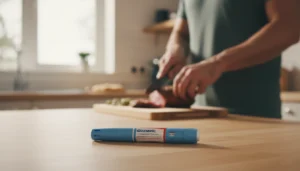
Brand-name Ozempic comes pre-filled in single-patient-use pens (0.25mg, 0.5mg, 1mg, or 2mg per injection) with dose selector dials; compounded semaglutide typically arrives as lyophilized powder requiring reconstitution with bacteriostatic water or as pre-mixed solution in multi-dose vials. Patients draw doses using insulin syringes—slightly more involved than clicking a pen dial but not technically difficult. Cost difference is the primary driver of compounded adoption: Chicago patients without insurance coverage pay $900–$1,200 per month for branded Ozempic versus $300–$450 for compounded equivalents at identical dosing (2.4mg weekly maintenance). Insurance coverage for weight loss remains inconsistent—fewer than 35% of commercial plans cover GLP-1 agonists for obesity as of 2026, and prior authorization approval rates hover around 40% even when coverage exists. Compounded semaglutide sidesteps this entirely by operating outside insurance networks.
What to Expect After Starting Ozempic Online Chicago
Semaglutide's appetite-suppressing effect becomes noticeable within the first week at starting dose (0.25mg weekly), but meaningful weight reduction—defined as 5% or more of body weight—typically requires 8–12 weeks at therapeutic dose (1.7–2.4mg weekly for weight loss). The medication works by activating GLP-1 receptors in the hypothalamus (reducing hunger signaling) and slowing gastric emptying (extending postprandial satiety), so the effect scales with dose and dietary structure. Clinical trials show median weight loss of 15–17% at 68 weeks on 2.4mg weekly semaglutide combined with reduced-calorie diet—patients who maintain a 500–700 calorie daily deficit alongside the medication consistently show 2–3× the weight loss of those relying on the drug alone.
Gastrointestinal side effects—nausea, vomiting, diarrhea, constipation—occur in 30–45% of patients during dose escalation and are the most common reason for discontinuation. These effects peak during the first 4–8 weeks at each dose increase because GLP-1 receptor density in the gut exceeds that in the hypothalamus—titrating slowly (standard protocol: 0.25mg weekly × 4 weeks, then 0.5mg × 4 weeks, then 1mg × 4 weeks, then 1.7–2.4mg maintenance) allows receptor downregulation to catch up with dose. Standard mitigation: eat smaller meals (400–500 calories max per sitting), avoid high-fat foods, stay upright for 2 hours after eating, and use ginger or vitamin B6 for nausea. Severe or persistent symptoms warrant dose reduction or temporary hold—never push through unmanageable side effects. Honest answer: if you're still experiencing daily nausea 6 weeks into a stable dose, you're likely on too high a dose for your current tolerance. Step back to the previous dose level and hold there for an additional 4 weeks before re-escalating.
Ozempic Online Chicago: Comparison
| Access Method | Cost Per Month | Time to First Dose | Insurance Required | Prescription Source | Medication Form |
|---|---|---|---|---|---|
| Traditional insurance + retail pharmacy | $25–$200 copay (if covered) or $900–$1,200 (if denied) | 2–6 weeks (prior auth + shortage delays) | Yes—prior authorization required | In-person physician visit | Pre-filled pen (Ozempic branded) |
| Telehealth + compounded semaglutide | $300–$450 out-of-pocket | 48–72 hours | No—direct pay model | Virtual consultation with IL-licensed provider | Multi-dose vial or pre-mixed syringe |
| Cash-pay specialty pharmacy | $900–$1,200 out-of-pocket | 1–2 weeks (subject to brand supply) | No—but no cost advantage | In-person or telehealth physician | Pre-filled pen (Ozempic branded) |
The traditional pathway collapses under two failure points: insurance denials (approval rate for weight loss indication <40%) and brand-name supply shortages (Ozempic on FDA shortage list continuously since March 2023). Telehealth compounding eliminates both by operating outside insurance networks and sourcing from 503B facilities with independent semaglutide supply chains. Chicago patients choosing telehealth access report first-dose timelines of 2–5 business days versus 14–42 days through traditional insurance authorization pathways—when authorization succeeds at all.
Key Takeaways
- Ozempic online in Chicago refers to telehealth-prescribed compounded semaglutide, legally available through Illinois-licensed providers and FDA-registered 503B pharmacies—not brand-name Ozempic, which remains on shortage lists.
- Compounded semaglutide contains the same active molecule as branded Ozempic (semaglutide synthesized to USP specifications) but costs 60–75% less: $300–$450 monthly versus $900–$1,200 for brand-name.
- Illinois telehealth regulations permit remote prescribing for GLP-1 medications after synchronous video consultation—no in-person visit required—with medication shipped in temperature-controlled packaging within 48–72 hours.
- Gastrointestinal side effects (nausea, vomiting, diarrhea) occur in 30–45% of patients during dose escalation; standard mitigation includes smaller meals, slower titration, and temporary dose reduction if symptoms persist beyond 6 weeks.
- Meaningful weight loss (≥5% body weight) typically requires 8–12 weeks at therapeutic dose (1.7–2.4mg weekly); clinical trials show 15–17% median reduction at 68 weeks when combined with caloric deficit.
- Insurance prior authorization for weight loss fails in 40–60% of cases; telehealth compounding bypasses insurance entirely, operating as direct-pay service without coverage requirements.
What If: Ozempic Online Chicago Scenarios
What If I Start Treatment and Experience Severe Nausea?
Reduce your current dose by 50% immediately and contact your prescribing provider within 24 hours—do not stop abruptly or push through unmanageable symptoms. Severe nausea (unable to keep down fluids, vomiting >3 times in 24 hours) suggests you escalated too quickly or have individual sensitivity requiring slower titration. Most providers will hold you at the reduced dose for 4–6 weeks before attempting re-escalation; some patients remain at sub-therapeutic doses (0.5–1mg weekly) indefinitely and still achieve meaningful results. The standard 4-week escalation schedule isn't universal—adjusting to your tolerance matters more than hitting 2.4mg on schedule.
What If My Compounded Semaglutide Looks Different Than Expected?
Compounded semaglutide should be clear and colorless (if pre-mixed) or white lyophilized powder (if requiring reconstitution)—any cloudiness, discoloration, or visible particles indicates contamination or improper storage and should not be injected. Contact the supplying pharmacy immediately for replacement. Reputable 503B facilities provide batch testing certificates (sterility, potency, endotoxin levels) with each shipment; request these if they're not automatically included. We've found that most visual concerns stem from unfamiliarity with vial presentation (patients expect a pen) rather than actual product defects, but legitimate contamination does occur—when in doubt, don't inject.
What If I Travel and Can't Refrigerate My Medication?
Unreconstituted lyophilized semaglutide tolerates ambient temperature (up to 25°C) for 48 hours without degradation; pre-mixed solutions or reconstituted vials must remain between 2–8°C or potency degrades irreversibly within 24–48 hours. For travel, use medical-grade insulin coolers (FRIO wallets use evaporative cooling and maintain 2–8°C for 36–48 hours without ice or electricity) or portable mini-fridges with car adapters. TSA permits refrigerated medications in carry-on with supporting documentation (prescription label or provider letter). A single temperature excursion above 8°C for >24 hours renders the medication ineffective—appearance and clarity don't change, but therapeutic effect is lost.
The Regulatory Truth About Ozempic Online Chicago
Here's the honest answer: compounded semaglutide is not FDA-approved as a finished drug product—but that doesn't mean it's unregulated, unsafe, or ineffective. The FDA explicitly permits compounding of drugs in shortage under Section 503B of the Federal Food, Drug, and Cosmetic Act; semaglutide has been on the FDA Drug Shortages Database continuously since March 2023, which is why compounded versions are legally available. What patients need to understand is the regulatory distinction: FDA approval applies to the finished product manufactured by Novo Nordisk (specific formulation, delivery device, manufacturing process), not to the semaglutide molecule itself, which is a well-characterized peptide synthesized to USP monograph standards.
The confusion stems from marketing: some telehealth platforms obscure the compounded vs. branded distinction to make their service sound more official; others overemphasize it to justify lower pricing. The clinical reality sits between those extremes. Compounded semaglutide from reputable 503B facilities undergoes sterility testing, potency verification (typically 95–105% of labeled dose), and endotoxin screening—standards that exceed those for traditional compounding pharmacies but fall short of full FDA cGMP oversight required for branded drugs. Batch-to-batch consistency is the primary difference: branded Ozempic guarantees <5% potency variation across batches; compounded versions may show wider variance (90–110% of labeled dose is considered acceptable). For most patients, this variance is clinically negligible—but it matters for anyone requiring precise dose control (e.g., patients with significant renal impairment or those combining multiple medications with narrow therapeutic windows).
Chicago's telehealth market for ozempic online includes both legitimate platforms using licensed Illinois providers and FDA-registered pharmacies—and opportunistic operators using out-of-state prescribers, non-503B compounders, or overseas peptide sources. Red flags include: no required video consultation (prescription issued after questionnaire only), pricing under $250 monthly (suggests non-sterile or improperly sourced peptide), inability to provide 503B registration proof or batch testing certificates, and customer service that can't name the specific compounding facility. TrimrX operates transparently: Illinois-licensed providers conduct synchronous video consultations, partner 503B pharmacies provide full batch documentation, and pricing ($300–$450 monthly) reflects actual pharmaceutical-grade compounded semaglutide costs. If someone's offering ozempic online in Chicago for $199 per month with no video visit required—you're not getting pharmaceutical-grade semaglutide.
Patients who achieve goal weight and discontinue semaglutide regain approximately two-thirds of lost weight within 12 months—not because the medication 'stops working' but because it corrected a physiological state (impaired satiety signaling, elevated ghrelin) that returns when treatment ends. The STEP 1 Extension trial published in JAMA showed this rebound clearly. GLP-1 medications are increasingly considered long-term metabolic management rather than short-term weight loss courses. For Chicago residents accessing ozempic online through telehealth, transition planning with your provider—including dietary structure, maintenance dosing options (some patients use 0.5–1mg weekly indefinitely), and metabolic monitoring—matters as much as the initial prescription itself.
Frequently Asked Questions
How does ozempic online chicago work?▼
ozempic online chicago works by combining proven methods tailored to your needs. Contact us to learn how we can help you achieve the best results.
What are the benefits of ozempic online chicago?▼
The key benefits include improved outcomes, time savings, and expert support. We can walk you through how ozempic online chicago applies to your situation.
Who should consider ozempic online chicago?▼
ozempic online chicago is ideal for anyone looking to improve their results in this area. Our team can help determine if it’s the right fit for you.
How much does ozempic online chicago cost?▼
Pricing for ozempic online chicago varies based on your specific requirements. Get in touch for a personalized quote.
What results can I expect from ozempic online chicago?▼
Results from ozempic online chicago depend on your goals and circumstances, but most clients see measurable improvements. We’re happy to share case examples.

Transforming Lives, One Step at a Time
Keep reading
How to Keep an Ozempic Routine on Rotating Shifts
The good news is that the injection is the easiest part of this. Semaglutide is dosed weekly and has a long duration of action,…

Was Your Weight Gain Really Menopause? What Ozempic Working Tells You
It tells you almost nothing about the cause, and that is worth understanding before you draw conclusions about the last several years. A treatment…

Ozempic and Social Isolation: When Food Was How You Connected
This is a real cost of treatment and it does not get discussed much, partly because it sounds minor next to the medical benefits….


