Personal Trainers on a GLP-1: Fueling, Classes and Clients
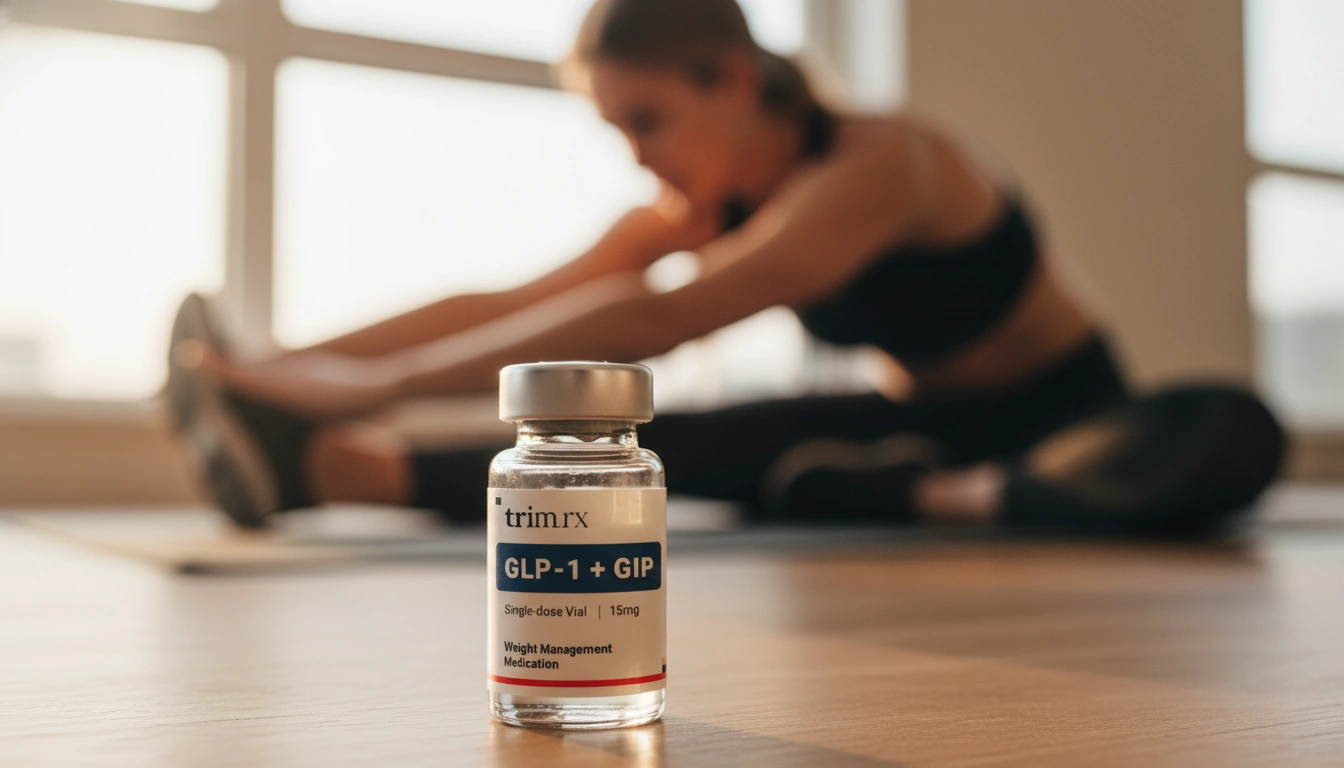
Trainers and fitness instructors are in an unusual position on these medications. Their job is physically demanding all day, their energy is visible to clients, and people around them may have opinions about someone in fitness using a weight-loss medication.
The physical side is manageable with planning. The rest is mostly about deciding what you want to say.
Training and these medications work together
There is evidence that exercise and GLP-1 treatment complement each other. A trial published in the New England Journal of Medicine looked at maintaining weight loss with exercise, a GLP-1 medication, or both. The combination held weight loss better than exercise alone, and lean mass did not fall in any of the groups, including the one taking the medication.
Training while underfueled is the problem, not training itself. For someone teaching several sessions a day, that is the part to plan around.
Fueling a day of classes
A day of demonstrating, cueing, and moving through several classes is a lot of work. On these medications, appetite will not tell you when to eat, and a slow stomach does not handle a big meal right before a session.
Eat on a schedule, not on appetite. Set times between sessions and stick to them.
Small and frequent works better than large and rare. A few bites of protein between clients is more realistic than a long lunch.
Liquids often go down when food will not. Many people find a drink easier than a meal on a busy day.
Do not demonstrate high-intensity work on an empty stomach on your rough days. That is how people end up lightheaded in front of a class.
Drink water throughout. Heat, sweating, and smaller meals add up.
Time your injection around your schedule
Side effects tend to be worst in the day or two after an injection and after each dose increase.
Put those days on your lightest teaching days if your week has a pattern.
Never step up the dose right before a heavy block, a competition, or an event you are running. Ask your provider to time increases for quieter weeks. Our guides on when to increase your tirzepatide dose and the tirzepatide starting dose cover how that timing usually works.
Consider this scenario: a trainer who teaches four spin classes on Mondays starts injecting on Saturday. Monday falls in the rough window after every dose. By the third class each week they are lightheaded and nauseated, and they start to think the medication is incompatible with their job. Moving the injection to Monday evening puts the hardest days on their lighter midweek schedule instead.
Protect your own strength
Your strength and fitness are part of your professional credibility, and fast weight loss on very little food is the version most likely to cost you some of both.
Keep up your own resistance training, not just the sessions you teach, which are often lighter for you than for clients. Eat enough protein. And track more than the scale. Our guide on tracking your progress covers what else is worth recording, including strength and performance.
Watch for a cluster: persistent fatigue that rest days do not fix, feeling cold when others are comfortable, dizziness on standing, losing strength, or sessions feeling harder than they should. Several together means you are not eating enough for your workload.
Clients and colleagues
Some trainers worry about what clients will think. You are not obliged to share your medical information with anyone. If clients ask how you lost weight, you can answer as fully or as briefly as you like.
Some trainers choose to be open about it, and find it makes them more relatable to clients who are also considering or using these medications. Others keep it private. Both are legitimate.
If clients ask your advice about starting a GLP-1 themselves, that is a question for their own clinician rather than for you, however well informed you are. Pointing them to a prescriber is the right answer.
Coaching clients who are on these medications
Many trainers now have clients on GLP-1 medications. Your own experience can help you understand what they are dealing with: lower appetite, lower energy after doses, and the importance of eating enough to support training. Encourage clients to raise fatigue, dizziness, or dropping performance with their prescriber rather than pushing through it.
Early morning classes
Many trainers teach at five or six in the morning, before they would normally eat. On these medications, teaching a hard early class on nothing is a common cause of lightheadedness.
Eat something small before the first session, even if it is only a few bites or a drink. Liquid options are often easier first thing. Then eat a proper breakfast after the early block rather than letting the morning run into lunch.
If you teach late evening classes as well, the day becomes very long. Watch that you are fitting enough real meals into the gaps rather than living on snacks between sessions.
The short version
Training and these medications work well together as long as you eat enough to support the work. Eat on a schedule, small and often, with liquids when food will not go down, and drink water throughout. Put your post-injection days on your lightest teaching days and never step up the dose before a heavy block. Protect your own strength with your own training and enough protein. And share as much or as little about your medication as you like.
If you want a provider who will plan dosing around a teaching schedule, TrimRx includes ongoing provider access alongside treatment.
This information is for educational purposes and is not medical advice. Consult with a healthcare provider before starting any medication. Individual results may vary.

Transforming Lives, One Step at a Time
Keep reading

Bartenders on a GLP-1: Late Shifts, Odd Meals and a Bar Full of Drinks
Bartending combines long nights on your feet, meals at unusual hours or not at all, heat and noise, and a workplace where alcohol is…

Moving to a New State on a GLP-1
Moving is chaotic enough without your medication getting caught up in it. But a move across state lines can affect three things that are…

Starting a New Job on a GLP-1: Coverage, Schedule and Colleagues
A new job changes several things at once: your insurance, your daily schedule, and the people you eat around. Each of them can interrupt…


