Phentermine vs Ozempic: Comparing Two Popular Weight Loss Medications

Phentermine and Ozempic represent two different eras of weight loss treatment. Phentermine has been prescribed since the 1950s, making it one of the oldest weight loss medications still in use. Ozempic (semaglutide) arrived decades later and has fundamentally changed expectations for what medication-assisted weight loss can achieve. If you’re considering weight loss medication, understanding how these options compare helps you make an informed decision.
The fundamental difference: Phentermine is a stimulant that suppresses appetite through the central nervous system, while Ozempic works through gut hormone pathways that regulate hunger and satiety. This mechanistic difference leads to dramatically different profiles in terms of effectiveness, side effects, duration of use, and who should take each medication.
The results differ substantially too. Phentermine typically produces 5-10% weight loss over short-term use, while semaglutide produces approximately 15% weight loss sustained over longer periods. But phentermine costs a fraction of semaglutide’s price and has been used safely for decades in appropriate patients. The “better” choice depends on your specific situation, health profile, and goals.
This guide covers:
- How each medication works (completely different mechanisms)
- Weight loss effectiveness and what to expect
- Duration of use (short-term vs. long-term treatment)
- Side effect profiles (stimulant effects vs. GI effects)
- Cardiovascular considerations (critical for medication selection)
- Cost comparison
- Who is a good candidate for each option
- Safety concerns and contraindications
- Whether combining or sequencing these medications makes sense
Key Takeaways
- Ozempic produces greater weight loss (15% average) compared to phentermine (5-10% average)
- Phentermine is short-term only (typically 12 weeks), while semaglutide is used long-term
- Different mechanisms: Phentermine is a CNS stimulant; semaglutide works through GLP-1 hormone pathways
- Side effects differ dramatically: Phentermine causes stimulant effects (rapid heart rate, insomnia, anxiety); semaglutide causes GI effects (nausea, diarrhea)
- Cardiovascular profiles oppose each other: Phentermine can raise heart rate and blood pressure; semaglutide provides cardiovascular protection
- Phentermine costs much less ($10-30/month vs. $199-349/month for semaglutide)
- Phentermine is a controlled substance (Schedule IV); semaglutide is not
- Weight regain after stopping is common with both, but more rapid with phentermine due to shorter use period
- Phentermine is contraindicated for patients with cardiovascular disease, uncontrolled hypertension, hyperthyroidism, or history of substance abuse
- For most patients seeking significant, sustained weight loss, semaglutide is the superior choice if affordable
How Each Medication Works
Understanding the mechanisms explains why these medications have such different profiles.
Phentermine’s Mechanism
Phentermine is a sympathomimetic amine, chemically related to amphetamines. It works through central nervous system stimulation:
Norepinephrine release: Phentermine triggers the release of norepinephrine in the brain, which suppresses appetite through the hypothalamus.
Stimulant effects: As a CNS stimulant, phentermine increases alertness, energy, and metabolic rate while decreasing appetite. The appetite suppression is real but achieved through a different pathway than newer medications.
Sympathetic activation: The medication activates the sympathetic nervous system (“fight or flight” response), which is why it can increase heart rate and blood pressure.
Tolerance development: Over time, the body adapts to phentermine’s effects, reducing its appetite-suppressing action. This is one reason it’s approved only for short-term use.
The weight loss from phentermine comes primarily from reduced food intake driven by appetite suppression, plus a modest increase in metabolic rate from sympathetic activation.
Semaglutide’s Mechanism
Semaglutide (Ozempic, Wegovy) is a GLP-1 receptor agonist that works through hormone pathways rather than stimulant effects:
GLP-1 receptor activation: Semaglutide mimics the natural gut hormone GLP-1, which is released after eating and signals satiety to the brain.
Appetite center effects: The medication acts on brain regions controlling hunger and fullness, producing sustained appetite reduction without stimulant effects.
Slowed gastric emptying: Food stays in the stomach longer, prolonging feelings of fullness after meals.
Metabolic effects: Semaglutide improves insulin sensitivity and glucose metabolism, providing benefits beyond appetite suppression.
No tolerance development: Unlike stimulants, semaglutide’s effects are maintained with continued use, allowing long-term treatment.
The weight loss from semaglutide comes from sustained appetite reduction through natural satiety pathways, producing a more physiologically normal relationship with food.
Why the Mechanism Difference Matters
The different mechanisms lead to fundamentally different treatment profiles:
| Factor | Phentermine | Semaglutide |
| Approach | Stimulant-driven appetite suppression | Hormone-mediated satiety |
| Treatment duration | Short-term (weeks to months) | Long-term (ongoing) |
| Tolerance | Develops over time | Does not develop |
| Cardiovascular effect | Increases HR/BP | Protective |
| Controlled substance | Yes (Schedule IV) | No |
| Energy effects | Stimulating | Neutral |
| Sleep effects | Can cause insomnia | Minimal |
Weight Loss Effectiveness
Both medications produce meaningful weight loss, but the magnitude and sustainability differ.
Phentermine Weight Loss Results
Phentermine produces moderate weight loss over short-term use:
Clinical trial data:
- Average weight loss: 5-10% of body weight over 12-24 weeks
- Some patients achieve 10-15% loss
- Results vary substantially between individuals
- Most weight loss occurs in the first few months
What this means practically: For someone weighing 220 pounds:
- Average result: 11-22 pounds lost (reaching 198-209 pounds)
- Good responder: 22-33 pounds lost (reaching 187-198 pounds)
- Timeline: Over 3-6 months of treatment
After stopping: Weight regain is common and often rapid because the short treatment period doesn’t allow for sustained behavioral change, and the appetite suppression disappears when medication stops.
Semaglutide Weight Loss Results
Semaglutide produces greater and more sustained weight loss:
STEP trial data (semaglutide 2.4mg):
- Average weight loss: 14.9% of body weight over 68 weeks
- 86% of participants lost at least 5%
- 69% lost at least 10%
- 50% lost at least 15%
- 32% lost at least 20%
What this means practically: For someone weighing 220 pounds:
- Average result: 33 pounds lost (reaching 187 pounds)
- Good responder: 44+ pounds lost (reaching 176 pounds or lower)
- Timeline: Over 15-18 months, with continued maintenance
With continued treatment: Weight loss is maintained as long as medication continues. Stopping typically leads to gradual weight regain.
Head-to-Head Comparison
| Metric | Phentermine | Semaglutide |
| Average % loss | 5-10% | 15% |
| Pounds lost (220 lb start) | 11-22 lbs | 33 lbs |
| Patients losing 10%+ | Variable (~30-50%) | ~69% |
| Patients losing 20%+ | Uncommon | ~32% |
| Duration of use | 12 weeks typical | Ongoing |
| Sustainability | Limited (short-term use) | Maintained with treatment |
Why Such Different Results?
Several factors explain the effectiveness gap:
Duration of treatment: Phentermine’s short-term use limits total weight loss achievable. Semaglutide’s ongoing use allows continued progress over many months.
Tolerance: Phentermine’s effects diminish over time; semaglutide’s effects persist.
Mechanism depth: Semaglutide affects multiple aspects of appetite and metabolism; phentermine primarily affects appetite through one pathway.
Behavioral change window: Longer treatment with semaglutide provides more time to establish new eating habits, though both medications see weight regain when stopped.
Duration of Use: A Critical Difference
One of the most important differences between these medications is how long they can be used.
Phentermine: Short-Term Only
Phentermine is FDA-approved only for short-term use:
Typical duration: 12 weeks (3 months) is standard. Some providers extend to 24 weeks.
Why short-term only:
- Tolerance develops, reducing effectiveness
- Stimulant effects and cardiovascular concerns with prolonged use
- Controlled substance status limits extended prescribing
- Original FDA approval specified short-term use
Practical implications:
- Treatment has a defined endpoint
- Weight loss must be achieved quickly
- Long-term maintenance relies on lifestyle changes alone
- Weight regain is common after stopping
Extended or intermittent use: Some providers prescribe phentermine intermittently (on and off) or for longer periods, though this is off-label. Evidence for long-term safety is limited.
Semaglutide: Long-Term Treatment
Semaglutide is designed for ongoing use:
Indefinite duration: No maximum treatment duration. Patients typically continue as long as beneficial.
Why long-term works:
- No tolerance development
- Sustained appetite effects
- Ongoing cardiovascular and metabolic benefits
- Weight maintenance requires continued treatment
Practical implications:
- Treatment is ongoing, like blood pressure medication
- Weight loss occurs gradually over 12-18 months
- Results are maintained with continued use
- Cost is an ongoing consideration
What This Means for Your Decision
If you want a short-term boost: Phentermine might help jump-start weight loss, but you’ll need another plan for long-term maintenance.
If you want sustained management: Semaglutide provides ongoing support, but requires commitment to long-term treatment and cost.
The maintenance reality: Both medications see weight regain when stopped. With phentermine, this happens quickly after the short treatment period. With semaglutide, ongoing treatment maintains results but stopping leads to gradual regain over months to a year.
Side Effect Comparison
The different mechanisms produce very different side effect profiles.
Phentermine Side Effects
Phentermine’s side effects reflect its stimulant nature:
Common stimulant effects:
- Increased heart rate (palpitations)
- Elevated blood pressure
- Insomnia and sleep disturbances
- Restlessness, nervousness, anxiety
- Dry mouth
- Jitteriness
Other effects:
- Headache
- Dizziness
- Constipation
- Unpleasant taste
- Decreased libido (in some patients)
Tolerance effects: As the body adapts, appetite suppression diminishes while some side effects may persist.
Dependency potential: As a controlled substance related to amphetamines, phentermine carries some risk of psychological dependence, though physical addiction is uncommon at prescribed doses.
Withdrawal: Stopping phentermine can cause fatigue, depression, and increased appetite, though severe withdrawal is uncommon.
Semaglutide Side Effects
Semaglutide’s side effects are primarily gastrointestinal:
Common GI effects:
- Nausea (most common, usually improves over time)
- Vomiting
- Diarrhea
- Constipation
- Abdominal discomfort
- Decreased appetite (intended effect)
Other effects:
- Fatigue (some patients, usually temporary)
- Injection site reactions (minor)
- Hair thinning during rapid weight loss (temporary)
Timing: GI effects are most prominent during dose increases and typically improve over weeks to months. The gradual titration schedule minimizes severity.
Serious but rare:
- Pancreatitis (severe abdominal pain requires immediate attention)
- Gallbladder problems (weight loss increases gallstone risk)
- Thyroid concerns (animal studies; human risk uncertain)
Side Effect Comparison Table
| Factor | Phentermine | Semaglutide |
| Most common | Insomnia, rapid heart rate | Nausea |
| Cardiovascular | Increases HR/BP | No increase; may improve BP |
| Sleep effects | Often disrupts sleep | Minimal |
| Energy effects | Stimulating (can feel “wired”) | Neutral |
| Mood effects | Can cause anxiety, irritability | Minimal |
| GI effects | Constipation, dry mouth | Nausea, diarrhea, vomiting |
| Dependency risk | Low but present (Schedule IV) | None |
| Tolerance | Develops | Does not develop |
Which Side Effect Profile Is More Tolerable?
This varies by individual and health status:
Phentermine may be more tolerable for: Patients who don’t have cardiovascular concerns, who can tolerate stimulants, and who prefer oral medication with non-GI side effects.
Semaglutide may be more tolerable for: Patients who can manage initial GI effects, who cannot tolerate stimulants, who have cardiovascular disease or risk factors, or who need long-term treatment.
Neither is universally easier. Some patients handle stimulant effects fine but can’t tolerate nausea; others have the opposite experience.
Cardiovascular Considerations
This is perhaps the most important differentiator between these medications for many patients.
Phentermine’s Cardiovascular Effects
Phentermine’s stimulant mechanism creates cardiovascular concerns:
Direct effects:
- Increases heart rate (tachycardia)
- Raises blood pressure
- Can cause palpitations
- Increases cardiac workload
Contraindications: Phentermine is contraindicated for patients with:
- Cardiovascular disease (coronary artery disease, heart failure, arrhythmias)
- Uncontrolled hypertension
- History of stroke
- Pulmonary hypertension
Historical context: Phentermine was historically used in combination with fenfluramine (fen-phen), which was withdrawn due to heart valve problems. Phentermine alone hasn’t been linked to valvular disease, but its cardiovascular stimulation remains a concern.
Monitoring: Patients on phentermine should have regular blood pressure and heart rate monitoring.
Semaglutide’s Cardiovascular Effects
Semaglutide has the opposite cardiovascular profile:
Proven cardiovascular benefit:
- SELECT trial: 20% reduction in major cardiovascular events (heart attack, stroke, cardiovascular death)
- SUSTAIN-6 trial: 26% reduction in cardiovascular events in diabetics
Blood pressure: Typically reduces systolic blood pressure by 4-6 mmHg.
Heart rate: May cause a slight increase (2-4 bpm), but this is offset by overall cardiovascular protection.
Appropriate for cardiovascular disease: Unlike phentermine, semaglutide is appropriate and even preferred for patients with established cardiovascular disease.
Who Should Not Take Each Medication
Phentermine contraindications:
- Cardiovascular disease
- Uncontrolled hypertension
- Hyperthyroidism
- Glaucoma
- History of drug abuse
- Agitated states
- MAO inhibitor use (within 14 days)
- Pregnancy
Semaglutide contraindications:
- Personal or family history of medullary thyroid carcinoma
- Multiple Endocrine Neoplasia syndrome type 2 (MEN2)
- History of pancreatitis (relative contraindication)
- Pregnancy
The contraindication profiles are dramatically different. Many patients who cannot take phentermine can safely take semaglutide, particularly those with cardiovascular concerns.
Cost Comparison
Cost differs substantially between these medications.
Phentermine Costs
Phentermine is inexpensive:
Generic phentermine:
- Typical cost: $10-30/month
- With insurance: Usually $5-15 copay
- GoodRx prices: Often under $20/month
Why so cheap: Phentermine has been generic for decades, with multiple manufacturers and extensive price competition.
Total treatment cost: At $20/month for 3 months = $60 total for a typical treatment course.
Semaglutide Costs
Semaglutide is substantially more expensive:
Brand-name pricing:
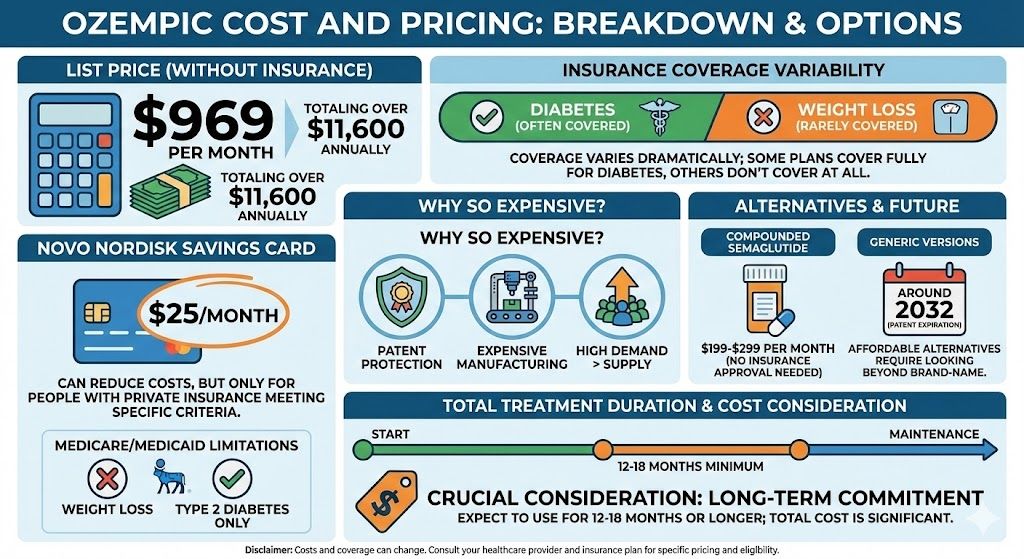
- Ozempic list price: ~$1,000/month
- Wegovy list price: ~$1,350/month
- Manufacturer cash-pay (NovoCare): $349/month
Compounded semaglutide:
- TrimRx: $199/month
Total treatment cost: At $199/month ongoing = $2,388/year for continued treatment.
For detailed pricing, see our guide on compounded semaglutide costs.
Cost Comparison Table
| Factor | Phentermine | Semaglutide |
| Monthly cost | $10-30 | $199-349 |
| Typical treatment duration | 3 months | Ongoing |
| Total first-year cost | $30-90 | $2,388-4,188 |
| Insurance coverage | Usually covered | Variable |
| Cost per pound lost | ~$3-9/pound | ~$70-100/pound |
Is the Cost Difference Justified?
Several factors inform this calculation:
For phentermine:
- Very affordable
- Lower total weight loss
- Short-term only
- Weight regain common after stopping
- Not appropriate for many patients with cardiovascular risk
For semaglutide:
- Substantially more expensive
- Greater weight loss achieved
- Sustained with ongoing treatment
- Cardiovascular protection
- Appropriate for broader patient population
The value question: If semaglutide produces three times the weight loss and maintains it long-term while providing cardiovascular protection, the higher cost may be justified for many patients. However, for patients who cannot afford ongoing treatment, phentermine’s affordability makes it accessible.
Who Should Choose Each Medication?
Different patient profiles suit different medication choices.
Phentermine May Be Appropriate If:
Health profile:
- No cardiovascular disease
- Blood pressure well-controlled
- No history of substance abuse
- No anxiety disorder
- Not taking MAO inhibitors
Goals and circumstances:
- Seeking short-term weight loss boost
- Planning significant lifestyle changes and need initial momentum
- Budget is severely constrained
- Comfortable with stimulant side effects
- Have an event or deadline motivating short-term loss
Practical considerations:
- Prefer oral medication over injection
- Cannot commit to long-term treatment
- Want to “try” medication before committing to expensive long-term options
Semaglutide Is Likely Better If:
Health profile:
- Cardiovascular disease or high cardiovascular risk
- Diabetes or prediabetes
- History of stimulant intolerance
- Anxiety or sleep disorders
- High blood pressure
Goals and circumstances:
- Seeking significant, sustained weight loss (15%+ of body weight)
- Willing to commit to long-term treatment
- Can afford ongoing medication costs
- Have substantial weight to lose (BMI 35+)
- Previous weight loss attempts have failed
Practical considerations:
- Comfortable with weekly injection
- Want cardiovascular protection alongside weight loss
- Previous short-term approaches haven’t produced lasting results
When Neither Is Ideal
Consider alternatives if:
- You have contraindications to both medications
- Very modest weight loss goals (lifestyle changes alone may suffice)
- Pregnancy is planned in the near future
- You cannot afford semaglutide and have cardiovascular contraindications to phentermine
Using Both Medications: Combination or Sequence?
Some patients wonder about using these medications together or in sequence.
Combination Therapy
Can they be taken together? This is not a standard approach and raises concerns:
Concerns about combination:
- Both suppress appetite through different mechanisms, but combining stimulants with other agents increases complexity
- Cardiovascular effects of phentermine remain concerning regardless of what it’s combined with
- Limited evidence for safety or efficacy of this specific combination
- Not a standard or recommended approach
If considered: Would require careful provider supervision and is not typically recommended.
Sequential Use
Starting with phentermine, then switching to semaglutide: This approach has some logic:
Potential rationale:
- Use inexpensive phentermine for initial weight loss
- Transition to semaglutide for long-term maintenance
- May reduce total semaglutide cost by starting at lower weight
Considerations:
- Weight often regains during transition period
- Starting semaglutide requires new titration period regardless
- May simply delay achieving optimal treatment
More practical sequence: If budget is the concern, starting with semaglutide and continuing it long-term typically produces better results than starting with phentermine and switching.
What About Qsymia?
Qsymia is a combination medication containing phentermine plus topiramate. This is different from combining phentermine with semaglutide:
Qsymia produces: Approximately 8-10% weight loss, more than phentermine alone but less than semaglutide.
Still has: Phentermine’s cardiovascular concerns and controlled substance status.
Duration: Also intended for longer use than phentermine alone, but still has limitations.
For patients interested in combination approaches, discussing Qsymia with your provider might be more appropriate than attempting to combine phentermine with semaglutide.
Regulatory and Access Differences
The regulatory status of these medications differs significantly.
Phentermine: Controlled Substance
Phentermine is classified as Schedule IV controlled substance:
What this means:
- Requires special prescription monitoring
- Cannot be refilled indefinitely without new prescriptions
- Some providers are hesitant to prescribe controlled substances
- State regulations may limit prescribing
- Potential for abuse/diversion concerns
Access implications:
- May require more frequent office visits
- Some telehealth platforms don’t prescribe controlled substances
- Insurance may have additional requirements
- Documentation requirements for providers
Semaglutide: Not Controlled
Semaglutide has no controlled substance designation:
What this means:
- Standard prescription without special monitoring requirements
- Refills more straightforward
- Providers generally more comfortable prescribing
- No abuse potential concerns
- Telehealth prescribing is straightforward
Access implications:
- Easier to obtain and refill
- Available through telehealth platforms like TrimRx
- Fewer regulatory barriers
- Main barrier is cost, not access restrictions
Insurance Coverage
Phentermine:
- Usually covered as generic
- May require documentation of weight loss attempts
- Some plans limit duration of coverage
- Generally affordable even without insurance
Semaglutide:
- Ozempic often covered for Type 2 diabetes
- Wegovy (weight loss indication) less commonly covered
- Prior authorization typically required
- Many plans exclude weight loss medications
- Cash-pay and compounded options available
Safety Profiles Compared
Both medications have established safety profiles, but with different considerations.
Phentermine Safety
Long track record: Used since 1959, providing decades of safety observation.
Known risks:
- Cardiovascular stimulation (main concern)
- Dependency potential (low but present)
- Contraindicated in many conditions
Monitoring needs:
- Regular blood pressure and heart rate checks
- Assessment for signs of abuse or dependency
- Monitoring for psychological effects
Serious events: Rare when appropriately prescribed to patients without contraindications. Historical concerns about heart valve disease were related to fenfluramine combination, not phentermine alone.
Semaglutide Safety
Growing track record: Used since 2017 for diabetes, with no major safety signals emerging.
Known risks:
- Pancreatitis (rare but serious)
- Gallbladder disease (related to weight loss generally)
- Thyroid concerns (uncertain human relevance)
Monitoring needs:
- Less intensive than phentermine
- Report severe abdominal pain promptly
- Periodic lab work reasonable but not strictly required
Serious events: Rare. Pancreatitis occurs in a small percentage of patients. Thyroid tumor risk seen in animals has not been confirmed in humans but prompts contraindication in those with personal/family history of medullary thyroid carcinoma.
Safety Comparison
| Factor | Phentermine | Semaglutide |
| Years of use | 65+ years | ~8 years |
| Major safety concerns | CV stimulation, dependency | Pancreatitis, thyroid (uncertain) |
| Contraindicated conditions | Many cardiovascular conditions | MTC, MEN2, pregnancy |
| Monitoring intensity | Regular vitals | Symptom awareness |
| Controlled substance | Yes | No |
Frequently Asked Questions
Which medication produces more weight loss, phentermine or Ozempic?
Ozempic (semaglutide) produces substantially more weight loss. Clinical trials show semaglutide produces approximately 15% average body weight loss over 68 weeks, while phentermine typically produces 5-10% loss over 12-24 weeks. For a 220-pound person, this translates to roughly 33 pounds lost with semaglutide versus 11-22 pounds with phentermine. Additionally, semaglutide’s weight loss is sustained with continued treatment, while phentermine’s short-term use means weight often regains after stopping. If maximum weight loss is your goal, semaglutide is clearly more effective.
Is phentermine safer than Ozempic?
Neither medication is universally “safer” than the other; they have different safety profiles. Phentermine has been used for over 60 years, providing extensive safety observation, but it stimulates the cardiovascular system (raising heart rate and blood pressure), making it inappropriate for patients with heart disease or uncontrolled hypertension. Semaglutide has fewer years of use but has shown cardiovascular protection rather than harm, and is appropriate even for patients with heart disease. Semaglutide does carry rare risks of pancreatitis and theoretical thyroid concerns. The “safer” choice depends on your specific health profile.
Why is phentermine only approved for short-term use?
Phentermine is limited to short-term use (typically 12 weeks) for several reasons. First, tolerance develops over time, meaning the appetite-suppressing effects diminish with continued use. Second, as a stimulant and controlled substance, there are concerns about prolonged cardiovascular stimulation and dependency with extended use. Third, the original FDA approval in 1959 was for short-term use, and no manufacturer has pursued approval for longer treatment. Some providers do prescribe phentermine for longer periods off-label, but evidence for long-term safety is limited.
Can I take phentermine and Ozempic together?
This is not a standard or recommended approach. While no absolute prohibition exists, combining a CNS stimulant (phentermine) with a GLP-1 agonist (semaglutide) isn’t well-studied for safety or efficacy. Phentermine’s cardiovascular effects remain concerning regardless of combination, and both medications already suppress appetite through different mechanisms. If you’re considering combination therapy, discuss with your provider, but most would recommend choosing one medication based on your health profile rather than combining both.
Which is better for patients with heart disease?
Semaglutide is clearly better and is actually the only appropriate choice. Phentermine is contraindicated in patients with cardiovascular disease because it stimulates the heart and raises blood pressure. Semaglutide, conversely, has proven cardiovascular protection, with trials showing a 20% reduction in major cardiovascular events. For patients with existing heart disease, high blood pressure, or significant cardiovascular risk factors, semaglutide is appropriate while phentermine is not.
Why is phentermine so much cheaper than Ozempic?
Phentermine has been generic for decades, with multiple manufacturers producing it and intense price competition keeping costs low (typically $10-30/month). Semaglutide is under patent protection, with Novo Nordisk as the sole manufacturer of brand-name versions, allowing premium pricing. Additionally, semaglutide is a complex biologic molecule that’s more expensive to manufacture than simple chemical compounds like phentermine. Compounded semaglutide ($199/month) offers a middle ground but is still substantially more expensive than generic phentermine.
Will I regain weight after stopping either medication?
Yes, weight regain is common after stopping both medications, but the pattern differs. With phentermine, regain is often rapid because the short treatment duration (3 months typically) doesn’t allow for sustained behavioral change, and appetite returns immediately when medication stops. With semaglutide, regain is more gradual if medication is stopped (research shows approximately two-thirds of lost weight returns over about one year) because treatment duration is longer, but regain still occurs. The key difference is that semaglutide can be continued long-term to maintain results, while phentermine cannot.
Is phentermine a good option if I can’t afford Ozempic?
For some patients, yes. If budget is the primary barrier and you have no cardiovascular contraindications, phentermine can provide modest weight loss (5-10%) at very low cost. This might help jump-start weight loss efforts, though maintaining results long-term without medication is challenging. However, if you have cardiovascular disease, uncontrolled hypertension, or other contraindications, phentermine isn’t safe regardless of cost. In that case, looking into compounded semaglutide ($199/month through TrimRx) or manufacturer assistance programs might provide more affordable access to the safer, more effective option.
Do phentermine and Ozempic have different side effects?
Yes, the side effect profiles are very different. Phentermine causes stimulant-related effects: increased heart rate, elevated blood pressure, insomnia, anxiety, restlessness, and dry mouth. Some patients feel “wired” or jittery. Semaglutide causes gastrointestinal effects: nausea (most common), vomiting, diarrhea, and constipation. Semaglutide’s GI effects usually improve over weeks with proper titration, while phentermine’s stimulant effects may persist throughout treatment. Which profile is more tolerable depends on your individual physiology and preferences.
Can I switch from phentermine to Ozempic?
Yes, patients commonly switch from phentermine to semaglutide. If phentermine hasn’t produced adequate results, or if you want long-term treatment that phentermine can’t provide, transitioning to semaglutide is straightforward. You would stop phentermine and begin semaglutide’s standard titration schedule. There’s no mandatory waiting period between medications, though your provider may prefer a brief gap. Be aware that semaglutide’s full effects take 4-5 months to develop due to titration, so there may be a period of reduced appetite suppression during the transition.
Which medication is better for diabetics?
Semaglutide has significant advantages for diabetic patients. It produces greater weight loss (which helps diabetes), provides excellent blood sugar control (HbA1c reductions of 1.0-1.8 percentage points), and offers proven cardiovascular protection (particularly important since diabetes increases cardiovascular risk). Ozempic is FDA-approved specifically for Type 2 diabetes. Phentermine has no blood sugar benefits beyond what weight loss itself provides and carries cardiovascular concerns that are more significant for diabetics, who already have elevated cardiovascular risk. For patients with Type 2 diabetes, semaglutide is generally the better choice.
The Bottom Line
Phentermine and Ozempic represent fundamentally different approaches to weight loss treatment. Phentermine offers an inexpensive, short-term option that can produce modest weight loss in patients without cardiovascular contraindications. Ozempic offers a more expensive but substantially more effective long-term treatment appropriate for a broader range of patients, including those with cardiovascular disease.
For most patients seeking significant, sustained weight loss, semaglutide is the superior choice if cost is manageable. The threefold greater weight loss, cardiovascular protection, and ability to continue treatment long-term represent meaningful advantages that justify the higher cost for many patients.
Phentermine retains a role for budget-constrained patients without cardiovascular issues who need short-term weight loss support, but its limitations are significant: less weight loss, short-term use only, contraindicated in many patients, and rapid weight regain after stopping.
Discuss these options with your healthcare provider, considering your specific health profile, cardiovascular status, weight loss goals, and budget reality.
Ready to explore semaglutide treatment? TrimRx offers consultations with licensed providers who can evaluate your eligibility and prescribe compounded semaglutide at $199/month for qualifying patients.

Transforming Lives, One Step at a Time
Keep reading

Ozempic for Emotional Eating: Does It Help?
Emotional eating is one of the most common and least discussed barriers to sustainable weight loss. For people who eat in response to stress,…

Hashimoto’s and Ozempic: Safety Considerations
Hashimoto’s thyroiditis is the most common autoimmune condition in the United States, affecting an estimated 14 million people, the majority of them women. It’s…

Ozempic and Anxiety: Side Effects and Interactions (2026)
Anxiety is one of the more nuanced topics that comes up in conversations about GLP-1 medications. Some people report that starting Ozempic worsened their…


