Protein Cycling: Training Days vs Rest Days on GLP-1
Introduction
Protein cycling on a GLP-1 works best as a flexibility tool, not a performance strategy: you push protein harder on the days you train and allow a modest reduction on rest days, while never letting any day fall below the floor that protects your muscle. The research case for strict day-to-day protein periodization is thin. The practical case for a structured high day/moderate day pattern, when your appetite is suppressed by semaglutide or tirzepatide, is strong.
Here’s the tension this article resolves. On a GLP-1 medication, many patients can’t comfortably eat 130 grams of protein every single day. Some days the appetite just isn’t there. Rather than failing a flat daily target five days out of seven, cycling gives you a planned structure: bigger protein effort on the 3 days you lift, a gentler but still protected floor on the 4 days you don’t.
We’ll cover what the muscle physiology actually supports, how to set your numbers, what a real week looks like on a suppressed appetite, and the failure modes that quietly cost people muscle.
At TrimRx, we believe an informed plan beats willpower, which is why our programs pair compounded GLP-1 medications with practical guidance like this. If you want to see whether a personalized program fits you, the free assessment quiz is the starting point.
At TrimRx, we believe that understanding your options is the first step toward a more manageable health journey. You can take the free assessment quiz if you’re ready to see whether a personalized program is a fit for you.
What Is Protein Cycling?
Protein cycling is the deliberate variation of daily protein intake across the week, typically higher on resistance training days and lower on rest days, while keeping weekly totals and calorie targets fixed. It borrows its logic from carb cycling, which manipulates carbohydrate around training for fuel and recovery reasons.
Quick Answer: Protein cycling means eating more protein on training days and slightly less on rest days, while calories stay in a deficit. On a GLP-1, it’s mostly a tool for working with a suppressed appetite, not a muscle-building hack.
A typical cycled week for a GLP-1 patient targeting a 75 kg goal weight might look like:
- Training days (3x/week): 135 to 165 g protein (1.8 to 2.2 g/kg)
- Rest days (4x/week): 105 to 120 g protein (1.4 to 1.6 g/kg)
- Weekly total: roughly 825 to 975 g
Compare that to a flat 1.6 g/kg every day (840 g weekly) and you can see the totals land in the same neighborhood. That’s the first honest point about cycling: it redistributes protein more than it adds any. Whether that redistribution helps depends on what your appetite, schedule, and training actually look like.
The reason this topic matters more for GLP-1 patients than for the general lifting population is appetite suppression. When eating 160 g of protein daily feels impossible, a plan that concentrates the effort on 3 days and eases off on 4 can be the difference between hitting your weekly total and abandoning the target entirely.
Does the Science Support Eating More Protein on Training Days?
Only weakly, and the honest answer is that total weekly intake and per-meal distribution carry almost all of the benefit. The key physiological fact: after a resistance training session, muscle protein synthesis stays elevated for 24 to 48 hours. Your Tuesday workout is still using Wednesday’s protein. The body doesn’t reset at midnight.
The big meta-analysis on protein and lean mass, Morton 2018 in the British Journal of Sports Medicine (49 studies, over 1,800 participants), found benefits of protein supplementation on lean mass plateau around 1.6 g/kg/day on average, with the analysis built on daily intakes, not training-day-specific ones. Research on nutrient timing more broadly, including the well-known meta-analysis work by Schoenfeld and Aragon, has repeatedly found that once daily protein is adequate, timing tweaks add little.
So why cycle at all? Three defensible reasons:
- Appetite management. On a GLP-1, your capacity to eat varies. Anchoring high-protein effort to training days, when appetite is often slightly better and motivation is concrete, raises weekly compliance.
- Calorie budgeting. Protein costs calories. In a 1,200-calorie day, cycling lets rest days carry a bit more vegetable volume and fat for satisfaction without blowing the weekly protein total.
- Behavioral clarity. “Lift day = 4 protein feedings, rest day = 3” is a rule people actually follow.
What cycling will not do is build extra muscle versus a flat intake with the same weekly total. Anyone selling it as an anabolic trick is overreaching the data.
How Much Protein Do You Need on a GLP-1 Overall?
During active weight loss, 1.6 to 2.2 grams per kilogram of target body weight per day is the evidence-supported zone, with 1.2 g/kg as the never-go-below floor. The deficit raises protein needs above the maintenance recommendations, because amino acids are being pulled for energy and the body needs a louder retention signal.
Quick worked example. Target weight 70 kg (154 lb):
- Floor (any day): 84 g
- Rest day target: 98 to 112 g (1.4 to 1.6 g/kg)
- Training day target: 126 to 154 g (1.8 to 2.2 g/kg)
Why target body weight instead of current? Using current weight in people with substantial weight to lose overshoots the requirement, since fat mass demands little protein. Target or “adjusted” body weight keeps the number realistic on a suppressed appetite.
Context that makes these numbers worth fighting for: in the STEP 1 DEXA sub-study (Wilding 2021, NEJM), about 39 percent of weight lost on semaglutide was lean mass in participants given no specific protein or training intervention. Resistance training plus adequate protein is the established combination that drives that fraction down, in some intervention studies by half or more.
How Should You Structure Training Day Protein?
Four feedings of 30 to 40 grams each, with one of them landing within a couple of hours after your workout. That spacing matters because muscle protein synthesis responds per dose: roughly 0.4 g/kg per meal (about 25 to 35 g for most people) gets you near the per-meal ceiling, and each feeding needs around 2.5 to 3 g of leucine to flip the synthesis switch.
A training day at 140 g might look like:
- Breakfast: Greek yogurt bowl with whey stirred in, 35 g
- Post-workout: whey shake with a banana, 30 g
- Lunch: chicken thigh and rice plate, half portion, 35 g
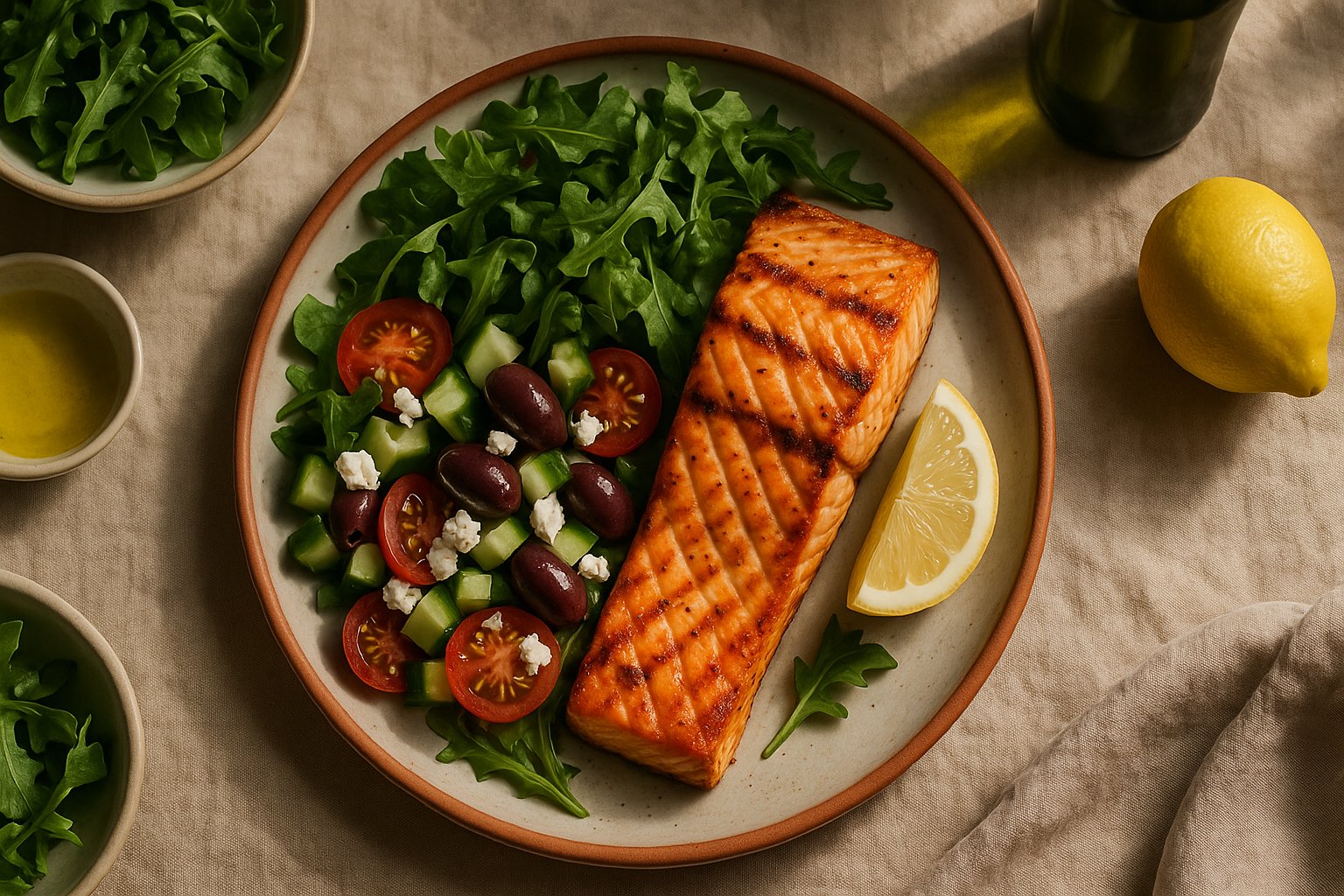
- Dinner: salmon, potatoes, vegetables, 40 g
Notice what’s absent: enormous meals. On a GLP-1, a 50-gram protein dinner often isn’t physically comfortable. Four moderate feedings beat two heroic ones, both physiologically and practically.
Pre-sleep protein is a legitimate fifth slot if your day’s total is short. Studies of casein before bed (typically 30 to 40 g) show overnight muscle protein synthesis support, and a cup of cottage cheese or a casein shake is an easy way to rescue a low day.
The post-workout “anabolic window” deserves a quick honest note: it’s wider than the old 30-minute myth, more like several hours, and total daily intake still dominates. Don’t panic-chug a shake in the gym parking lot. Do get a real protein feeding within 2 hours or so.
What Should Rest Day Protein Look Like?
Three feedings of 30 to 40 grams, totaling 1.4 to 1.6 g/kg, with no feeding skipped because “I didn’t train today.” Remember the 24-to-48-hour synthesis window: the day after a lift is when much of the repair happens. Rest-day protein is recovery protein.
A 105-gram rest day on a suppressed appetite:
- Late breakfast: 3-egg scramble with cottage cheese, 30 g
- Mid-afternoon: protein shake or high-protein yogurt, 30 to 35 g
- Dinner: ground turkey bowl, modest portion, 40 g
Rest days are where GLP-1 patients lose the plot. No workout means no hunger trigger, no routine anchor, and on heavy suppression days some patients drift through on 600 calories and 35 grams of protein. One day like that is noise. A pattern of them is how you end up in the muscle-loss statistics. The fix is mechanical, not motivational: rest-day feedings go on the calendar with alarms, and a shake counts as a meal when food won’t fit. Our guide to protein shakes on GLP-1 covers good options.
If you do light activity on rest days, a 30-minute walk or mobility work, no protein adjustment is needed. Cycling only distinguishes true resistance training days.
How Do You Protein Cycle When Appetite Is Severely Suppressed?
Drop the cycle and defend the floor. On weeks when nausea or strong suppression caps your eating, the priority order is: hit 1.2 g/kg every day by any means available, keep lifting (possibly at reduced volume), and return to the high/moderate cycle when appetite recovers.
Tactically, severe-suppression weeks run on these tools:
- Liquid protein first. Shakes empty from the stomach more comfortably than solid meals for most patients. Two shakes a day is 50 to 60 g secured before any food negotiation starts.
- Cold and bland beats hot and rich. Cottage cheese, yogurt, deli turkey, protein ice pops. GLP-1 nausea is often triggered by rich, fatty, hot foods.
- Small and frequent. Six 20-gram feedings can work when three 35-gram ones can’t. Per-meal optimization is a luxury; weekly total is the necessity.
- Track for two weeks. Most people overestimate protein intake by 20 to 30 percent when guessing. A free tracking app for 14 days calibrates your eye.
Also tell your provider. Persistent inability to eat adequate protein is a dose-adjustment conversation, not a personal failing. The medication dose that produces steady fat loss while letting you eat like an adult is the right dose.
Key Takeaway: A practical GLP-1 cycle: 1.8 to 2.2 g/kg of target body weight on training days, 1.4 to 1.6 g/kg on rest days, never below 1.2 g/kg on any day.
Should Calories Cycle Along with Protein?
They can, modestly, and many GLP-1 patients do this without naming it. A common structure puts 100 to 200 more calories on training days (mostly carbohydrate around the workout) and fewer on rest days, holding the weekly deficit constant. The case for this is performance and adherence rather than fat-loss physics: a banana and some rice around training sessions measurably improves session quality for many people, and better sessions protect more muscle.
Keep two guardrails. First, the weekly deficit shouldn’t exceed what produces about 0.5 to 1 percent body weight loss per week; faster than that and the lean fraction of your losses climbs regardless of how cleverly you cycle. Second, don’t let rest days collapse. A 1,300-calorie training day paired with a 700-calorie rest day averages fine on paper and feels terrible in practice, with rest-day fatigue, poor sleep, and rebound hunger.
If tracking two moving targets sounds exhausting, simplify: flat calories every day, protein cycled high/moderate, carbs naturally drifting toward training days. That’s 90 percent of the benefit with half the bookkeeping.
What Does a Full Week Actually Look Like?
Here’s a complete template for a patient on tirzepatide with a 70 kg target weight, lifting Monday, Wednesday, and Friday. Training days target 135 g protein, rest days 100 g.
Monday (train): Greek yogurt + whey breakfast (35 g), post-lift shake (30 g), chicken and rice bowl (35 g), salmon dinner (35 g). Total 135 g.
Tuesday (rest): egg and cottage cheese scramble (30 g), afternoon shake (30 g), turkey chili (40 g). Total 100 g.
Wednesday (train): repeat Monday’s skeleton with different proteins: skyr bowl, post-lift shake, tuna melt on thin bread, pork tenderloin dinner.
Thursday (rest): Tuesday’s skeleton: high-protein yogurt, shake, shrimp stir-fry.
Friday (train): Monday’s skeleton, lean beef dinner.
Saturday (rest): brunch-style: 3-egg omelet with cheese (30 g), late shake (30 g), rotisserie chicken dinner (40 g).
Sunday (rest): same skeleton, plus pre-sleep cottage cheese (25 g) to top up the weekly total.
Weekly total: roughly 805 g, or a 1.64 g/kg daily average against target weight. That’s squarely in the protective zone, and no single day required heroic eating. The pattern repeats, the shopping list barely changes, and decision fatigue stays low, which matters more for adherence than any macro detail.
Common Protein Cycling Mistakes on GLP-1
The most expensive mistake is treating rest days as “off” days for eating, letting low appetite turn a planned 100-gram day into an accidental 45-gram one. Muscle repair from yesterday’s session runs on today’s amino acids. Three more failure modes show up constantly:
Cycling calories down so hard that training quality dies. If your Wednesday lift feels like wading through wet sand, your rest days are too thin. Weak sessions don’t signal muscle retention.
Chasing the high number and ignoring distribution. 140 g eaten as 15/25/100 across the day wastes much of the dinner dose. Per-meal caps on synthesis are real; spread it out.
Counting protein optimistically. “A chicken breast” ranges from 25 to 55 g of protein depending on size. Two weeks of honest tracking with a food scale fixes the calibration, and most people find they were 20 to 30 percent under their guess.
Skipping the floor on sick or nauseated days. Zero-protein days happen to everyone occasionally, but back-to-back ones during rapid weight loss are exactly when lean tissue goes. Even 60 g from shakes on a rough day changes the math meaningfully.
The Path Forward
Protein cycling earns its place on a GLP-1 not because muscles count weekdays but because humans do. A high/moderate structure matched to your training calendar makes an otherwise punishing protein target achievable on a suppressed appetite: 1.8 to 2.2 g/kg on lifting days, 1.4 to 1.6 g/kg on rest days, a hard floor of 1.2 g/kg always, and 25 to 40 g per feeding throughout.
Pair that with progressive resistance training 2 to 3 times weekly and a loss rate under 1 percent of body weight per week, and you’ve covered the three levers that determine whether your weight loss is mostly fat. TrimRx programs are built around exactly this combination, with compounded semaglutide and tirzepatide prescribed through a personalized medical assessment. The free quiz takes five minutes if you’re ready to look at your options.
Bottom line: The biggest cycling mistake on a GLP-1 is letting rest days become accidental protein-fasting days because appetite is low and there’s no workout to remind you.
FAQ
Is Protein Cycling Better Than Eating the Same Amount Every Day?
Not physiologically, if weekly totals and per-meal distribution match. Muscle protein synthesis runs on a 24-to-48-hour window after training, so the body smooths out day-to-day variation. Cycling wins practically when appetite suppression makes a flat high target unrealistic, because it concentrates effort where motivation and appetite are best.
How Much Protein Should I Eat on Rest Days While on Semaglutide?
Around 1.4 to 1.6 g per kilogram of target body weight, and never below 1.2 g/kg. For a 70 kg target, that’s roughly 100 to 112 g on rest days. Keep three feedings of 30-plus grams rather than grazing, since older or dieting muscle responds best to meaningful per-meal doses.
Can I Just Eat All My Protein on Training Days and Relax on Rest Days?
No. Extreme swings (say, 180 g on lift days and 50 g on rest days) leave recovery days under-supplied while the muscle is still repairing. The repair window from a workout extends one to two days past the session. Keep rest days at no less than about 70 to 80 percent of training-day intake.
Does Protein Cycling Help with GLP-1 Nausea?
Indirectly. Cycling lets you plan lighter eating on days you don’t train, which can align with how many patients schedule injections (shooting the night before a rest day, when side effects peak). On true nausea days, switch to the floor-defense approach: liquids, cold foods, small frequent feedings, 1.2 g/kg minimum.
Should Protein Come From Food or Shakes on a GLP-1?
Food first, shakes as infrastructure. Whole food brings micronutrients, fiber, and better satiety, but on a suppressed appetite most patients need 1 to 2 shakes daily to reach protective totals. A standard whey isolate (24 to 30 g protein, around 120 calories) is the most efficient protein-per-calorie tool available.
Do I Need to Cycle Carbs Too?
Optional. Putting an extra 30 to 60 g of carbohydrate around training sessions improves workout quality for many people, and better workouts protect muscle. If tracking two variables is too much, hold calories flat, cycle protein, and let carbs drift toward training days naturally.
How Do I Know If My Protein Plan Is Working?
Three checks: strength holding or rising in your main lifts month over month, grip strength stable, and a DEXA scan every 4 to 6 months showing lean mass loss under about 25 to 30 percent of total weight lost. If any of those slip, raise the rest-day floor first, then total intake, then revisit your loss rate with your provider.
Disclaimer: This content is for informational purposes only and does not constitute medical advice. It is not intended to diagnose, treat, cure, or prevent any disease or condition. Individual results may vary. Always consult a qualified healthcare professional before starting any weight loss program or medication.

Transforming Lives, One Step at a Time
Keep reading

What Labs Should Your Doctor Run Now That You’re on a GLP-1?
There is no universal panel, and anyone handing you a fixed list is guessing about your situation. What gets checked depends on what conditions…

Can’t Eat Enough Protein on a GLP-1? Why It Matters and What Helps
This is one of the most common difficulties on these medications, and the tension in your question is real: protein is the thing most…
Type 2 Diabetes Medications and a New GLP-1: What to Tell Your Doctor
Tell whoever prescribed the GLP-1 exactly what diabetes medications you take, at what doses, before your first injection. That conversation needs to happen first,…


