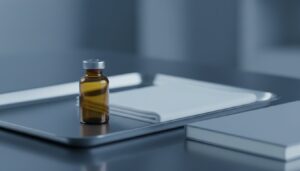
How to Reconstitute Peptides: Mixing Guide for Beginners
Introduction
Compounded GLP-1 peptides often arrive as a lyophilized (freeze-dried) powder that you mix with bacteriostatic water before the first injection. The mixing step intimidates new patients more than the injection itself. The actual procedure is simple, but the dose math has to be correct because every later dose depends on it.
TrimRx ships most compounded semaglutide and tirzepatide pre-mixed, but some formulations and most research-grade peptides require reconstitution. This guide walks through how to do it safely and how to calculate the right dose volume once the powder is in solution.
At TrimRx, we believe that understanding your options is the first step toward a more manageable health journey. You can take the free assessment quiz if you’re ready to see whether a personalized program is a fit for you.
What Does Reconstitution Mean for Compounded Peptides?
Reconstitution is dissolving a dry peptide powder into a sterile liquid so it can be drawn into a syringe and injected. The dry form has a longer shelf life than the liquid, which is why some compounded GLP-1 products ship as a powder.
Quick Answer: Reconstitution means adding sterile bacteriostatic water to a freeze-dried peptide powder to make it injectable
Once you add the liquid, the clock starts on the beyond-use date. That’s typically 30 days for room-temperature storage and up to 90 days refrigerated for benzyl-alcohol-preserved solutions, depending on the formulation.
You only reconstitute once per vial. After that, you draw doses from the mixed vial until it’s empty or expires.
What Supplies Do You Need to Reconstitute a Peptide?
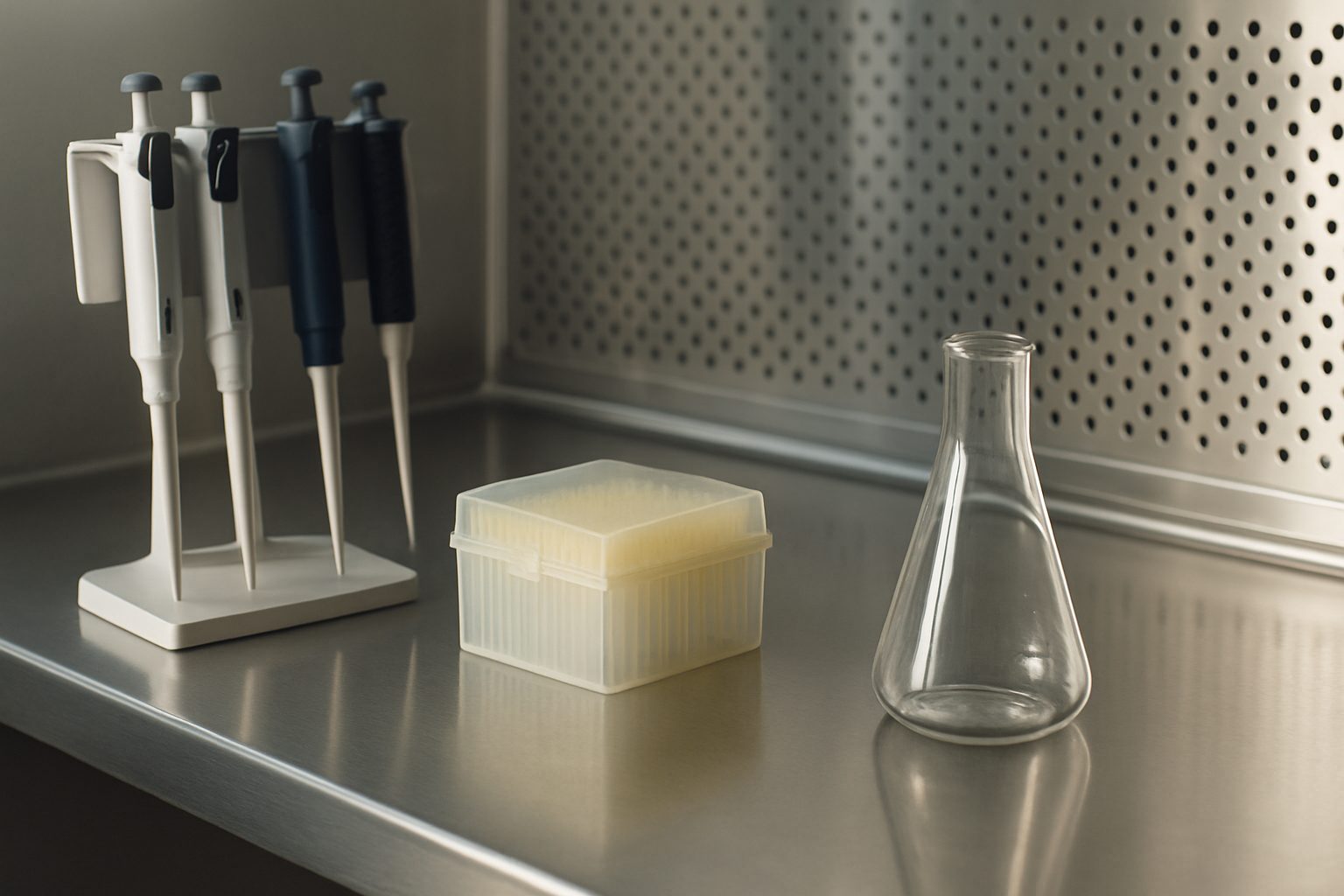
Five items: the vial of lyophilized peptide, a vial of bacteriostatic water (the standard diluent), one reconstitution syringe (typically a 3 mL syringe with a 22-23 gauge 1 inch needle), alcohol prep pads, and a sharps container.
You also need a clean dry workspace and washed hands. The reconstitution step is the highest contamination-risk moment in the whole process because the vial is open longer than it ever will be again.
TrimRx provides bacteriostatic water and the appropriate syringe sizes when the product requires mixing. Do not substitute sterile water for injection or saline; bacteriostatic water is what extends multi-use vial life.
How Much Bacteriostatic Water Should You Add?
The amount of diluent determines the final concentration, which determines the units you’ll draw per dose. Your TrimRx instructions will specify the exact volume. A typical example: 5 mg of semaglutide powder plus 2 mL of bacteriostatic water gives a 2.5 mg/mL solution.
Once mixed, math is simple. A 0.25 mg dose at 2.5 mg/mL is 0.1 mL or 10 units on a U-100 insulin syringe. A 0.5 mg dose is 20 units. Write the concentration on the vial cap with a permanent marker.
If you change the diluent volume, every dose calculation changes. Stick with the volume on your instructions.
What’s the Step-by-step Mixing Procedure?
Set up a clean workspace and wash hands. Wipe both vial stoppers (peptide and bacteriostatic water) with alcohol pads and let them dry for 15 seconds.
Pull the specified volume of bacteriostatic water into the reconstitution syringe. If you need 2 mL, draw 2 mL. Insert that syringe into the peptide powder vial and slowly inject the water down the inside wall of the vial, not directly onto the powder. The angled flow protects peptide structure.
Remove the syringe and discard it in the sharps container. Gently swirl the vial in a circular motion. Do not shake. Shaking creates foam that can denature peptides. Wait 30-60 seconds for the powder to fully dissolve. The solution should be clear or very slightly hazy.
Why Use Bacteriostatic Water Instead of Regular Sterile Water?
Bacteriostatic water contains 0.9% benzyl alcohol as a preservative. That allows a single vial to be punctured multiple times over 28 days without bacterial growth at room temperature, and longer refrigerated.
Sterile water for injection has no preservative. A vial of sterile water becomes a contamination risk after the first puncture and is single-use. If you reconstitute a peptide with sterile water you have to use the whole vial within hours or discard it.
Bacteriostatic water is not for use in neonates because of benzyl alcohol toxicity at large volumes, but for adult subcutaneous peptide injections the dose is far below any safety threshold.
Key Takeaway: The concentration after mixing is mg of peptide divided by mL of diluent added
How Do You Draw Doses From a Reconstituted Vial?
Wipe the stopper with alcohol. Pull air into a U-100 insulin syringe equal to your dose volume. Insert the needle, push the air in to maintain vial pressure, then invert the vial and pull back to the exact unit line.
Flick out any large bubbles, withdraw the needle, and proceed with injection as you would with a pre-mixed vial. The injection technique itself doesn’t change based on whether the medication was reconstituted at home or by the pharmacy.
Store the reconstituted vial in the refrigerator between doses. Bring it to room temperature for 5 minutes before the next dose for a more comfortable injection.
How Do You Know the Reconstituted Peptide Is Still Good?
A correctly stored reconstituted GLP-1 peptide stays clear and colorless. If you see floating particles, cloudiness that wasn’t there at mixing, or any color change toward yellow or brown, discard the vial. The peptide has likely degraded.
A correctly mixed solution should swirl smoothly without sediment at the bottom. Sediment means undissolved powder; gently swirl more and wait longer. If sediment remains after 5 minutes of patience, the powder may be defective.
The beyond-use date on the vial after reconstitution is the firm cutoff. Refrigerated, that’s typically 30-90 days depending on the formulation. Mark the date with a marker when you mix.
Why Is Shaking the Vial a Problem?
GLP-1 peptides have a 3D folded structure that is sensitive to mechanical agitation. Vigorous shaking creates foam, and foam means peptide molecules at the air-water interface, where they unfold and lose activity. Foam can also persist for hours.
Gentle swirling provides enough kinetic energy to dissolve the powder without the mechanical shear that shaking produces. Roll the vial slowly between your palms or swirl it in a horizontal circle on the counter.
This same principle applies to insulin and most biologic injectables. The rule is: roll, don’t rock.
What About Storage and Travel with Reconstituted Peptides?
Refrigerated storage (36-46°F or 2-8°C) is standard for reconstituted GLP-1 peptides. Room temperature storage is acceptable for short windows per the formulation, typically up to 28 days for products preserved with benzyl alcohol.
For travel, use an insulated bag with a small ice pack. Avoid freezing. Frozen and thawed peptides aggregate and lose activity. TSA allows injectable medications and supplies through security with a doctor’s note or original packaging.
Heat is the biggest enemy. A car dashboard in summer can reach 140°F in minutes and will destroy peptide activity even in a closed bag.
Bottom line: Refrigerate the reconstituted vial and use within 30-90 days per the formulation’s beyond-use date
FAQ
Can I Reuse the Bacteriostatic Water Vial Across Multiple Peptide Reconstitutions?
Yes, for up to 28 days from the first puncture if stored properly. Wipe the stopper with alcohol before each use and don’t touch the rubber surface.
What If I Added Too Much or Too Little Bacteriostatic Water?
If you added too much, the concentration is lower than intended and you’ll need to draw more units per dose. Recalculate using the actual volume added. If you added too little, you may not have enough volume to draw clean doses; ask your TrimRx clinician whether to add the remaining diluent.
Is the Slight Haziness in My Reconstituted Vial a Problem?
A very faint haze right after mixing usually clears with another minute of swirling. Persistent cloudiness or visible particles means the vial should be discarded.
Can I Reconstitute with Saline Instead?
No. Saline doesn’t have a preservative, which limits the vial to single-use, and the salt content can affect peptide stability for some formulations. Bacteriostatic water is the standard.
How Long Does the Mixed Solution Last in the Fridge?
Most compounded GLP-1 peptides reconstituted with bacteriostatic water are good for 30 days refrigerated. Some formulations are stable for up to 90 days. Use the beyond-use date your TrimRx pharmacy provides as the firm limit.
What’s the Difference Between Lyophilized and Pre-mixed Peptide Vials?
Lyophilized means freeze-dried powder that you reconstitute. Pre-mixed means the pharmacy already added diluent before shipping. Pre-mixed is more convenient but has a shorter total shelf life because the clock started at the pharmacy.
Can I Mix Two Different Peptides in One Vial?
No. Always reconstitute and inject each peptide separately. Mixing peptides can cause precipitation, alter absorption, and complicate dosing math beyond what’s safe for at-home use.
Disclaimer: This content is for informational purposes only and does not constitute medical advice. It is not intended to diagnose, treat, cure, or prevent any disease or condition. Individual results may vary. Always consult a qualified healthcare professional before starting any weight loss program or medication.

Transforming Lives, One Step at a Time
Keep reading
Tesamorelin for Visceral Fat: What It Is and WHO It Is For
People often collapse two different goals into one: losing visceral fat and losing weight overall. They overlap. They are not the same job.