Semaglutide vs Tirzepatide: Which GLP-1 is Right for You?
Tirzepatide demonstrates superior weight loss results in clinical trials, with patients losing 15-22% of body weight compared to 10-15% with semaglutide, though both medications are highly effective GLP-1 options.
If you’re deciding between these two weight loss medications, understanding their differences helps you choose the option that best fits your goals, budget, and health needs. Both semaglutide (Ozempic, Wegovy) and tirzepatide (Mounjaro, Zepbound) work by regulating appetite and blood sugar, but they have distinct mechanisms and outcomes.
The choice between semaglutide and tirzepatide often comes down to effectiveness goals versus cost considerations. While tirzepatide shows slightly higher weight loss in studies, semaglutide offers proven results at a lower price point. TrimRx provides affordable access to both compounded semaglutide and tirzepatide, allowing you to choose based on your specific needs rather than cost alone.
Semaglutide and Tirzepatide: Key Differences Explained
What Are These Medications?
Both semaglutide and tirzepatide belong to the class of medications that mimic hormones your body produces naturally to regulate appetite and blood sugar. However, they target different hormone receptors and work through slightly different mechanisms.
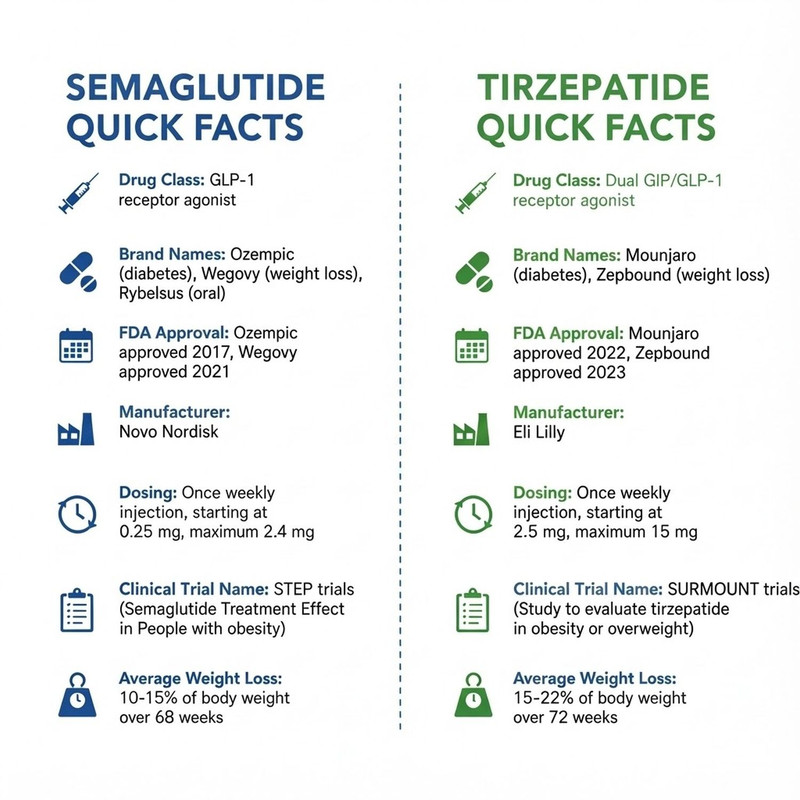
Semaglutide Quick Facts:
- Drug Class: GLP-1 receptor agonist
- Brand Names: Ozempic (diabetes), Wegovy (weight loss), Rybelsus (oral)
- FDA Approval: Ozempic approved 2017, Wegovy approved 2021
- Manufacturer: Novo Nordisk
- Dosing: Once weekly injection, starting at 0.25 mg, maximum 2.4 mg
- Clinical Trial Name: STEP trials (Semaglutide Treatment Effect in People with obesity)
- Average Weight Loss: 10-15% of body weight over 68 weeks
Tirzepatide Quick Facts:
- Drug Class: Dual GIP/GLP-1 receptor agonist
- Brand Names: Mounjaro (diabetes), Zepbound (weight loss)
- FDA Approval: Mounjaro approved 2022, Zepbound approved 2023
- Manufacturer: Eli Lilly
- Dosing: Once weekly injection, starting at 2.5 mg, maximum 15 mg
- Clinical Trial Name: SURMOUNT trials (Study to evaluate tirzepatide in obesity or overweight)
- Average Weight Loss: 15-22% of body weight over 72 weeks
Primary Difference:
The main distinction is that semaglutide activates only GLP-1 receptors, while tirzepatide activates both GIP (glucose-dependent insulinotropic polypeptide) and GLP-1 receptors. This dual action appears to produce greater weight loss effects, though it may also come with different side effect patterns.
Similarities Between the Two:
- Both are once-weekly injectable medications
- Both work by reducing appetite and slowing stomach emptying
- Both improve blood sugar control
- Both require gradual dose escalation to minimize side effects
- Both are available in brand-name and compounded forms
- Both require refrigeration until first use
- Both have similar contraindications and warnings
When comparing GLP-1 weight loss programs, many providers offer both medications, allowing you to choose based on your provider’s recommendation and your individual response.
How Each Medication Works
Understanding the mechanism of action helps explain why these medications are so effective for weight loss and why tirzepatide may produce slightly better results.
How Semaglutide Works:
GLP-1 Receptor Activation:
Semaglutide mimics the natural hormone GLP-1 (glucagon-like peptide-1) that your intestines produce after eating. By activating GLP-1 receptors throughout your body, semaglutide:
- Increases Insulin Release: When blood sugar rises after meals, semaglutide signals the pancreas to release more insulin, helping move glucose from blood into cells.
- Decreases Glucagon: Reduces production of glucagon, a hormone that raises blood sugar, preventing unnecessary glucose release from the liver.
- Slows Gastric Emptying: Keeps food in your stomach longer, creating prolonged feelings of fullness and reducing hunger between meals.
- Acts on Brain Appetite Centers: Crosses the blood-brain barrier to affect hypothalamic regions that control hunger and satiety, directly reducing appetite and food cravings.
- Increases Satiety: You feel fuller faster when eating and stay satisfied longer after meals.
Where GLP-1 Receptors Are Located:
- Pancreas (insulin and glucagon regulation)
- Stomach (slowing emptying)
- Brain (appetite control)
- Heart (cardiovascular benefits)
- Liver (glucose production regulation)
How Tirzepatide Works:
Dual GIP and GLP-1 Receptor Activation:
Tirzepatide activates two hormone receptors instead of one, creating a more comprehensive metabolic effect:
GLP-1 Effects (Same as Semaglutide):
- Increased insulin secretion
- Decreased glucagon production
- Slowed gastric emptying
- Reduced appetite through brain signaling
- Enhanced satiety
Additional GIP Effects:
GIP (glucose-dependent insulinotropic polypeptide) adds complementary benefits:
- Enhanced Insulin Response: GIP amplifies insulin secretion even more than GLP-1 alone, particularly after meals when blood sugar is elevated.
- Improved Insulin Sensitivity: Helps cells respond better to insulin, making the hormone more effective at lowering blood sugar.
- Fat Metabolism Changes: GIP receptors in fat tissue may influence how your body stores and uses fat, potentially increasing fat burning.
- Reduced Food Intake: The combination of GIP and GLP-1 activation appears to have synergistic effects on appetite suppression, leading to greater reduction in calorie intake.
- Metabolic Rate Effects: Some research suggests GIP may influence energy expenditure, though this is still being studied.
Why Dual Activation Matters:
The combination of GIP and GLP-1 activation produces stronger metabolic effects than either hormone alone. Clinical trials consistently show tirzepatide produces about 5% more body weight loss than semaglutide, likely due to this dual mechanism.
Pharmacokinetics (How Long They Last):
Semaglutide:
- Half-life: Approximately 7 days
- Reaches steady state: After 4-5 weeks
- Duration of action: Remains active for one week between doses
- Time to peak concentration: 1-3 days after injection
Tirzepatide:
- Half-life: Approximately 5 days
- Reaches steady state: After 4 weeks
- Duration of action: Remains active for one week between doses
- Time to peak concentration: 8-72 hours after injection
Both medications are designed for once-weekly dosing and maintain therapeutic levels throughout the week.
Weight Loss Results: Clinical Trial Comparison
Clinical trial data provides the most reliable comparison of effectiveness between semaglutide and tirzepatide.
Semaglutide Clinical Trial Results (STEP Program):
STEP 1 Trial (Wegovy 2.4 mg):
- Participants: 1,961 adults with obesity or overweight with comorbidities
- Duration: 68 weeks
- Average Weight Loss: 14.9% of body weight
- Placebo Group: 2.4% weight loss
- Patients Losing 5% or More: 86.4%
- Patients Losing 10% or More: 69.1%
- Patients Losing 15% or More: 50.5%
STEP 2 Trial (Participants with Type 2 Diabetes):
- Average Weight Loss: 9.6% of body weight
- Duration: 68 weeks
- Notable: Lower weight loss in diabetic population, which is typical
STEP 3 Trial (With Intensive Behavioral Therapy):
- Average Weight Loss: 16.0% of body weight
- Duration: 68 weeks
- Notable: Highest weight loss when combined with intensive lifestyle intervention
STEP 4 Trial (Maintenance Study):
- Finding: Participants who stopped semaglutide regained most of their lost weight
- Continuation Group: Maintained weight loss and continued to lose more weight
- Conclusion: Suggests long-term use is needed to maintain results
Tirzepatide Clinical Trial Results (SURMOUNT Program):
SURMOUNT-1 Trial (Zepbound 15 mg highest dose):
- Participants: 2,539 adults with obesity or overweight
- Duration: 72 weeks
- Average Weight Loss (15 mg dose): 22.5% of body weight
- Average Weight Loss (10 mg dose): 21.4% of body weight
- Average Weight Loss (5 mg dose): 15.0% of body weight
- Placebo Group: 2.4% weight loss
- Patients Losing 5% or More (15 mg): 96%
- Patients Losing 10% or More (15 mg): 89%
- Patients Losing 15% or More (15 mg): 78%
- Patients Losing 20% or More (15 mg): 63%
SURMOUNT-2 Trial (Participants with Type 2 Diabetes):
- Average Weight Loss (15 mg dose): 15.7% of body weight
- Duration: 72 weeks
- Notable: Diabetic participants still achieved substantial weight loss
SURMOUNT-3 Trial (Maintenance After Initial Weight Loss):
- Finding: Continued tirzepatide after initial weight loss led to additional 5.5% weight loss
- Withdrawal Group: Regained 14% of weight
- Conclusion: Ongoing treatment maintains and continues weight loss progress
Direct Comparison:
| Metric | Semaglutide (2.4 mg) | Tirzepatide (15 mg) | Difference |
| Average Weight Loss | 14.9% | 22.5% | +7.6% |
| Patients Losing 5%+ | 86.4% | 96% | +9.6% |
| Patients Losing 10%+ | 69.1% | 89% | +19.9% |
| Patients Losing 15%+ | 50.5% | 78% | +27.5% |
| Patients Losing 20%+ | Not reported | 63% | — |
| Trial Duration | 68 weeks | 72 weeks | +4 weeks |
Real-World Weight Loss Examples:
Starting Weight: 250 pounds
- Semaglutide (14.9% loss): Final weight ~213 pounds (37 pounds lost)
- Tirzepatide (22.5% loss): Final weight ~194 pounds (56 pounds lost)
- Difference: 19 additional pounds lost with tirzepatide
Starting Weight: 200 pounds
- Semaglutide (14.9% loss): Final weight ~170 pounds (30 pounds lost)
- Tirzepatide (22.5% loss): Final weight ~155 pounds (45 pounds lost)
- Difference: 15 additional pounds lost with tirzepatide
Important Context:
- Clinical trial results represent averages; individual results vary significantly
- Both medications require adherence to dosing schedule and lifestyle modifications
- Higher doses generally produce better results but may have more side effects
- Not everyone reaches maximum doses due to side effect tolerance
- Actual weight loss depends on starting weight, diet, exercise, and individual metabolism
Time to See Results:
Semaglutide:
- Weeks 1-4: Minimal weight loss (adjusting to medication)
- Weeks 4-12: Noticeable appetite reduction and initial weight loss (5-8 pounds)
- Weeks 12-24: Steady weight loss (1-2 pounds per week)
- Weeks 24-68: Continued weight loss at slower pace
Tirzepatide:
- Weeks 1-4: Minimal weight loss (adjusting to medication)
- Weeks 4-12: Noticeable appetite reduction and initial weight loss (8-12 pounds)
- Weeks 12-24: Steady weight loss (1.5-2.5 pounds per week)
- Weeks 24-72: Continued weight loss, often at sustained pace
Both medications show continued weight loss throughout the clinical trial periods, with weight loss plateauing around month 16-20 for most participants.
Side Effects: What to Expect with Each
Both medications share similar side effect profiles because they work through related mechanisms, though there are some differences in frequency and severity.
Common Side Effects (Both Medications):
Gastrointestinal Side Effects (Most Common):
These typically occur when starting treatment or increasing doses, and often improve over time:
- Nausea: Most frequent side effect for both medications
- Semaglutide: 44% of participants in clinical trials
- Tirzepatide: 30-37% depending on dose
- Usually mild to moderate
- Most common in weeks 1-8, improves with continued use
- Diarrhea:
- Semaglutide: 30% of participants
- Tirzepatide: 19-23% depending on dose
- Often resolves within a few weeks
- Staying hydrated helps manage symptoms
- Constipation:
- Semaglutide: 24% of participants
- Tirzepatide: 10-17% depending on dose
- Can alternate with diarrhea
- Fiber and hydration help
- Vomiting:
- Semaglutide: 24% of participants
- Tirzepatide: 9-17% depending on dose
- More common at higher doses
- May require dose reduction
- Abdominal Pain:
- Semaglutide: 20% of participants
- Tirzepatide: 8-11% depending on dose
- Usually mild, related to slower stomach emptying
Other Common Side Effects:
Appetite Changes:
- Decreased appetite (desired effect)
- Food aversions or taste changes
- Reduced interest in previously enjoyed foods
- Early satiety (feeling full quickly)
Fatigue:
- Semaglutide: 11% of participants
- Tirzepatide: Similar rates
- Often related to reduced calorie intake
- May improve as body adjusts
Injection Site Reactions:
- Mild redness, swelling, or itching at injection site
- Usually resolves within a few days
- Rotating injection sites helps minimize
Headache:
- Occurs in 10-14% of participants with both medications
- Usually mild and temporary
- Often related to dehydration
Side Effect Comparison:
| Side Effect | Semaglutide (2.4 mg) | Tirzepatide (15 mg) | Winner |
| Nausea | 44% | 30-37% | Tirzepatide (less frequent) |
| Diarrhea | 30% | 19-23% | Tirzepatide (less frequent) |
| Vomiting | 24% | 9-17% | Tirzepatide (less frequent) |
| Constipation | 24% | 10-17% | Tirzepatide (less frequent) |
| Abdominal Pain | 20% | 8-11% | Tirzepatide (less frequent) |
| Discontinuation Due to Side Effects | 6.9% | 6.2% | Similar |
Why Tirzepatide May Have Fewer GI Side Effects:
Despite being more potent, tirzepatide appears to cause slightly less nausea and GI distress. Researchers theorize this may be because:
- GIP activation may counterbalance some GLP-1 effects on the gut
- Dose escalation schedule allows more gradual adaptation
- Different pharmacokinetic profile may produce less pronounced peaks
Serious Side Effects (Both Medications):
These are rare but require immediate medical attention:
Pancreatitis:
- Severe abdominal pain that may radiate to the back
- Risk: Less than 1% with both medications
- Usually occurs in first few months of treatment
- Requires immediate discontinuation if suspected
Gallbladder Problems:
- Gallstones, cholecystitis (gallbladder inflammation)
- Symptoms: Right upper abdominal pain, nausea, fever
- More common with rapid weight loss
- May require surgical intervention
Kidney Problems:
- Dehydration from vomiting/diarrhea can affect kidney function
- Watch for decreased urination, swelling in legs
- Stay well-hydrated, especially during side effect periods
Thyroid Tumors (Black Box Warning):
- Both medications carry warnings about thyroid C-cell tumors
- Based on rodent studies; not confirmed in humans
- Contraindicated if personal or family history of medullary thyroid carcinoma
- Symptoms: Lump in neck, difficulty swallowing, persistent hoarseness
Hypoglycemia:
- Low blood sugar, especially if taking with insulin or sulfonylureas
- Symptoms: Shakiness, sweating, confusion, dizziness
- Less common with these medications alone
- Higher risk in diabetic patients on multiple medications
Allergic Reactions:
- Rare but serious
- Symptoms: Difficulty breathing, facial swelling, severe rash
- Requires immediate emergency care
Managing Side Effects:
For Nausea:
- Eat smaller, more frequent meals
- Avoid fatty or spicy foods
- Stay hydrated with clear fluids
- Ginger tea or ginger candies may help
- Take anti-nausea medication if prescribed
- Inject medication before bed (sleep through initial nausea)
For Diarrhea:
- Increase fiber gradually
- Stay hydrated with electrolyte drinks
- Avoid trigger foods (dairy, caffeine, high-fat foods)
- Ask provider about anti-diarrheal medication if severe
For Constipation:
- Increase water intake (8-10 glasses daily)
- Add fiber-rich foods gradually
- Regular physical activity helps
- Stool softeners if needed
For Fatigue:
- Ensure adequate protein intake
- Don’t restrict calories too severely
- Maintain regular sleep schedule
- Light exercise can boost energy
When to Contact Your Provider:
- Severe or persistent vomiting (can’t keep fluids down)
- Severe abdominal pain
- Signs of dehydration (dark urine, dizziness, dry mouth)
- Vision changes
- Rapid heartbeat or chest pain
- Suspected allergic reaction
- Thoughts of self-harm (rare but reported)
Cost Comparison: Monthly Pricing Breakdown
Cost is often a deciding factor between semaglutide and tirzepatide, especially for those paying out-of-pocket.
Brand-Name Medication Costs (Without Insurance):
Semaglutide (Wegovy/Ozempic):
- List Price: $1,349 per month
- With Manufacturer Coupon: May reduce to $25/month with commercial insurance (not available for Medicare/Medicaid or cash-pay patients)
- Average With Insurance: $25-$300 per month depending on coverage
- Availability: Ongoing shortages affecting access
Tirzepatide (Zepbound/Mounjaro):
- List Price: $1,069 per month
- With Manufacturer Coupon: May reduce to $25/month with commercial insurance (not available for Medicare/Medicaid or cash-pay patients)
- Average With Insurance: $25-$300 per month depending on coverage
- Availability: Better availability than semaglutide, though still limited
Compounded Medication Costs:
Compounded Semaglutide:
- TrimRx: $199/month with annual commitment
- Other Providers: $199-$599/month
- Insurance: Not covered
- HSA/FSA: Usually eligible
- Savings vs Brand-Name: $1,150/month ($13,800/year)
Compounded Tirzepatide:
- TrimRx: $349/month with annual commitment
- Other Providers: $349-$699/month
- Insurance: Not covered
- HSA/FSA: Usually eligible
- Savings vs Brand-Name: $720/month ($8,640/year)
Annual Cost Comparison:
| Option | Semaglutide | Tirzepatide | Difference |
| Brand-Name (No Insurance) | $16,188 | $12,828 | -$3,360 |
| Brand-Name (With Good Insurance) | $300-$3,600 | $300-$3,600 | Similar |
| Compounded (TrimRx) | $2,388 | $4,188 | +$1,800 |
| Compounded (Other Providers) | $2,388-$7,188 | $4,188-$8,388 | +$1,800 |
Cost vs Effectiveness Analysis:
Compounded Options:
For the $150/month price difference ($1,800/year) between compounded semaglutide and tirzepatide:
- You get approximately 7.6% more weight loss on average
- For a 250-pound person, that’s about 19 additional pounds lost
- Cost per additional pound lost: ~$95
Is the Extra Cost Worth It?
Choose Tirzepatide If:
- You want maximum weight loss results
- You have struggled with weight loss in the past
- The $150/month difference fits your budget
- You have significant weight to lose (50+ pounds)
- You want the medication with the best clinical trial outcomes
Choose Semaglutide If:
- Budget is your primary concern
- You’re satisfied with 10-15% weight loss
- You want to try GLP-1 therapy at lower cost first
- You have less weight to lose (20-40 pounds)
- You can always switch to tirzepatide later if needed
Many patients start with compounded semaglutide to test GLP-1 therapy at a lower cost, then switch to tirzepatide if they want enhanced results.
Insurance Considerations:
Semaglutide:
- More insurance companies cover Wegovy for weight loss
- Longer track record may make approval easier
- Prior authorization typically required
- May require documented weight loss attempts first
Tirzepatide:
- Newer to market, fewer insurance plans cover for weight loss
- Mounjaro (diabetes version) may be covered, Zepbound (weight loss) less often
- Prior authorization almost always required
- May have more stringent requirements due to higher cost
Hidden Costs to Consider:
Initial Expenses:
- Medical consultation fee: $0-$129
- Blood work (if required): $75-$200
- First month may include startup costs
Ongoing Expenses:
- Monthly medication cost
- Potential anti-nausea medication
- Sharps containers for needle disposal
- Shipping fees (usually free but verify)
Long-Term Costs:
- Most people need to continue medication long-term to maintain weight loss
- Multiply monthly cost by 12-24+ months for realistic budget
- Plan for ongoing treatment, not just 3-6 months
Effectiveness: Which Works Better for Weight Loss?
Based on clinical trial data, tirzepatide produces superior weight loss results, but the “better” medication depends on individual factors beyond just numbers.
By the Numbers (Clinical Trial Averages):
Tirzepatide Wins for:
- Greater Average Weight Loss: 22.5% vs 14.9%
- More Patients Reaching 20% Loss: 63% vs not reported
- Higher Percentage Reaching 15% Loss: 78% vs 50.5%
- Continued Weight Loss: Patients continued losing weight throughout 72 weeks
Semaglutide Still Highly Effective:
- 86% of patients lost at least 5% of body weight
- 69% of patients lost at least 10% of body weight
- Longer market history with real-world data
- Proven cardiovascular benefits in studies
Factors Beyond Weight Loss Numbers:
Side Effect Tolerance: If you experience severe nausea with one medication, the one you can actually take consistently is the more effective choice for you. Tirzepatide appears to have slightly lower rates of GI side effects despite being more potent.
Cost and Accessibility: The most effective medication is the one you can afford to take long-term. Stopping treatment leads to weight regain, so consistent access matters more than maximum potency.
Individual Response: Some people respond better to semaglutide, others to tirzepatide. Genetic factors, metabolism, and individual physiology affect outcomes. Your results may differ from clinical trial averages.
Existing Health Conditions:
- Type 2 Diabetes: Both work well; semaglutide has more extensive cardiovascular outcome data
- Cardiovascular Disease: Semaglutide has proven heart benefits in SELECT trial
- Kidney Disease: Dosing adjustments may be needed for both
- Gastrointestinal Issues: Pre-existing GI problems may influence tolerance
Lifestyle Factors: Neither medication works without lifestyle changes. Your commitment to:
- Dietary modifications
- Regular physical activity
- Stress management
- Adequate sleep
- Behavior changes
These factors significantly impact your results with either medication.
Head-to-Head Comparison Study:
As of 2025, no large-scale clinical trial has directly compared semaglutide and tirzepatide in the same study population. We’re comparing results from separate trials with different participants, which has limitations:
- Different inclusion/exclusion criteria
- Different trial durations (68 vs 72 weeks)
- Different geographic populations
- Different lifestyle intervention protocols
What Doctors Say:
Most weight loss physicians report that both medications are highly effective. The choice often comes down to:
- Cost considerations (especially for cash-pay patients)
- Side effect profiles (individual tolerance)
- Patient preference after discussing options
- Insurance coverage (what’s actually accessible)
Providers like TrimRx offer both options, allowing you and your healthcare provider to choose based on your specific situation rather than being limited by insurance restrictions.
Bottom Line on Effectiveness:
For Maximum Weight Loss: Tirzepatide produces better results on average (7.6% more body weight lost)
For Proven Long-Term Safety: Semaglutide has been on the market longer with more real-world data
For Best Value: Compounded semaglutide at $199/month provides excellent results at lowest cost
For Most People: Both medications are highly effective; personal factors matter more than the small difference in average outcomes
Switching Between Medications
Many patients start with one medication and switch to the other. Here’s what you need to know about transitioning.
Why People Switch:
From Semaglutide to Tirzepatide:
- Want enhanced weight loss results
- Weight loss plateau on semaglutide
- Hoping for additional benefits
- Better tolerance of tirzepatide’s side effect profile
From Tirzepatide to Semaglutide:
- Cost considerations
- Side effects on tirzepatide
- Adequate weight loss achieved, looking for lower maintenance cost
- Insurance coverage changes
How to Switch Safely:
Timing the Transition:
Most providers recommend one of two approaches:
Option 1: Direct Switch (Most Common)
- Take your last dose of current medication
- Wait one week (your regular injection day)
- Start new medication at appropriate dose
- No overlap or gap needed due to long half-lives
Option 2: Washout Period
- Some providers recommend 2-4 weeks between medications
- Allows first medication to clear system completely
- May see weight regain during gap
- Less commonly used due to long half-lives
Dosing When Switching:
Semaglutide to Tirzepatide:
Your semaglutide dose doesn’t directly convert to tirzepatide. General approach:
- If on Semaglutide 0.5 mg or less: Start tirzepatide at 2.5 mg
- If on Semaglutide 1.0 mg: Start tirzepatide at 5 mg
- If on Semaglutide 1.7-2.4 mg: Start tirzepatide at 5-7.5 mg
Some providers start everyone at 2.5 mg regardless of previous dose to minimize side effects.
Tirzepatide to Semaglutide:
- If on Tirzepatide 2.5-5 mg: Start semaglutide at 0.5 mg
- If on Tirzepatide 7.5-10 mg: Start semaglutide at 1.0 mg
- If on Tirzepatide 12.5-15 mg: Start semaglutide at 1.7 mg
Your provider will determine the best starting dose based on your tolerance and response.
What to Expect When Switching:
First 2-4 Weeks:
- Side effects may recur even if you tolerated the first medication well
- Nausea and GI symptoms are common during transition
- Appetite changes may feel different
- Weight loss may slow temporarily
Weeks 4-12:
- Body adjusts to new medication
- Side effects typically improve
- Appetite suppression becomes consistent
- Weight loss resumes or accelerates (especially switching to tirzepatide)
After 3 Months:
- Full effects of new medication apparent
- Can assess if switch was beneficial
- May adjust dose based on results and tolerance
Switching Success Rates:
Most patients successfully transition between medications. Studies of medication switching show:
- 80-90% of patients tolerate the switch well
- 10-20% experience increased side effects requiring dose adjustment
- Weight loss typically continues after initial adjustment period
- Switching from semaglutide to tirzepatide often results in additional weight loss
Important Considerations:
Insurance and Cost: If switching due to insurance changes, verify coverage before stopping current medication. Having a gap in treatment often leads to weight regain.
Side Effects May Return: Even if you had no side effects on your current medication, starting a new GLP-1 can cause initial nausea and GI symptoms. Be prepared with management strategies.
Not a Quick Fix for Plateau: If you’ve plateaued on one medication, switching might help, but also consider:
- Have you reached a healthy weight for your body?
- Are lifestyle factors limiting further loss?
- Is your current dose optimized?
Compounded to Brand-Name (or Vice Versa): Switching between compounded and brand-name versions of the same medication (for example, compounded semaglutide to Wegovy) is generally straightforward since the active ingredient is identical. Maintain the same dose and timing.
Working with Your Provider:
Discuss switching plans with your provider rather than making changes independently. They can:
- Determine appropriate starting dose
- Monitor for side effects
- Adjust timing if needed
- Provide anti-nausea medication for transition
- Track your response and make further adjustments
For patients using compounded medications, switching between compounded semaglutide and tirzepatide is straightforward with provider guidance.
Which Should You Choose?
The “best” medication depends on your individual priorities, health status, and circumstances.
Choose Semaglutide If:
Budget is a Primary Concern:
- Compounded semaglutide starts at $199/month
- Significantly more affordable than tirzepatide
- Excellent results at lower cost
- Can always switch later if desired
You Have Cardiovascular Disease:
- Semaglutide has proven cardiovascular benefits
- SELECT trial showed 20% reduction in major cardiac events
- Longer safety track record for heart patients
- May be preferred by your cardiologist
You Want Established Long-Term Data:
- Been on market since 2017 (Ozempic) and 2021 (Wegovy)
- More real-world experience and data
- Longer history of safety monitoring
- Some people prefer tried-and-tested medications
Your Insurance Covers It:
- If insurance covers Wegovy but not Zepbound
- Take advantage of coverage when available
- Brand-name semaglutide with insurance often costs less than compounded tirzepatide
You’re Starting GLP-1 Therapy:
- Good entry point to test GLP-1 tolerance
- Lower cost if you decide it’s not for you
- Can escalate to tirzepatide if you want more weight loss
Choose Tirzepatide If:
Maximum Weight Loss is Your Goal:
- Clinical trials show 7.6% more weight loss on average
- Better chance of reaching 20%+ body weight loss
- More potent appetite suppression for some people
- Worth the extra $150/month for enhanced results
You Have Significant Weight to Lose:
- Starting BMI over 35
- Need to lose 50+ pounds
- Previous weight loss attempts unsuccessful
- Want the most effective medication available
You’ve Plateaued on Semaglutide:
- Hit a weight loss plateau
- Looking for additional results
- Already tolerate GLP-1 medications well
- Want to try the stronger option
You Experienced GI Side Effects with Semaglutide:
- Tirzepatide has lower rates of nausea and vomiting
- Some people tolerate tirzepatide better
- Worth trying if semaglutide side effects were problematic
Cost Isn’t Your Primary Concern:
- Can afford $349/month (compounded)
- Prioritize effectiveness over cost
- Want best possible results regardless of price
Decision-Making Framework:
Step 1: Assess Your Weight Loss Goals
- How much weight do you need to lose?
- What percentage of body weight loss would be meaningful?
- Is 10-15% loss sufficient, or do you need 20%+?
Step 2: Evaluate Your Budget
- What can you realistically afford long-term (12+ months)?
- Do you have insurance coverage for either medication?
- Are you paying cash or using HSA/FSA?
Step 3: Consider Your Health History
- Any contraindications to either medication?
- Existing GI issues that might worsen with GLP-1s?
- Cardiovascular disease that might benefit from semaglutide?
- Type 2 diabetes (both work well, semaglutide more studied)?
Step 4: Think About Side Effect Tolerance
- Have you taken GLP-1s before?
- How sensitive are you to nausea and GI symptoms?
- Are you willing to work through initial side effects?
Step 5: Factor in Availability
- Is your preferred medication in stock?
- Can you get ongoing supply reliably?
- Does your provider offer both options?
What Most Doctors Recommend:
Many physicians suggest a practical approach:
- Start with compounded semaglutide ($199/month at TrimRx)
- Assess results after 3-6 months
- If satisfied with progress, continue with semaglutide
- If you want enhanced results, switch to tirzepatide
- Monitor and adjust based on your individual response
This approach lets you test GLP-1 therapy at lower cost, then optimize if needed.
Both Are Excellent Choices:
You can’t make a wrong decision between these two medications. Both are:
- Highly effective for weight loss
- Well-tolerated by most people
- Significantly better than non-medication weight loss approaches
- Improving health outcomes for millions of patients
The small difference in outcomes (7.6% on average) matters less than:
- Choosing a medication you can take consistently
- Affording treatment long-term
- Working with a supportive provider
- Maintaining lifestyle changes alongside medication
Frequently Asked Questions
Which is stronger, semaglutide or tirzepatide? Tirzepatide produces greater weight loss in clinical trials, with patients losing an average of 22.5% of body weight compared to 14.9% with semaglutide. The difference comes from tirzepatide’s dual GIP/GLP-1 mechanism versus semaglutide’s single GLP-1 action.
Can I switch from semaglutide to tirzepatide? Yes, you can safely switch between medications with provider guidance. Most people take their last semaglutide dose, wait one week, then start tirzepatide at an appropriate dose based on their previous semaglutide level. Your provider will determine the best starting dose to minimize side effects during transition.
Is tirzepatide worth the extra cost compared to semaglutide? For compounded medications, tirzepatide costs about $150/month more ($349 vs $199 at TrimRx). Whether it’s worth it depends on your goals. If you want maximum weight loss and the cost fits your budget, tirzepatide’s superior results may justify the difference. If budget is tight, semaglutide produces excellent results at lower cost.
Which has fewer side effects, semaglutide or tirzepatide? Surprisingly, tirzepatide shows slightly lower rates of nausea (30-37% vs 44%) and vomiting (9-17% vs 24%) in clinical trials despite being more potent. Both medications share similar side effect profiles, with GI symptoms being most common and typically improving over time.
Do both medications require injections? Yes, both semaglutide and tirzepatide are once-weekly injections. There is an oral form of semaglutide (Rybelsus), but it’s less effective for weight loss than injectable forms. Both medications use small subcutaneous injections similar to insulin injections.
Which medication works faster for weight loss? Both medications show similar timelines, with noticeable appetite reduction within 1-2 weeks and visible weight loss by weeks 8-12. Tirzepatide may produce slightly faster results due to its dual mechanism, but both require 16-20 weeks to see substantial weight loss.
Can I take both medications together? No, you should not take semaglutide and tirzepatide together. They work through overlapping mechanisms and combining them would significantly increase side effect risks without proven additional benefits. Choose one medication and optimize the dose before considering switching.
Will insurance cover semaglutide or tirzepatide? Insurance coverage varies significantly. Semaglutide (Wegovy) is more widely covered for weight loss than tirzepatide (Zepbound) because it’s been approved longer. Both typically require prior authorization, documentation of BMI requirements, and may require trying other weight loss methods first. For many people, compounded options provide more accessible and affordable access.
How long do I need to take these medications? Clinical trials show that stopping either medication typically leads to weight regain. Most people need to continue treatment long-term to maintain their weight loss. Think of these as chronic disease medications (like blood pressure medication) rather than short-term solutions.
Which medication is better for people with diabetes? Both medications effectively lower blood sugar and help with weight loss in diabetic patients. Semaglutide (as Ozempic) has more extensive data in diabetic populations and proven cardiovascular benefits. Tirzepatide (as Mounjaro) shows superior A1C reduction. Your endocrinologist can help choose based on your specific diabetes management needs.
Ready to start your weight loss journey with semaglutide or tirzepatide? TrimRx offers both compounded semaglutide ($199/month) and tirzepatide ($349/month) with licensed medical oversight and transparent pricing.

Transforming Lives, One Step at a Time
Keep reading

How Online GLP-1 Prescriptions Work: From Consult to Delivery
The idea of getting a prescription for a GLP-1 medication without setting foot in a doctor’s office still surprises some people. It shouldn’t. Telehealth…

How to Verify a Compounding Pharmacy Is Safe and Legitimate
The growth of the compounded GLP-1 market has brought something genuinely useful to patients who couldn’t otherwise afford semaglutide or tirzepatide. It has also…

What Is a Compounding Pharmacy and How Does It Work?
If you’ve been researching GLP-1 medications like semaglutide or tirzepatide, you’ve probably come across the term “compounding pharmacy” more than once. It gets used…


