Semaglutide Weight Loss Results: Complete Month-by-Month Guide

Over 68 weeks, people taking semaglutide lost an average of 14.9% of their body weight, with 50.5% of participants losing 15% or more. If you’re considering semaglutide for weight loss, understanding the realistic timeline and what to expect each month helps you set appropriate goals and stay motivated throughout your journey.
This guide breaks down semaglutide weight loss results month by month based on the landmark STEP-1 clinical trial and real-world patient experiences. You’ll learn when most people start seeing results, how weight loss progresses as doses increase, and what factors influence your individual outcomes.
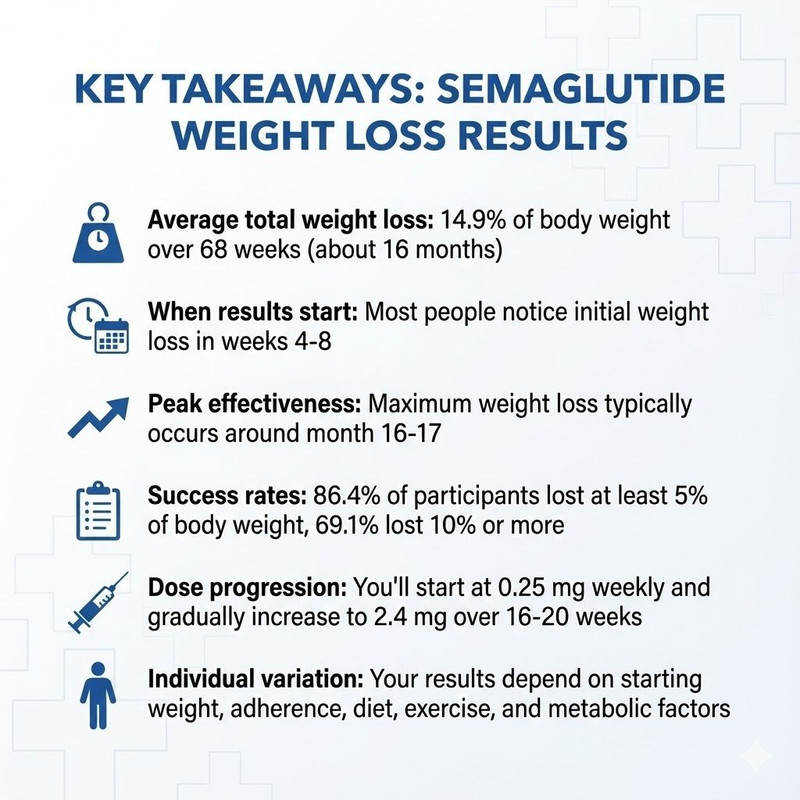
Key Takeaways: Semaglutide Weight Loss Results
- Average total weight loss: 14.9% of body weight over 68 weeks (about 16 months)
- When results start: Most people notice initial weight loss in weeks 4-8
- Peak effectiveness: Maximum weight loss typically occurs around month 16-17
- Success rates: 86.4% of participants lost at least 5% of body weight, 69.1% lost 10% or more
- Dose progression: You’ll start at 0.25 mg weekly and gradually increase to 2.4 mg over 16-20 weeks
- Individual variation: Your results depend on starting weight, adherence, diet, exercise, and metabolic factors
How Semaglutide Works for Weight Loss
Semaglutide belongs to a class of medications called GLP-1 receptor agonists. These medications mimic a naturally occurring hormone (GLP-1) that regulates appetite and blood sugar. When you take semaglutide, it creates several effects that promote weight loss:
Appetite suppression: Semaglutide acts on receptors in your brain that control hunger and satiety. Most people experience significantly reduced appetite, making it easier to eat less without feeling deprived or constantly hungry.
Slower gastric emptying: The medication slows how quickly food leaves your stomach. This means you feel full longer after eating and are satisfied with smaller portion sizes.
Improved blood sugar control: Semaglutide helps regulate insulin secretion and reduces glucose production in the liver, which can reduce cravings for high-sugar foods.
Reduced food noise: Many patients report that semaglutide quiets the constant thoughts about food that often interfere with weight loss efforts.
The FDA approved semaglutide under the brand name Wegovy specifically for chronic weight management in 2021. The same active ingredient is also sold as Ozempic for type 2 diabetes, though Ozempic carries lower maximum doses. Through platforms like TrimRx, you can also access compounded semaglutide at significantly lower costs than brand-name options.
Semaglutide Weight Loss Results: Month-by-Month Timeline
Understanding the typical progression of weight loss on semaglutide helps you set realistic expectations. The timeline below reflects the standard dosing schedule and average results from clinical trials, though individual experiences vary.
Month 1: Initial Results (0.25 mg dose)
Average weight loss: 1-2% of body weight (2-4 pounds for a 200-pound person)
Your first month on semaglutide serves primarily as an initiation period. The starting dose of 0.25 mg weekly is intentionally low to help your body adjust to the medication and minimize side effects like nausea.
During this month, you’ll likely notice reduced appetite before seeing significant weight changes on the scale. Many people report feeling full faster during meals and experiencing fewer cravings between meals. Some patients lose 3-5 pounds in the first month, while others maintain their weight as their bodies adjust.
What to expect: Mild nausea is common but typically manageable. Focus on staying hydrated, eating smaller meals, and avoiding very fatty or spicy foods.
Month 2: Increasing Effects (0.5 mg dose)
Average weight loss: 2-4% cumulative (4-8 pounds for a 200-pound person)
After four weeks at the starter dose, you’ll increase to 0.5 mg weekly. This doubling of the dose often brings more noticeable appetite suppression and the beginning of consistent weight loss.
During month two, the majority of patients begin seeing steady downward movement on the scale. You may find that you naturally skip snacks you would have previously eaten or feel satisfied with significantly smaller portions at meals.
What to expect: Your body is still adjusting to the medication. Continue monitoring for side effects, which often peak during dose increases then subside within a week or two.
Month 3: Noticeable Changes (0.5 mg dose)
Average weight loss: 4-6% cumulative (8-12 pounds for a 200-pound person)
By month three, most people have been on 0.5 mg for at least four weeks. This is often when weight loss becomes visibly noticeable to you and others. Clothes may fit more loosely, and you might see changes in your face, waist, and overall shape.
The consistent appetite suppression at this dose allows for sustained caloric reduction without the mental struggle that typically accompanies dieting. Many patients report this is when they truly start believing the medication is working.
What to expect: Energy levels often improve as your body adapts to eating less and your weight decreases. Side effects typically become less bothersome or resolve entirely.
Month 4: Steady Progress (1 mg dose)
Average weight loss: 6-8% cumulative (12-16 pounds for a 200-pound person)
Around week 12-16, your provider will increase your dose to 1 mg weekly. This represents another doubling of your dose and often brings renewed appetite suppression if you had started to notice any return of hunger at the previous dose.
Month four typically shows continued steady weight loss. You’re now one-third of the way through the typical titration schedule, and the cumulative effects are becoming substantial.
What to expect: Brief return of mild side effects during the first week or two at the new dose, then continued steady progress. This is a good time to reassess your eating habits and ensure you’re getting adequate nutrition despite reduced appetite.
Months 5-8: Continued Weight Loss (1.7 mg dose)
Average weight loss: 10-12% cumulative by month 8 (20-24 pounds for a 200-pound person)
Between months 5-8, you’ll increase to 1.7 mg weekly (typically around week 16-20). This dose represents a significant jump and is where many patients experience their most dramatic weight loss phase.
During these months, the rate of weight loss often accelerates. You may lose 2-4 pounds per week during the initial weeks at this dose. The appetite suppression at 1.7 mg is typically quite strong, and many patients report they have to consciously remind themselves to eat adequate nutrition.
What to expect: This period often brings both exciting progress and the need for closer attention to nutrition. Make sure you’re consuming enough protein, staying hydrated, and meeting your basic nutritional needs despite reduced hunger.
Months 9-12: Approaching Maintenance (2.4 mg dose)
Average weight loss: 13-15% cumulative by month 12 (26-30 pounds for a 200-pound person)
Around month 6-7 (week 20-24), you’ll reach the maximum maintenance dose of 2.4 mg weekly. This is the dose used in the STEP clinical trials and the FDA-approved dose for chronic weight management.
During months 9-12, weight loss typically continues but often at a slower pace than the rapid loss experienced at 1.7 mg. This is normal and expected. Your body is adjusting to a new set point, and the dramatic initial losses naturally moderate over time.
What to expect: The focus shifts from rapid weight loss to sustainable progress. Some weeks you may lose 1-2 pounds, other weeks you may maintain your weight. Both patterns are normal as your body finds its new equilibrium.
Months 12+: Long-Term Results
Average weight loss: 14-15% by month 16-17 (28-30 pounds for a 200-pound person)
In the STEP-1 trial, participants reached their maximum weight loss around week 60-68 (months 14-16). After this point, most people maintain their weight loss rather than continuing to lose significant additional weight.
Long-term success with semaglutide typically involves continuing the medication while establishing sustainable lifestyle habits. The medication makes it dramatically easier to maintain a lower weight by continuing to suppress appetite and reduce food preoccupation.
What to expect: You’ll transition from active weight loss to weight maintenance. This involves staying on semaglutide (or discussing options with your provider) while developing long-term habits around nutrition and activity that support your new weight.
Clinical Trial Data: STEP-1 Study Results
The STEP-1 (Semaglutide Treatment Effect in People with Obesity) trial remains the gold standard for understanding semaglutide weight loss results. This 68-week study followed 1,961 adults with obesity or overweight who did not have diabetes.
Primary Outcomes
Participants taking semaglutide 2.4 mg weekly achieved:
- Average weight loss: 14.9% of body weight (compared to 2.4% in the placebo group)
- 86.4% lost at least 5% of body weight (vs. 31.5% in placebo group)
- 69.1% lost at least 10% of body weight (vs. 12% in placebo group)
- 50.5% lost at least 15% of body weight (vs. 4.9% in placebo group)
- 32% lost at least 20% of body weight (vs. 1.7% in placebo group)
Real-World Translation
For context, losing 5-10% of your body weight produces significant health improvements, including better blood sugar control, reduced blood pressure, improved cholesterol levels, and decreased joint pain. The fact that nearly 70% of participants achieved 10% or greater weight loss demonstrates semaglutide’s effectiveness compared to traditional weight loss methods.
A 200-pound person losing 14.9% would lose approximately 30 pounds, reaching 170 pounds. A 250-pound person would lose about 37 pounds, reaching 213 pounds.
Study Design Details
Participants in STEP-1 also received counseling on diet and exercise, with recommendations to reduce daily caloric intake by 500 calories and increase physical activity to 150 minutes per week. This mirrors the real-world approach where semaglutide works best as part of a comprehensive weight management strategy.
Factors That Affect Your Semaglutide Weight Loss Results
While the clinical trial data provides valuable benchmarks, individual results vary based on multiple factors:
Starting Weight and BMI
People with higher starting weights and BMIs often lose more absolute pounds but similar percentages of body weight. Someone starting at 300 pounds might lose 45 pounds (15%), while someone starting at 180 pounds might lose 27 pounds (15%).
Adherence to Dosing Schedule
Missing doses or inconsistent weekly injections can reduce effectiveness. Semaglutide works best when taken on the same day each week without skipping doses.
Diet and Nutrition Choices
While semaglutide significantly reduces appetite, your food choices still matter. Focusing on protein-rich foods, vegetables, and whole grains supports better weight loss and helps maintain muscle mass. Continuing to consume high-calorie, nutrient-poor foods will limit your results even on medication.
Physical Activity Level
The STEP trials included modest exercise recommendations (150 minutes weekly of moderate activity). Increasing physical activity, particularly strength training, helps preserve muscle mass during weight loss and can enhance overall results.
Metabolic Factors
Your individual metabolism, hormonal balance, sleep quality, stress levels, and underlying health conditions all influence how your body responds to semaglutide. Conditions like polycystic ovary syndrome (PCOS), hypothyroidism, or insulin resistance may affect your rate of weight loss.
Previous Weight Loss History
People who have lost and regained weight multiple times (yo-yo dieting) may experience slower initial weight loss as their metabolism adjusts. However, semaglutide can still be highly effective in this population.
Medication Interactions
Certain medications can affect weight loss, including some antidepressants, antipsychotics, corticosteroids, and beta-blockers. Discuss your full medication list with your provider to understand potential interactions.
Comparing Semaglutide to Tirzepatide Results
If you’re deciding between weight loss medications, comparing semaglutide results to tirzepatide (another GLP-1 medication) provides helpful context. Our complete semaglutide vs tirzepatide comparison guide covers this in detail, but here are the key differences in weight loss outcomes:
Average Weight Loss Comparison
Semaglutide (STEP-1 trial, 68 weeks):
- Average weight loss: 14.9%
- 69.1% lost 10% or more
- 50.5% lost 15% or more
Tirzepatide (SURMOUNT-1 trial, 72 weeks at 15 mg dose):
- Average weight loss: 22.5%
- 89% lost 10% or more
- 78% lost 15% or more
Tirzepatide shows higher average weight loss in clinical trials, though both medications demonstrate significant effectiveness. The choice between them often comes down to factors like cost, availability, side effect profile, and individual response.
Through TrimRx, compounded semaglutide costs $199 per month while compounded tirzepatide costs $349 per month. Both prices include all consultation, medication, supplies, and shipping with no hidden fees.
How to Maximize Your Semaglutide Results
Getting the best possible outcomes from semaglutide involves more than just taking your weekly injection. These strategies help optimize your results:
Prioritize Protein Intake
When appetite is suppressed, many people naturally reduce protein consumption, which can lead to muscle loss alongside fat loss. Aim for 0.7-1 gram of protein per pound of goal body weight daily. Focus on lean meats, fish, eggs, Greek yogurt, legumes, and protein supplements if needed.
Stay Hydrated
Adequate hydration supports metabolism, helps manage side effects, and prevents constipation (a common issue on semaglutide). Aim for at least 64 ounces of water daily, more if you’re physically active.
Implement Strength Training
While cardio burns calories, strength training preserves and builds muscle mass. This maintains your metabolic rate and improves body composition. Even two 30-minute resistance training sessions weekly make a significant difference.
Get Adequate Sleep
Poor sleep disrupts hunger hormones (ghrelin and leptin) and can slow weight loss. Aim for 7-9 hours of quality sleep nightly. Sleep deprivation also reduces the effectiveness of semaglutide’s appetite suppression.
Manage Stress Levels
Chronic stress elevates cortisol, which promotes fat storage, particularly around the midsection. Incorporate stress-reduction techniques like meditation, yoga, walking, or other activities that help you decompress.
Take Your Dose Consistently
Choose a specific day and time for your weekly injection and stick to it. Set reminders on your phone. Consistency maintains stable medication levels in your system and optimizes effectiveness.
Track Your Progress Beyond the Scale
Take measurements, progress photos, and note how your clothes fit. Sometimes body composition changes (losing fat while maintaining muscle) won’t show as dramatic scale movement but still represent significant progress.
Work with Your Healthcare Provider
Regular follow-up appointments allow your provider to monitor your progress, adjust your dose if needed, manage side effects, and provide support throughout your weight loss journey.
Side Effects and What to Expect
Understanding potential side effects helps you manage them effectively and stay committed to your weight loss plan.
Most Common Side Effects
Nausea: The most frequently reported side effect, affecting about 44% of patients in clinical trials. It’s typically most noticeable during dose increases and usually improves within 1-2 weeks. Eating smaller, more frequent meals helps manage nausea.
Diarrhea: Affects approximately 30% of patients. Usually resolves as your body adjusts. Staying hydrated and avoiding very fatty or spicy foods can help.
Constipation: Occurs in about 24% of patients. Results from slower gastric emptying and reduced food intake. Increase fiber, water intake, and consider a gentle fiber supplement.
Vomiting: Less common than nausea (about 9% of patients) but can occur, especially if you eat too much too quickly. Listen to your body’s fullness signals.
Abdominal pain: Approximately 20% of patients experience some abdominal discomfort, usually mild and temporary.
Managing Side Effects
Most side effects occur during the first few months of treatment and during dose increases. They typically lessen over time as your body adapts:
- Eat smaller, more frequent meals rather than large meals
- Avoid lying down immediately after eating
- Stay away from very fatty, greasy, or spicy foods initially
- Eat slowly and stop when you feel satisfied, not stuffed
- Stay well-hydrated throughout the day
- Take your injection on a day when you can rest if you experience side effects
When to Contact Your Provider
Contact your healthcare provider if you experience:
- Severe abdominal pain that doesn’t resolve
- Persistent vomiting that prevents adequate hydration
- Signs of pancreatitis (severe upper abdominal pain radiating to your back)
- Symptoms of gallbladder problems (pain in the upper right abdomen, yellowing of skin or eyes)
- Significant changes in vision
- Signs of kidney problems (changes in urination, swelling)
Most people tolerate semaglutide well, and side effects, while common, are typically manageable and temporary.
Cost and Access to Semaglutide for Weight Loss
Understanding your options for accessing semaglutide helps you make informed decisions about affordability and treatment.
Brand-Name Semaglutide Costs
Wegovy (FDA-approved for weight loss):
- List price: $1,349 per month
- With insurance: $25-$300 copay (if covered, which is often limited)
- With manufacturer savings card: May reduce cost if you have commercial insurance
Ozempic (FDA-approved for diabetes, used off-label for weight loss):
- List price: $969 per month
- With insurance: $25-$300 copay (if covered for diabetes)
- With manufacturer savings card: Available with commercial insurance
Many insurance plans don’t cover weight loss medications, or coverage is limited. Even with insurance, monthly copays can be substantial.
Compounded Semaglutide Costs
Compounded semaglutide provides a more affordable alternative. Compounding pharmacies create semaglutide preparations using the same active ingredient as brand-name versions but without the branded packaging and marketing costs.
TrimRx offers compounded semaglutide at $199 per month, all-inclusive. This price includes:
- Consultation with a licensed medical provider
- The medication itself
- All necessary supplies (syringes, needles, alcohol pads, sharps container)
- Cold-chain shipping to maintain medication stability
- Monthly follow-up appointments
- Ongoing access to medical support
- Dose adjustments as needed
No hidden fees, membership charges, or additional costs for supplies or shipping.
Telehealth Access
Platforms like TrimRx provide convenient online access to weight loss prescriptions through licensed healthcare providers. The entire process happens virtually:
- Complete an online medical intake form
- Consultation with a licensed provider (typically within 24-48 hours)
- If approved, medication ships directly to your home
- Monthly follow-ups via telehealth platform
This model eliminates the need for in-person doctor visits while maintaining appropriate medical oversight throughout your treatment.
To learn more about buying semaglutide online safely and legally, including what to look for in a legitimate provider, check out our complete safety guide.
Frequently Asked Questions
How quickly will I see results from semaglutide?
Most people begin noticing reduced appetite within the first 1-2 weeks of starting semaglutide. Visible weight loss on the scale typically starts around week 4-8, with an average loss of 1-2% of body weight in the first month. More significant weight changes usually occur from month 2 onward as doses increase.
What is the average weight loss with semaglutide?
Based on the STEP-1 clinical trial, the average weight loss with semaglutide 2.4 mg weekly is 14.9% of body weight over 68 weeks (about 16 months). This translates to approximately 33 pounds for someone starting at 225 pounds. Individual results vary, with 50.5% of participants losing 15% or more of their body weight.
Can I lose 20 pounds in a month on semaglutide?
Losing 20 pounds in a single month on semaglutide is extremely unlikely and would not be healthy. Typical weight loss ranges from 1-4 pounds per week, with an average of 1-2 pounds weekly during the active weight loss phase. Expect to lose 4-8 pounds in most months during your peak weight loss period, with slower losses in early months (as you start on lower doses) and later months (as you approach your goal weight).
How long should I stay on semaglutide?
Most clinical trials studied semaglutide use for 68 weeks, but many people continue treatment indefinitely for weight maintenance. When people stop semaglutide, they typically regain much of the lost weight within a year. Your healthcare provider can help you determine the appropriate duration of treatment based on your individual goals, response to medication, and overall health status.
Does semaglutide work without diet and exercise?
Semaglutide produces weight loss even without significant diet and exercise changes due to its appetite suppression effects. However, the STEP trials combined semaglutide with reduced caloric intake (500-calorie deficit) and moderate physical activity (150 minutes weekly). Combining medication with healthy lifestyle changes produces better results and helps establish sustainable habits for long-term weight maintenance.
Why did my weight loss stall on semaglutide?
Weight loss plateaus are common and normal during any weight loss journey, including on semaglutide. Plateaus can occur because: your metabolism has adapted to your lower weight, you’ve unconsciously increased caloric intake, you need a dose adjustment, you’re retaining water temporarily, or you’re building muscle while losing fat (improving body composition without scale changes). Most plateaus resolve within 2-4 weeks. If weight loss remains stalled longer, discuss dose optimization with your provider.
Is semaglutide better than tirzepatide for weight loss?
Tirzepatide shows higher average weight loss than semaglutide in clinical trials (22.5% vs. 14.9% at maximum doses). However, semaglutide is still highly effective, costs less in compounded form ($199/month vs. $349/month through TrimRx), and some people tolerate it better. The “better” choice depends on your budget, response to medication, side effect profile, and weight loss goals.
Can I drink alcohol while taking semaglutide?
Alcohol is not contraindicated with semaglutide, but moderation is important. Alcohol adds empty calories that can slow weight loss, and some people find their alcohol tolerance decreases on semaglutide. Additionally, alcohol can worsen gastrointestinal side effects like nausea. If you choose to drink, limit consumption to occasional, moderate amounts.
What happens when I reach my goal weight on semaglutide?
When you reach your goal weight, you’ll typically continue taking semaglutide at your maintenance dose to prevent weight regain. Studies show that stopping semaglutide usually results in gradual weight regain. Some people maintain on lower doses, while others need their full dose for continued weight maintenance. Your provider can help you develop a long-term plan that balances medication use with lifestyle habits.
Will insurance cover semaglutide for weight loss?
Insurance coverage for weight loss medications varies significantly by plan. Many insurance plans don’t cover semaglutide when prescribed for weight loss (Wegovy), though some may cover it for diabetes (Ozempic). Even with coverage, copays can be high. Compounded semaglutide through platforms like TrimRx at $199 per month is often more affordable than brand-name options even with insurance coverage.
Ready to Start Your Semaglutide Weight Loss Journey?
Semaglutide offers a medically proven approach to achieving significant, sustainable weight loss. With average results of 14.9% body weight loss over 68 weeks and nearly 70% of people achieving 10% or greater weight loss, it represents one of the most effective weight management medications available.
TrimRx provides affordable access to compounded semaglutide at $199 per month, with all-inclusive pricing covering consultations, medication, supplies, and ongoing medical support. Get started with a simple online consultation and begin your weight loss journey with expert guidance and support every step of the way.
For those interested in even more significant weight loss, compounded tirzepatide at $349 per month offers another option with higher average weight loss in clinical trials. Compare your options and find the right medication for your goals through TrimRx.

Transforming Lives, One Step at a Time
Keep reading

How Online GLP-1 Prescriptions Work: From Consult to Delivery
The idea of getting a prescription for a GLP-1 medication without setting foot in a doctor’s office still surprises some people. It shouldn’t. Telehealth…

How to Verify a Compounding Pharmacy Is Safe and Legitimate
The growth of the compounded GLP-1 market has brought something genuinely useful to patients who couldn’t otherwise afford semaglutide or tirzepatide. It has also…

What Is a Compounding Pharmacy and How Does It Work?
If you’ve been researching GLP-1 medications like semaglutide or tirzepatide, you’ve probably come across the term “compounding pharmacy” more than once. It gets used…


