Sermorelin Guide
Introduction
A growth hormone injection delivers the hormone itself. Sermorelin does not. It signals the pituitary gland and asks the body to release more of its own growth hormone.
That distinction drives nearly every important question about sermorelin: what it does, what it cannot do, and why its growing online reputation often outruns the evidence.
Sermorelin has a legitimate medical history. It is also now promoted through compounded products tied to recovery, body composition, sleep, and “anti-aging.” Those claims are not interchangeable. A plausible mechanism does not make a medication a proven treatment for every problem attached to it.
This guide covers sermorelin’s mechanism, history, uses, administration, safety questions, and relationship to weight management. At TrimRx, our only program is GLP-1 weight loss telehealth. We do not sell sermorelin. This article is educational, not a recommendation to use it.
At TrimRx, we believe understanding your options is the first step toward taking control of your health. If you want to see whether a personalized treatment plan is a fit for you, you can start with a quick online visit.
What Is Sermorelin?
Sermorelin is a synthetic version of growth hormone-releasing hormone, often called GHRH. GHRH is a signaling hormone produced in the hypothalamus, the part of the brain that helps regulate the pituitary gland. The pituitary then releases growth hormone into the bloodstream.
Quick Answer: Sermorelin is a synthetic version of growth hormone-releasing hormone, or GHRH, designed to signal the pituitary gland to release growth hormone.
Sermorelin imitates that upstream signal. It is not growth hormone. Its intended action is to stimulate the pituitary to release growth hormone, provided the relevant signaling pathway and pituitary function are intact.
That places sermorelin in the broader peptide category, but “peptide” is not a quality seal. The term describes a type of molecule. It does not establish FDA approval, prove that a product works for a particular purpose, or show that a compounded formulation matches one used in older clinical research.
How Does Sermorelin Work?
Sermorelin binds to receptors involved in growth hormone-releasing hormone signaling. The pituitary responds by releasing growth hormone, which then participates in the body’s normal growth and tissue-regulation processes.
The key word is indirect. Sermorelin relies on the body’s endocrine system to respond. Direct growth hormone therapy skips that step and supplies recombinant human growth hormone. These are different treatments, not interchangeable versions of the same drug.
Growth hormone release is naturally pulsatile, not constant. Sleep, age, nutrition, illness, and other hormonal signals affect it. Sermorelin is not designed to keep growth hormone permanently elevated. It influences a regulatory pathway, and the response varies from person to person.
What Was Sermorelin Originally Used For?
Sermorelin was used to evaluate and treat certain children with growth hormone deficiency. A product containing sermorelin was formerly approved in the United States for pediatric growth hormone deficiency and for diagnostic testing related to growth hormone secretion.
That product is no longer marketed in the United States. Its disappearance from the market does not erase sermorelin’s medical history. It does matter, however, when someone presents a current compounded vial as though it were the same as a widely available FDA-approved product.
Sermorelin is now generally encountered through compounding. Compounded medications can have legitimate clinical uses when prescribed appropriately, but they are not automatically equivalent to FDA-approved commercial medications. The prescriber should explain why sermorelin is being considered, which formulation is being used, and how the response will be assessed.
Why Are Adults Interested in Sermorelin?
Adult interest usually rests on one idea: stimulate the body’s own growth hormone signaling instead of injecting growth hormone directly. Sermorelin appears in conversations about recovery, body composition, sleep, energy, and age-related changes.
Those promises cover too much ground. Fatigue, poor sleep, reduced exercise capacity, changes in body composition, and low mood can stem from medication effects, sleep disorders, endocrine disease, depression, inadequate nutrition, or excess weight. Growth hormone dysfunction is not the default explanation.
“Anti-aging” is even less precise. Aging is not one hormone deficiency, and sermorelin is not a general reversal treatment. A sound evaluation begins with the person’s symptoms and medical history, not the assumption that a peptide is the answer.
Is Sermorelin FDA Approved Today?
The former FDA-approved sermorelin product is no longer marketed in the United States. Current sermorelin products are typically compounded. They should not be presented as FDA-approved treatments for general adult wellness, weight loss, or anti-aging.
That distinction is more than paperwork. FDA approval applies to a specific product, formulation, manufacturing process, and labeled use. A compounded medication is prepared by a pharmacy under prescription and does not have the same approval status as a commercially manufactured drug.
A clinician may prescribe a medication outside its former labeled context, but that should be stated plainly. Ask whether the product is compounded, why it is being prescribed, how the dose was chosen, and what would prompt the clinician to stop treatment.
How Is Sermorelin Taken?
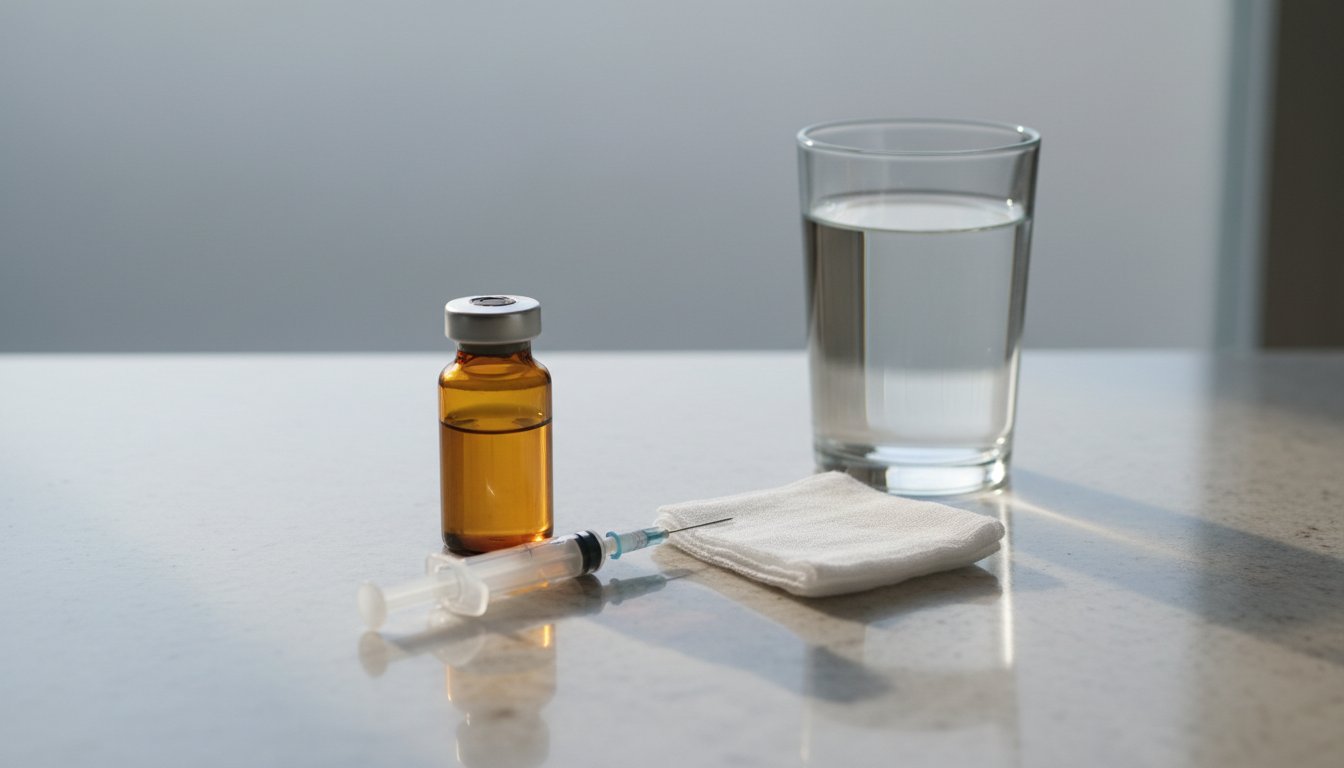
Sermorelin is generally administered by subcutaneous injection. The medication goes into the fatty tissue beneath the skin, not into a vein or muscle. Exact instructions depend on the formulation and the clinician’s directions.
Because current products are commonly compounded, no single sermorelin routine applies to every vial. Concentration, injection volume, storage instructions, and beyond-use dating may differ. Follow the pharmacy label and prescription. Do not copy a protocol from a peptide forum or social media post.
Basic injection safety still matters. Use the correct syringe, check the label, store the medication as instructed, and never share needles or medication. If the vial looks different from a previous one, stop and contact the dispensing pharmacy or prescriber before using it.
What Side Effects Can Sermorelin Cause?
Sermorelin can cause injection-site reactions, including redness, soreness, and irritation. Headache, flushing, dizziness, and nausea are also reported with growth hormone-releasing hormone therapies. Contact the prescribing clinician about any concerning or persistent reaction.
Sermorelin’s effects do not stop at the injection site. By stimulating growth hormone release, it can affect fluid balance, glucose regulation, and tissue growth. That makes medical screening important, especially for people with conditions involving those systems.
Discuss a history of cancer, diabetes or impaired glucose regulation, pituitary disease, severe illness, or other endocrine problems before treatment. Pregnancy and breastfeeding also require specific medical guidance.
The important question is not whether sermorelin is “natural.” The important question is whether changing this hormone pathway is appropriate for the individual.
Key Takeaway: Sermorelin was used in pediatric growth hormone deficiency and for diagnostic purposes, but its former FDA-approved product is no longer marketed in the United States.
Who Should Not Use Sermorelin Without Medical Evaluation?
No one should begin sermorelin because of an online claim or a vial obtained without proper prescribing oversight. The medication acts on an endocrine pathway. Treatment should have a clear clinical reason, and the evaluation should identify conditions that could make it inappropriate.
Known or suspected pituitary disease deserves particular attention because sermorelin depends on pituitary responsiveness. A clinician may also need to investigate symptoms that point to another hormone disorder rather than assume a growth hormone problem.
Discuss active cancer and any history that raises concern about abnormal tissue growth. The same applies to diabetes, glucose intolerance, thyroid disease, unexplained headaches, visual symptoms, and medications that affect endocrine function. These issues do not create a universal yes-or-no answer, but they cannot be brushed aside.
Product quality matters, too. Compounded medications require accurate labeling, proper storage, and careful handling. A low price or easy online checkout is no substitute for a clinician who knows the patient’s medical history.
Is Sermorelin the Same as Growth Hormone?
No. Sermorelin stimulates the pituitary to release growth hormone. Growth hormone therapy supplies recombinant human growth hormone directly.
That difference affects both physiology and prescribing. Sermorelin requires a functioning signaling pathway and responsive pituitary tissue. Direct growth hormone therapy does not rely on the same upstream release step.
Neither treatment is a casual supplement. Neither should be chosen solely because of promises about muscle, fat, or aging.
It is also wrong to call sermorelin a universally milder form of growth hormone. Indirect does not mean risk-free. Sermorelin still affects an important hormonal system, and its suitability depends on the patient, indication, formulation, and monitoring plan.
Can Sermorelin Help with Weight Loss?
Sermorelin is not an FDA-approved weight-loss medication. It should not be marketed as a substitute for treatments studied and prescribed for obesity or excess weight.
Growth hormone biology does intersect with body composition. That does not make sermorelin a reliable weight-loss treatment. Weight management involves energy balance, appetite, metabolic health, behavior, and, when appropriate, evidence-based medication. A peptide linked to growth hormone signaling is not automatically an obesity treatment.
TrimRx’s role is straightforward. TrimRx provides GLP-1 weight loss telehealth, and GLP-1 medication is the only treatment program we offer. We do not prescribe sermorelin and do not claim that it treats excess weight. If weight is the central concern, the appropriate next step is a weight-management evaluation, not a detour into a growth hormone peptide.
What Should You Ask Before Starting Sermorelin?
Start with the indication. What diagnosis or treatment goal is being addressed? “More energy” and “better aging” are not precise enough for a medication that changes endocrine signaling.
Then ask about the product. Is it compounded? Which pharmacy prepares it? How should it be stored? What is the beyond-use date? How will the clinician confirm that the vial and instructions are correct?
Ask about monitoring. What symptoms or laboratory findings would lead to a dose change or discontinuation? What follow-up is required? A provider who cannot explain how safety and treatment response will be judged has not provided a complete plan.
Finally, ask about alternatives that match the actual problem. Poor sleep may require a sleep evaluation. Erectile symptoms may call for cardiovascular and hormonal assessment. Excess weight may require a dedicated obesity-treatment plan. The best treatment usually targets the real diagnosis, not the most interesting molecule in the marketing copy.
The Path Forward
Sermorelin is a growth hormone-releasing hormone analog with a legitimate clinical history. Its online reputation, however, often reaches beyond what can be responsibly claimed.
It is not the same as growth hormone. It is not a general anti-aging treatment. It is not an FDA-approved weight-loss medication. Current use commonly involves compounded products, which makes the prescriber, pharmacy, labeling, and monitoring plan especially important.
At TrimRx, we stay specific. We provide GLP-1 weight loss telehealth, and that is the only program we sell. We do not prescribe sermorelin or present it as a treatment for weight, energy, recovery, or aging.
If excess weight is the real concern, begin with an evaluation designed for weight management rather than choosing a peptide because its mechanism sounds promising. If sermorelin is being considered for another reason, take these questions to a qualified clinician and require a clear indication, product explanation, and follow-up plan.
Bottom line: Sermorelin is not an FDA-approved weight-loss medication, and it is not part of TrimRx’s GLP-1 weight loss program.
FAQ
What Is Sermorelin?
Sermorelin is a synthetic version of growth hormone-releasing hormone. It signals the pituitary gland to release growth hormone instead of supplying growth hormone directly.
Is Sermorelin the Same as Human Growth Hormone?
No. Sermorelin acts upstream by stimulating the pituitary. Recombinant human growth hormone supplies growth hormone directly. They work differently and are not interchangeable.
Is Sermorelin FDA Approved?
A former FDA-approved sermorelin product was used for pediatric growth hormone deficiency and diagnostic testing, but that product is no longer marketed in the United States. Current sermorelin products are commonly compounded and should not be described as FDA-approved general wellness or weight-loss products.
How Is Sermorelin Administered?
Sermorelin is generally given by subcutaneous injection. Instructions vary by compounded formulation, so follow the prescription label and the prescribing clinician’s directions.
What Are Sermorelin’s Side Effects?
Possible effects include injection-site irritation, headache, flushing, dizziness, and nausea. Because sermorelin affects growth hormone signaling, medical screening matters for conditions involving glucose regulation, the pituitary gland, abnormal tissue growth, or other endocrine concerns.
Can Sermorelin Help with Weight Loss?
Sermorelin is not an FDA-approved weight-loss medication. TrimRx does not prescribe sermorelin. Our only program is GLP-1 weight loss telehealth, and a weight-management evaluation is more appropriate when excess weight is the primary concern.
Should Adults Use Sermorelin for Anti-aging?
“Anti-aging” is too broad to function as a clear medical indication. Adults considering sermorelin should discuss the specific symptom or diagnosis, the compounded product’s status, possible risks, and the monitoring plan with a qualified clinician before treatment.
Disclaimer: This content is for informational purposes only and does not constitute medical advice. It is not intended to diagnose, treat, cure, or prevent any disease or condition. Individual results may vary. Always consult a qualified healthcare professional before starting any treatment or medication.

Transforming Lives, One Step at a Time
Keep reading


Tesamorelin for Visceral Fat: What It Is and WHO It Is For
People often collapse two different goals into one: losing visceral fat and losing weight overall. They overlap. They are not the same job.