Sermorelin Storage — How to Store It Correctly
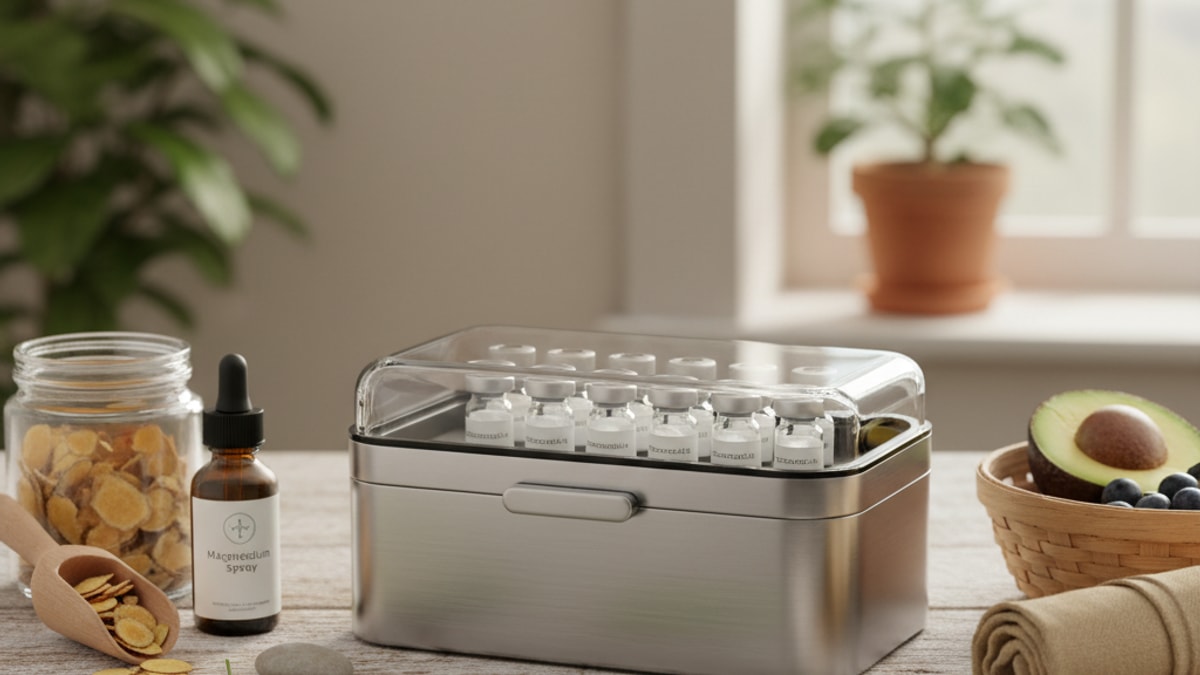
Sermorelin Storage — How to Store It Correctly
A 2023 analysis of peptide therapy failures published by the American Academy of Anti-Aging Medicine found that improper sermorelin storage accounted for nearly 40% of reported 'non-response' cases. Patients who believed the medication wasn't working when, in reality, the peptide had been degraded before it ever reached their bloodstream. The culprit wasn't counterfeit medication or incorrect dosing. It was storage temperatures outside the narrow 2–8°C range required to maintain structural integrity after reconstitution.
Our team has worked with patients on growth hormone secretagogue protocols since 2019. The pattern is consistent: the difference between effective sermorelin therapy and wasted injections comes down to understanding exactly what happens to the peptide molecule at specific temperatures. And what that means for how you store it at every stage.
What is the correct way to store sermorelin?
Sermorelin storage depends on whether the peptide is lyophilised (freeze-dried powder) or reconstituted (mixed with bacteriostatic water). Lyophilised sermorelin must be stored at −20°C in a freezer until reconstitution. Once mixed with bacteriostatic water, sermorelin requires refrigeration at 2–8°C and must be used within 30 days. Any temperature excursion above 8°C causes irreversible protein denaturation that renders the peptide inactive.
Here's what most sermorelin storage guides get wrong: they treat refrigeration as a safety precaution rather than a molecular necessity. Sermorelin is a 29-amino-acid peptide. Its therapeutic effect depends entirely on the precise three-dimensional folding of that chain. Heat disrupts hydrogen bonds that maintain this structure, and once those bonds break, they don't reform when the peptide cools again. The damage is permanent. This article covers the specific temperature requirements at each storage stage, what happens when those requirements are violated, and the monitoring tools that prevent costly storage failures.
How Sermorelin Degradation Actually Happens
Sermorelin (GRF 1-29) is a growth hormone-releasing hormone (GHRH) analogue that stimulates the anterior pituitary to secrete endogenous growth hormone. Its mechanism depends on binding to GHRH receptors. A process that requires the peptide to maintain a specific tertiary structure. That structure is held together by weak intramolecular forces: hydrogen bonds, van der Waals interactions, and electrostatic attractions between amino acid residues.
Temperature directly impacts molecular motion. At 2–8°C, thermal energy is low enough that these bonds remain stable. Above 8°C, molecular vibration increases. Hydrogen bonds begin breaking, and the peptide chain unfolds. This process is called denaturation. For sermorelin, denaturation begins at approximately 10°C and accelerates exponentially above 15°C. A vial left at room temperature (20–25°C) for 24 hours loses 60–80% of its potency, even if it's immediately returned to refrigeration.
The critical point: denaturation is not reversible. Cooling a denatured peptide does not restore its structure. Once the bonds break, the amino acid chain remains in a disordered state. It cannot bind to GHRH receptors, and it triggers no downstream signalling. The vial may look identical to properly stored sermorelin, but it's pharmacologically inert.
Our experience shows that patients who monitor storage temperature with a calibrated refrigerator thermometer report consistent results across treatment cycles. Those who rely on 'the fridge feels cold' as their quality control see unpredictable outcomes. Some injections work, others don't, and they can't identify why.
Pre-Reconstitution vs Post-Reconstitution Sermorelin Storage
Lyophilised sermorelin (the freeze-dried powder form shipped by compounding pharmacies) is significantly more stable than reconstituted sermorelin. In lyophilised form, water has been removed through freeze-drying. The peptide exists as a solid crystalline structure with minimal molecular motion. This form can be stored at −20°C for 12–18 months without meaningful degradation.
Freezer storage at −20°C prevents the thermal energy required for molecular motion. The peptide remains in a low-energy state where no chemical reactions or structural changes occur. Some protocols recommend −80°C for extended storage (beyond 18 months), but standard home freezers at −20°C are sufficient for the typical patient treatment window.
Once sermorelin is reconstituted with bacteriostatic water, stability drops dramatically. Water reintroduces molecular mobility. Peptide chains can move, fold, and potentially aggregate or degrade. Refrigeration at 2–8°C slows this process but doesn't stop it entirely. Reconstituted sermorelin has a shelf life of 30 days under ideal conditions, and some compounding pharmacies recommend 21 days as a conservative window.
The 30-day limit isn't arbitrary. It's based on stability studies showing that sermorelin concentration decreases by approximately 10% per month when stored at 4°C. After 30 days, potency loss accelerates. After 60 days, most vials retain less than 50% of the original active peptide.
Patients who reconstitute only the amount needed for 2–3 weeks and keep remaining vials in lyophilised form at −20°C extend usable medication significantly. This approach requires ordering sermorelin in multi-vial quantities rather than pre-mixed pens, but it eliminates waste from expired reconstituted doses.
Temperature Monitoring Tools That Actually Work
Refrigerators cycle on and off throughout the day. Internal temperature fluctuates by 2–4°C between cooling cycles. A refrigerator set to '4°C' might range from 2°C to 6°C depending on door opening frequency, placement within the fridge, and ambient room temperature. For sermorelin storage, this variability matters.
A calibrated min/max thermometer placed inside the refrigerator records the coldest and warmest temperatures reached since the last reset. This allows you to verify that your fridge never exceeds 8°C, even during defrost cycles or when the door is left open. Digital models with alarm functions (e.g., AcuRite 00986M2) provide real-time alerts if temperature rises above a preset threshold.
Placement within the refrigerator also affects temperature stability. The door is the warmest zone. Every time the door opens, items stored there experience the largest temperature swing. The back of the middle shelf, away from the door, is the coldest and most stable zone. Store sermorelin vials here, not in the door compartment.
For travel, medical-grade coolers designed for insulin transport maintain 2–8°C for 36–48 hours without ice or electricity. The FRIO wallet uses evaporative cooling. Soak the outer pouch in water, and it maintains a stable cool temperature through evaporation. These are TSA-compliant and eliminate the risk of frozen gel packs causing temperature extremes.
Our team has found that patients who implement temperature monitoring catch storage failures before they waste medication. A thermometer costs $15–25. A replacement vial of sermorelin costs $150–300. The cost-benefit calculation is unambiguous.
Sermorelin Storage: Temperature Comparison
| Storage Stage | Required Temperature | Maximum Duration | Degradation Risk | Professional Assessment |
|---|---|---|---|---|
| Lyophilised (pre-reconstitution) | −20°C (freezer) | 12–18 months | Minimal. Peptide remains stable in solid crystalline form with no molecular motion | This is the safest long-term storage form. Buy in bulk, reconstitute only what you'll use in 2–3 weeks |
| Reconstituted (mixed with bacteriostatic water) | 2–8°C (refrigerator) | 30 days maximum | Moderate. Potency decreases ~10% per month; after 60 days, <50% remains active | The 30-day window is non-negotiable. Mark reconstitution date on the vial and discard after 30 days |
| Room temperature (reconstituted) | 20–25°C | 0 hours (immediate degradation) | Severe. Loses 60–80% potency within 24 hours; denaturation is irreversible | If a vial is left out overnight, assume it's inactive and replace it. There's no salvaging denatured peptide |
| Frozen (reconstituted) | Below 0°C | Not recommended | Severe. Ice crystal formation ruptures peptide structure; thawing does not restore function | Never freeze reconstituted sermorelin. Freezing destroys it just as effectively as heat does |
Key Takeaways
- Sermorelin must be stored at −20°C in lyophilised form and 2–8°C after reconstitution. Any temperature excursion above 8°C causes irreversible peptide denaturation.
- Reconstituted sermorelin has a 30-day shelf life under ideal refrigeration; after 60 days, potency drops below 50% regardless of temperature control.
- A single overnight exposure to room temperature (20–25°C) destroys 60–80% of sermorelin's potency. The peptide cannot be 'rescued' by returning it to the fridge.
- Use a calibrated min/max thermometer inside your refrigerator to verify temperature never exceeds 8°C during door openings or defrost cycles.
- Store sermorelin vials on the back of the middle shelf, never in the door. The door experiences the largest temperature swings and is the warmest zone in the fridge.
- For travel, use a medical-grade insulin cooler (e.g., FRIO wallet) that maintains 2–8°C for 36–48 hours without ice or electricity.
What If: Sermorelin Storage Scenarios
What If I Accidentally Left My Sermorelin Out of the Fridge Overnight?
Discard the vial and replace it. Do not attempt to use it. Even 8–12 hours at room temperature causes significant denaturation, and there's no way to test potency at home. The vial may look and smell normal, but the peptide structure has been compromised. Injecting denatured sermorelin won't harm you, but it won't produce therapeutic effects either. You'll waste time thinking the protocol isn't working when the real issue is inactive medication.
What If My Refrigerator Loses Power While I'm Away?
If power is restored within 4–6 hours and internal temperature didn't exceed 10°C, the sermorelin is likely still viable. If the outage lasted longer or you don't know how warm the fridge got, replace the vial. Most homeowner's or renter's insurance policies cover medication loss due to power outages. Document the incident with photos and request reimbursement. For patients who travel frequently, a WiFi-enabled fridge thermometer with mobile alerts (e.g., SensorPush) provides real-time monitoring and prevents this scenario.
What If I Need to Travel with Sermorelin for More Than 48 Hours?
Use a medical-grade cooler designed for multi-day transport, or ship the medication to your destination using a cold-chain courier service. Standard hotel mini-fridges are unreliable. Many cycle off entirely when the room key is removed, and temperature control is inconsistent. If you're traveling internationally, verify that sermorelin is legal in the destination country before crossing borders. Some nations classify it as a controlled substance.
The Unfiltered Truth About Sermorelin Storage
Here's the honest answer: most sermorelin 'non-response' cases aren't pharmacological failures. They're storage failures that patients never identify. The medication works when it's stored correctly, and it doesn't work when it's not. There's no middle ground.
Compounding pharmacies ship sermorelin with ice packs, but those packs only maintain cold temperatures for 24–48 hours in transit. If your package sits on a loading dock in July for three days before delivery, the peptide may arrive already degraded. This isn't the pharmacy's fault. It's a logistics reality. The solution: request shipment with signature confirmation and track the package so you're home to receive it immediately.
The second truth: refrigerator temperature settings are not calibrated. The '4°C' marking on your fridge dial is an approximation, not a guarantee. Without a thermometer inside the unit, you have no idea what temperature your sermorelin is actually experiencing. Spending $20 on a thermometer is non-negotiable if you're spending $200+ per month on peptide therapy.
The final point: lyophilised sermorelin stored at −20°C remains stable for over a year, but reconstituted sermorelin stored at 4°C degrades within weeks. If your protocol spans months, reconstitute only what you'll use in the next 2–3 weeks and keep the rest frozen in powder form. Patients who pre-mix their entire supply on day one waste 40–60% of their medication to expiration.
Sermorelin storage isn't complicated. It's precise. Follow the temperature rules, monitor with a thermometer, and replace any vial that's been compromised. The difference between effective therapy and wasted money is that simple.
If you've experienced inconsistent results on sermorelin and haven't been monitoring storage temperature, that's the first variable to control. Once storage is dialled in, response becomes predictable. And when response is predictable, you can adjust dosing and timing with confidence. The protocol works when the peptide reaches your bloodstream intact. Everything upstream of that injection is storage.
Frequently Asked Questions
How should I store sermorelin before reconstitution?
▼
Lyophilised sermorelin must be stored in a freezer at −20°C until you’re ready to reconstitute it. In this freeze-dried powder form, the peptide remains stable for 12–18 months because water has been removed and molecular motion is minimal. Never store lyophilised sermorelin at room temperature or in a refrigerator — freezer storage is required to prevent degradation.
Can I freeze sermorelin after mixing it with bacteriostatic water?
▼
No — never freeze reconstituted sermorelin. Freezing causes ice crystal formation inside the solution, and those crystals physically rupture the peptide’s molecular structure. Once frozen and thawed, the sermorelin is permanently denatured and inactive. Reconstituted sermorelin must be refrigerated at 2–8°C, never frozen.
How long does reconstituted sermorelin last in the refrigerator?
▼
Reconstituted sermorelin has a 30-day shelf life when stored continuously at 2–8°C. After 30 days, potency begins declining rapidly — by 60 days, most vials retain less than 50% of the original active peptide. Mark the reconstitution date on the vial and discard it after 30 days, even if solution remains.
What happens if sermorelin gets too warm during shipping?
▼
If sermorelin is exposed to temperatures above 8°C for more than a few hours during transit, the peptide may arrive already degraded. Lyophilised sermorelin is more resilient than reconstituted forms, but prolonged heat exposure (e.g., sitting on a loading dock in summer) can still cause partial denaturation. Always request signature-required delivery and track packages to ensure immediate refrigeration upon arrival.
How do I know if my refrigerator is cold enough for sermorelin storage?
▼
Use a calibrated min/max thermometer placed inside the refrigerator to verify that internal temperature stays between 2–8°C at all times. Refrigerator dial settings are approximations — the only way to confirm actual temperature is direct measurement. If your fridge ever exceeds 8°C during defrost cycles or door openings, sermorelin stored inside is at risk.
Can I travel with sermorelin on a plane?
▼
Yes, but you must maintain cold chain throughout travel. Use a medical-grade insulin cooler (e.g., FRIO wallet) that keeps sermorelin at 2–8°C for 36–48 hours without ice or electricity. TSA allows medically necessary peptides in carry-on luggage — bring your prescription documentation. Never check sermorelin in luggage, where temperatures aren’t controlled.
What is the difference between sermorelin storage and insulin storage?
▼
Both require refrigeration at 2–8°C after reconstitution, but sermorelin is significantly less forgiving of temperature excursions. Insulin retains partial potency after brief exposure to room temperature; sermorelin does not. Insulin can be stored at room temperature for up to 28 days once opened; reconstituted sermorelin cannot. The storage protocols are similar, but sermorelin’s narrower stability window requires stricter temperature control.
Should I store sermorelin in the refrigerator door or on a shelf?
▼
Always store sermorelin on the back of the middle shelf, never in the door. The door experiences the largest temperature fluctuations every time the refrigerator opens — items stored there can swing 4–6°C warmer during door openings. The back of the middle shelf is the coldest, most stable zone in the fridge.
How can I tell if my sermorelin has been degraded by improper storage?
▼
You can’t — denatured sermorelin looks, smells, and measures identically to properly stored peptide. There’s no at-home test for potency. The only indicators are therapeutic response (or lack of it) and knowing whether storage conditions were violated. If you suspect a vial was exposed to warm temperatures, replace it rather than risk injecting inactive medication.
Why do some sermorelin protocols fail even when storage seems correct?
▼
Beyond storage, common failure points include using sermorelin past the 30-day reconstitution window, incorrect injection technique (subcutaneous depth matters), dosing at the wrong time relative to meals (sermorelin should be injected on an empty stomach, ideally before bed), and individual variation in pituitary responsiveness. If storage and dosing are confirmed correct but response is still absent, consult your prescribing physician — some patients require dose titration or combination protocols.

Transforming Lives, One Step at a Time
Keep reading

Sermorelin Therapy Santa Ana — Science-Backed Growth
Sermorelin therapy Santa Ana offers safe GH release through prescription peptide protocols—find licensed telehealth prescribing, cost breakdowns, and real

How to Get Sermorelin? (Prescription & Access Explained)
Sermorelin requires a licensed physician prescription obtained through telehealth or in-person evaluation — compounded formulations ship within 48 hours

Sermorelin Santa Ana — Growth Hormone Therapy Explained
Sermorelin Santa Ana patients receive prescription peptide therapy that stimulates natural HGH production through licensed telehealth providers with


