Starting Dose of Tirzepatide: What to Expect

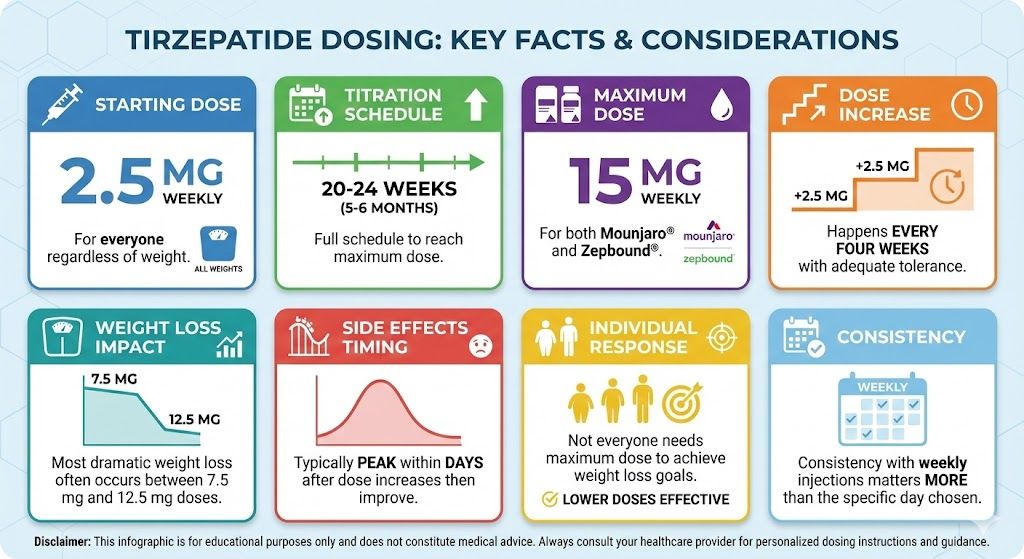
The standard starting dose of tirzepatide is 2.5 mg injected once weekly for the first four weeks. This initial dose isn’t primarily intended for weight loss. It’s a tolerability phase, designed to let your body adjust to the medication before your provider increases the dose. Most people don’t see dramatic results at 2.5 mg, and that’s completely by design. Understanding why the starting dose works this way, and what the ramp-up looks like, helps set realistic expectations from day one.
Why Everyone Starts at 2.5 mg
Tirzepatide is a dual GIP/GLP-1 receptor agonist, and it’s a potent one. It simultaneously activates two incretin hormone pathways that affect appetite, blood sugar regulation, gastric emptying, and how your brain processes hunger signals. Introducing that kind of biological activity all at once would be rough on your system.
The 2.5 mg starting dose is essentially an onboarding period. Your GI tract, in particular, needs time to adapt. Tirzepatide slows the rate at which food moves through your stomach and intestines. If you jumped straight to a therapeutic dose like 10 mg or 15 mg, the likelihood of significant nausea, vomiting, and other GI side effects would be much higher.
Think of it this way: you wouldn’t start a running program with a marathon. The 2.5 mg dose is your training phase. Your body is learning how to respond to the medication, and that adaptation period makes higher doses much more tolerable when you get there.
The Full Dosing Schedule
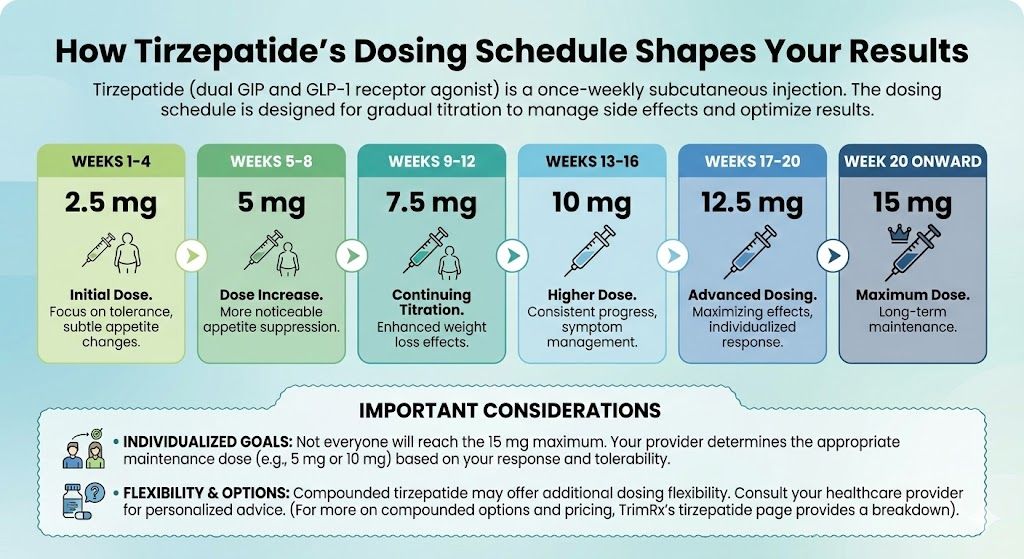
Tirzepatide follows a structured escalation schedule. Here’s how it typically looks:
- Weeks 1 through 4: 2.5 mg weekly (starting dose)
- Weeks 5 through 8: 5 mg weekly
- Weeks 9 through 12: 7.5 mg weekly
- Weeks 13 through 16: 10 mg weekly
- Weeks 17 and beyond: 12.5 mg or 15 mg weekly (if needed)
Each dose increase happens in 2.5 mg increments, and you stay at each level for at least four weeks before moving up. Your provider may adjust this timeline based on how you’re responding. Some people get excellent results at 10 mg and never need to go higher. Others benefit from the maximum 15 mg dose. There’s no single “right” dose for everyone.
The escalation schedule isn’t arbitrary. It’s based on the clinical trial design used in the SURMOUNT and SURPASS programs, where this gradual approach consistently produced better tolerability outcomes than faster titration.
What to Expect During Your First Four Weeks
Your first month on tirzepatide at 2.5 mg will likely be more subtle than you’re expecting, especially if you’ve read about the dramatic results people report at higher doses. Here’s a realistic breakdown of what most people experience.
Appetite changes. Some people notice a mild reduction in appetite even at 2.5 mg. You might find yourself feeling full a little sooner at meals or thinking about food less frequently. Others don’t notice any appetite change at this dose, and that’s normal too. The appetite suppression becomes more pronounced as the dose increases.
GI side effects. Nausea is the most commonly reported side effect during the first few weeks. It’s usually mild at 2.5 mg, often described as a low-grade queasiness rather than intense nausea. Some people experience constipation, mild bloating, or changes in bowel habits. These effects tend to be most noticeable in the first week or two and then gradually improve as your body adapts.
Weight changes. Don’t be surprised if you lose very little weight during month one. Some people lose a few pounds, others see no change, and a small number actually gain a pound or two due to constipation or water retention. The first month is about adjustment, not results. The meaningful weight loss typically begins once you reach the 5 mg or 7.5 mg dose.
Injection experience. Tirzepatide is injected subcutaneously, usually in the abdomen, thigh, or upper arm. The needle is thin, and most people report that injections are less painful than expected. You’ll pick a day of the week for your injection and stick with that same day throughout treatment.
Managing Side Effects at the Starting Dose
Even though 2.5 mg is a low dose, some people do experience side effects that are bothersome enough to warrant attention. A few practical strategies can make a real difference.
Eat smaller, more frequent meals. Rather than three large meals, try four to five smaller ones throughout the day. This works with the slowed gastric emptying rather than against it. Large meals sitting in a stomach that’s emptying more slowly is a recipe for nausea and discomfort.
Stay hydrated. Constipation is common on tirzepatide, and adequate water intake is one of the simplest ways to manage it. Aim for at least 64 ounces daily, and more if you’re active.
Avoid high-fat and greasy foods. Fatty foods take longer to digest under normal circumstances. Add tirzepatide’s effect on gastric emptying, and heavy meals can trigger significant nausea. Lean proteins, vegetables, and whole grains tend to be better tolerated, especially in the early weeks.
Time your injection strategically. Some people find that injecting in the evening allows them to sleep through the peak of any nausea. Others prefer morning injections. Experiment during your first couple of weeks to find what works best for your body.
Don’t push through severe symptoms. If you’re experiencing persistent vomiting, severe abdominal pain, or side effects that prevent you from eating or drinking, contact your provider. These aren’t typical at 2.5 mg and may need medical attention.
When the Starting Dose Isn’t Standard
While 2.5 mg is the recommended starting dose for most people, there are situations where your provider might modify the approach.
Let’s say a patient is switching from semaglutide to tirzepatide. If they’ve already been on a GLP-1 medication and their body is adapted to the drug class, their provider might move through the early dose escalation steps more quickly. The transition from one GLP-1 to another doesn’t always require starting from scratch, though this is a clinical decision that depends on the specific circumstances.
On the other hand, some people are particularly sensitive to GI medications or have a history of gastroparesis or other digestive conditions. In these cases, a provider might extend the time at 2.5 mg beyond four weeks before escalating. Staying at the starting dose for six or even eight weeks is reasonable if side effects are significant.
The point is that the dosing schedule is a guideline, not a rigid rule. Your provider should be tailoring it to your response.
How Long Until You See Real Results?
This is the question everyone asks, and the honest answer is that most people start seeing meaningful weight loss somewhere between weeks four and eight, after they’ve moved up to 5 mg or higher. The full timeline of tirzepatide results shows that the most significant weight loss occurs between months two and nine, with results continuing to accumulate for up to 18 months in some cases.
In the SURMOUNT-1 clinical trial, participants on the highest dose of tirzepatide (15 mg) lost an average of 22.5% of their body weight over 72 weeks. But that’s an endpoint number. The journey to get there started with the same 2.5 mg dose you’ll be taking, and the early weeks showed modest changes that built over time.
Patience during the starting dose phase genuinely pays off. People who try to rush through the escalation or who get discouraged by slow early progress often end up with worse GI side effects or abandon treatment prematurely. The gradual approach exists because it produces better long-term outcomes.
Getting Started With Tirzepatide
If you’re considering tirzepatide for weight loss, the process starts with determining whether you’re a good candidate. Tirzepatide is typically prescribed for adults with a BMI of 30 or higher, or a BMI of 27 or higher with at least one weight-related health condition.
Taking a quick eligibility assessment can help you find out if tirzepatide is right for you. TrimRx offers both compounded tirzepatide and brand-name options, with online consultations and home delivery that make starting treatment straightforward.
The 2.5 mg starting dose might feel like a slow beginning, but it’s setting the foundation for everything that comes after. Give your body the time it needs to adjust, stay in communication with your provider about how you’re feeling, and trust the process. The results are worth the ramp-up.

Transforming Lives, One Step at a Time
Keep reading

Tirzepatide and Pregnancy: Safety Guide for Women
Tirzepatide is one of the most effective weight loss medications available right now, and many of the women using it are in their reproductive…

The SURMOUNT Trials: What Tirzepatide’s Data Means for Patients
Weight loss drugs have been around for decades, but none of them produced numbers like tirzepatide did in clinical trials. The SURMOUNT program, a…

GLP-1 Medications and Autoimmune Conditions: A Guide for Lupus and RA Patients
If you have lupus or rheumatoid arthritis and you’re carrying extra weight, you’ve probably wondered whether GLP-1 medications are an option for you. The…


