What Is the Strongest Healing Peptide?
Introduction
BPC-157 has the strongest claim to the title of strongest healing peptide, and it is not particularly close in terms of research volume. The compound, a 15-amino-acid fragment derived from a protective protein in gastric juice, has appeared in dozens of animal studies since the 1990s showing accelerated healing of tendons, ligaments, muscle, intestinal tissue, and even nerve injuries. Most of that work comes from Sikiric and colleagues in Croatia, and the consistency across tissue types is what built its reputation.
But “strongest” needs an honest asterisk and a tissue-by-tissue breakdown. No randomized human trial proves BPC-157 outperforms TB-500, GHK-Cu, or placebo in people. What exists is a strong preclinical record, widespread clinical use, and accumulating case experience. This guide ranks the major healing peptides by what each is genuinely best at, with the evidence quality labeled plainly.
At TrimRx, we describe peptide evidence honestly, including its limits. If you are exploring supervised treatment options, the free assessment quiz takes about five minutes.
At TrimRx, we believe that understanding your options is the first step toward a more manageable health journey. You can take the free assessment quiz if you’re ready to see whether a personalized program is a fit for you.
What Makes BPC-157 the Strongest Healing Peptide Candidate?
Breadth and consistency of preclinical results. Across rodent models, BPC-157 has accelerated healing of transected Achilles tendons, crushed muscles, ligament injuries, intestinal anastomoses, gastric ulcers, and chemically induced colitis. Proposed mechanisms include upregulating growth factor receptors, promoting angiogenesis (new blood vessel formation, which injured tendon desperately lacks), and modulating the nitric oxide system.
Quick Answer: BPC-157 is the most commonly cited “strongest” healing peptide, with the deepest animal evidence base for tendon, ligament, gut, and muscle repair. Human trial data remains thin.
Tendons are the headline use case for a structural reason: tendon tissue has poor blood supply, which is why tendon injuries heal so slowly. A compound that promotes blood vessel growth into healing tissue addresses the actual bottleneck. That mechanistic fit, plus the animal data, is why sports medicine adopted BPC-157 ahead of the human evidence.
The regulatory footnote matters for sourcing: in April 2026 the FDA removed BPC-157 from its Category 2 bulk substances list, changing the picture for compounded access in the US.
How Does TB-500 Compare to BPC-157?
TB-500 (a synthetic fragment of thymosin beta-4) is the systemic counterpart to BPC-157’s local reputation. Thymosin beta-4 is a naturally occurring protein involved in actin regulation, cell migration, and wound repair; research interest has included cardiac tissue protection and corneal wound healing alongside musculoskeletal recovery.
Practical differences as used in the field: TB-500 is typically dosed less frequently (often twice weekly versus daily BPC-157), is described as working body-wide rather than near the injection site, and gets chosen for diffuse or widespread issues, while BPC-157 gets chosen for a specific tendon or gut problem. Head-to-head human data: none. The honest summary is that BPC-157 has more total animal evidence, while TB-500 has interesting but earlier-stage research, including some human trial work on thymosin beta-4 for heart repair that did not produce approved therapy.
When Is GHK-Cu the Strongest Choice?
For skin, wounds, and anything cosmetic, GHK-Cu outranks both of the above. The copper tripeptide, identified by Loren Pickart in the 1970s, has decades of research showing stimulation of collagen synthesis, wound remodeling, and repair-related gene expression. Unlike BPC-157 and TB-500, GHK-Cu has actual controlled human cosmetic studies showing improved skin density and wrinkle reduction over 8 to 12 weeks.
So the “strongest” ranking flips by tissue. Open wound, surgical scar, aging skin: GHK-Cu has the best human evidence of the three. Deep tendon or gut lining: BPC-157’s animal record is unmatched. That tissue-specificity is the most useful single idea in this article; there is no one strongest healing peptide, only a strongest peptide per job.
Is the BPC-157 and TB-500 Stack Stronger Than Either Alone?
In practice, the stack is the default for serious injuries, on the theory that the two cover complementary territory: BPC-157 working locally on the injured structure, TB-500 supporting systemic repair and cell migration. Clinics commonly run them together for 4 to 8 weeks on stubborn tendinopathies and post-surgical recovery.
The evidence honesty check: no controlled study, animal or human, has compared the stack against either compound alone. The combination logic is mechanistic, not proven. The reasonable read is that the stack is popular because injured athletes want maximum coverage and the marginal cost is modest, roughly $100 to $250 per month total from compounding sources, not because data demands both.
What About Growth Hormone Peptides for Healing?
GH secretagogues (ipamorelin, CJC-1295, tesamorelin) are support players rather than primary healing agents. Growth hormone and IGF-1 participate in tissue repair, collagen synthesis, and muscle maintenance, so restoring stronger GH pulses plausibly helps recovery, particularly sleep-driven repair in adults over 40 whose GH output has declined.
A relevant human data point: growth hormone administered to older men in small studies increased collagen synthesis in tendon and muscle tissue. But nobody credible positions secretagogues as the strongest option for fixing a torn ligament. They pair behind a dedicated healing peptide when recovery is the goal, usually dosed at night to ride the natural sleep pulse.
Key Takeaway: No healing peptide has won a head-to-head human trial against another. The rankings used in practice come from animal data and clinical experience, not direct comparison.
What Does Human Evidence Actually Show for Healing Peptides?
Thin, and worth stating without spin. BPC-157: animal studies in the dozens, human randomized trials essentially absent; published human experience is limited to small reports and clinical use narratives. TB-500/thymosin beta-4: early-phase human work in cardiac and wound settings, no approved indication. GHK-Cu: real controlled human cosmetic trials, the best human record of the group, in its narrow lane.
This gap between preclinical promise and human proof is the defining feature of the category. It does not mean the compounds fail in humans; rodent tendon biology translates reasonably often. It means anyone promising guaranteed healing results is selling past the data, and your decision should be framed as an informed bet with a defined budget and timeline.
How Do You Get the Most Out of a Healing Peptide Protocol?
Treat the peptide as an amplifier for rehab, not a substitute. Tendon tissue adapts to progressive load; that is settled sports medicine. A typical serious protocol looks like: 4 to 8 weeks of BPC-157 (often 250 to 500 mcg daily, the common field dosing), structured physical therapy with progressive loading, protein at 1.6 g/kg or higher, sleep prioritized, and alcohol minimized since it measurably impairs tissue repair.
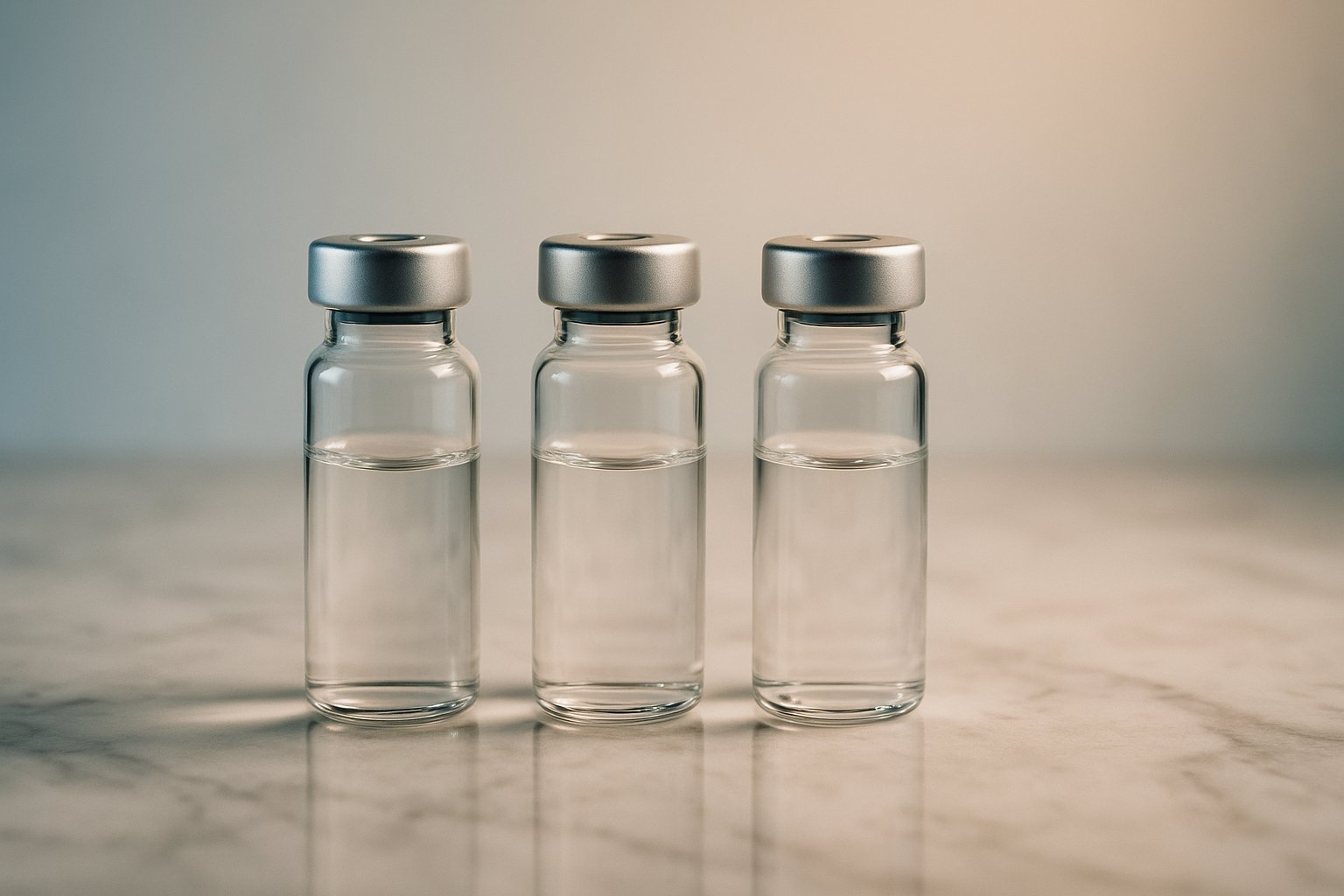
Source quality is half the outcome. Compounded product from a licensed 503A pharmacy with purity testing beats research-chemical vials, where independent testing has repeatedly found underdosed or mislabeled product. A peptide that is not in the vial cannot heal anything.
The Path Forward
If you force a single answer: BPC-157 is the strongest healing peptide by weight of evidence and breadth of use, with GHK-Cu the stronger pick for skin specifically and the BPC-157/TB-500 stack the common escalation for stubborn injuries. Hold expectations to what the data supports: a plausible, well-tolerated acceleration of healing, not a miracle, and always alongside actual rehab.
TrimRx is expanding into provider-supervised peptide offerings on top of its core weight programs ($199 to $349 per month all-inclusive), with the same medical oversight model. The free assessment quiz is where to start if you want guidance matched to your situation.
Bottom line: The strongest healing protocol is still peptide plus rehab. A peptide cannot replace progressive loading for tendon recovery.
FAQ
What Is the Number One Strongest Healing Peptide?
BPC-157, by research volume and breadth. Dozens of animal studies show accelerated healing across tendon, ligament, muscle, and gut tissue. The major caveat: human randomized trials are lacking, so its top ranking reflects preclinical evidence and clinical adoption rather than proven human superiority.
Is TB-500 Stronger Than BPC-157?
Neither has beaten the other in any direct study. Field convention treats BPC-157 as stronger for localized tendon and gut issues and TB-500 as the broader systemic option, which is why the two are commonly stacked for serious injuries rather than chosen between.
How Fast Do Healing Peptides Work?
Users and clinicians typically report noticeable changes within 2 to 4 weeks, with protocols running 4 to 8 weeks total. Animal studies showed measurable healing acceleration within days to weeks. Expect gradual improvement layered on a proper rehab timeline, not overnight repair.
Are Healing Peptides Legal?
The picture moved in 2026: the FDA removed BPC-157 from its Category 2 bulk substances list in April 2026, which changed the compounding outlook in the US. Sourcing through licensed providers and compounding pharmacies remains the defensible route. Athletes should note WADA prohibits BPC-157 and TB-500 in competition contexts.
Can Healing Peptides Fix a Torn Tendon Without Surgery?
A complete rupture generally needs surgical repair; no peptide reattaches a fully torn tendon. Where peptides plausibly help is partial injuries and post-surgical recovery, accelerating the biology while progressive loading rebuilds the structure. Skipping rehab and expecting the vial to do the work is the most common failure mode.
What Is the Strongest Healing Peptide for Skin?
GHK-Cu. The copper tripeptide has decades of research from Pickart and colleagues plus controlled human cosmetic studies showing increased collagen production, improved skin density, and faster wound remodeling. For skin specifically, its human evidence outranks both BPC-157 and TB-500.
Disclaimer: This content is for informational purposes only and does not constitute medical advice. It is not intended to diagnose, treat, cure, or prevent any disease or condition. Individual results may vary. Always consult a qualified healthcare professional before starting any weight loss program or medication.

Transforming Lives, One Step at a Time
Keep reading

Tesamorelin for Visceral Fat: What It Is and WHO It Is For
People often collapse two different goals into one: losing visceral fat and losing weight overall. They overlap. They are not the same job.