Switching from Mounjaro to Zepbound: What Changes
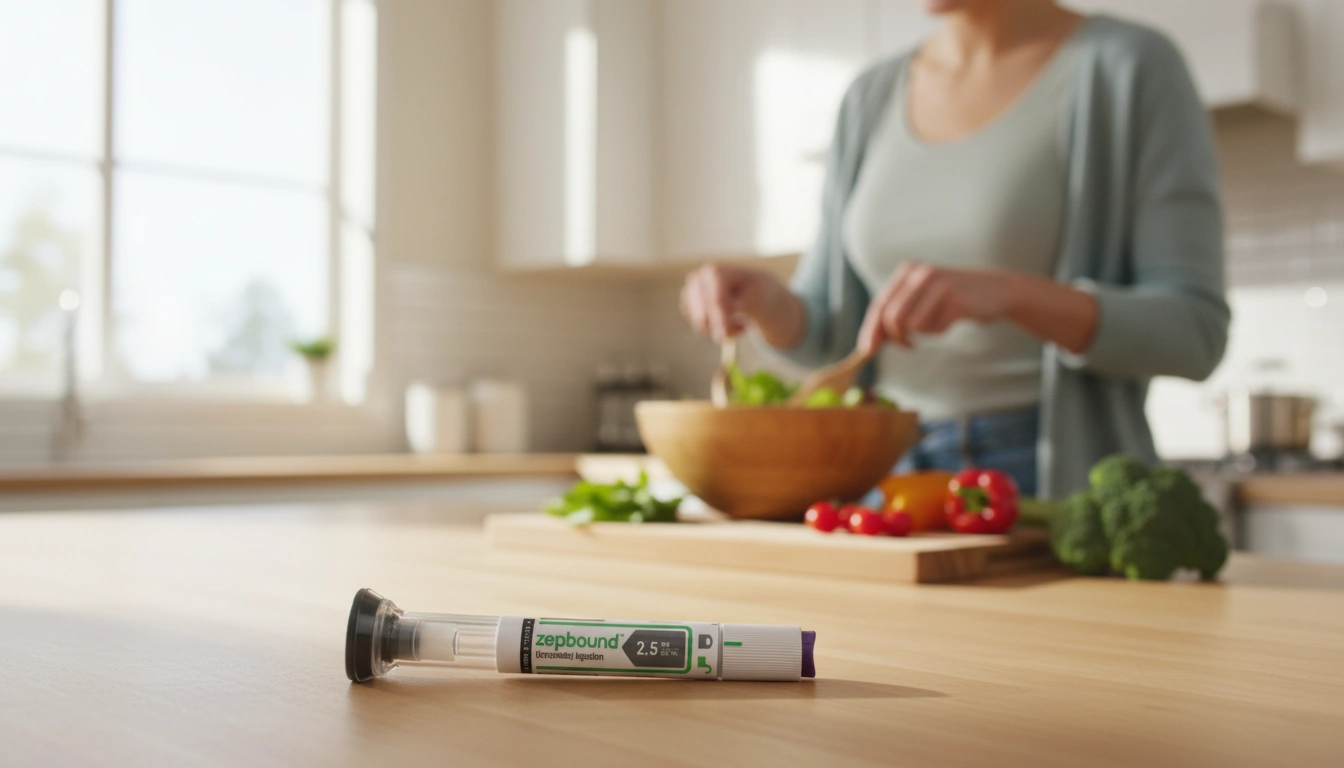
Switching from Mounjaro to Zepbound is the easiest medication transition in GLP-1 treatment, because nothing changes pharmacologically. Both medications contain the exact same active ingredient (tirzepatide), made by the same manufacturer (Eli Lilly), delivered in the same type of injection pen. The only differences are the FDA-approved indication, the label on the box, and how insurance processes the prescription. Mounjaro is approved for type 2 diabetes. Zepbound is approved for chronic weight management. If you’re switching, it’s almost certainly for insurance, cost, or regulatory reasons, not because one works better than the other.
Here’s what you need to know about why people make this switch, how it works, and the few things that actually do change.
Why People Switch from Mounjaro to Zepbound
The switch is almost always driven by one of three practical considerations.
Insurance coverage is the most common reason. If you’re using Mounjaro for weight loss but don’t have type 2 diabetes, your insurer may deny coverage because Mounjaro isn’t FDA-approved for that purpose. Zepbound, being specifically indicated for weight management, is the version insurers are more likely to approve for non-diabetic patients seeking obesity treatment. Switching to Zepbound aligns your prescription with your actual diagnosis, which simplifies the insurance process.
Provider recommendation is another factor. Some clinicians prefer prescribing the medication that matches the treatment indication. If your primary goal is weight loss and you don’t have diabetes, your provider may recommend Zepbound simply because it’s the appropriate product for your situation. This can matter for medical documentation, insurance appeals, and continuity of care.
Availability can also play a role. Both medications have experienced supply constraints at various times since their launches. If your current Mounjaro dose is backordered but the equivalent Zepbound dose is available (or vice versa), switching keeps your treatment on schedule without a gap.
What’s notably absent from this list is effectiveness. Nobody switches from Mounjaro to Zepbound because one works better. They’re the same drug.
What’s Actually the Same
Almost everything.
The active ingredient is identical: tirzepatide. Same molecule, same dual GIP/GLP-1 receptor agonist mechanism, same pharmacokinetics.
The available doses are identical: 2.5 mg, 5 mg, 7.5 mg, 10 mg, 12.5 mg, and 15 mg. Every dose tier on Mounjaro has a direct equivalent on Zepbound.
The injection device is essentially the same: a single-dose, prefilled pen injected subcutaneously once weekly. The injection technique doesn’t change. The needle gauge is the same. The experience of using it feels the same.
The side effect profile is the same, because it’s the same drug. Nausea, diarrhea, constipation, decreased appetite, and injection site reactions occur at the same rates with both products.
The titration schedule is the same: start at 2.5 mg, increase by 2.5 mg every four weeks as tolerated, up to a maximum of 15 mg.
Your body cannot tell the difference between Mounjaro and Zepbound. If someone swapped your pens without telling you, you would have no way of knowing.
What Actually Changes
The differences are entirely administrative and logistical.
The NDC (National Drug Code) number is different. This is the identifier pharmacies and insurers use to process the prescription. It means your pharmacy will process Zepbound as a new medication, even though the contents are identical to what you’ve been taking.
The insurance category may change. Mounjaro is typically processed under diabetes drug coverage. Zepbound is processed under obesity or weight management coverage. Depending on your plan, one category may have better benefits, lower copays, or fewer prior authorization hurdles than the other. This is the entire reason most people switch.
The prescription itself needs to be rewritten. Your provider can’t just change the label on your existing Mounjaro prescription. They need to write a new prescription for Zepbound, which your pharmacy fills as a separate medication. This means there may be a brief processing delay the first time.
The copay assistance programs are different. Eli Lilly runs separate savings card programs for Mounjaro and Zepbound. If you were using a Mounjaro copay card, you’ll need to enroll in Zepbound’s program separately. Check Eli Lilly’s website or ask your pharmacy about current offers.
That’s it. Those are the only real differences.
How the Transition Works
This is the simplest possible medication switch.
Take your last Mounjaro injection as scheduled. The following week, on your regular injection day, use Zepbound at the exact same dose. If you were on Mounjaro 10 mg, you start Zepbound 10 mg. There’s no dose adjustment, no retitration, no washout period, and no adjustment phase.
Let’s say a patient has been on Mounjaro 12.5 mg for two months with good weight loss and minimal side effects. Their insurance stops covering Mounjaro for weight management, but approves Zepbound. The patient takes their last Mounjaro 12.5 mg injection on Tuesday, and the following Tuesday injects Zepbound 12.5 mg. Nothing changes in their experience. Appetite suppression stays the same. Side effects stay the same. Weight loss continues at the same rate.
That’s the typical transition. Uncomplicated and unnoticeable.
What to Expect After Switching
Nothing different. This bears repeating because some patients worry that switching brands will somehow disrupt their progress, even when the medication is identical.
Your appetite suppression will remain at the same level. Your side effects (if any) will remain at the same level. Your weight loss trajectory will continue on the same path. Your injection routine stays exactly the same.
If you do notice any changes after switching, they’re almost certainly coincidental, caused by normal weight fluctuations, dietary changes, stress, sleep variations, or the natural progression of your treatment rather than the brand swap itself.
The tirzepatide results timeline applies equally to both Mounjaro and Zepbound, since the clinical data is based on the tirzepatide molecule regardless of brand. Similarly, the tirzepatide weight loss results from major clinical trials like SURMOUNT-1 are relevant to both products.
Insurance and Cost: The Real Reason You’re Here
Let’s talk about the part that actually matters for most people making this switch.
If you have type 2 diabetes, Mounjaro is typically the easier medication to get covered, since it’s indicated for that condition. Most diabetes drug formularies include it, though prior authorization and step therapy requirements vary.
If you don’t have type 2 diabetes and your primary indication is weight management, Zepbound is the product insurers expect to see on the prescription. Trying to get Mounjaro covered off-label for weight loss is possible but often involves appeals, prior authorizations, and sometimes outright denial.
Coverage for Zepbound specifically isn’t universal either. Many commercial plans cover it, but some exclude weight loss medications entirely, and Medicare Part D generally does not cover anti-obesity medications (though this has been evolving, so check current policy). Prior authorization is standard, and your provider will need to document that you meet criteria, typically BMI of 30+, or 27+ with a weight-related comorbidity.
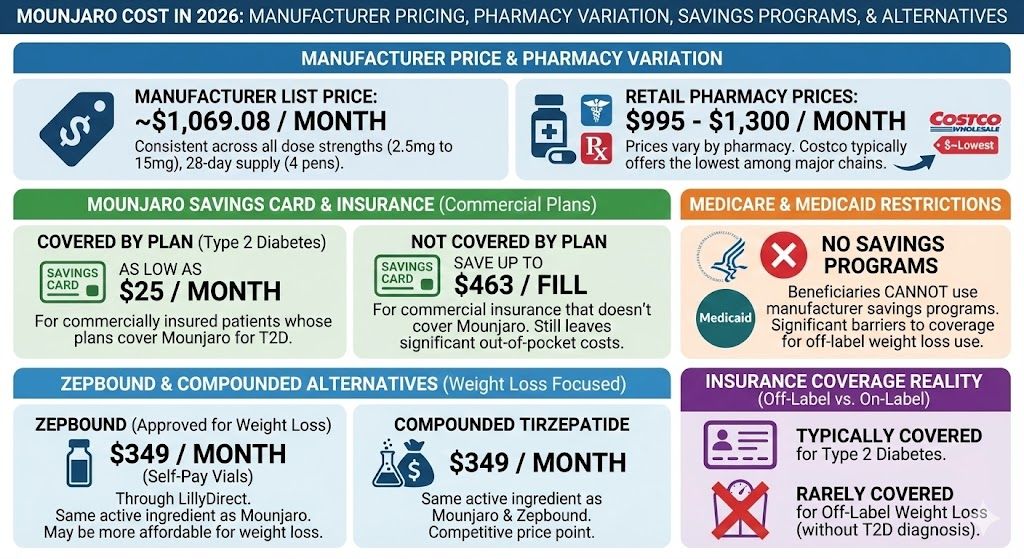
The out-of-pocket cost for either brand without insurance is steep, often exceeding $1,000 per month. If coverage is a problem for both products, compounded tirzepatide is an alternative that sidesteps insurance entirely. TrimRx’s compounded tirzepatide provides the same active ingredient at a significantly lower cost through a telehealth model that includes provider consultation, prescription, and home delivery.
A study published in JAMA Network Open (Wharton et al., 2023) examined real-world persistence on GLP-1 medications and found that cost and insurance barriers were the leading reasons patients discontinued treatment. Switching between equivalent brand products or exploring compounded options are both strategies that help patients stay on therapy long enough to achieve meaningful results.
Common Questions About the Switch
Do I need to retitrate from 2.5 mg? No. You continue at your current dose. Retitration is only necessary if you’ve had a significant gap in treatment (generally two or more missed doses).
Can I switch back to Mounjaro later? Yes. You can switch back and forth as needed, always at the same dose, without any medical concern. This sometimes happens when insurance formularies change or when one product has supply issues.
Will my side effects get worse? No. Same drug, same dose, same side effects. If your side effects change after switching, it’s coincidental.
Do I need new bloodwork? Not specifically for the switch. Continue with whatever monitoring schedule your provider has established for your tirzepatide treatment.
Can my provider prescribe both at the same time? Generally no. Insurers and pharmacies flag duplicate therapy. You’ll have one active prescription at a time.
When to Consider Other Options Instead
If you’re switching from Mounjaro to Zepbound purely for insurance reasons and your insurer denies Zepbound too, you’re left with cash-pay options. At that point, brand pricing for either product is essentially the same, so the brand distinction becomes irrelevant.
This is where compounded tirzepatide becomes the practical choice for many patients. TrimRx offers compounded formulations at price points well below brand medications, making it possible to stay on tirzepatide without navigating insurance at all.
If you’re considering the switch because your weight loss has plateaued, keep in mind that switching between Mounjaro and Zepbound won’t break a plateau. It’s the same medication. Plateaus require different interventions: dose increases, dietary recalibration, adding resistance training, addressing sleep and stress, or investigating medical factors. The Mounjaro 3-month results article covers realistic expectations and what to do when progress stalls.
Making the Switch
Coordinate with your provider to write a new prescription for Zepbound at your current Mounjaro dose. Verify insurance coverage and copay before filling. Enroll in any available copay assistance programs specific to Zepbound. Time the switch so your first Zepbound injection falls on the same weekly schedule as your Mounjaro injections with no gap.
If you need help managing this transition or exploring cost-effective tirzepatide options, TrimRx’s intake quiz can connect you with a provider who handles these logistics regularly.
This information is for educational purposes and is not medical advice. Consult with a healthcare provider before starting any medication. Individual results may vary.

Transforming Lives, One Step at a Time
Keep reading

Mounjaro Plateau: Strategies That Work
A Mounjaro plateau is when your weight loss stalls for four or more consecutive weeks despite staying consistent with your medication and general routine….

Not Losing Weight on Mounjaro: Common Causes and Solutions
You started Mounjaro expecting the weight to come off. Maybe it did at first, maybe it never really got going, or maybe you hit…

Why Am I Not Losing Weight on Mounjaro? Troubleshooting Guide
Mounjaro (tirzepatide) has generated significant buzz for its weight loss effects, even though it’s technically FDA-approved for type 2 diabetes management rather than weight…


