Switching from Ozempic to Mounjaro: What to Expect
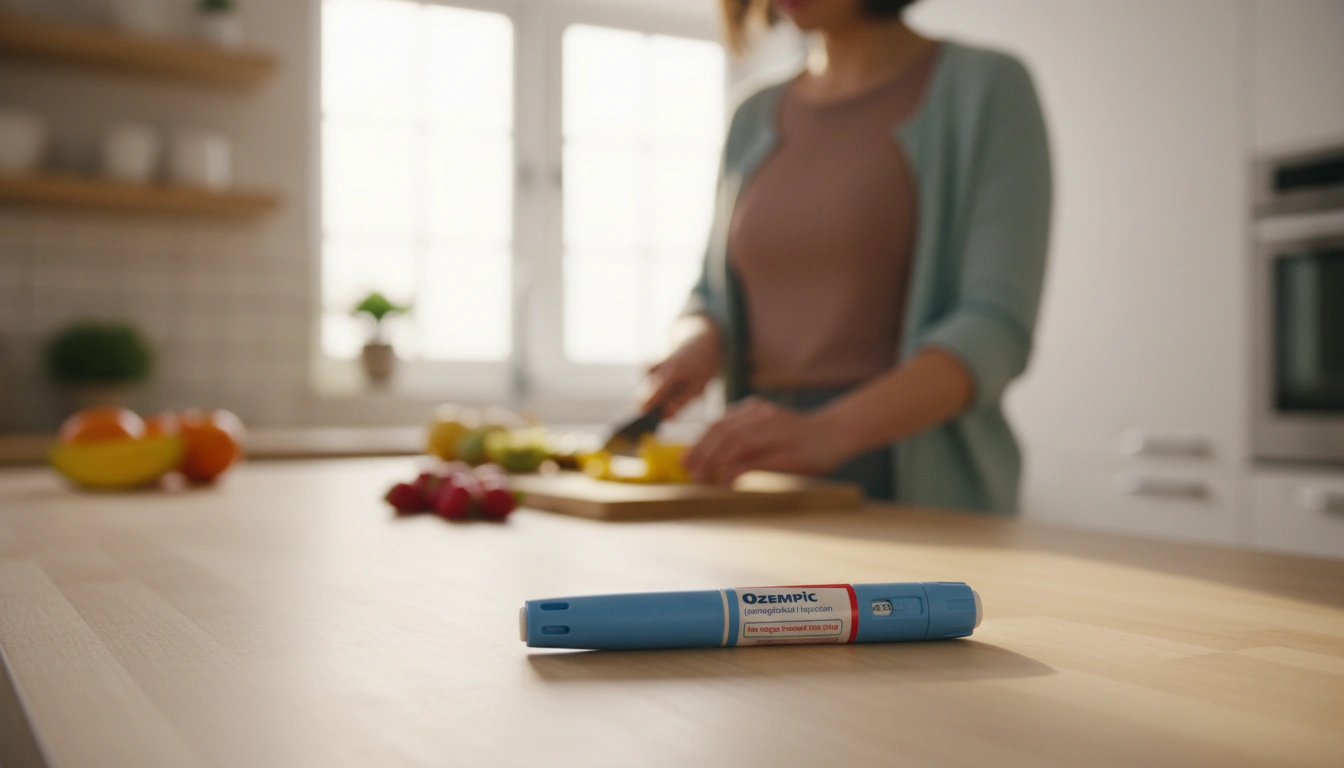
Switching from Ozempic to Mounjaro is one of the most common medication transitions in GLP-1 weight loss treatment, and for good reason. Both are injectable medications taken once weekly, but they work differently. Ozempic contains semaglutide, a GLP-1 receptor agonist. Mounjaro contains tirzepatide, a dual GIP/GLP-1 receptor agonist that targets an additional hormone pathway. In clinical trials, tirzepatide has produced greater average weight loss than semaglutide, which is why many patients and providers consider the switch when results plateau or when a stronger response is needed.
Here’s how the transition actually works, what the experience feels like, and what results you can realistically expect.
Why People Switch from Ozempic to Mounjaro
There are a few common reasons, and they’re all legitimate.
The most frequent one is a weight loss plateau on Ozempic. You lost weight steadily for several months, reached a point where the scale stopped moving, titrated up to the maximum dose, and still couldn’t break through. This is the scenario where switching medication classes makes the most clinical sense, because you’re not just getting a higher dose of the same thing. You’re adding an entirely new mechanism of action through GIP receptor activation.
The second reason is that Ozempic’s appetite suppression weakened over time. Some patients find that the appetite control they experienced early in treatment fades at their current dose, even after titrating up. Switching to tirzepatide often restores strong appetite suppression because the dual receptor activity produces a different signaling pattern in the brain.
The third reason is cost. Depending on your insurance situation, one medication may be significantly more affordable than the other. Compounded versions can also shift the cost equation. The Ozempic plateau article covers how to determine whether you’ve truly exhausted your options on semaglutide before making the switch.
Less commonly, some patients switch because of side effects. While both medications share similar GI side effect profiles, individual responses vary. A person who experiences persistent nausea on semaglutide might tolerate tirzepatide better, or vice versa.
How the Two Medications Compare
Ozempic and Mounjaro share some similarities, but the differences matter.
Both are once-weekly subcutaneous injections. Both reduce appetite, slow gastric emptying, and improve insulin sensitivity. Both require titration from a low starting dose upward.
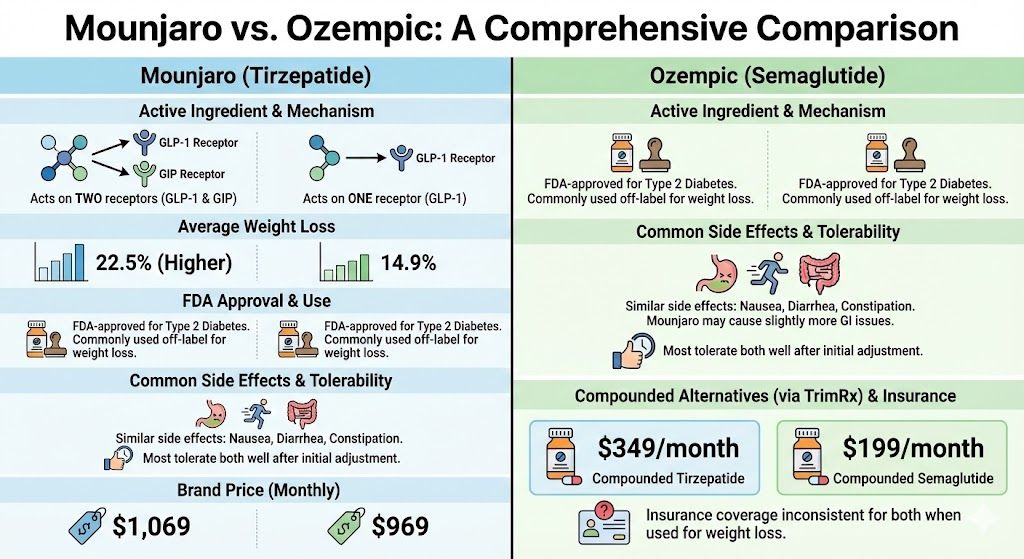
The key difference is mechanism. Ozempic activates only GLP-1 receptors. Mounjaro activates both GLP-1 and GIP receptors. GIP (glucose-dependent insulinotropic polypeptide) plays a role in fat metabolism, insulin secretion, and appetite regulation through pathways that GLP-1 alone doesn’t fully address. This dual action is what drives Mounjaro’s stronger average results.
The SURMOUNT-1 trial (Jastreboff et al., NEJM, 2022) showed tirzepatide at its highest dose produced average weight loss of over 22% of body weight, compared to roughly 15% for semaglutide at maximum dose in the STEP 1 trial. That’s a meaningful difference, particularly for patients who need to lose a significant amount of weight or who haven’t responded adequately to semaglutide alone.
Dosing ranges also differ. Ozempic goes from 0.25 mg to 2 mg. Mounjaro goes from 2.5 mg to 15 mg. These aren’t equivalent milligram-for-milligram, so your provider will determine the appropriate starting dose on Mounjaro based on where you are in your Ozempic treatment, not by matching numbers.
How the Transition Works
The transition itself is straightforward, but the specifics depend on your current Ozempic dose and your provider’s clinical judgment.
In most cases, your provider will have you take your last dose of Ozempic and then start Mounjaro the following week, at the time your next Ozempic injection would have been due. There’s no washout period needed. Both medications are cleared from the body within their weekly dosing cycle, so you’re essentially swapping one weekly injection for another.
The starting dose on Mounjaro after switching from Ozempic is typically 2.5 mg or 5 mg. If you were on a low dose of Ozempic (0.5 mg or less), you’ll likely start at 2.5 mg. If you were on 1 mg or higher, your provider may start you at 5 mg to avoid backsliding on appetite suppression. Some providers start at 5 mg regardless for patients switching from established Ozempic use, since 2.5 mg is primarily an acclimation dose and your body is already accustomed to GLP-1 activity.
There’s no universal conversion chart between semaglutide and tirzepatide doses because they’re different molecules with different receptor profiles. Your provider makes this call based on your individual history, tolerability, and goals.
What the First Few Weeks Feel Like
Most people transitioning from Ozempic to Mounjaro report a relatively smooth experience, with a few common observations.
Appetite suppression often feels different. Not necessarily stronger or weaker at first, just qualitatively different. Some patients describe feeling fuller sooner during meals (a GLP-1 effect they’re used to) combined with less interest in food between meals (which may reflect the added GIP activity). Others notice reduced cravings for specific types of food, particularly sweets and high-fat snacks.
GI side effects may temporarily resurface. Even though your body is accustomed to GLP-1 stimulation from Ozempic, tirzepatide also activates GIP receptors, which your system hasn’t encountered in this way before. Mild nausea, some changes in bowel habits, or slight abdominal discomfort during the first week or two is common. For most people, these effects are milder than what they experienced when first starting Ozempic, because one receptor pathway is already familiar to the body.
Let’s say a patient switches from Ozempic 1 mg to Mounjaro 5 mg. During the first week, they notice slightly less appetite than they had on Ozempic, mild nausea for a day or two, and one episode of loose stool. By week two, GI symptoms have resolved and appetite suppression is noticeably stronger. This is a very typical transition experience.
Energy levels usually remain stable throughout the switch. Some patients actually report improved energy within the first few weeks on tirzepatide, possibly related to better glucose regulation from the dual receptor activity.
When to Expect Weight Loss Results After Switching
If you were plateaued on Ozempic, don’t expect the switch to produce dramatic results in week one. Your body still needs time to respond to the new medication, and you’ll likely start at a lower effective dose than where you ended up on Ozempic.
Most patients who switch start seeing renewed weight loss within three to six weeks, often coinciding with their first or second dose increase on Mounjaro. By the time you reach 7.5 mg or 10 mg, the dual mechanism is typically in full effect, and many people experience a return to the kind of steady, consistent weight loss they saw during their best months on Ozempic.
The tirzepatide results timeline outlines what to expect at each dose level. Keep in mind that if you’re switching after a plateau, your initial rate of loss may be different from someone starting tirzepatide as their first GLP-1 medication, because your body has already undergone significant metabolic adaptation from prior weight loss.
For a broader view of what tirzepatide delivers across different timeframes, the Mounjaro 3-month results data provides useful benchmarks.
Managing Side Effects During the Transition
The side effect profile of Mounjaro is similar to Ozempic: nausea, diarrhea, constipation, decreased appetite, and occasional injection site reactions. Since you’ve already been on a GLP-1 medication, your body has some baseline tolerance, which usually means side effects during the switch are less intense than they were when you first started Ozempic.
That said, a few practical strategies help:
Eat smaller, more frequent meals during the first two weeks rather than two or three large ones. This reduces the GI burden while your system adjusts. Stay well hydrated. Dehydration worsens nausea and can cause constipation. Avoid high-fat and greasy foods, which tend to sit longer in the stomach and amplify nausea when gastric emptying is slowed. Take your injection at a time when mild nausea would be least disruptive. Many people prefer evening injections so they can sleep through any initial queasiness.
If side effects are significant enough to interfere with daily functioning, contact your provider. They may recommend staying at your current dose for an extra week before titrating up, or adjusting the timing or injection site.
Cost Considerations
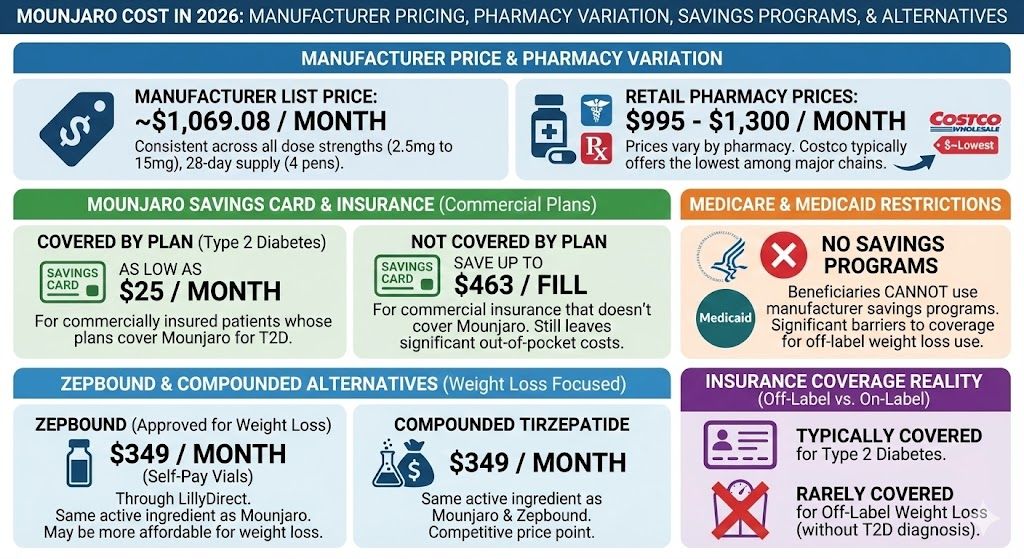
Brand-name Mounjaro can be expensive without insurance, often exceeding $1,000 per month. If cost is a concern, compounded tirzepatide is worth exploring. TrimRx offers compounded tirzepatide at significantly lower price points, with the same active ingredient delivered through a telehealth model that includes provider consultation, prescription, and home delivery.
If you’re currently paying out of pocket for brand Ozempic and want to switch to tirzepatide, the compounded route can sometimes make the switch more affordable than what you’re already paying.
Is Switching Right for You?
Switching from Ozempic to Mounjaro makes the most sense if you’ve plateaued on semaglutide at or near maximum dose, if your appetite suppression has faded significantly, or if you want to try a medication with a stronger average weight loss profile.
It’s less necessary if you’re still losing weight on Ozempic, still have dose increases available, or haven’t yet addressed lifestyle factors (diet, exercise, sleep) that could be contributing to a stall. Sometimes the answer isn’t a new medication. It’s optimizing everything around the one you’re already on.
Your provider can help you make this decision based on your full clinical picture. If you don’t currently have a provider who specializes in GLP-1 treatment, TrimRx’s intake quiz can connect you with one who can evaluate whether a switch is the right move.

Transforming Lives, One Step at a Time
Keep reading

How to Get Ozempic or Semaglutide in Miami
Miami’s wellness culture runs deep, and GLP-1 medications have become a significant part of that conversation across the city. From Brickell to Coral Gables…

How to Get Ozempic or Semaglutide in Los Angeles
Los Angeles has no shortage of wellness clinics, concierge medicine practices, and weight loss programs promising access to the latest treatments. Semaglutide is at…

How to Get Ozempic or Semaglutide in Chicago
Chicago residents looking for semaglutide have more options than they might realize, and fewer of those options require setting foot in a clinic than…


