Switching From Wegovy to Compounded Semaglutide

Introduction
Switching from Wegovy® to compounded semaglutide is clinically straightforward. The active molecule is identical: semaglutide base. The weekly dose maps one-to-one in milligrams. STEP 1 data (Wilding et al. 2021 NEJM, 14.9% weight loss at 68 weeks) describes what to expect from semaglutide regardless of source, as long as the compound uses the same active ingredient at the same potency.
The two real switching issues are concentration confusion (going from a metered Wegovy pen to a manual draw from a multi-dose vial) and pharmacy verification (making sure the compound is semaglutide base from a state-licensed 503A pharmacy, not a salt form from a sketchy vendor).
Cost drives most switches. Wegovy lists around $1,350 per month without insurance. Compounded semaglutide through a telehealth platform usually runs $150 to $300 per month. That gap is the reason most self-pay patients move.
At TrimRx, we believe that understanding your options is the first step toward a more manageable health journey. You can take the free assessment quiz if you’re ready to see whether a personalized program is a fit for you.
Why Are Patients Switching From Wegovy to Compounded Semaglutide?
Cost is the primary driver. Wegovy’s list price is roughly $1,350 per month in 2026. Insurance coverage for Wegovy varies by employer plan and is rare on Medicare. Out-of-pocket Wegovy through retail pharmacies sits around $1,350 even with the manufacturer savings card for many self-pay patients.
Quick Answer: Wegovy and compliant compounded semaglutide use the same active ingredient (semaglutide base)
Compounded semaglutide through a state-licensed 503A telehealth pharmacy typically runs $150 to $300 per month. For a patient paying out of pocket, the annual difference is roughly $12,000 to $14,000.
A smaller group switches for dose flexibility. Wegovy comes in fixed strengths. Compounded semaglutide allows custom doses between Wegovy’s standard steps, which helps patients hitting GI side effects on standard titration.
How Does the Dose Convert?
The conversion is one-to-one by milligram. The mg amount stays the same. The volume drawn changes because compounded vials use different concentrations than the Wegovy pen.
Wegovy dose schedule: 0.25 mg weekly for 4 weeks, 0.5 mg for 4 weeks, 1 mg for 4 weeks, 1.7 mg for 4 weeks, 2.4 mg maintenance.
Compounded semaglutide vials typically come at 2.5 mg/mL or 5 mg/mL.
At 5 mg/mL, 1.7 mg equals 0.34 mL (34 units on a U-100 insulin syringe). 2.4 mg equals 0.48 mL (48 units).
At 2.5 mg/mL, 1.7 mg equals 0.68 mL (68 units). 2.4 mg equals 0.96 mL (96 units).
Your pharmacy should provide a dose chart specific to your vial concentration. Confirm concentration on the label before every draw.
Will the Weight Loss Results Be the Same?
If the API is semaglutide base at the labeled potency, yes. The active molecule is the same as Wegovy. STEP 1 (Wilding et al. 2021 NEJM) at 2.4 mg weekly for 68 weeks produced 14.9% weight loss. That result is tied to the molecule and dose, not to the brand.
There’s no published head-to-head RCT comparing branded Wegovy with compounded semaglutide. The biological expectation is identical results when potency and dose match. In practice, batch potency variation in compounding can produce slight efficacy differences, which is why third-party batch testing matters.
What’s the Biggest Switching Mistake?
Concentration mix-ups. Wegovy patients are used to a metered pen. Compounded vials require thinking in mL or insulin syringe units. A patient drawing the wrong volume because they applied their Wegovy mg number to syringe units at the wrong concentration can over- or under-dose by 2x or more.
Avoid this by:
Reading the label every time. Concentration is printed on the vial.
Using the pharmacy’s dose chart for your specific concentration.
Calling the pharmacist if anything looks off.
Sticking with U-100 insulin syringes (the standard for compounded GLP-1 doses).
Will Side Effects Change After Switching?
Biologically, no. The same molecule produces the same GI profile (nausea, vomiting, diarrhea, constipation), the same satiety effect, and the same thyroid C-cell rodent warning. STEP 1 reported nausea in 44% of patients, vomiting in 24%, and diarrhea in 31% on 2.4 mg semaglutide.
In practice, some patients report side effect changes after switching. The usual explanation is dose accuracy. If the compound’s potency is below label (within or outside USP’s 90-110% range), GI side effects ease. If above label, they worsen. Batch testing transparency from the pharmacy resolves the uncertainty.
How Do I Switch Without Losing Progress?
Finish your current Wegovy dose, then start the compounded vial seven days later at the equivalent mg. No washout needed. The half-life of semaglutide is about a week.
If you’re on 2.4 mg Wegovy weekly, your first compounded dose is 2.4 mg, drawn at the volume matching your vial’s concentration.
If you’re mid-titration on Wegovy (still moving up), continue the titration on the compounded vial. Don’t restart the titration schedule.
If there’s a shipping delay and your gap stretches beyond two to three weeks, expect to step down a dose temporarily to avoid GI side effects on restart. Discuss with your prescriber.
What Pharmacy Markers Do I Need to Verify Before Switching?
Five checks:
Active state board of pharmacy license, verifiable on the public lookup.
503A or 503B status disclosed in writing.
Semaglutide base API (not sodium or acetate salt forms), confirmed in writing.
Third-party batch testing certificate of analysis available.
Pharmacist consultation availability for dose questions.
TrimRx’s free assessment quiz routes patients to state-licensed 503A partner pharmacies that meet these criteria with published batch testing.
Key Takeaway: Concentration confusion is the most common switching error
Do I Need a New Prescriber to Switch?
Usually yes. Wegovy prescriptions are typically written by primary care or obesity medicine providers who don’t compound or work with compounding pharmacies. Telehealth platforms offering compounded semaglutide use their own prescriber networks.
If your current prescriber will write a compounded semaglutide prescription to a pharmacy of your choice, you can keep them. Most won’t.
A new prescriber will want your Wegovy history (dose, duration, response, side effects, current weight, starting weight). Bringing records speeds intake.
Can I Switch Back to Wegovy Later?
Yes. The reverse switch is identical in mechanics. Finish the compounded vial dose, then start Wegovy seven days later at the matching mg. The molecule and dose are the same.
The barrier on the way back is usually cost and insurance authorization, not pharmacology.
What If My Insurance Pays for Wegovy?
If insurance is covering Wegovy, the math for switching usually doesn’t favor compounded. Patients with covered Wegovy at $25 to $100 monthly copay rarely save money switching to compounded.
The switch makes sense when:
Insurance prior authorization is rejected or revoked.
Out-of-pocket Wegovy lands above $400/month.
Wegovy supply is unreliable in your area (less common in 2026 than 2023-2024).
Dose flexibility between Wegovy’s standard steps would help you.
What If I’m Late on a Dose During the Switch?
Take it as soon as you remember, then resume your normal weekly schedule from that point. If you’re more than 48 hours late on a 2.4 mg dose, talk to your prescriber about whether to step down for one cycle to ease re-acclimation.
The half-life of semaglutide is about a week, so missed doses cause slower decline in blood levels than with daily medications. A few days late doesn’t undo months of weight loss. Repeated late doses or a gap of two weeks or more can shift the effective dose lower for a cycle.
Should I Expect Any Difference in How the Injection Feels?
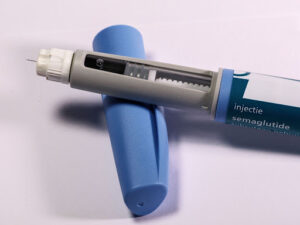
Possibly. The Wegovy pen uses a fixed-length needle and metered injection. Compounded vials use a separate insulin syringe with a 5/16-inch or 1/2-inch needle that you select.
Most patients find subcutaneous injection comparable in sensation between pen and syringe. A few report the manual draw is uncomfortable until they’re used to it. Injection technique matters: pinch a fold of abdominal or thigh skin, insert at 90 degrees, inject steadily, count to ten before withdrawing.
If you’ve never used insulin syringes before, your pharmacist should walk you through technique on the first dispense.
What Does a Typical Switching Timeline Look Like?
Week one: receive first compounded vial. Read the dose chart. Confirm the concentration. Inject your usual mg dose seven days after your last Wegovy dose.
Weeks two through four: continue weekly injections at the same mg dose. Track side effects.
Week four: assess whether the compounded version is producing similar appetite suppression and weight loss to Wegovy. If yes, continue. If no, request the batch COA and discuss potency with your prescriber.
Weeks five and beyond: routine monthly or quarterly refills depending on pharmacy.
Bottom line: No washout period needed; finish Wegovy dose, start compounded seven days later
FAQ
Is Compounded Semaglutide the Same as Wegovy?
Same active ingredient (semaglutide base) when sourced from a reputable 503A pharmacy. Same dose schedule, same biological effect. Not FDA-approved as a finished drug product, unlike Wegovy.
Will I Still Lose Weight on Compounded?
Yes, if the API and dose match. STEP 1 efficacy is tied to the molecule, not the brand.
How Quickly Should I Switch?
Cleanly. Finish the current Wegovy dose, start compounded seven days later. No gap.
Do I Need to Ramp up Again?
No. Continue at your current Wegovy dose. Don’t restart titration.
Is the Compounded Version Cheaper Enough to Be Worth It?
For self-pay patients yes, typically saving $1,000+ per month. For insurance-covered Wegovy patients, usually no.
Can I Split a Wegovy Pen to Make It Cheaper?
No. Wegovy pens are designed for fixed metered doses and aren’t safe to split. Switching to compounded with manual dosing is the legitimate cost-reduction option.
What’s the Most Important Safety Check Before Switching?
Confirm semaglutide base API in writing from the pharmacy and verify the pharmacy’s state board license is active.
Disclaimer: This content is for informational purposes only and does not constitute medical advice. It is not intended to diagnose, treat, cure, or prevent any disease or condition. Individual results may vary. Always consult a qualified healthcare professional before starting any weight loss program or medication.

Transforming Lives, One Step at a Time
Keep reading
Semaglutide vs Tirzepatide: Comparing Weight Loss, Blood Sugar, and Side Effects
Semaglutide and Tirzepatide are one of the most common comparisons in medical weight loss. The two medications share a clear family resemblance. Both are…

How Much Weight Can You Lose on Semaglutide?
How much weight can you lose on semaglutide? The answer varies depending on your starting weight, dosage, treatment duration, and individual response to the…

Hair Shedding Months Into Semaglutide
It shows up in the shower drain first, then on the pillow, then in the brush. By the time most people search this, they…


