How to Taper Off GLP-1 Medications Safely

Stopping GLP-1 medications like Wegovy, Ozempic, or Mounjaro suddenly can lead to significant weight regain and health issues. A gradual tapering process, guided by a healthcare provider, helps prevent intense hunger, metabolism imbalances, and potential complications like blood sugar spikes in people with diabetes. Research shows that tapering over nine weeks helps maintain weight loss for at least six months after stopping.
Key Points:
- Why Tapering Matters: Avoids rebound weight gain caused by sudden appetite increases and slow metabolism.
- Tapering Example: Gradually lower doses or space out injections over 1–2 months.
- Lifestyle Adjustments: Focus on high-protein, fiber-rich diets, regular exercise, and stress management.
- Medical Monitoring: Track weight, hunger levels, and blood sugar to adjust the plan if needed.
A structured tapering plan, combined with healthy habits, is essential for maintaining progress after stopping GLP-1 therapy.
GLP-1 Medication: How to Safely Decrease Your Dose | Expert Guide
Why You Should Taper Gradually
Stopping GLP-1 medications suddenly can throw your body off balance. These medications work by suppressing ghrelin – often called the hunger hormone – and slowing the rate at which food leaves your stomach. When you quit abruptly, ghrelin levels skyrocket, leading to intense hunger and constant thoughts about food. This sudden shift highlights why a gradual tapering process can make all the difference.
The issue lies in the mismatch between your hunger signals and metabolism. When you stop cold turkey, hunger spikes immediately, but your metabolism is still running slow. This imbalance often results in rapid weight regain.
Preventing Hunger and Weight Regain
Research backs up the benefits of tapering. The TAILGATE study, presented at the European Congress on Obesity in May 2024, offers compelling evidence. Researchers followed more than 2,200 adults who had lost an average of 15% of their body weight over 76 weeks using semaglutide. Participants who gradually reduced their dose over about nine weeks managed to maintain their weight for at least 26 weeks after stopping the medication. In contrast, those who stopped abruptly struggled to maintain their results.
Maintaining Metabolic Balance
Tapering doesn’t just help with hunger – it also helps your metabolism adjust. Reducing the medication over a period of about two months gives your body time to adapt to the increase in ghrelin levels gradually, avoiding a sudden shock to your system.
For individuals with type 2 diabetes, tapering is even more essential. Stopping suddenly can cause rapid blood sugar fluctuations and the return of diabetic symptoms. A gradual approach allows healthcare providers to monitor how blood sugar and other metabolic markers respond as doses decrease. This monitoring period also gives them the chance to tweak the plan if necessary or introduce alternative medications, such as metformin, to maintain metabolic stability. Working closely with your healthcare provider ensures a smoother transition and supports long-term health goals.
How to Taper Off GLP-1 Medications
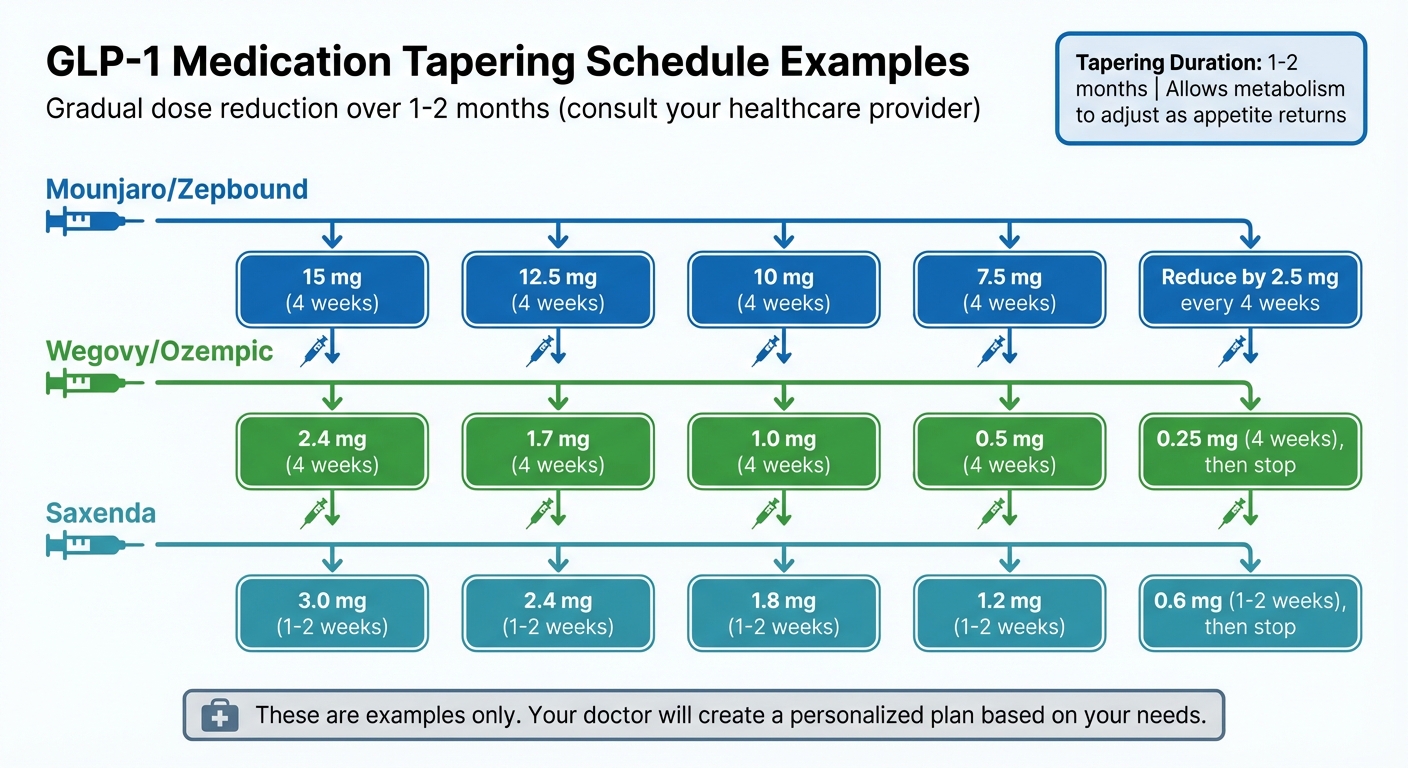
GLP-1 Medication Tapering Schedule Guide by Drug Type
There aren’t any official guidelines for tapering off medications like Wegovy, Ozempic, Mounjaro, or Zepbound. These drugs were designed for long-term use, so manufacturers haven’t provided formal instructions for stopping. That’s why your healthcare provider will work with you to create a plan tailored to your needs.
Two common approaches to tapering are often used. The first involves gradually lowering your dose – for example, stepping down from 2.4 mg to 1.7 mg of semaglutide over a four-week period. The second method spaces out your doses, extending the time between injections, such as moving from weekly shots to every 10 or 14 days. Both methods allow your body to adjust as the medication’s effects gradually decrease.
"We help people taper off their treatment dose over about two months so that as their appetite slowly increases, so does their metabolism." – Dr. Benjamin Duffy, Obesity Medicine Specialist, ThedaCare
Tapering Schedule Examples
Here are some examples of how a tapering schedule might look:
| Medication | Step 1 | Step 2 | Step 3 | Step 4 | Step 5 |
|---|---|---|---|---|---|
| Mounjaro / Zepbound | 15 mg (4 wks) | 12.5 mg (4 wks) | 10 mg (4 wks) | 7.5 mg (4 wks) | Reduce by 2.5 mg every 4 wks |
| Wegovy / Ozempic | 2.4 mg (4 wks) | 1.7 mg (4 wks) | 1.0 mg (4 wks) | 0.5 mg (4 wks) | 0.25 mg (4 wks), then stop |
| Saxenda | 3.0 mg (1-2 wks) | 2.4 mg (1-2 wks) | 1.8 mg (1-2 wks) | 1.2 mg (1-2 wks) | 0.6 mg (1-2 wks), then stop |
These schedules are just examples, not set rules. Your doctor might adjust the timing depending on how your body reacts. Some people may need a slower taper, while others can move through the steps more quickly. The goal is to reduce gradually enough for your metabolism to adapt as your appetite returns.
Once your tapering plan is in place, monitoring its progress is critical.
Tracking Your Progress
As you taper, it’s important to watch for specific signs that indicate how well the process is going. Weight changes are a key indicator. If you regain more than 5% of your target weight, it’s a sign that the taper may need adjustment, or in some cases, a temporary return to the medication.
Pay attention to "food noise", a term doctors use to describe intrusive thoughts about food. If you find yourself constantly thinking about your next meal or craving high-calorie foods, it’s a sign the medication’s appetite-suppressing effects are wearing off. These changes are normal but should be discussed with your healthcare provider.
For individuals managing type 2 diabetes, keeping a close eye on blood sugar levels is essential. Check your glucose more frequently than usual and be alert for signs of hyperglycemia, such as increased thirst, frequent urination, fatigue, or blurred vision. Your doctor may recommend medications like metformin to help maintain blood sugar control as the effects of the GLP-1 medication diminish.
Keeping a daily log can be incredibly helpful. Track your hunger levels, weight changes, and any physical or emotional shifts. This log will provide valuable insights for you and your doctor, helping to identify patterns and make adjustments to your tapering plan before issues arise. This ongoing feedback ensures the process stays on track while supporting any necessary lifestyle changes.
Lifestyle Changes to Support Tapering
As the effects of the medication begin to diminish, building healthy habits is key to preventing weight regain. While the medication has been a helpful tool, maintaining your progress in the long term depends on the foundation you establish during the tapering process. These lifestyle adjustments work hand in hand with your tapering schedule to promote sustainable weight management.
Nutrition and Portion Control
To mimic the feeling of fullness provided by GLP-1 medications, focus on strategies that help you feel satisfied with smaller portions. A good goal is to consume 1–1.2 g of protein per kilogram of body weight and 28–36 g of fiber daily. This approach not only supports satiety but also helps preserve muscle mass.
Choose nutrient-dense foods that keep you fuller for longer. Think lean proteins like grilled chicken breast, salmon, and Greek yogurt, along with high-fiber options such as lentils, quinoa, and vegetables like broccoli and Brussels sprouts. Switching to a low-glycemic diet can also help stabilize blood sugar levels as the medication’s effects taper off. Instead of sticking to three large meals a day, try eating smaller, balanced meals every 3 to 4 hours to avoid extreme hunger and reactive eating. Removing processed snacks like chips, cookies, and candy from your home can also help you manage your appetite as it naturally adjusts.
In June 2025, WeightWatchers shared data from 200 individuals who discontinued GLP-1 medications while following structured lifestyle plans. These participants not only maintained their weight but also lost an additional 1.8% of their body weight on average over 13 weeks [1]. Keeping track of your food intake and staying within your caloric needs can help you navigate this transition successfully.
Exercise and Stress Management
Staying physically active is especially important during tapering. Strength training is highly recommended, as it helps maintain muscle mass – essential for long-term weight stability and metabolic health. Aim to include two to three resistance training sessions per week that target major muscle groups.
In addition, try to get 150 to 300 minutes of moderate-intensity aerobic exercise each week. Activities like brisk walking, cycling, or swimming are great options for supporting your overall metabolic health. You can also incorporate more movement into your daily routine by walking your dog, cleaning the house, or choosing stairs over elevators.
Getting enough sleep and managing stress effectively are just as important. Aim for 7–9 hours of sleep each night to regulate hunger hormones and reduce cravings. To manage stress, consider mindfulness practices like deep breathing exercises, yoga, or guided meditation. If possible, avoid starting your taper during particularly stressful times, such as vacations or major life changes, when it may be harder to maintain a controlled food environment.
Supplements That May Help
In addition to lifestyle changes, certain supplements might provide extra support during tapering. For example, magnesium can help your body cope with the stress of medication adjustments and improve sleep quality, which plays a role in hunger regulation. Some healthcare providers may also recommend supplements like Alpha Lipoic Acid or Berberine to support metabolic health during this period.
Before adding any supplements to your routine, consult your healthcare provider. They can guide you on the best options for your specific needs and ensure there are no conflicts with other medications you may be taking. If you find you need additional support, your provider might suggest transitioning to more affordable oral medications, such as metformin, naltrexone/bupropion, or orlistat, to help maintain your progress.
sbb-itb-e2779c3
Working with Your Healthcare Provider
Never stop taking GLP-1 medications on your own – always consult your healthcare provider. Stopping these medications suddenly can cause your appetite to spike while your metabolism struggles to adjust. Dr. Benjamin Duffy, an Obesity Medicine Specialist at ThedaCare, emphasizes that a provider-guided tapering process typically takes about two months. This gradual approach helps your metabolism align with changes in appetite.
Getting a Personalized Tapering Plan
Your healthcare provider will design a tapering plan specifically for you, factoring in your medical history, current dosage, personal goals, and even insurance requirements. Dr. Robert Kushner, Professor of Medicine at Northwestern University, explains:
"We consider the patient’s goals and values into account along with discussions of risk and benefits."
This means your tapering plan will be unique to your situation, even if you’re on the same medication as someone else.
Most tapering strategies involve either slowly reducing your dose (lowering the milligrams step by step) or spacing out injections. For instance, instead of weekly injections, your schedule might shift to every 10 or 14 days. Your doctor will also help you track progress with specific milestones or identify warning signs. Dr. Holly Lofton from NYU Grossman School of Medicine highlights:
"If a patient has recurrence of a previously resolved medical condition or if they gain more than 5% weight above their goal weight, then they are likely to continue to gain weight [and may need to restart]."
This personalized approach ensures your tapering process is carefully monitored and adjusted as needed.
Regular Medical Check-Ins
Ongoing check-ups are essential during this process. These appointments allow your provider to monitor key health markers like blood sugar, HbA1c levels, and cholesterol. They’re also an opportunity to discuss any changes in hunger, cravings, or "food noise" – those distracting thoughts about food that GLP-1 medications help suppress.
You’ll also need to coordinate with your pharmacy to ensure you have access to lower-dose medications that align with your tapering schedule. Additionally, your doctor might explore transitioning you to more cost-effective oral medications, such as metformin or naltrexone/bupropion, to help you maintain your progress after tapering off completely.
Maintaining Weight Loss After Stopping GLP-1 Medications
Long-Term Weight Maintenance Habits
Stopping GLP-1 medications abruptly often leads to regaining a significant portion of the lost weight – studies show that within 10–12 months, many people regain about two-thirds or more of the weight they initially lost. In fact, a 2024 study revealed that only 20% of patients managed to keep their weight loss within 25% of their goal after stopping semaglutide for a year.
What makes the difference? Consistent daily habits. Focus on staying full with lean protein and fiber, as these can help regulate blood sugar and curb cravings. Aim for 1–1.2 grams of protein per kilogram of body weight and 28–36 grams of fiber per day. Foods like legumes, whole grains, and vegetables are excellent choices to support these goals.
Exercise also plays a big role in maintaining weight loss. Stick to regular resistance training and aerobic activity to preserve muscle mass and keep your metabolism steady. Weekly weigh-ins can help you spot small weight gains early. Consider setting a benchmark – like a 5% increase above your goal weight – as a signal to check in with your healthcare provider for adjustments.
Interestingly, observational data from 200 WeightWatchers members showed that those who stopped GLP-1 medications while following a structured healthy habits program not only maintained their weight loss but even lost an additional 1.8% of their body weight over 13 weeks. This demonstrates that with the right strategies and support, long-term success is achievable.
Continued Support with TrimRX

If sticking to daily habits feels challenging, professional guidance can make all the difference. TrimRX offers personalized consultations, custom prescriptions, and unlimited check-ins to support you during and after tapering off GLP-1 medications. Plans start at $179/month for oral semaglutide and $199/month for injectables, with free delivery included.
For those who need additional help, TrimRX can assist in transitioning to more affordable maintenance medications like Metformin or Naltrexone/Bupropion. You can also explore supplements like the GLP-1 Daily Support ($119), featuring ingredients such as Alpha Lipoic Acid, Berberine, and Chromium, or the Weight Loss Boost formula ($149), designed to help accelerate fat burning. Combining these tools with expert guidance ensures a better chance of maintaining your progress for the long haul.
Conclusion
A structured tapering plan is key to maintaining long-term weight management after stopping GLP-1 medications. Gradually reducing your dose helps your body adjust, preventing the double challenge of increased appetite and a slowed metabolism. Stopping abruptly often results in regaining about two-thirds of the lost weight within 10 to 12 months.
Research backs the effectiveness of tapering. Studies show that individuals who gradually reduced their dose maintained a stable weight for at least six months after stopping, compared to those who stopped suddenly.
"Tapering is the strategy that is most commonly done in the office setting to help blunt the effect of weight regain." – Dr. Robert Kushner, Professor of Medicine, Northwestern University
Your healthcare provider will create a tailored plan for you. This might involve gradually lowering your dose or extending the time between injections – moving from every 7 days to every 10 or 14 days. They’ll keep a close eye on your weight and blood sugar levels, making adjustments as needed, whether that means introducing a maintenance dose or exploring other medication options.
Healthy habits are just as important for maintaining your progress. Prioritize high-protein meals (1–1.2 grams per kilogram of body weight), include fiber-rich foods (28–36 grams daily), and incorporate regular resistance training to protect muscle mass. With a well-planned tapering strategy, medical guidance, and consistent healthy routines, you’ll be set up for lasting success.
FAQs
Why is it important to gradually stop taking GLP-1 medications instead of quitting suddenly?
Stopping GLP-1 medications suddenly can throw your body off balance, disrupting its ability to manage hormones and blood sugar effectively. This can lead to side effects like sudden blood sugar spikes, increased hunger, and quick weight regain, potentially undoing much of the progress achieved during treatment.
A gradual tapering process allows your body to adapt more smoothly, minimizing these risks and helping you maintain your results without the medication. Be sure to work closely with your healthcare provider to create a tapering plan tailored to your needs.
What steps can I take to maintain weight loss after stopping GLP-1 medications?
Maintaining weight loss after stopping GLP-1 medications requires adopting habits that support your metabolism and help manage hunger. Start with balanced meals that include protein, fiber, and healthy fats. Protein helps maintain muscle and reduces cravings, while fiber and fats keep you feeling full and help regulate blood sugar. Eating every 3–4 hours can also prevent energy dips and hunger spikes. Focus on adding non-starchy vegetables, whole grains, and nutrient-dense options to create satisfying, nourishing meals.
Combine good nutrition with regular exercise to keep your metabolism active and preserve muscle. Activities like walking, jogging, or resistance training are great choices. Make sure to get 7–9 hours of quality sleep each night and incorporate stress-relief practices like mindfulness or yoga to promote hormonal balance and reduce the likelihood of emotional eating. Staying hydrated, being mindful of portion sizes, and tuning into your hunger signals can further support your long-term success.
How can I track my progress and adjust my tapering plan for GLP-1 medications?
Tracking your progress and fine-tuning your tapering plan is essential for safely transitioning off GLP-1 medications while keeping your weight loss on track. Start by maintaining a daily log that includes your weight (in pounds), hunger levels (using a simple 1–10 scale), injection doses, and any side effects. If you have diabetes, it’s a good idea to include blood sugar readings as well. You can also track meals, calorie intake, and physical activity to better understand how your lifestyle adjustments are influencing your tapering process.
Set aside time each week to review your progress with your healthcare provider. Share your log so they can identify patterns, such as weight changes or increased hunger. Based on these trends, they might suggest slowing the taper, pausing dose reductions, or making dietary tweaks. If you notice a sudden increase in weight or hunger, it might be helpful to stay on your current dose for an additional 1–2 weeks or adjust the timing between dose reductions.
Digital tools can make this process easier. Apps that sync with smart scales or glucose meters can offer real-time feedback to help you stay on course. Platforms like TrimRX’s personalized program also allow you to securely upload your logs and get timely input from clinicians. By remaining consistent and collaborating closely with your healthcare provider, you can safely taper off GLP-1 medications while maintaining your progress.
Related Blog Posts

Transforming Lives, One Step at a Time
Keep reading

How to Adjust Weight Loss Goals on GLP-1 Medications
Adjust weight goals on GLP-1 meds by tracking body composition and labs, optimizing protein, activity, sleep, and working with your provider on dosing.

Falsified Mounjaro pens prompt urgent safety advisory
MHRA warns of counterfeit Mounjaro pens (batch D873576); stop use and check batch numbers for infection risk.

Novo Nordisk shares drop as Alzheimer’s hopes for weight-loss drug fade
Novo Nordisk’s semaglutide failed to slow Alzheimer’s in large trials, prompting shares to fall and expert reactions.


