Telehealth Ozempic Buffalo — Get Prescribed Online Today
Telehealth Ozempic Buffalo — Get Prescribed Online Today
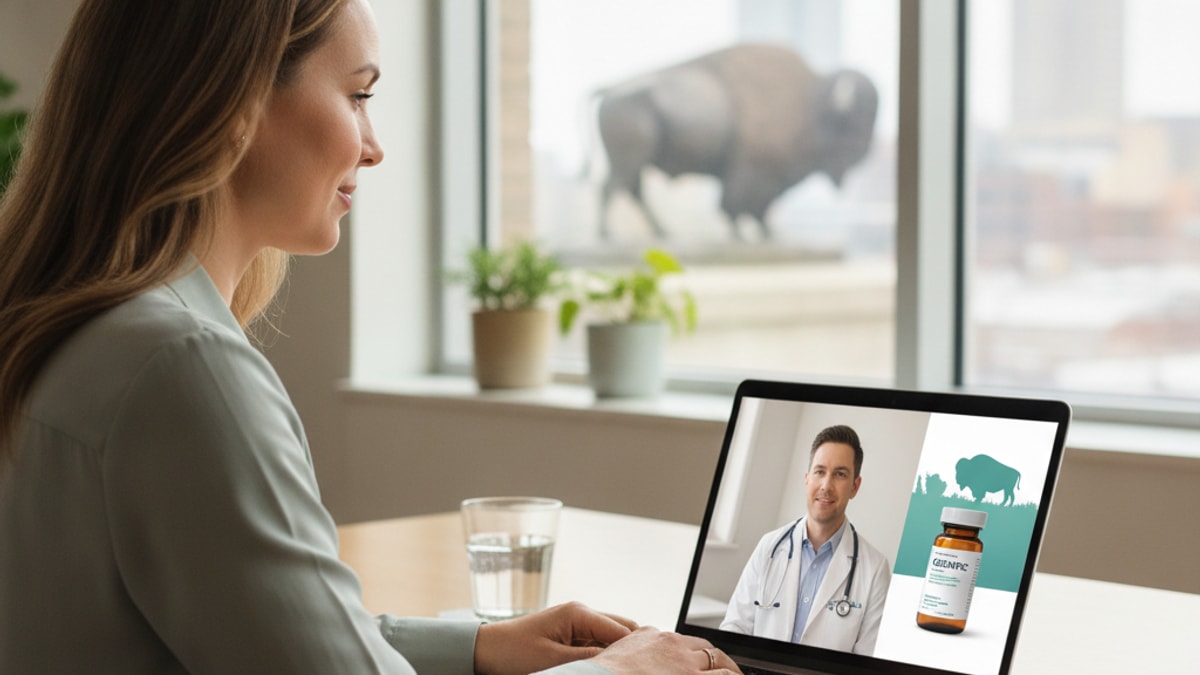
Buffalo residents seeking weight loss treatment through GLP-1 medications face a frustrating reality: local endocrinology clinics are booked months out, insurance prior authorizations take weeks, and brand-name Ozempic costs upward of $900 per month without coverage. What most people don't realize is that telehealth ozempic buffalo access exists through a completely different pathway. Compounded semaglutide prescribed by licensed providers via remote consultation and shipped directly to your door. No waiting room. No insurance battle. No three-month delay to see a specialist who may or may not prescribe what you need.
Our team has guided hundreds of patients through exactly this process across New York State. The gap between doing it right and doing it wrong comes down to three things most people never hear about: the difference between brand-name and compounded formulations, what New York telehealth statutes actually permit, and why the consultation process matters more than the prescription itself.
How does telehealth Ozempic work for Buffalo residents?
Telehealth ozempic buffalo access works through licensed healthcare providers who conduct remote consultations, evaluate eligibility based on BMI and medical history, and prescribe compounded semaglutide prepared by FDA-registered 503B pharmacies. The medication is shipped directly to the patient's address within 48 hours of approval. This pathway is fully legal under New York State telehealth statutes, which allow prescribing providers to establish physician-patient relationships without in-person evaluation for non-controlled medications.
Here's what that means in practice. Telehealth ozempic buffalo isn't the brand-name Novo Nordisk product you see advertised. It's compounded semaglutide, the same active molecule prepared by FDA-registered compounding facilities at 60–80% lower cost. The pharmacological mechanism is identical: semaglutide acts as a GLP-1 receptor agonist, slowing gastric emptying and reducing appetite signaling in the hypothalamus. What changes is the delivery format, the cost structure, and the access model. The rest of this piece covers exactly how the telehealth consultation works, what compounded semaglutide is and isn't, what Buffalo residents need to qualify, and what mistakes to avoid when evaluating providers.
What Buffalo Residents Need to Know About Compounded Semaglutide
Compounded semaglutide contains the same active peptide as brand-name Ozempic and Wegovy. It's prepared by state-licensed compounding pharmacies or FDA-registered 503B outsourcing facilities using pharmaceutical-grade semaglutide base. It is not 'fake Ozempic.' The molecule is identical. What it lacks is FDA approval of the finished drug product, which is granted to Novo Nordisk's specific formulation and manufacturing process, not to the peptide itself.
The practical difference matters for three reasons. First, cost: compounded semaglutide typically runs $250–$400 per month compared to $900+ for brand-name products without insurance. Second, availability: brand-name Ozempic has been under FDA shortage designation since 2022, making compounded versions legally available under federal compounding statutes. Third, insurance: compounded medications are rarely covered by insurance, but neither is brand-name Ozempic for weight loss unless your plan explicitly includes GLP-1 coverage. Which most don't.
Buffalo-area patients should verify that their provider sources compounded semaglutide from FDA-registered 503B facilities, not unregistered compounding pharmacies. The 503B designation means the facility undergoes regular FDA inspection, follows current Good Manufacturing Practices (cGMP), and reports adverse events to the FDA. TrimRx works exclusively with 503B-registered partners to ensure consistent potency and sterility across every vial shipped.
How the Telehealth Consultation Process Works
Telehealth ozempic buffalo consultations follow a structured evaluation model required under New York medical board regulations. The provider must establish a physician-patient relationship, document baseline health metrics, and determine that the medication is medically appropriate before prescribing. This isn't a checkout process. It's a clinical evaluation conducted remotely.
Here's what the consultation covers. Medical history review: the provider evaluates current medications, pre-existing conditions (particularly thyroid disorders, pancreatitis history, or diabetic retinopathy), and contraindications that would make GLP-1 therapy unsafe. BMI calculation: most telehealth providers require a BMI of 27 or higher with at least one weight-related comorbidity (hypertension, prediabetes, sleep apnea) or a BMI of 30 or higher without comorbidities. Weight loss goals and prior attempts: providers document previous weight loss efforts to establish that lifestyle modification alone has not achieved sustainable results. Lab work (optional but recommended): some providers require recent A1C, fasting glucose, or lipid panels before prescribing, particularly for patients with diabetes or prediabetes.
The consultation takes 15–30 minutes and can be completed via video call or asynchronous messaging depending on the platform. If approved, the prescription is sent to the compounding pharmacy and shipped within 48 hours. If not approved, the provider should explain why and offer alternative recommendations. A legitimate telehealth service doesn't approve every applicant.
Eligibility Criteria and Contraindications for Buffalo Patients
Not every Buffalo resident qualifies for telehealth ozempic buffalo prescriptions. New York-licensed providers follow FDA guidelines for GLP-1 receptor agonist use, which include specific eligibility thresholds and absolute contraindications.
Eligibility thresholds: BMI ≥30 without comorbidities, or BMI ≥27 with at least one weight-related condition (type 2 diabetes, hypertension, dyslipidemia, obstructive sleep apnea). Age 18 or older. GLP-1 medications are not FDA-approved for pediatric weight loss outside of specific trials. No current pregnancy or plans to conceive within six months. Semaglutide has a five-day half-life and requires a two-month washout period before attempting conception.
Absolute contraindications: personal or family history of medullary thyroid carcinoma (MTC) or Multiple Endocrine Neoplasia syndrome type 2 (MEN2). Semaglutide carries a boxed warning for thyroid C-cell tumors observed in rodent studies. History of severe pancreatitis. GLP-1 agonists have been associated with acute pancreatitis in post-marketing surveillance. Active diabetic retinopathy. Rapid glucose reduction can temporarily worsen retinopathy in patients with pre-existing disease. Known hypersensitivity to semaglutide or any component of the formulation.
Our team has found that the most common disqualifying factor isn't medical history. It's unrealistic expectations. Patients who expect semaglutide to produce weight loss without dietary changes or who want to use it for cosmetic purposes at a BMI below clinical thresholds are consistently declined by responsible providers.
Telehealth Ozempic Buffalo: [Compounded vs Brand-Name] Comparison
| Factor | Compounded Semaglutide (503B) | Brand-Name Ozempic/Wegovy | Bottom Line |
|---|---|---|---|
| Active Ingredient | Pharmaceutical-grade semaglutide base, identical molecular structure to brand-name | Semaglutide (proprietary formulation with excipients) | Same peptide. Compounded lacks FDA approval of finished product |
| Cost Per Month | $250–$400 without insurance | $900–$1,200 without insurance | Compounded is 60–80% less expensive |
| FDA Oversight | Prepared by FDA-registered 503B facilities under cGMP | Full FDA approval of drug product, batch testing, and manufacturing process | Brand-name has stricter batch-level oversight |
| Insurance Coverage | Rarely covered. Most plans exclude compounded medications | Covered if plan includes GLP-1 medications for weight loss (most don't) | Neither is reliably covered for weight loss |
| Availability | Legally available during brand-name shortage periods (ongoing since 2022) | Subject to nationwide shortages. Availability fluctuates | Compounded is more consistently available |
| Professional Assessment | Compounded semaglutide offers clinically equivalent weight loss outcomes at significantly lower cost for patients without GLP-1 insurance coverage. The FDA registration of the compounding facility is the critical quality indicator |
Key Takeaways
- Telehealth ozempic buffalo access means compounded semaglutide prescribed remotely by New York-licensed providers and shipped directly to patients within 48 hours.
- Compounded semaglutide contains the same active peptide as brand-name Ozempic but costs 60–80% less and is prepared by FDA-registered 503B facilities, not Novo Nordisk.
- Eligibility requires BMI ≥27 with comorbidities or BMI ≥30 without, plus no contraindications like MTC family history or active pregnancy plans.
- The telehealth consultation is a real clinical evaluation. Providers document medical history, calculate BMI, review contraindications, and determine appropriateness before prescribing.
- Buffalo residents should verify their provider sources medication from FDA-registered 503B pharmacies, not unregistered compounding facilities.
- Insurance rarely covers compounded semaglutide, but brand-name Ozempic for weight loss is also excluded from most plans unless GLP-1 coverage is explicitly included.
What If: Telehealth Ozempic Buffalo Scenarios
What If My Insurance Doesn't Cover GLP-1 Medications?
Switch to compounded semaglutide through a telehealth provider. The out-of-pocket cost is lower than brand-name copays in most cases. A typical brand-name Ozempic copay with insurance ranges from $25 to $500 depending on formulary tier, but many plans exclude GLP-1 medications for weight loss entirely. Compounded semaglutide at $250–$400 per month without insurance becomes the more affordable option by default.
What If I Live Outside Buffalo City Limits — Am I Still Eligible?
Yes, telehealth ozempic buffalo services are available to any New York State resident regardless of county. The provider must be licensed in New York, and the medication can be shipped to any address within the state. Patients in Amherst, Cheektowaga, Tonawanda, and surrounding Erie County areas qualify under the same telehealth statutes as Buffalo residents.
What If I've Never Injected Medication Before?
The provider includes detailed injection instructions, and subcutaneous semaglutide injections are administered with 31-gauge insulin syringes into fatty tissue on the abdomen or thigh. The needle is shorter and thinner than a standard vaccine needle. Most first-time users report the injection itself is painless; the anticipation is worse than the act. TrimRx provides video tutorials and written guides with every shipment.
What If I Experience Severe Nausea During Titration?
Contact your prescribing provider immediately. The dose escalation schedule can be slowed or paused to allow GI tolerance to catch up. Nausea occurs because GLP-1 receptor density in the gut exceeds hypothalamic density, and titrating too quickly overwhelms gastric adaptation. Standard mitigation: eat smaller meals, avoid high-fat foods, stay upright for two hours after eating, and consider an anti-nausea medication if symptoms persist.
The Unflinching Truth About Telehealth GLP-1 Access
Here's the honest answer: telehealth ozempic buffalo isn't a loophole or a gray-market workaround. It's how the healthcare system is supposed to function when insurance gatekeeping and artificial scarcity are removed. The medication is real, the providers are licensed, and the regulatory framework is established. What frustrates people is that this pathway exists at all. It exposes how much of traditional weight loss treatment is built around administrative barriers rather than clinical necessity. Compounded semaglutide prepared by 503B facilities delivers the same weight loss outcomes as brand-name Ozempic at a fraction of the cost, and the only reason more people don't know about it is that pharmaceutical manufacturers and insurance companies have no financial incentive to promote it.
Buffalo residents should approach telehealth GLP-1 providers the same way they'd approach any medical service: verify licensure, confirm the pharmacy is FDA-registered, and ensure the consultation includes a real clinical evaluation. If the provider approves everyone who applies, that's a red flag. If they source medication from unregistered compounding pharmacies, walk away. But when the model works correctly. Licensed provider, 503B pharmacy, transparent pricing. It's the most accessible path to medically supervised weight loss treatment that exists in 2026.
If cost, wait times, or insurance coverage have blocked your access to GLP-1 therapy, telehealth ozempic buffalo through providers like TrimRx removes every one of those barriers. The consultation takes less time than finding parking at a clinic, the medication arrives faster than a specialist referral processes, and the monthly cost is less than most insurance copays for brand-name alternatives. Start your treatment now. The evaluation is remote, the approval is same-day, and the first shipment goes out within 48 hours.
Frequently Asked Questions
How does telehealth Ozempic work for Buffalo residents?▼
Telehealth ozempic buffalo works through remote consultations with New York-licensed providers who evaluate eligibility, prescribe compounded semaglutide, and arrange direct shipment from FDA-registered 503B pharmacies to the patient’s address within 48 hours. The provider establishes a physician-patient relationship via video or asynchronous messaging, reviews medical history and BMI, and determines appropriateness before prescribing.
Can I get Ozempic prescribed online if I live in Buffalo without seeing a doctor in person?▼
Yes, New York State telehealth statutes permit licensed providers to prescribe non-controlled medications like semaglutide without in-person evaluation as long as a physician-patient relationship is established through remote consultation. The provider must document medical history, calculate BMI, and evaluate contraindications before prescribing — the consultation is conducted entirely online but follows the same clinical standards as an in-office visit.
What is the cost of telehealth Ozempic in Buffalo compared to brand-name prescriptions?▼
Compounded semaglutide prescribed via telehealth typically costs $250–$400 per month without insurance, compared to $900–$1,200 per month for brand-name Ozempic or Wegovy without coverage. Insurance rarely covers compounded medications, but most plans also exclude brand-name GLP-1 medications for weight loss unless explicitly included in the formulary — making compounded semaglutide the more affordable option for most patients.
What are the side effects of starting semaglutide through telehealth?▼
Gastrointestinal side effects — nausea, vomiting, diarrhea, and constipation — occur in 30–45% of patients during dose titration and typically resolve within 4–8 weeks as the body adjusts. These effects are most pronounced during the first dose increase and can be mitigated by eating smaller, lower-fat meals and slowing the titration schedule. Serious adverse events like pancreatitis and gallbladder disease are rare but documented — patients with personal or family history of medullary thyroid carcinoma should not use GLP-1 agonists.
How long does it take to see weight loss results from telehealth Ozempic?▼
Most patients notice appetite suppression within the first week at starting dose, but clinically meaningful weight loss — defined as 5% or more of body weight — typically takes 8–12 weeks at therapeutic dose. The STEP-1 trial published in the New England Journal of Medicine demonstrated 14.9% mean body weight reduction at 68 weeks on 2.4mg weekly semaglutide, with most weight loss occurring during the first 40 weeks of treatment.
Is compounded semaglutide the same as brand-name Ozempic?▼
Compounded semaglutide contains the same active peptide as brand-name Ozempic and Wegovy, prepared by FDA-registered 503B facilities using pharmaceutical-grade semaglutide base. It is not ‘fake Ozempic’ — the molecule and mechanism are identical. What it lacks is FDA approval of the finished drug product, which is granted to Novo Nordisk’s proprietary formulation, not to the peptide itself. The practical difference is regulatory oversight: brand-name products undergo batch-level FDA testing, while compounded products are subject to facility-level inspection.
Who qualifies for telehealth Ozempic prescriptions in Buffalo?▼
Eligibility requires BMI ≥30 without weight-related comorbidities, or BMI ≥27 with at least one comorbidity like hypertension, type 2 diabetes, or sleep apnea. Patients must be 18 or older, not pregnant or planning conception within six months, and have no contraindications such as personal or family history of medullary thyroid carcinoma or active diabetic retinopathy. The provider evaluates each case individually during the remote consultation.
Will I regain weight if I stop taking semaglutide prescribed through telehealth?▼
Clinical evidence shows that most patients regain a significant portion of lost weight after discontinuing GLP-1 therapy — the STEP 1 Extension trial found participants regained approximately two-thirds of their lost weight within one year of stopping semaglutide. This reflects the fact that GLP-1 agonists correct impaired satiety signaling that returns when the medication is removed. Transition planning with your provider — including dietary adjustments and possibly a lower maintenance dose — can reduce rebound weight gain.
Can telehealth providers prescribe Ozempic for type 2 diabetes in Buffalo?▼
Yes, New York-licensed telehealth providers can prescribe semaglutide for type 2 diabetes management if the patient meets clinical criteria — typically A1C above 7% despite metformin therapy or other oral agents. The consultation process includes review of recent lab work, current diabetes medications, and assessment for contraindications. Compounded semaglutide functions identically to brand-name Ozempic for glycemic control.
What happens during the telehealth Ozempic consultation?▼
The consultation includes medical history review, documentation of current medications and pre-existing conditions, BMI calculation, evaluation of weight-related comorbidities, and assessment for contraindications like thyroid carcinoma history or pregnancy plans. The provider determines whether semaglutide is medically appropriate and, if approved, sends the prescription to an FDA-registered 503B pharmacy for compounding and shipment. The process takes 15–30 minutes and can be completed via video call or asynchronous messaging.

Transforming Lives, One Step at a Time
Keep reading

Ozempic and Social Isolation: When Food Was How You Connected
This is a real cost of treatment and it does not get discussed much, partly because it sounds minor next to the medical benefits….
Can’t Comfort Eat on Ozempic and Don’t Feel Better? Why That Happens
Because the eating was doing a job, and removing your capacity to do it does not remove the need it was meeting. That is…
Food Noise Came Back on Ozempic? Whether It’s Your Dose or Your Stress
The pattern tells you more than the intensity does. Food noise that returns gradually over weeks and stays constant points toward the medication. Food…


